



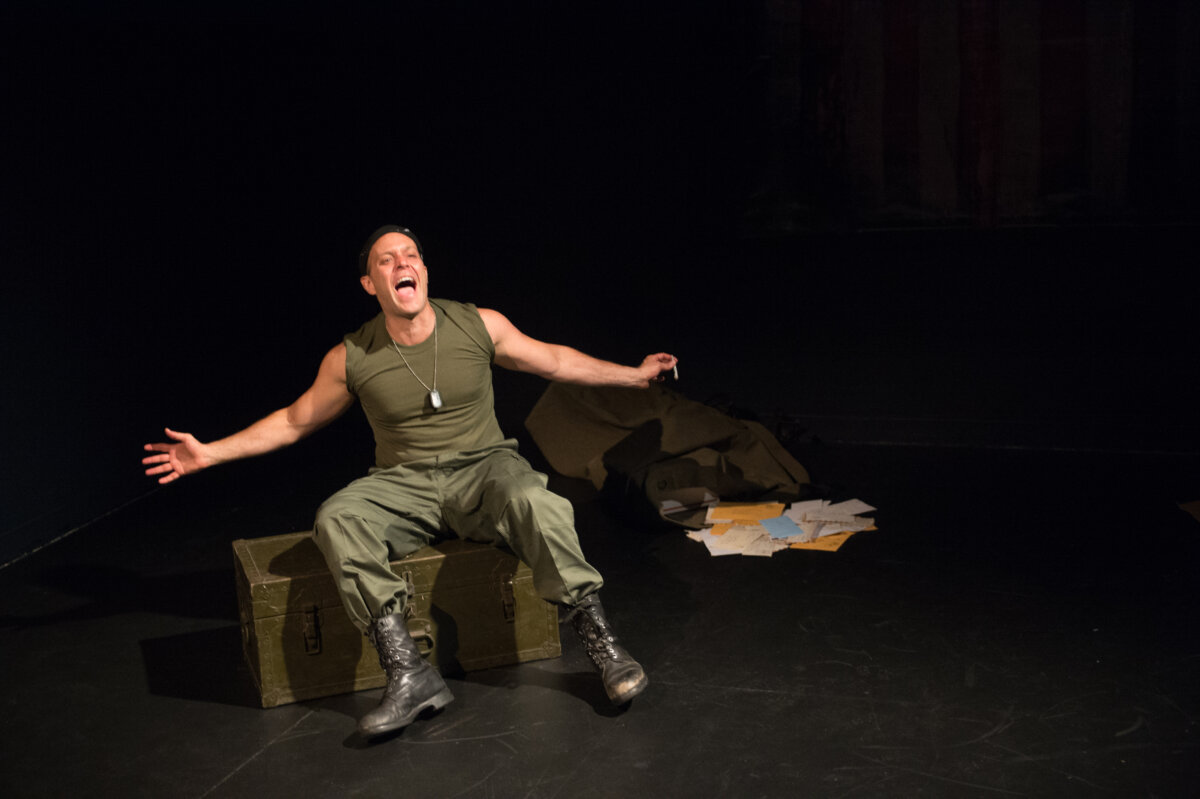
NEW YORK—As actor and playwright Douglas Taurel explains in his one-man show “The American Solder,” there are three important lessons to learn in the military. First is discipline—the importance of following orders and trusting in the chain of command; teamwork—where working together is how you survive in war; and brotherhood—that you are now part of something bigger than yourself.
Taurel, who has performed the show in over 34 cities across America, created the work based on extensive research, interviews, and letters that those in combat wrote to their loved ones. From that material, he created 14 characters, all affected by the forces of war. Though the settings are different, ranging from before the American Revolution to the more recent conflicts in Iraq and Afghanistan, the issues examined are constant throughout.
It’s told on a mostly bare stage with various props from the different time periods. Sound design by Andy Evan Cohen, lighting design by Katy Atwell, and projection design by Josh Iacovelli and Andy Evan Cohen help set the particular atmosphere for the various segments presented.
Taurel moves effortlessly from era to era, changing sex, personality, and accent when required. Most importantly, he’s able to make every one of the characters feel completely real. Some of these include a teenage colonist from Boston who wants to fight the British and seeks advice from his grandfather who fought in the French and Indian War, a veteran soldier who tries to impart a bit of advice to a new arrival to the Vietnam jungles, and a young woman from a patriarchal Italian family who joins the marines and suffers a devastating injury in Iraq.
-

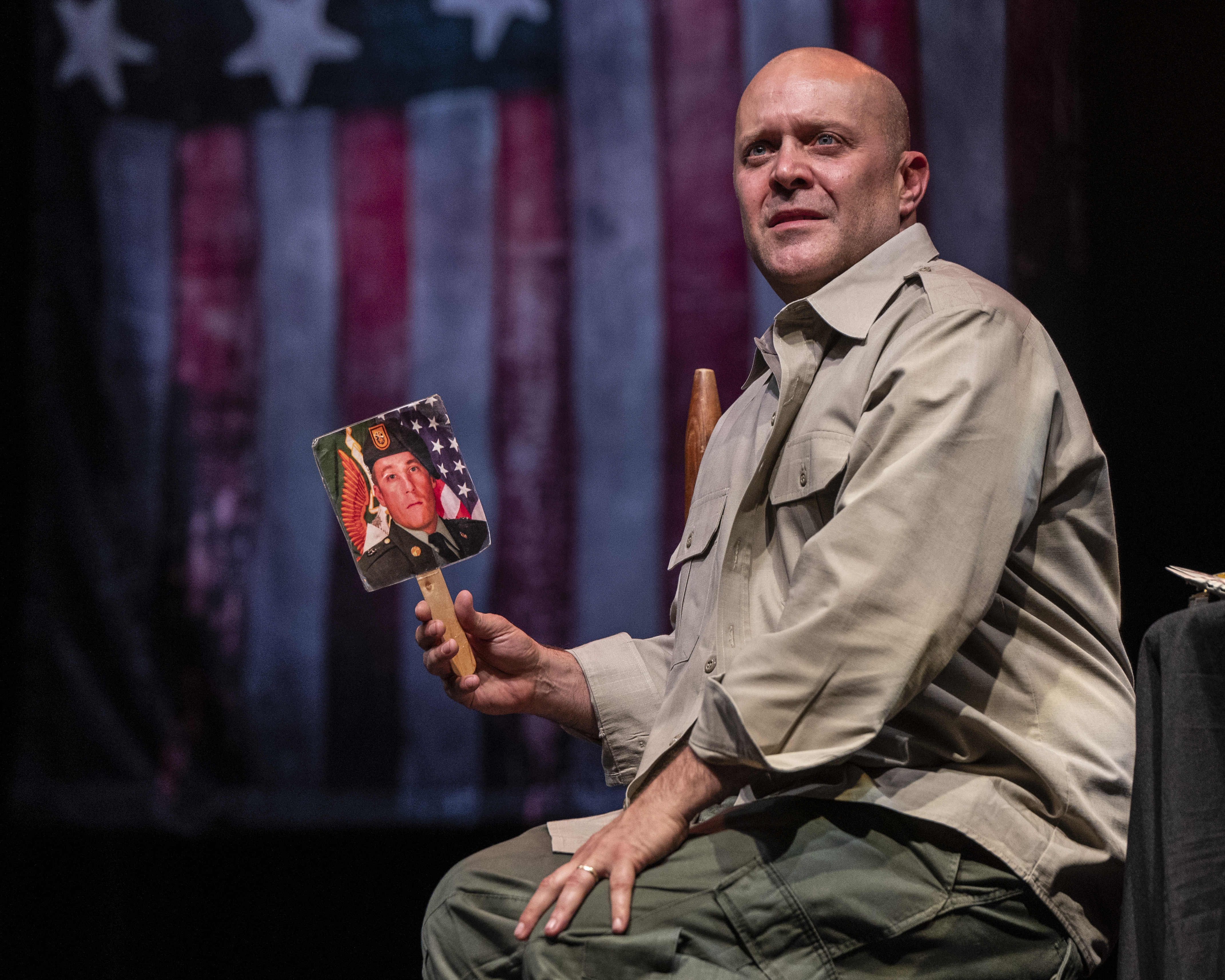 Douglas Taurel in “The American Soldier.” (Teresa Castracane Photography)
The show separates the protagonists into two distinct groups: those who joined the military and those who didn’t. The latter group is comprised of those on the outside looking in. They often struggle to deal with what those who fought experienced. We see a grieving mother reading a letter to her son in front of his name on the Vietnam War Memorial. For her, it is an annual pilgrimage as she tries to understand his last moments and what he endured in combat. Also poignant is a woman who repeatedly assures her son that his dad will be coming home from his third tour of duty. This story has a more hopeful ending; the two work to keep his memory and presence alive until he does.
Some of the most gripping segments portray what can best be described as a calm before the storm. Endless periods of waiting will soon become life or death scenarios. These feelings are laid bare when a Civil War officer writes a letter to his beloved wife before an upcoming campaign. In World War I, one soldier attempts to reassure another as they prepare to race across no man’s land.
The disconnection veterans often face upon their return home is also examined. One man explains how he has become broken after his experience at Iwo Jima, where he faced a kill-or-be-killed situation. He’s now on a first name basis with Jim Beam and Jack Daniels.
Even more telling is when a soldier home from Iraq recounts how unsteady he feels in both worlds. When he was over there, he couldn’t wait to get back to the safety of his family, but once he has, he finds he misses the camaraderie within his unit and the adrenaline of combat.
Audience members also hear from parents who recount their children’s battle with depression upon their return. They tried to encourage them to seek help, but they wonder if what they did was actually enough. Those on both sides of this equation use their own experiences to urge others to look for assistance before the situation worsens.
Despite the depicted characters’ circumstances, war is neither glorified nor condemned. Rather it’s presented as something that exists and to which people are called to serve—be it by voluntary or mandatory means. Coupled with this are the pride and self-satisfaction returning veterans can have, including those who didn’t come home unscathed. They were part of a select group tasked with a job most people would never even attempt. They had a calling that could lead them to offer guidance to others in similar situations and hopefully make it easier for them.
-
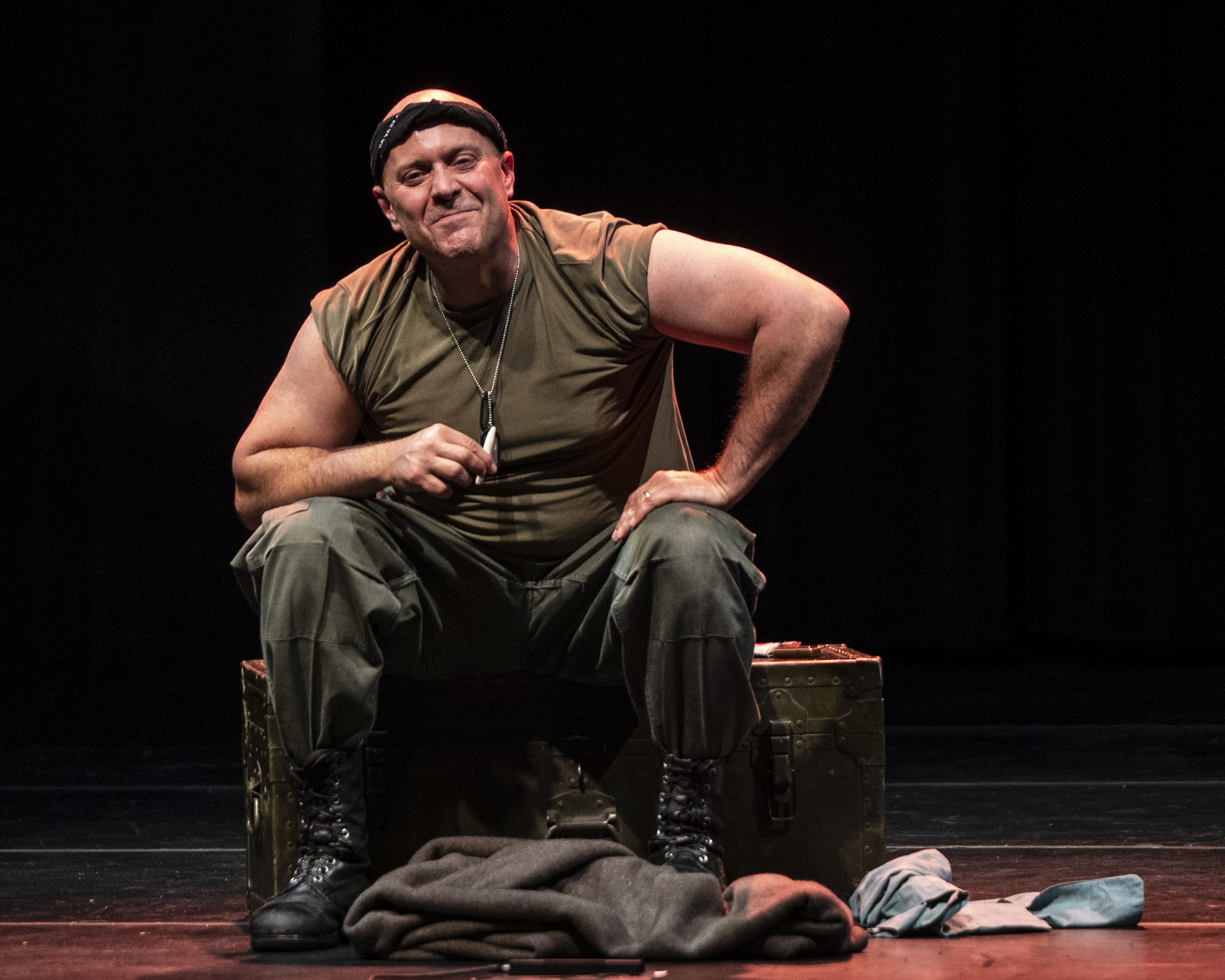 Douglas Taurel in “The American Soldier.” (Teresa Castracane Photography)
“The American Solider” offers an unflinching look at the suffering those who serve can face. It shows how they rise to the occasion, both in combat and at home, each of which can be a battle for survival.
‘The American Solider’
Presented by NewYorkRep at A.R.T./New York Theatres
502 W. 53rd St., New York City
Tickets: TicketTailor.com
Running time: one hour, 25 minutes (no intermission)
Closes: Dec. 21, 2025
What arts and culture topics would you like us to cover? Please email ideas or feedback to features@epochtimes.nyc
