



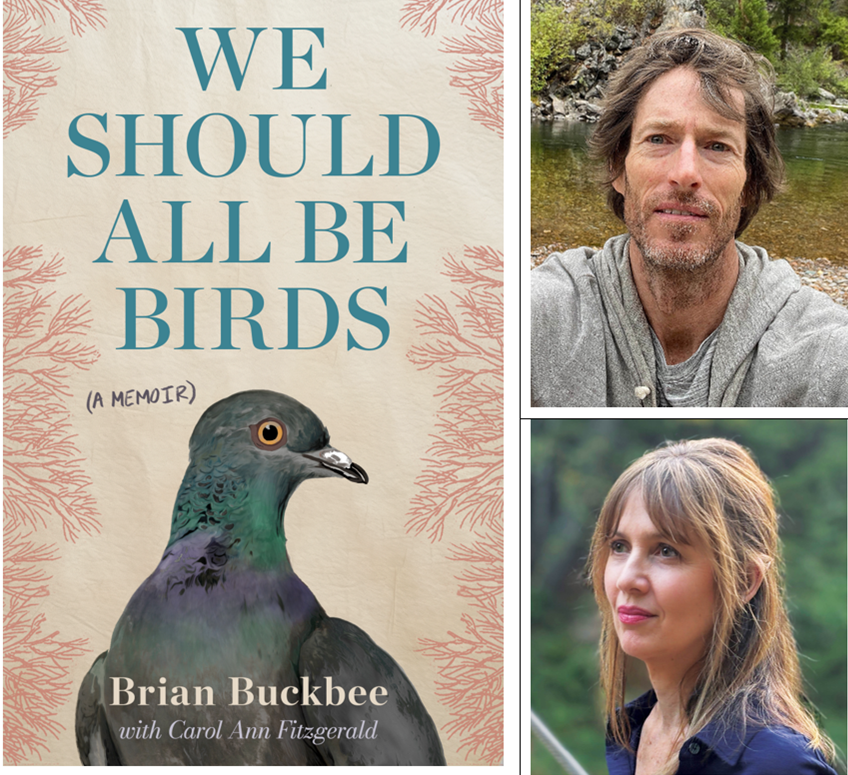
Contrary to their “rats of the sky” nickname, the pigeon is an intelligent and clean bird. They’ve been used as messengers during wartime, and many celebrities, including Marlon Brando and Elvis Presley, have kept them as pets.
In Brian Buckbee’s memoir, ‘We Should All Be Birds,” we meet a few that were instrumental during the darkest days of the author’s life; a chronic and mysterious illness kept him in almost constant pain, regularly fatigued and isolated.
In the book, the author accepts his situation and stays engaged in the world. He begin taking short walks around his neighborhood, an activity that offers the possibility of sleep later that night. His walks are also an escape from debilitating headaches that he comes to call the “black monster.” So acute is the pain that Buckbee plans his route to avoid the sun and wears a baseball cap pulled way down low.
An Unlikely Friendship
It was on one of these walks that the story begins. He comes across a pigeon, alone and only able to stand on one leg. The next day, taking the same route, he spies the bird a second time, “standing on one leg, looking right at me,” he wrote. “He had the funniest look in his eye, one of familiarity, as if we had known each other for a long, long time.”
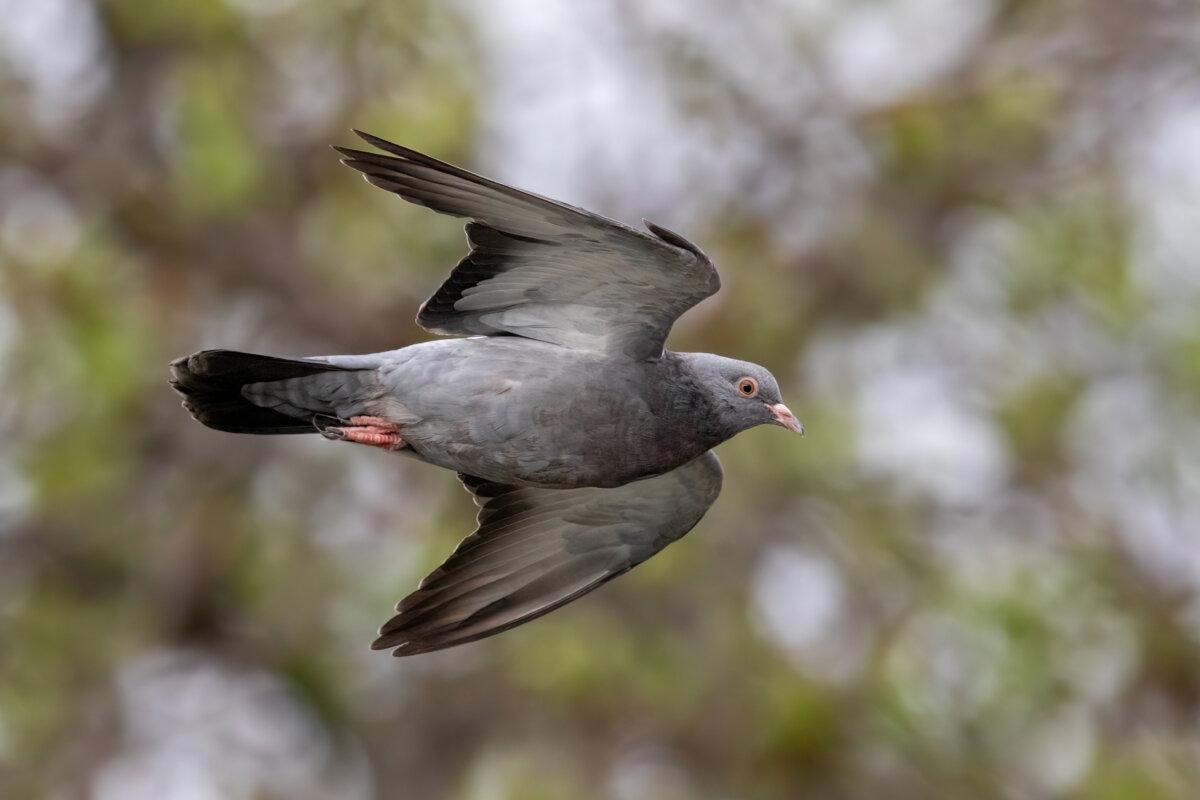
Buckbee, fearing the one-legged bird may not survive out in the world, is drawn to it. So, on the third night, coming upon the bird again, the author places his hands out to see what will happen. Without hesitation, the pigeon hops onto the outstretched palm.
The story is presented in journal-like style, noting how trust was established in the early days. The author makes room for his guest, building a shelter and providing food and water.
The book covers the year 2022, the third year of the pandemic and is divided into five parts. Buckbee provides regular updates on the bird’s health. He then shifts to pivotal moments from his past that come to mind including his travels, relationships, and the active life he led before the illness.
These stories, from the past and present, are not random but are connected, such as when he credits his mother for his love of animals. In dealing with his own illness, Buckbee is reminded of his father’s last days. One may see the appearance of the bird as a lifeline from the cosmos to keep him company and to offer him a respite from his own pain and suffering.
Dictating in the Dark
Readers may come to care deeply for these two, especially those facing similar issues like chronic illness, despair, and loneliness. The writing is simple, but articulate. The author is honest about his disabilities. He confesses that his headaches make it impossible to write in front of a computer screen. He dictates it to himself in a darkened room, hoping to recall his thoughts when he can sit at the keyboard.
It’s here that readers will appreciate the collaboration with editor Carol Ann Fitzgerald. She ensures Buckbee stays on schedule and that a cohesive manuscript is created. Her presence throughout the book is a symbol of the power of connection, not only with those from the animal world, but with fellow humans who continue to check in.
This book touches upon a few other topics like, for instance, the delicate friendship that develops between Buckbee and the pigeon, eventually named Two-Step because of its odd way of walking.
The more we learn about Two-Step, the more we see that what have been thought of as ordinary city pests are surprisingly expressive, affectionate, and quite extraordinary. Although given the chance to fly free, Two-Step returns to Buckbee’s open palm time after time. In return, despite pain and fatigue, Buckbee continues his caretaking duties, even when Two-Step finds a mate and starts a family.
Accepting Illness
Buckbee holds nothing back in relation to his health and sharing his extreme grief from a broken relationship. There’s no call for pity, or “woe is me” sentiment. It’s his story, and he’s facing it head-on. In one passage he wrote, “So yes. I am a sick person. I will not live the life I imagined.”
How many of us can understand that, whether in a health crisis or not. Day after day, he finds delight in learning about the pigeon species and being a spectator in the life that Two-Step builds.
It’s also a story about finding friendship in the unlikeliest of places and finding purpose even in the most desperate of situations. Buckbee learns how to take life slower, pay attention to what’s around him, and find the beauty in ordinary things.
Some readers may find the depth of caring the author shows for his friend too sentimental. Even Fitzgerald counsels her client not to put Two-Step “on a pedestal.” For this reviewer, that poses the question of who really saves who in this shared life between bird and man. How big a part Two-Step does play in Buckbee’s ability to weather the migraines, depression, and limitations of his health and energy?
Growth and Determination
Buckbee jumps between time periods which may seem to be a lack of structure, and the gloom that hangs over the story due to his illness may take away some of the book’s power. But the addition of conversations between Buckbee and his therapist do much to show his growth and determination to make the best of this arduous time.
The author focuses on the evolving friendship between him and his therapist and their contentment in shared companionship. This may remind the reader that opening one’s hearts to others and finding something else to care for can offer a needed distraction from loneliness that can be as debilitating as any physical symptom.
In the final pages, Buckbee looks back at when this story begins—the appearance of the injured bird. “He was sick and vulnerable at a time when I had become sick and vulnerable. We were partners through the pandemic. We were friends, companions, family.”
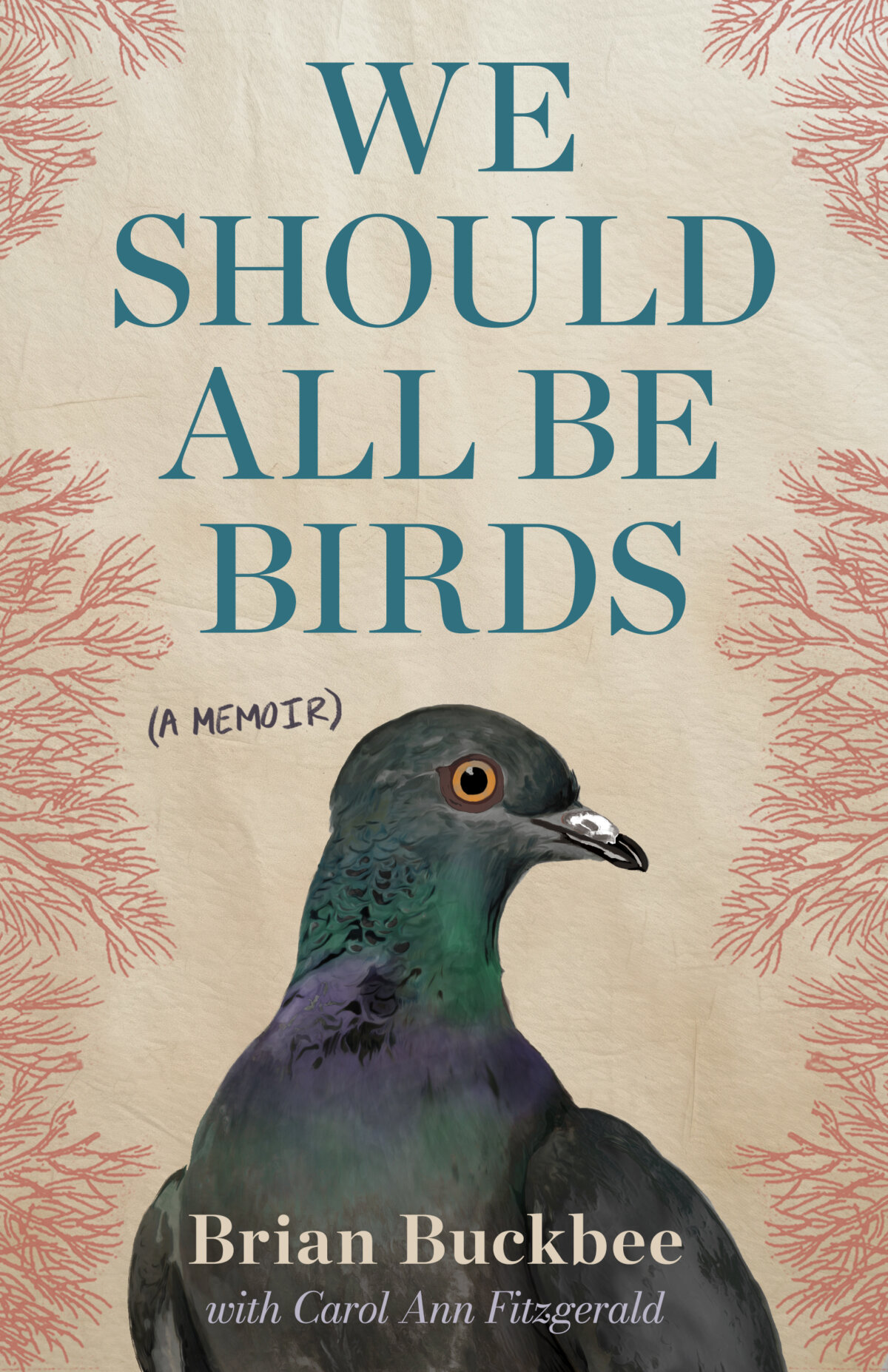
‘We Should All Be Birds: A Memoir’
By Brian Buckbee with Carol Ann Fitzgerald
Tin House: Aug. 5, 2025
Hardcover, 256 pages
What arts and culture topics would you like us to cover? Please email ideas or feedback to features@epochtimes.nyc
