



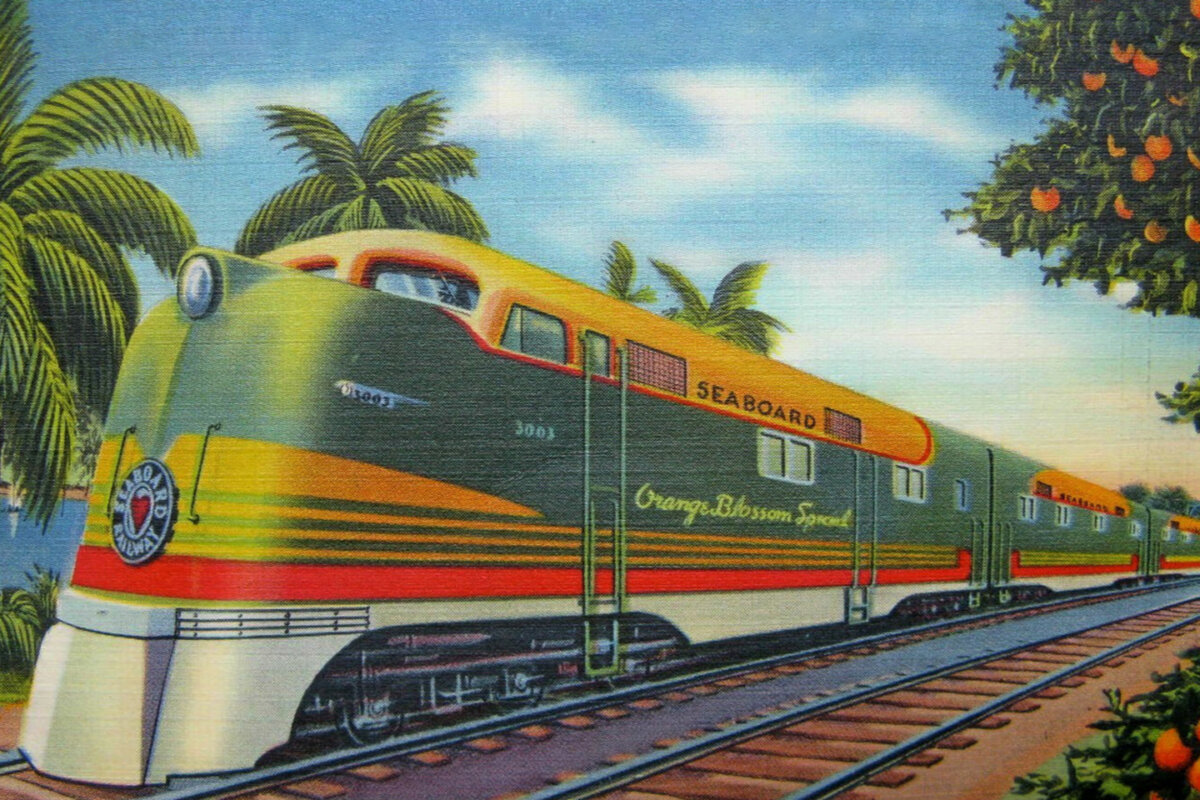
Writer E.M. Frimbo, nicknamed “The World’s Greatest Railroad Buff,” is widely quoted as saying the historic Orange Blossom Special locomotive was “the most luxurious winter-season train ever devised by man.”
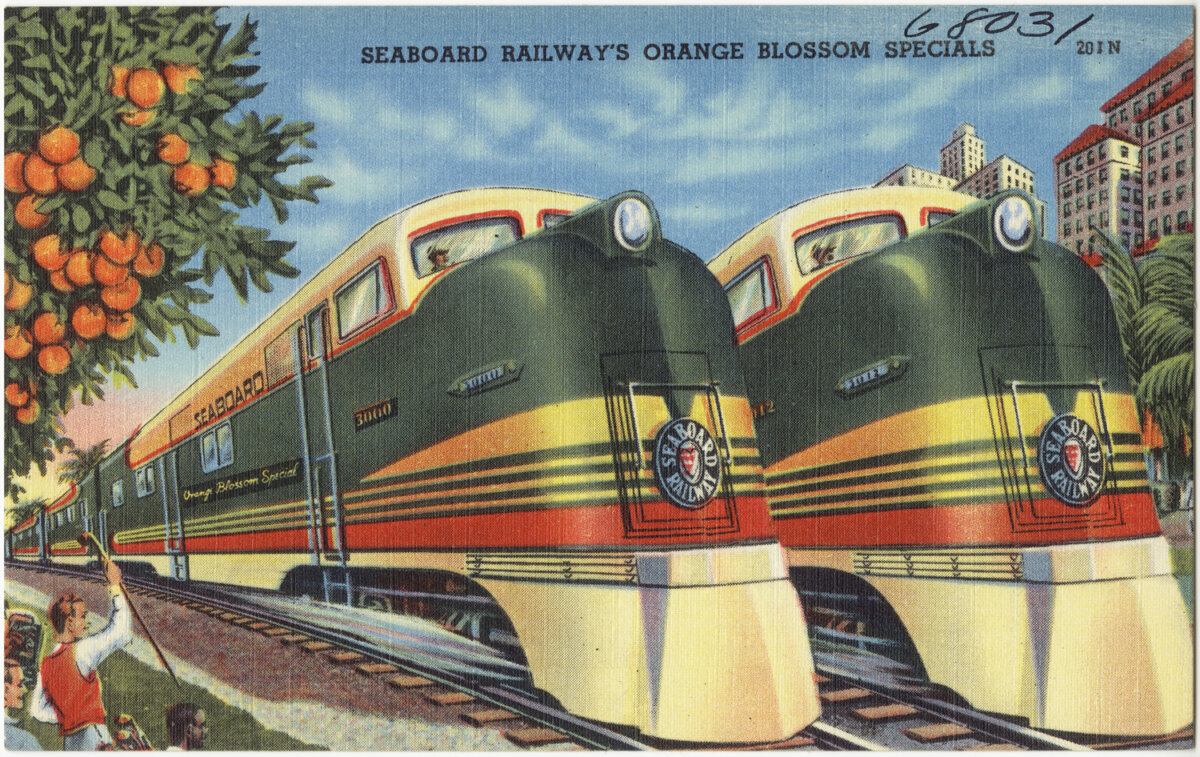
The luxury passenger train was a top-of-the-line carrier that began running in 1925, transporting vacationers from Northeastern states to destinations in tropical Florida.
Frimbo was the pen name for The New Yorker editor Rogers Ernest Malcolm Whitaker, but magazine editors weren’t the only ones interested in covering the fast-moving train. The Orange Blossom Special garnered national attention for its innovative amenities, including air conditioning, fresh-baked food, and grooming services. During its almost three-decade journey, it caught the attention of a musician in Florida.
Fiddle player and songwriter Ervin T. Rouse (1917–1981) was so inspired by the passenger train’s grandeur, he wrote a song about it—one that would eventually become known as “the fiddler’s national anthem.”
The Fiddle Takes Center Stage
In 1938, Rouse copyrighted his toe-tapping tribute, titled “Orange Blossom Special” in honor of the deluxe passenger train. The lyrics tell the story of “the fastest train on the line.” But the upbeat song’s specialty is found in its instrumentation. The fiddle takes center stage in the composition, providing string work that mimics a train horn in the opening measures.
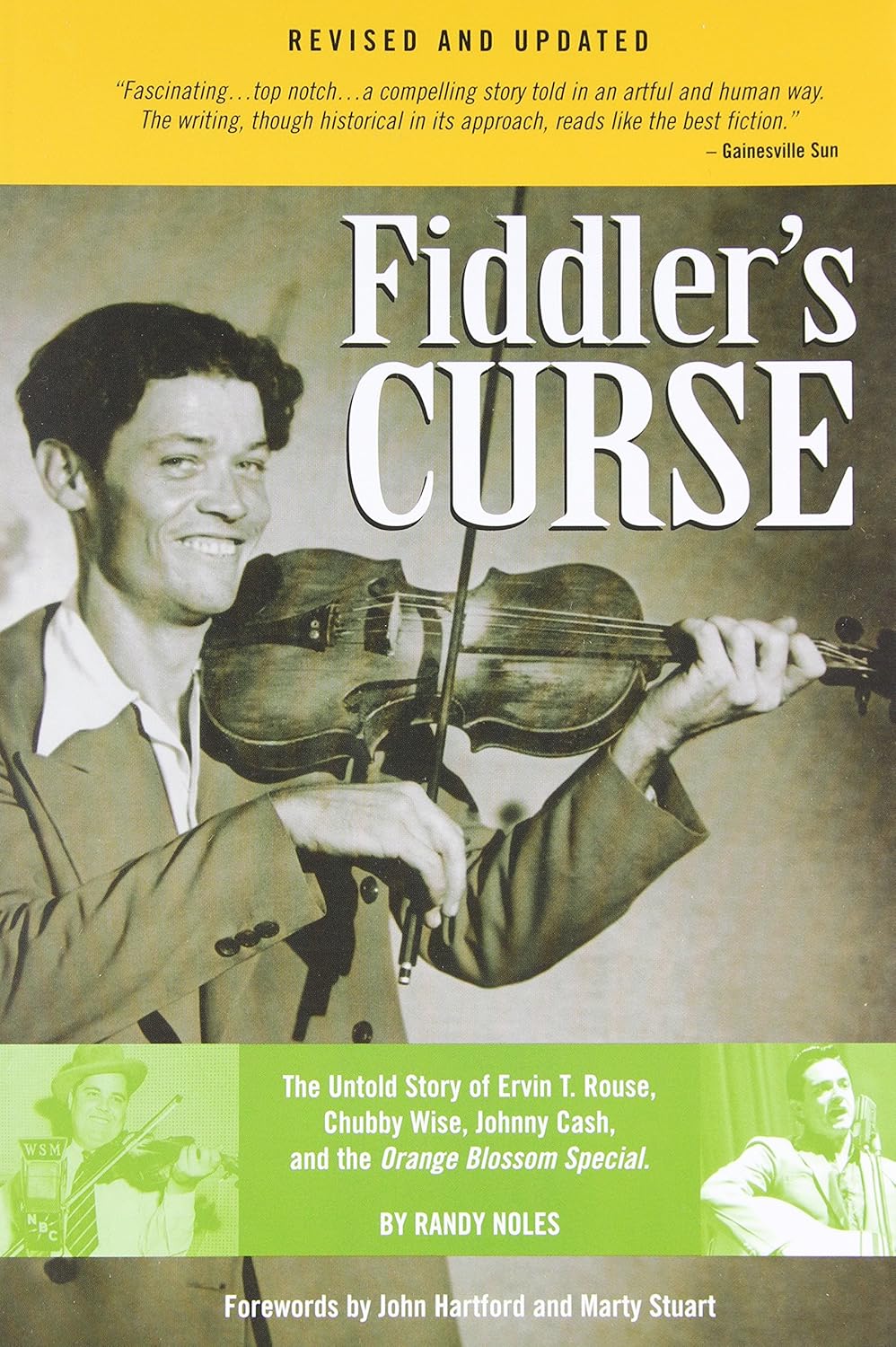
In his book “Fiddler’s Curse: The Untold Story of Ervin T. Rouse, Chubby Wise, Johnny Cash, and the Orange Blossom Special,” author Randy Noles tells the story of the making of the “Orange Blossom Special” hit and explains why the train had such an impact on Rouse and much of the East Coast.
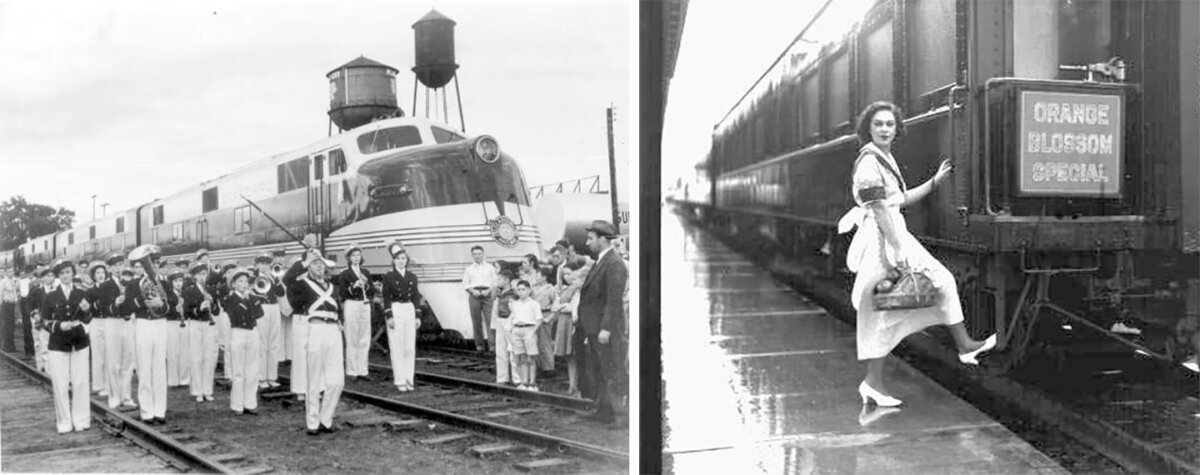
“It’s hard to imagine now, but this was a huge deal. This train had brand new diesel electric locomotives and Pullman cars, and it was on an exhibition tour between Washington and Miami that stopped in every city of any size along the way for people to look at it. Now we think ‘Well gee, it was just a train,’ but at the time it was like the space shuttle coming through town.”
During an exhibition two-day stop in Jacksonville, Florida, the train attracted about 30,000 people, according to the Florida Historical Society.
Rouse’s friend and fellow fiddle player, Robert Russell Wise, who went by the stage name Chubby Wise, claimed he had a hand in writing the tune with Rouse. His story involves the two musicians writing “Orange Blossom Special” after touring the famous train during its exhibition stop in Jacksonville. But Rouse’s brother, Gordon, initiated a copyright claim on Ervin’s behalf in October 1938, before the train’s exhibition tour began.
While findings show Rouse as the rightful sole copyright owner, Wise did contribute to the song in other ways. He helped popularize the tune after its 1939 release through live performances with Bill Monroe and His Blue Grass Boys band on the Grand Ole Opry stage.
‘Unofficial Anthem of Bluegrass’
The “Orange Blossom Special” number quickly caught on in both country and bluegrass communities. But bluegrass would lay claim to it first when Monroe released an instrumental version in the early 1940s. Fiddle player Art Wooten can be heard on the bluegrass patriarch’s earliest recording of the song in 1941.
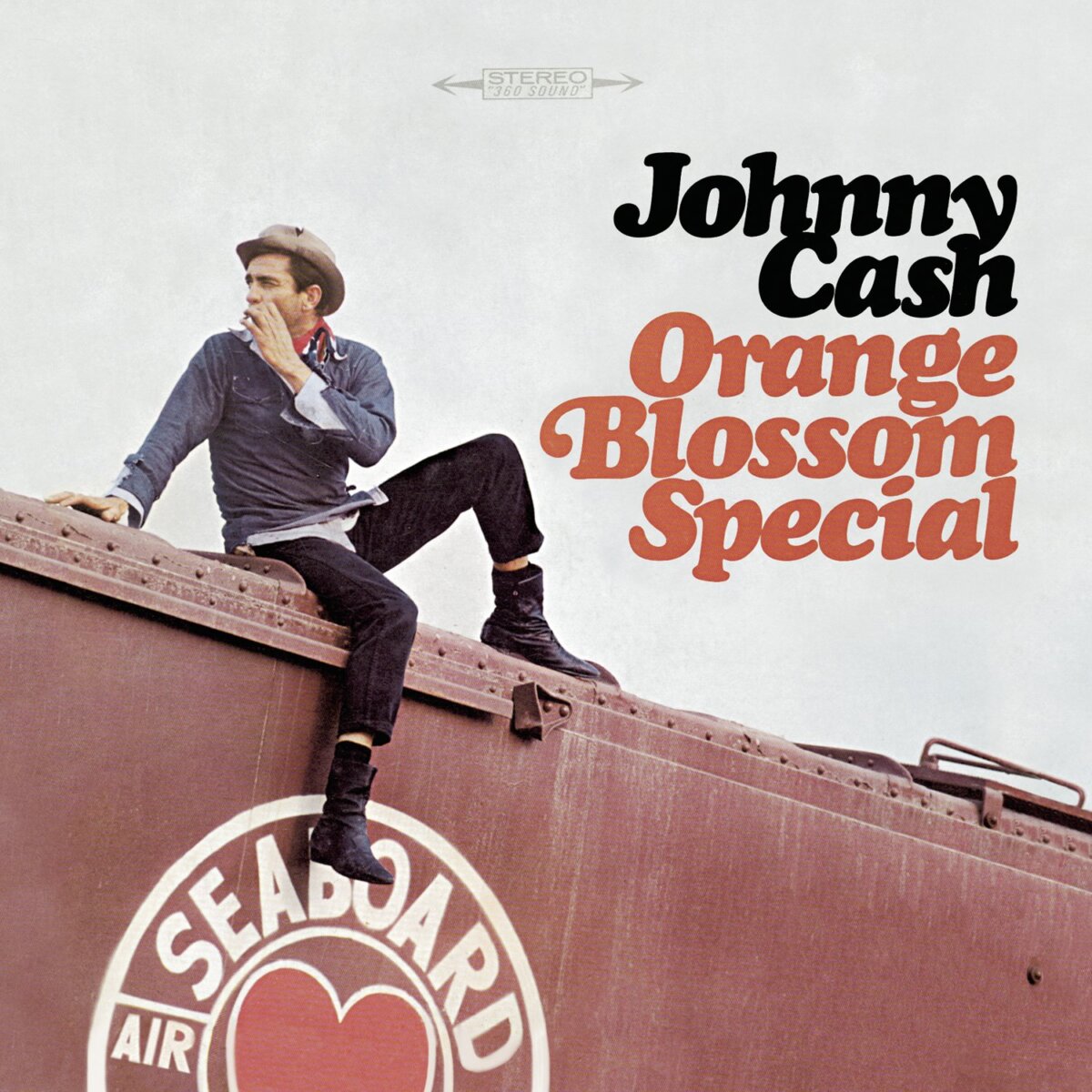
A little over two decades later, country artist Johnny Cash revived the train tribute with the release of his 1965 album “Orange Blossom Special.” His interpretation of the song, complete with saxophone, harmonica in place of fiddle, and added lyrics, became a top three country hit and gave the track crossover appeal.
Still performed today, and required learning for any serious, aspiring fiddle player, “Orange Blossom Special” is considered to be “the unofficial anthem of bluegrass.”
‘The Saga of the Special’
The song immortalized the luxury passenger train before it embarked on its last journey in 1953.
In his book, Noles captures the near-mythic status both the train and the song now share.
“In truth, like many stories behind early folk, country, and bluegrass songs, the saga of the Special is at times a convoluted one, involving the principles, Rouse and Wise, as well as an eclectic cast of peripheral players—singers and songwriters; pickers and publishers—who run the gamut from the famed to the forgotten; from the scrupulous to the scurrilous. And, across the length and breadth of the tale rolls the ghost of a plush, diesel-powered streamliner on which, ironically, neither Rouse nor Wise ever rode — except in their imaginations.”
From Rouse’s inception of the song in 1938 to Wise’s many performances of the tune, and the renditions released over the years by performers like Hank Snow and Charlie Daniels—the blistering bluegrass anthem’s long shelf life speaks to the strong-willed essence of the track.
“For many years, ‘Orange Blossom Special’ has been not only a train imitation piece, but also a vehicle to exhibit the fiddler’s pyrotechnic virtuosity. Performed at breakneck tempos and with imitative embellishments that evoke train wheels and whistles, OBS is guaranteed to bring the blood of all but the most jaded listeners to a quick, rolling boil,” author Norm Cohen shared in his book, “Long Steel Rail: The Railroad in American Folksong.”
Though the train no longer runs, its song still plays, so its legacy lives on.
“It is a standard of the country music repertoire,” the Florida Historical Society shared.
What arts and culture topics would you like us to cover? Please email ideas or feedback to features@epochtimes.nyc
