



Charles Burney, the most important music historian of the late 18th century, made a trip to Vienna in 1772. While visiting the residence of the famous opera librettist Pietro Metastasio, their group was interrupted by “the arrival of a young lady, who was received by the whole company with great respect. She was well dressed, and had a very elegant appearance.”
Burney explained that “this was Signora Martinez.” The daughter of an imperial librarian, she “was born in the house” where Metastasio lived “and educated under his eye.”
After conversing with Burney, Martines sat down “in a graceful manner” at the harpsichord. “Her performance indeed surpassed all that I had been made to expect,” he wrote. She then sang two arias that she had composed herself, which Burney described as “very well written, in a modern style; but neither common, nor unnaturally new.”
While vaguely admiring her keyboard skills and having a little more to say about her compositions in his book, “The Present State of Music in Germany, the Netherlands, and United Provinces” (1773), Burney reserved the bulk of his praise for her singing skills. “Her voice was naturally well-toned and sweet,” he wrote, and she had “a facility of executing the most rapid and difficult passages.” These qualities had, however, all been noted by others before.
What really set Martines apart, making her “more perfect than any singer … ever heard,” was in her technique of “portamento,” or the smooth gliding between pitches that avoids articulating specific notes. In this, Burney noted an unparalleled ability to divide “tones and semi-tones into infinitely minute parts, and yet always stopping upon the exact fundamental.”
Today, few have heard the name of Marianna von Martines. In her day, though, she was one of Austria’s most prolific composers, a contemporary of Wolfgang Amadeus Mozart and Joseph Haydn. She is supposed to have written more than 200 compositions, but since few were published in her lifetime, most have not survived.
How is it that this woman, so celebrated in her own day, has been almost completely forgotten? The answer may surprise you.
Early Life and ‘Dixit Dominus’
Marianna von Martines was born in Vienna in 1744, the child of an Italian-speaking noble family. She grew up in Vienna’s Michaelerhaus, a large prestigious building in the center of Vienna that functioned as a cultural microcosm.
Her talent was recognized early and, in addition to being patronized by Metastasio, a young Joseph Haydn accompanied her lessons.
Martines never married and had no children. There is no evidence that she ever ventured outside of Austria. In her mature years she hosted a salon in the Michaelerhaus, and though she was confined to Vienna, her fame as a musician and composer spread across Europe. She became the first woman admitted to Bologna’s elite Accademia Filarmonica—though she never visited the place in person.
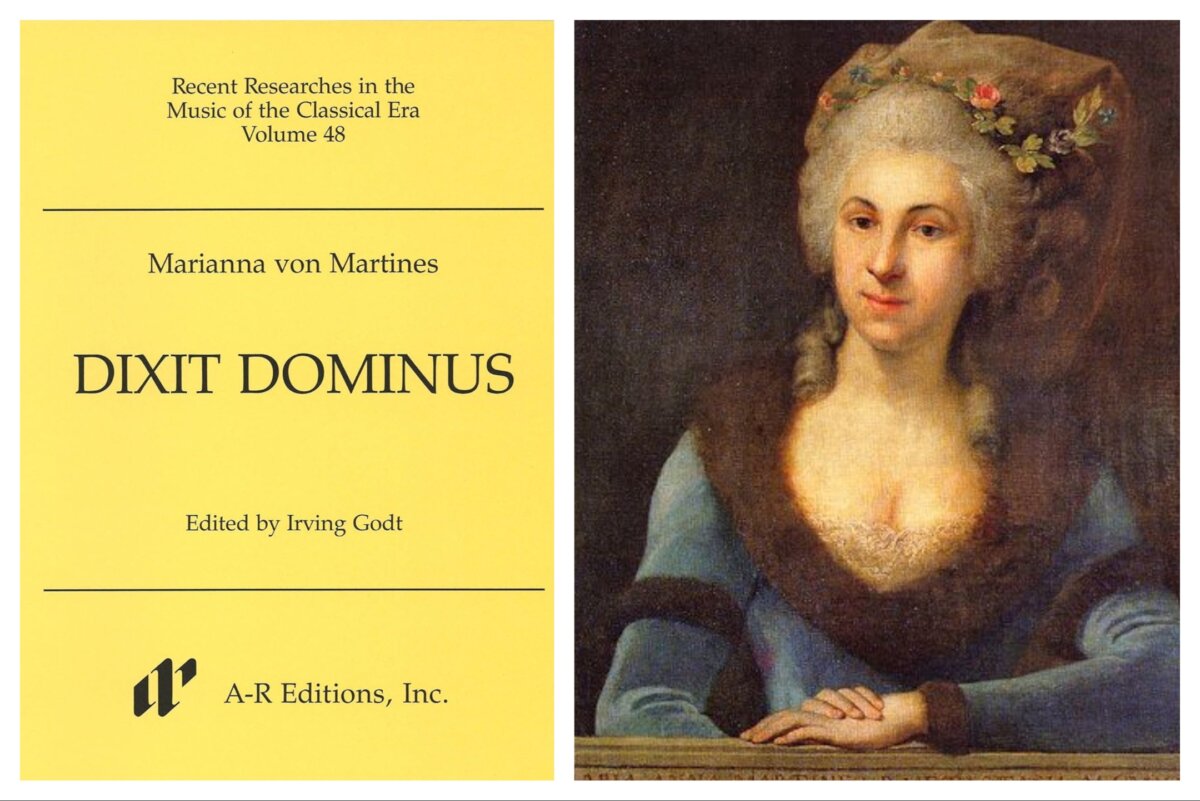
It was in response to being elected to Bologna’s Academy that she wrote her masterpiece, “Dixit Dominus.” A grand motet, it is a large-scale work for five-part chorus subdivided into six movements, featuring soloists and orchestra. Based on Psalm 110, the piece demonstrates rich vocal ornamentation that symbolizes God’s majesty. It also incorporates several customs of Viennese salon music, notably “glissandos” on the piano (sliding upwards and downwards between notes). Such showboating would have seemed undignified to more conventional musicians.
Although she sent this work to one of Bologna’s teachers, the eminent Padre Giovanni Battista Martini, there is no evidence that it was ever performed. We will never know why, but it is tempting to speculate that Martines’s pianistic grandstanding was too much for the staid professor.
Why Forgotten?
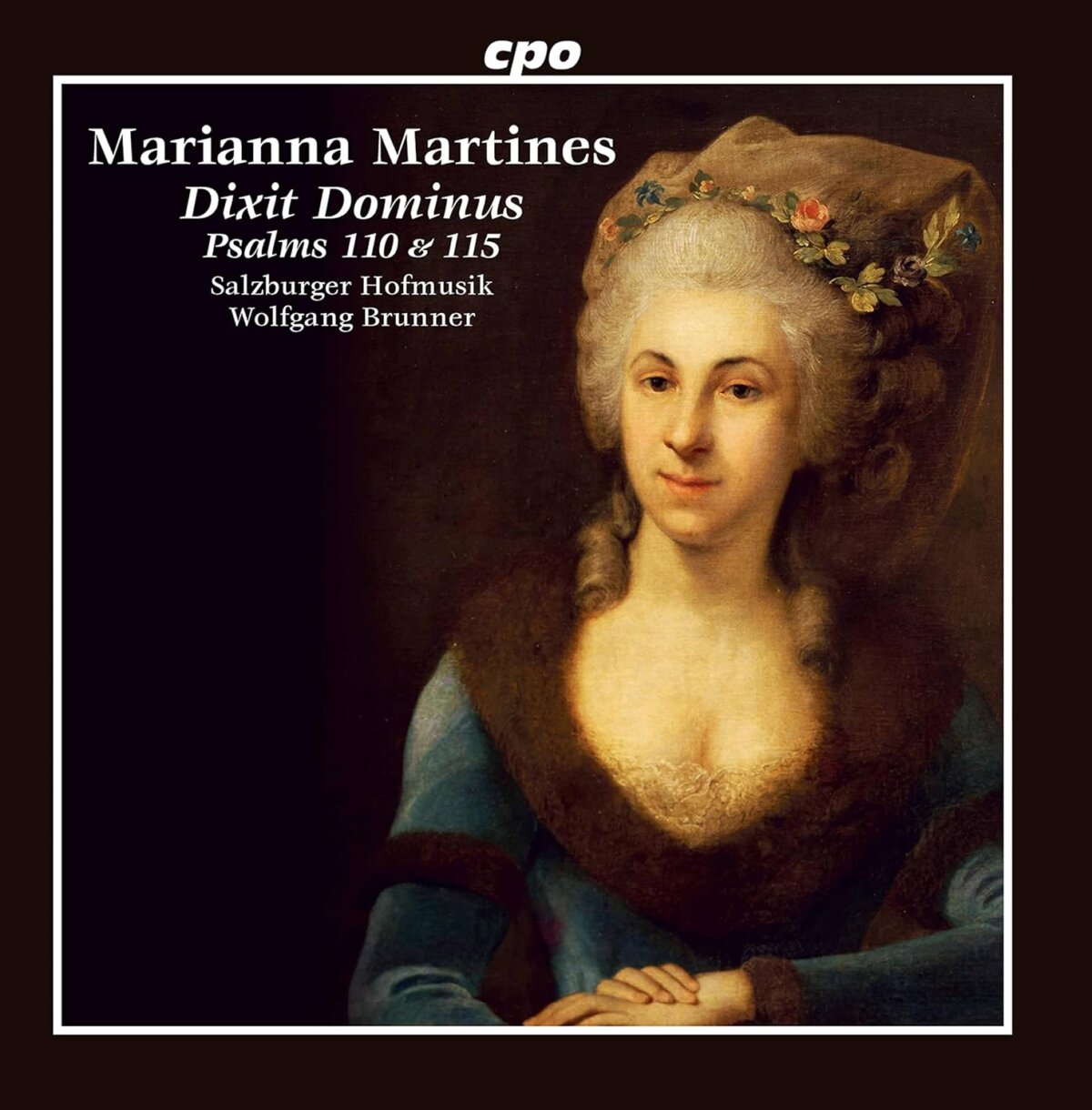
Why did Martines’s work fall into obscurity? The obvious explanation—that she was a woman who was discriminated against in a man’s world—only partly explains her fate. Social class was a major factor, as well.
Composers tended to come from the rising ranks of the middle-class, as was the case with Mozart, Ludwig van Beethoven, and Franz Schubert. Their drive to succeed was a result of the necessity to work. The toiling of note-scribblers was beneath the aristocratic class, however, and Martines was of noble blood. Though she was more than a genteel dilettante, her sphere was the salon rather than the stage.
Another reason for her obscurity is due to an unfortunate accident. In 1927, there was a fire in Vienna’s Palace of Justice that destroyed many of the records of the city’s nobility, including those of Martines.
Fortunately, the last of her direct family line, Anton Schmid, wrote a biographical essay about his famous relative three decades after she died. He evidently drew on the now-extinct records from the Palace of Justice, along with other documents, making his brief sketch the most valuable source on Martines’s life.
It is Schmid we have to thank for our knowledge of Martines’s lost compositions: 156 arias and cantatas, 31 piano sonatas, and 12 keyboard concertos. Much of this has vanished now. Although only about 70 works survive, we are lucky to have even these, since almost all of them have come down to us in the form of single manuscripts.
Intimate Letters
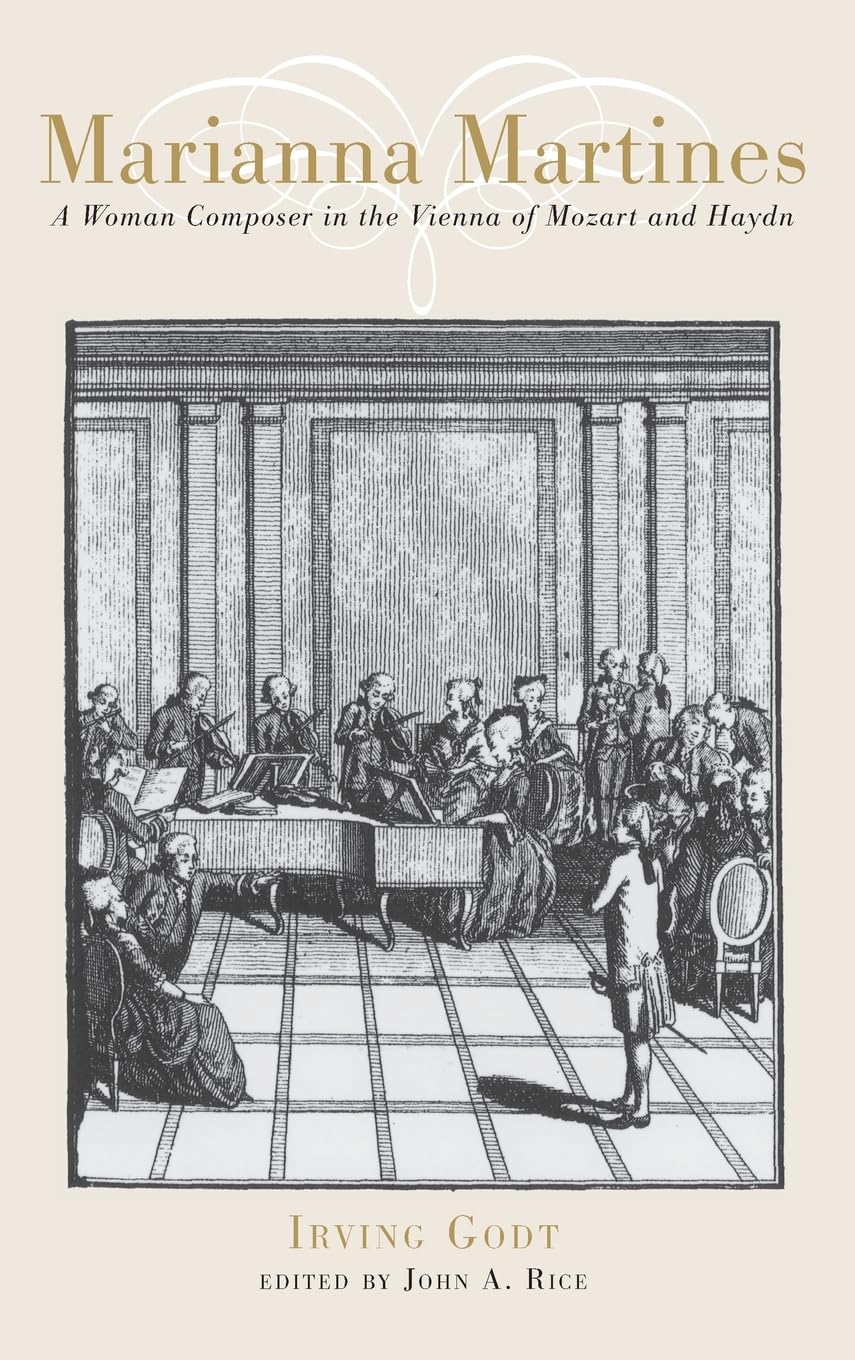
After a long period of obscurity, Martines’s name is again seeing the light. Irving Godt’s biography, “Marianna Martines: A Woman Composer in the Vienna of Mozart and Haydn,” the first full-length book, appeared in 2010. His painstaking research assembles the pieces of Martines’s life, drawing on Schmid’s essay, the composer’s handful of surviving letters, and random documents scattered across the libraries of Europe.
The least formal, and most familiar, of these documents are five surviving letters that Martines wrote to a younger poet and historian named Aurelio de’ Giorgi Bertola, which are printed in the appendix of Godt’s book. They exchanged ideas on art and shared pieces inspired by one another’s music and poetry. In one of her last letters to him, she observed how he seemed to tremble when writing how much time had passed since he last heard from her:
“Since you used to take pride in being my friend,” she replied, “you should have interpreted my silence better. … I wanted to avenge myself with a long silence, since you have likewise made me sigh for an answer to my letter, when I sent you my composition on your poetry. … I have been waiting, day after day, for the books of your poems, but in vain.”
While we know that Martines met Bertola, there is no evidence of a romantic liaison. Still, her exchange with him constitutes the most intimate information we have of her personal life and thoughts.
Performances
The renewed interest in Martines has naturally caused her works to be performed more often. In 2019, the San Francisco Bach Choir staged “Dixit Dominus” on period instruments for the first time. In 2025 alone, numerous performances of the work took place.
Today, as her music returns to concert halls and hearts, Martines again stands alongside Mozart and Haydn as one of Vienna’s brightest voices.
What arts and culture topics would you like us to cover? Please email ideas or feedback to features@epochtimes.nyc
