



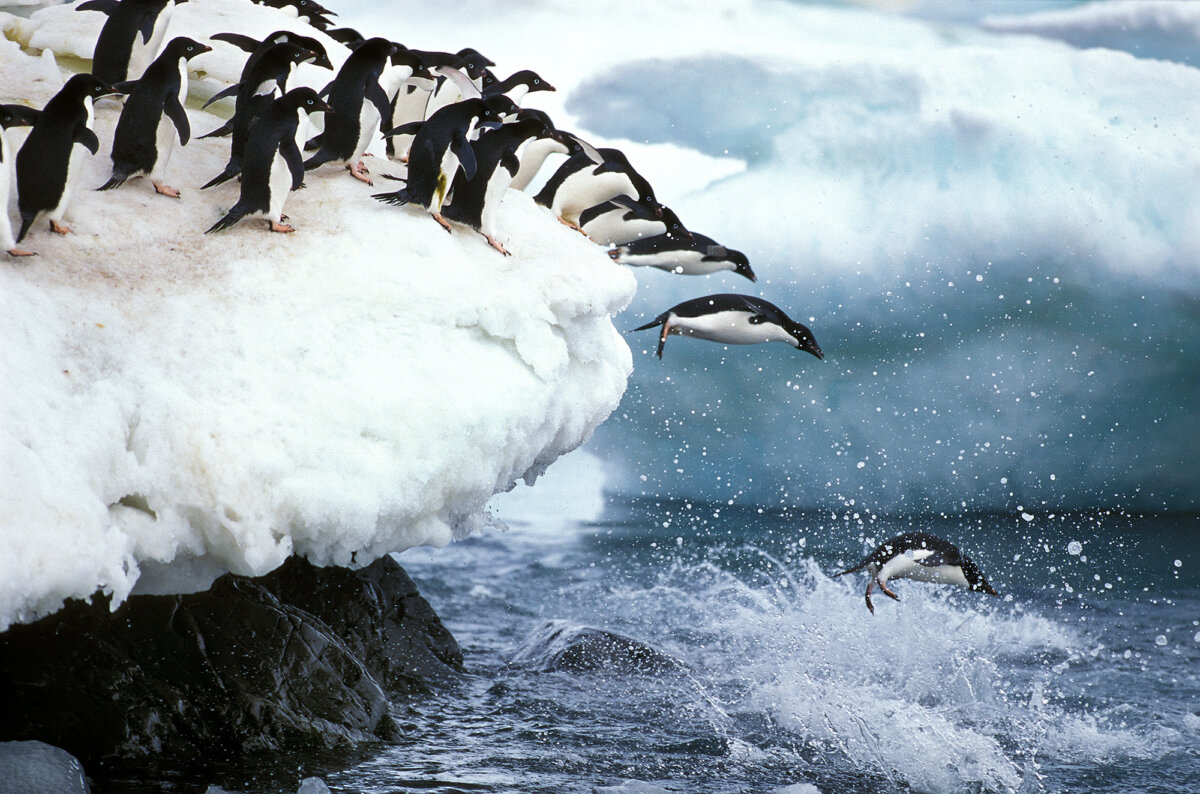
Who doesn’t love penguins? Curious and cute, it’s difficult not to watch these flightless birds through an anthropomorphic lens. Just by doing what comes naturally to them, they mimic some of the characteristics that we find most charming and loveable.
A few quick facts about these fascinating creatures. First, they’ve been around a very long time. The oldest penguin fossils were formed 62 million years ago—not so long after the time of the dinosaurs, relatively speaking. Unlike many other avian creatures, penguins have solid (not hollow) bones, and their “wings” have evolved into flippers that still allow them to “fly” underwater—the fastest can shoot forward, like a torpedo, at speeds exceeding 20 miles per hour.
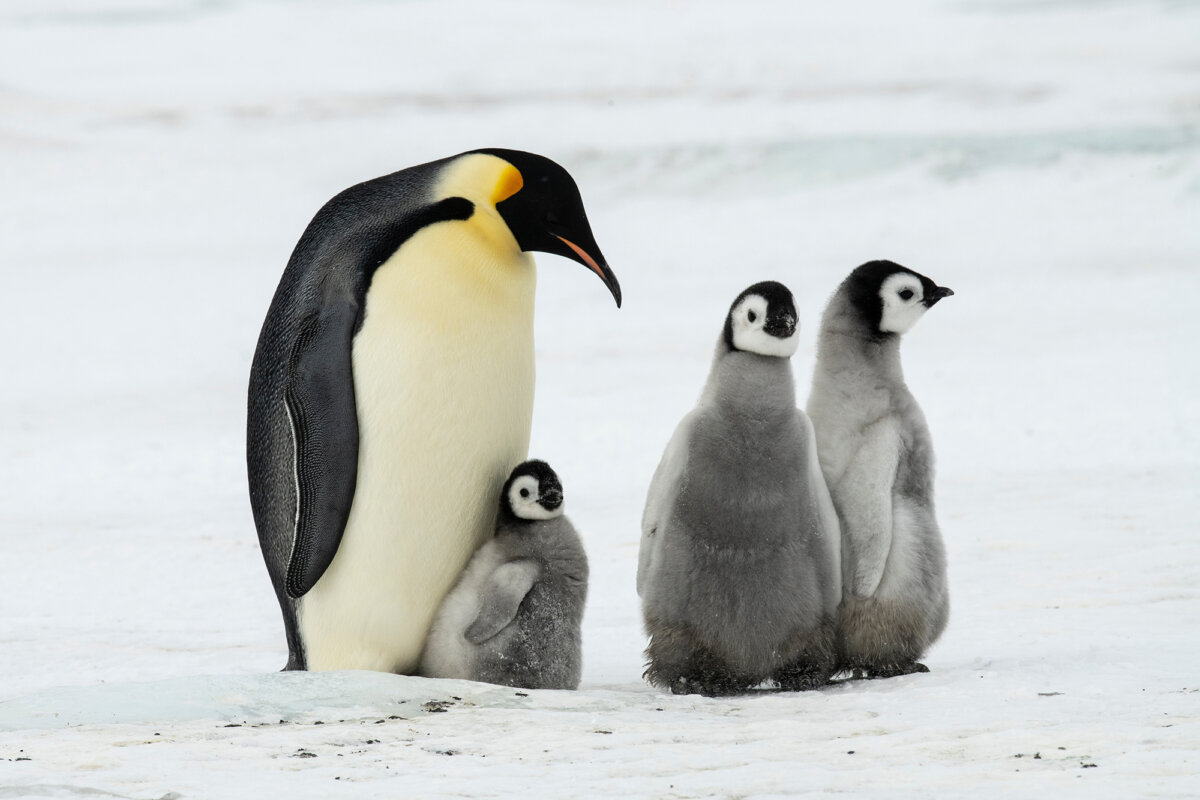
A total of 18 recognized species can be found around the world—but only in the Southern Hemisphere and along the equator. Perhaps the most extraordinary are emperor penguins, by far the biggest species. They can grow to four feet tall and thrive in the deepest, darkest parts of Antarctica. Their blubber and dense feathers, as well as well-orchestrated huddling formations, allow them to live in temperatures below minus 70 degrees F.
Fun Little Fellows
But beyond this, penguins are, simply, so much fun.
It’s enjoyable—really, pure joy—to just sit back and watch their behavior. They just seem so adorable, perhaps because they remind us of toddlers: awkward and clumsy (on land), when they’re not zooming down snowy slopes on their chests. And above all, they’re inquisitive, even snoopy, and are generally unafraid of humans.
I’ve experienced at least a dozen of the world’s penguin species, and every encounter is a wonder. Experiencing them never gets old. A lot has changed since the explorers of the Heroic Age—Scott, Shackleton, Amundsen—made these birds a regular part of their diet.
Today, many species are endangered and protected. In Antarctica, for example, rules forbid visitors to approach wildlife closer than 15 feet. But when you visit penguins in their natural environments, you quickly learn that these birds are wholly and completely unaware of the guidelines.
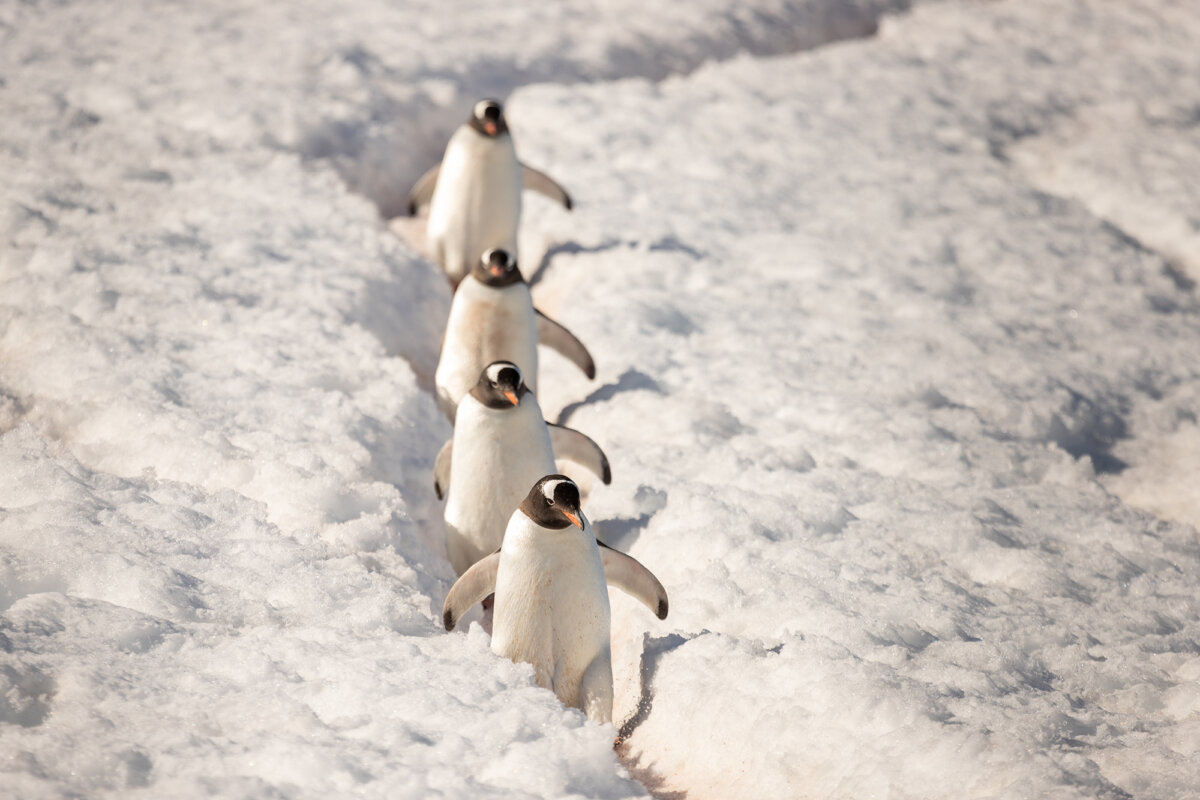
For example, on one of several trips to Antarctica, I visited a large gentoo penguin rookery. Disembarking the zodiac and striding up the shore, our small group proceeded through the snow. These birds create their own “penguin highways,” but also choose even easier routes, taking advantage of the paths created by human visitors.
Striding down one of these, I quickly found myself surrounded by gentoos. Let me be clear: they approached me, and not the other way around. Curious, the beautiful little gentoos lowered their heads; their small eyes, under a signature white stripe, closely inspected my gumboots. I was trapped by the harmless and charming creatures. Their investigation apparently satisfied, they eventually waddled off down the hill. Reaching the fast ice at the bottom, they popped into the water, one by one, and swam fast in search of a hearty krill lunch.
It was a short encounter, but one I’ll never forget. And you can have your own indelible experiences too. They won’t necessarily take you to the ends of the earth—but some will! Here are five places I’ve truly enjoyed penguins (and you can, too).
Antarctica
The world’s highest, driest, coldest, and windiest continent on earth is really the land of penguins. Around seven or eight separate species call this remote and harsh land home. In places like the South Shetland Islands and the Antarctic Peninsula, you’ll find thousands of gentoos and chinstraps and even macaronis. Often, they’re all in the same place.
Head further south, and you’ll find the two species of “true” Antarctic penguins: emperors and Adélies. Both are key characters in the movie “Happy Feet.” And the latter are small and energetic, named for the wife of the French explorer who discovered them in 1840.
South Georgia
Sometimes called the “Serengeti of the Southern Ocean,” South Georgia Island has an extremely high wildlife “wow” factor. When you first step onto a beach crowded with literally hundreds of thousands of king penguins—the second-largest species—you won’t quite believe it. Just, truly, penguins as far as the eye can see.
About 100 miles long and created by a spine of snow-capped mountains, this subantarctic island can only be reached by expedition ship. And it doesn’t just have penguins. South Georgia is also filled with fur seals, giant elephant seals, and wandering albatrosses, the world’s largest birds when measured by wingspan. History is here, too—the famed explorers Ernest Shackleton and Frank Wild are both buried in the cemetery at Grytviken, a former whaling town.
Cape of Good Hope, South Africa
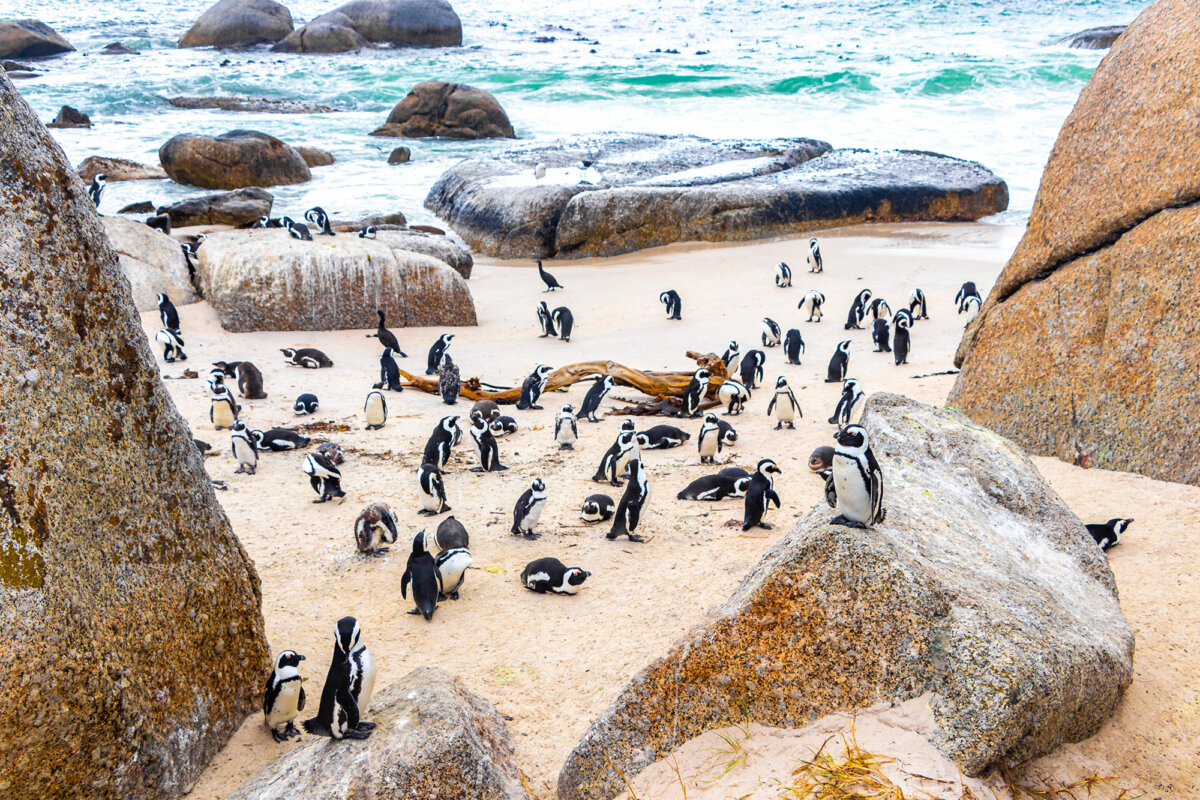
You won’t need a long sea voyage to reach the African penguin colony at Simon’s Town. Just get in your rental car and drive down there from Cape Town. Or even better, visit them as part of a day tour along the tip of the Cape, where you’ll see where oceans meet and, perhaps, encounter a few baboons along the way.
You can spot the many birds here on Boulder Beach from a seaside boardwalk or a series of viewing areas. Snap your photos and enjoy the sun and salty breezes. Then head back to Cape Town for a nice dinner on the waterfront.
Galapagos Islands, Ecuador
Most likely, if you’re into animals, you’re familiar with the marvels of the Galapagos. This Pacific archipelago sits some 600 miles off the Ecuadorian mainland and is home to the wild and wonderful. Think giant tortoises and lava lizards and marine iguanas and blue-footed boobies, and sea lions so unafraid of humans that they might hop right up onto your Zodiac.
And penguins, too. The Galapagos penguin is truly unique. They’re endemic to these islands—you won’t find them anywhere else. They’re the northernmost penguins on earth, with some even nesting just a tick above the equator.
Kangaroo Island, Australia
This island is small but mighty, packed with animals. Yes, kangaroos, but also koalas and sea lions and more. A place of abundant beauty just southwest of Adelaide, visitors have come here for decades to enjoy the coastline and caves and the Remarkable Rocks, as well as fresh food and excellent wine.
Plus, Little Penguins. Sometimes also called a fairy penguin, they are the world’s smallest species, rising to roughly a foot tall and weighing on average a little more than two pounds. The best way to spot them is a nighttime walking tour along the beach.
