



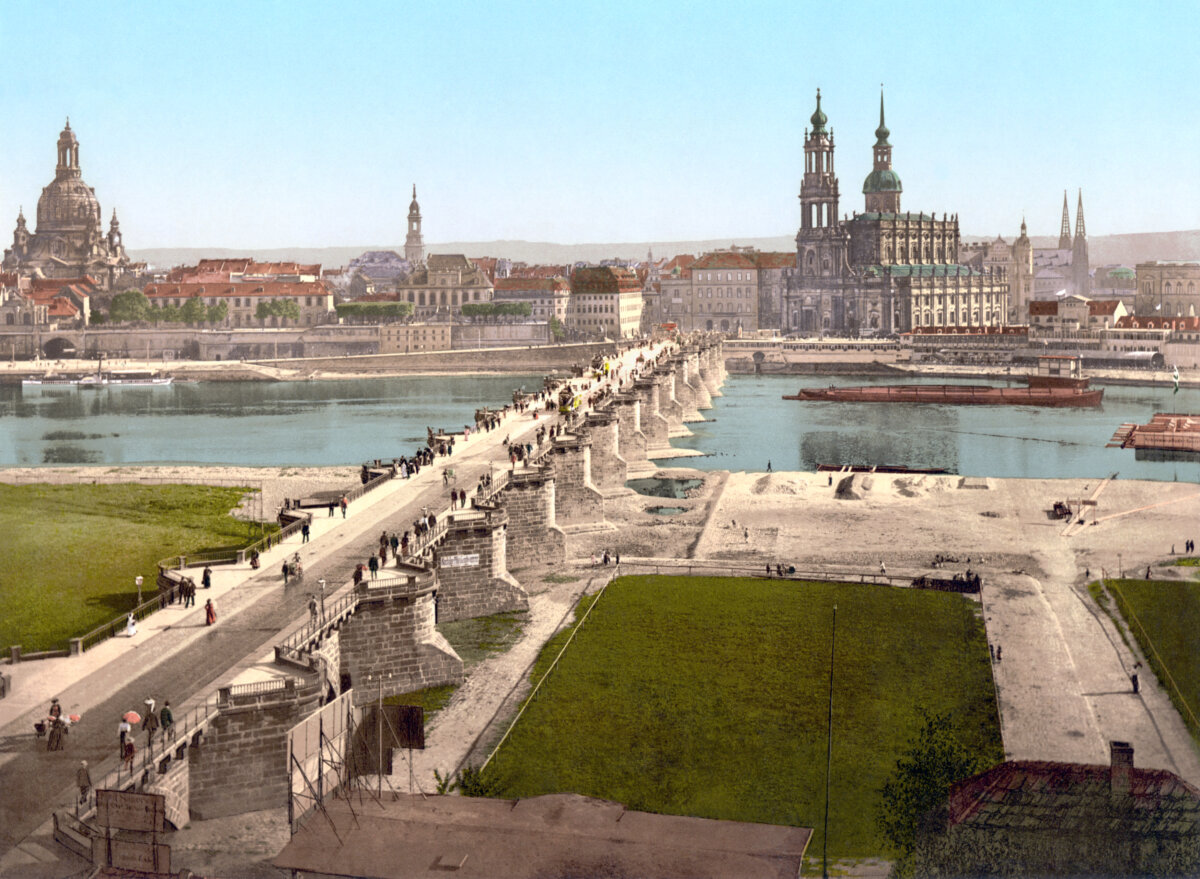
For two centuries, Dresden was known as the “Florence on the Elbe.” The city was called “The Jewel Box” because of its status as the most important cultural center of eastern Germany and home to one of the largest concentrations of late Baroque architectural masterpieces.
Dresden is perhaps better known for being largely demolished by firebombing in the closing months of World War II. Now, however, efforts to restore the city to its former greatness are underway and have already met with considerable success.
A Baroque Marvel
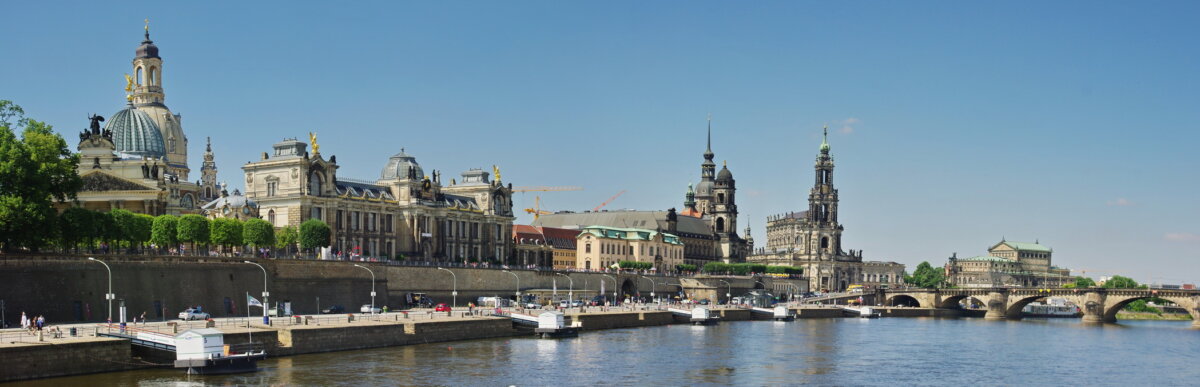
Historic Dresden’s relative stylistic unity owes much to its rapid transformation from the backwater capital of quasi-independent Saxony in 1697 into to one of the most magnificent German cities by 1763. This happened because its ruling Electors—Frederick Augustus I and Frederick Augustus II—were also kings of Poland. Then a major power in Eastern Europe, Poland provided the wealth.
This gave the city the prestige needed to attract architects, artists, writers, and musicians to their ethnically German monarch’s native capital. The Polish connection also shaped Dresden’s architectural style. Much of Germany followed French Rococo; this moved in a different direction from the previously dominant Baroque style.
Baroque aesthetics originally developed to communicate a religious message in a more sober, restrained, and cerebral approach. The Rococo heightened the Baroque’s ornate flamboyance and fluidity. The new style replaced Baroque’s intensity and drama with a gentler, even playful aesthetic. This is seen in lighter coloration and pastels. In Poland, Baroque still reigned supreme and served as a decisive point of reference for Dresden.
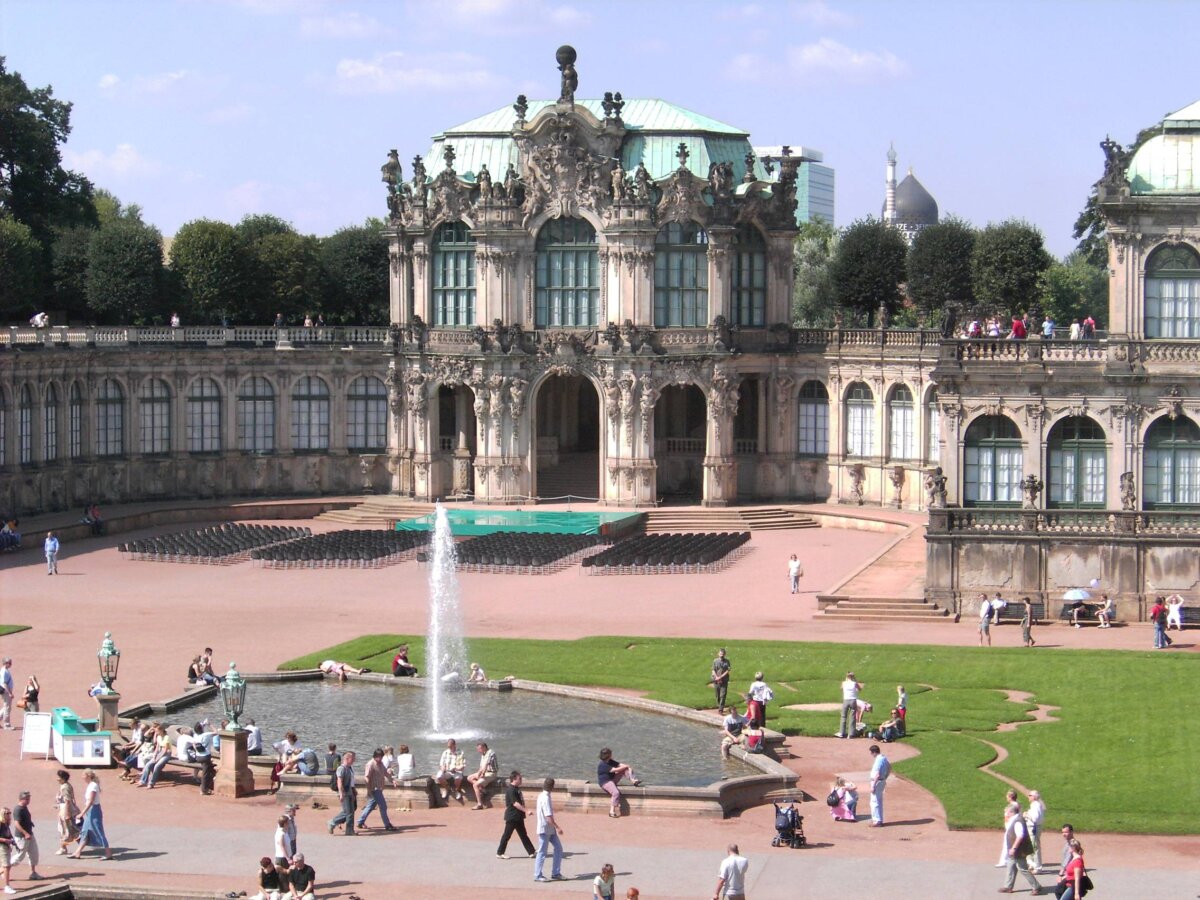
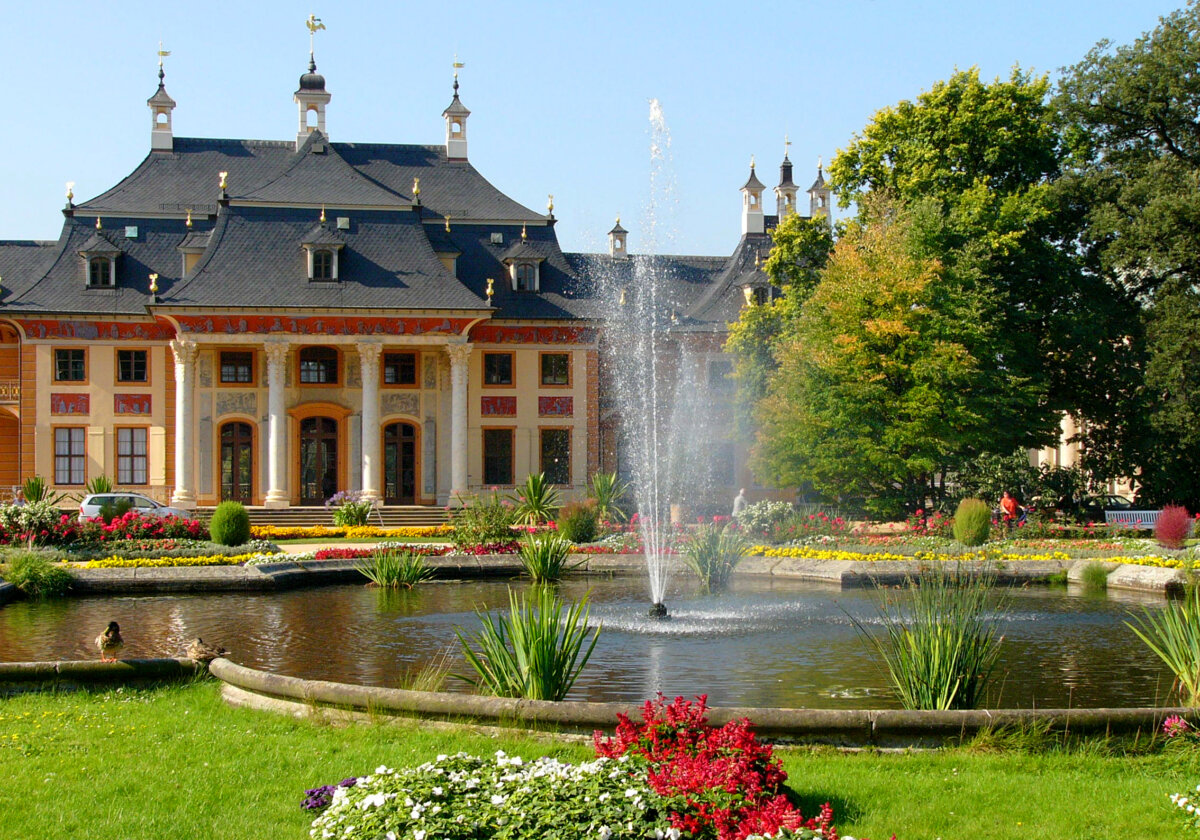
Some of the city’s most important architectural works even incorporate historically Slavic elements typical of Polish Baroque. These include the onion domes of the Cathedral of the Holy Trinity and of the Zwinger Palace, as well as the degrees at which Pillnitz Castle’s roofs are curved.
Other structures show the influence of different Baroque variants. The Frauenkirche remains close to the original Italian Baroque aesthetic. One part of the Zwinger Palace’s complex, the Mathematisch-Physikalischer Salon, follows French styles in the curves of its roofs, its statues, and the generally gentler appearance.
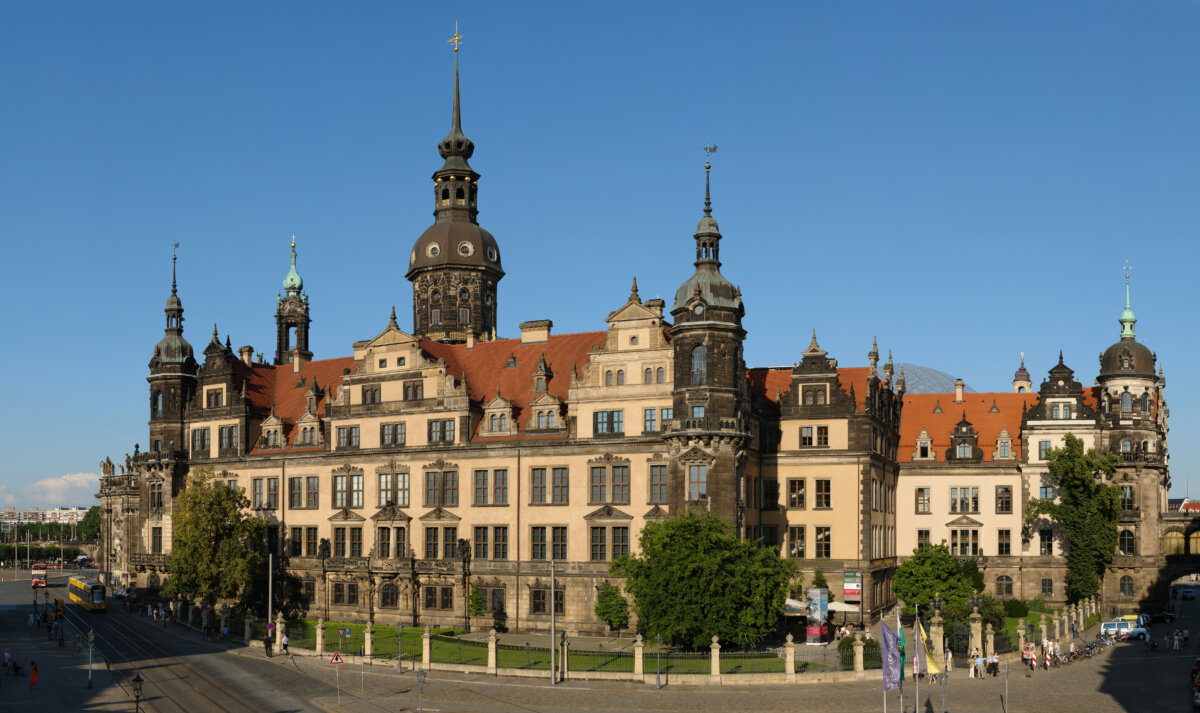
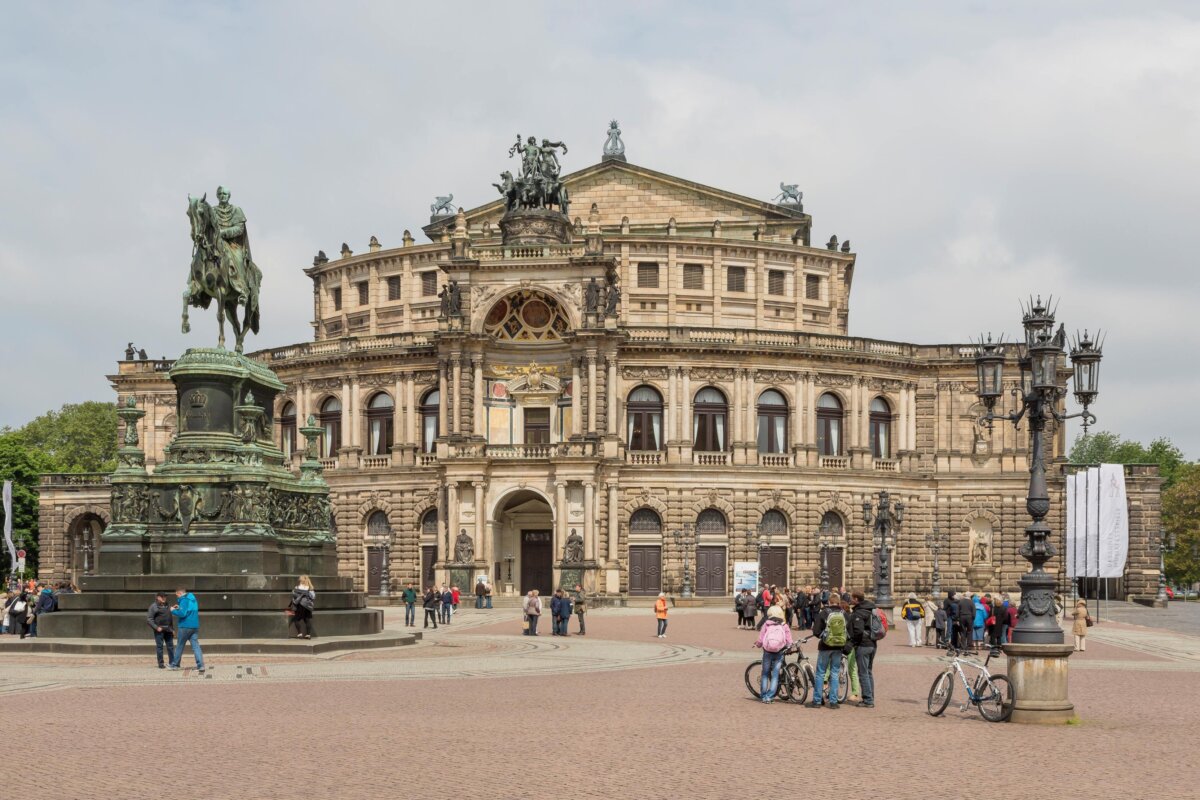
German Baroque is exemplified by the relative simplicity, pale walls, sloping red roofs, and lack of adornment of the Hotel Taschenbergpalais Kempinski. Many important older structures such as Dresden Castle were renovated during that same period. In the 19th century, the city’s status as a center of German Romanticism contributed to newer structures like the Semperoper being built in the Baroque Revival style.
Recovering From Disaster
In the decades between World War II and German reunification in 1990, the initial rebuilding of Dresden was less feasible than might be imagined. A shortage of the resources needed to implement plans for rebuilding the historic city center resulted in the remains of its great structures being left standing. Often, large bits of rubble were still in place. The land was sometimes used to graze sheep, but foundations were left in place for later restoration.
Some of the city’s most notable buildings were restored. Among them was the Cathedral of the Holy Trinity (a Catholic Church in a predominantly Protestant region) and the Zwinger Palace (used by the East German army).
Beginning Restoration
Steps toward a real restoration began almost as soon as the Berlin Wall fell. In 1990, “Call from Dresden” (Ruf Aus Dresden) was created to fundraise and advocate for rebuilding the Frauenkirche, perhaps the masterpiece best loved by the city’s residents. Government authorization was given in 1992.
Construction began in 1994; the walls largely made of brick were salvaged from the original church. Benefiting from worldwide support, the project inspired and encouraged similar efforts throughout the country, including the restoration of Berlin Palace.
At the end of the decade, the Dresden Historical Neumarkt Society e. V. (Gesellschaft Historischer Neumarkt Dresden e. V.), the society committed to the reconstruction of Dresden, was founded in 1999 to begin work on a more extensive project. The plan was to rebuild the entire and still largely vacant Neumarkt around the Frauenkirche.
Within a year, over 10 percent of the city’s population signed a petition to restore its historic center to its traditional style. Much of Neumarkt was more notable for its general style as part of a collective than for anything specific to individual buildings.
Today’s Neumarkt features a mixture of restored buildings and new structures faithful to the Baroque-influenced German style. Characteristics include pediments, ornate gables, and symmetry. Building exteriors followed the same lines as the curved streets (particularly at rounded corners) and used classical proportions. There was also a variety of sculpted exterior decorations.
Certain adaptations gave way to modern realities. Roads are, in many cases, somewhat wider. Buildings are sometimes smaller, even if replicating specific predecessors.
More space has been devoted to housing than was historically the case. Many who love Dresden’s historic architecture had more contemporary tastes regarding homes’ interior designs. Many buildings whose exteriors were renovated in a traditional direction have a fairly modern appearance inside. Interiors intended for professional and commercial purposes were designed around modern needs rather than to imitate styles suited to bygone technology.
Continuing Into the Future
By now, most of Dresden’s major architectural works have been largely restored. However, much of the city is dominated by bland utilitarian structures, many dating from the immediate post-war period when rapid provision of housing was essential. Many of these buildings will soon need to be replaced due to deteriorating structural soundness; with that, possibilities for developing sections of the city along traditional lines will soon open up.
Popular demand and investor interest should lead to some success. Plans have already been made for a restoration of another of historic Dresden’s most important districts, the Münzgasse, located just across the Elbe from Neumarkt. Efforts to have the plan accepted by the government are currently underway.
What arts and culture topics would you like us to cover? Please email ideas or feedback to features@epochtimes.nyc
