



NR | 1h 47m | Documentary, Film History | 2025
Forty-plus years in the making, Francis Ford Coppola’s “Megalopolis” is arguably the most expensive and unprofitable privately-funded production in movie history. The estimated budget was between $120 million and $136 million with a final box office take of $14.4 million. Ouch.
Coppola paid for all of it, mostly from the sale of part of his Napa Valley winery. Twice in this movie he states that he didn’t make “Megalopolis” for money, fame, or Oscars, because he already has all three. He doesn’t care if he dies broke because he’s creating something that will live forever. This is the type of statement that can only be uttered by someone who can afford to lose well over $100 million while scratching a creative itch.
Absolute Dedication
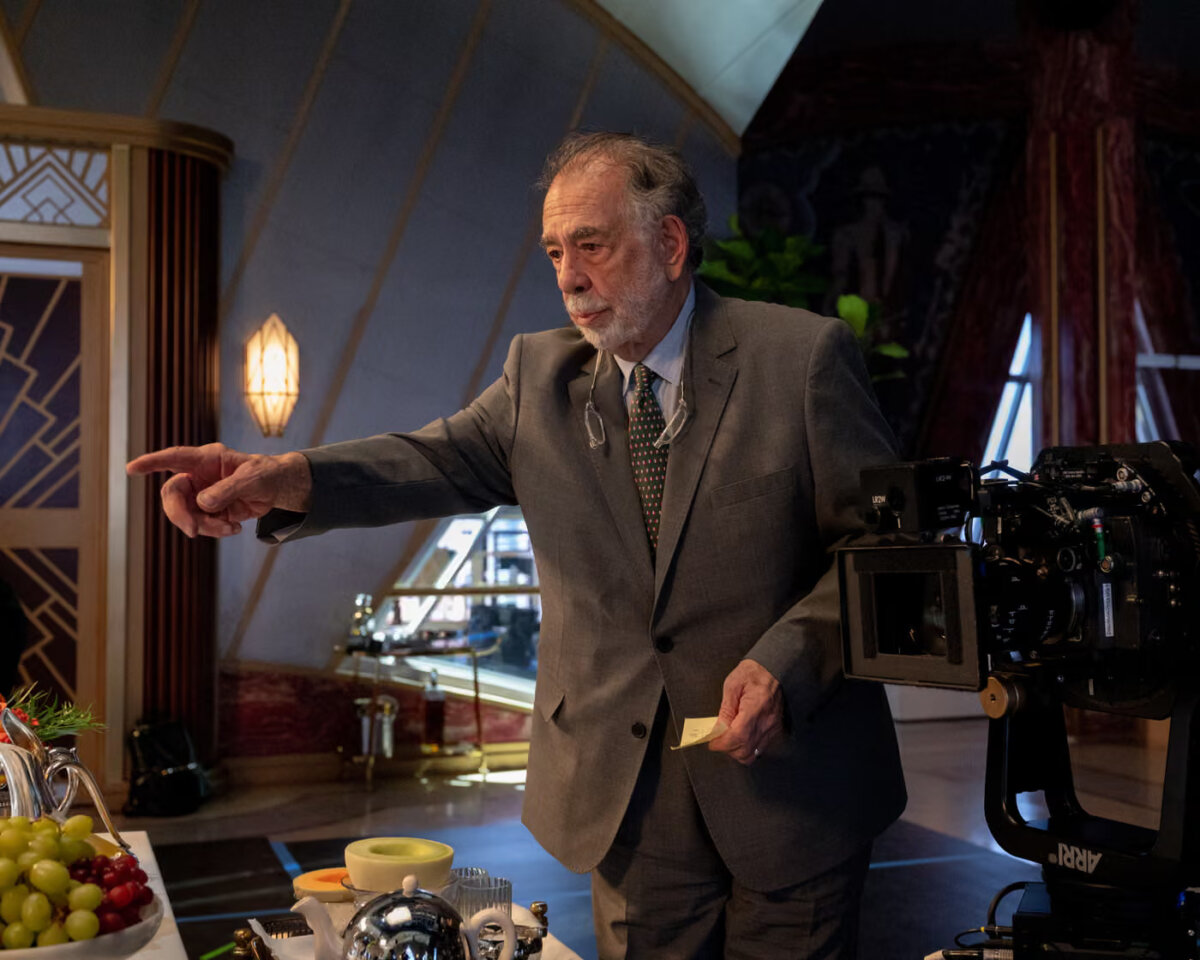
I’ve followed Coppola’s career since “The Godfather” and have seen every one of his movies, most of them more than once. The one constant in all of them is his absolute dedication to the material, whether good or bad. This guy pours his heart and soul into everything he makes. Whether he fails or succeeds, you’ve got to respect that unwavering mindset.
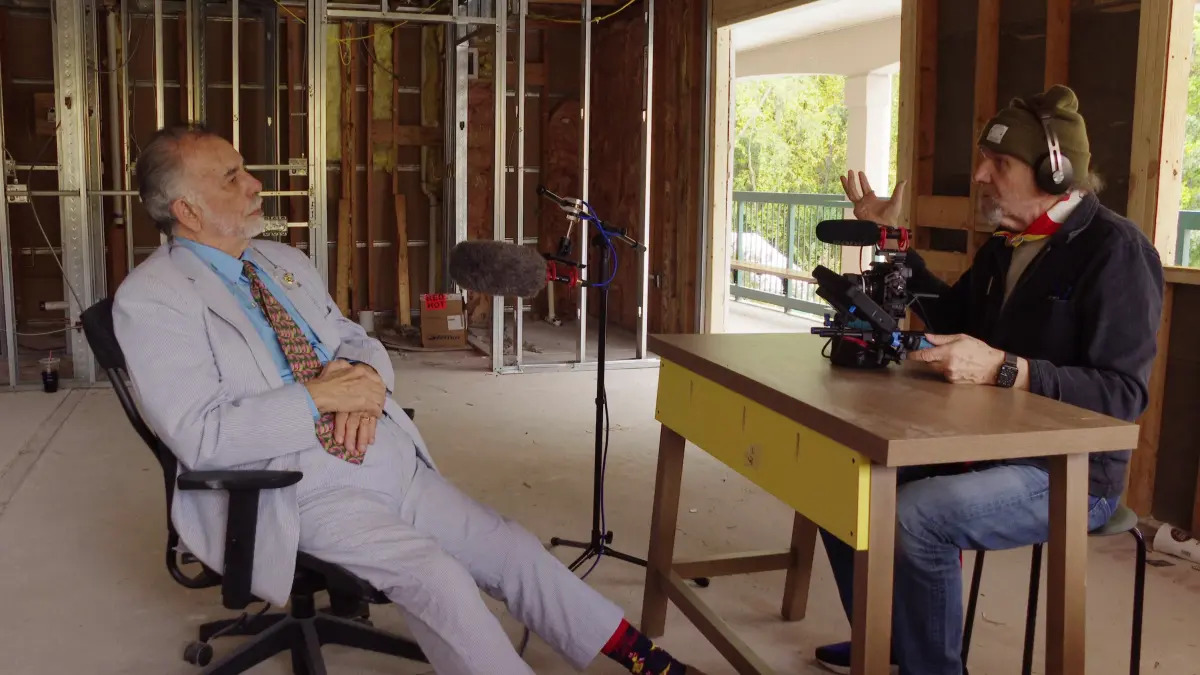
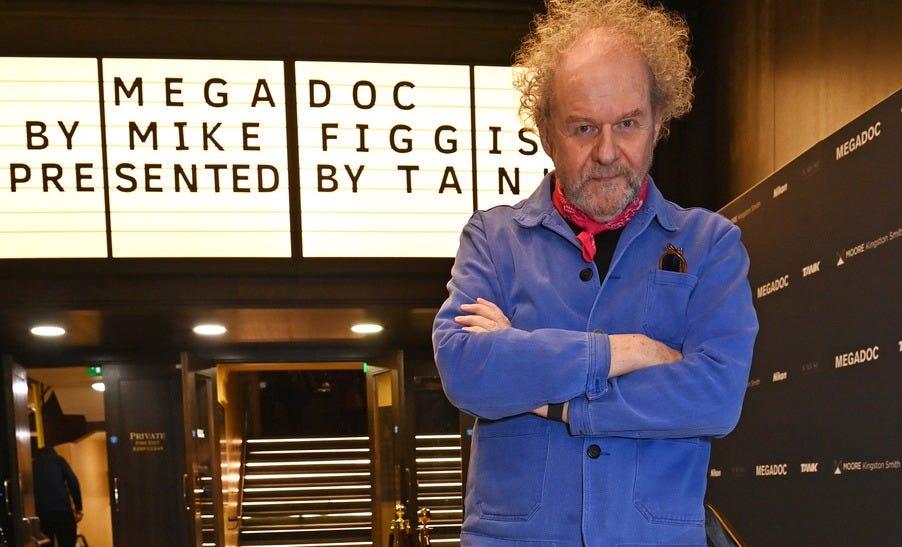
For reasons only he truly knows, Coppola was asked by Mike Figgis to direct a “making-of” feature of the production of “Megalopolis.” Usually something one might find as an afterthought bonus feature on a home video release, “Megadoc” is a full-length—warts and all—fly-on-the-wall affair.
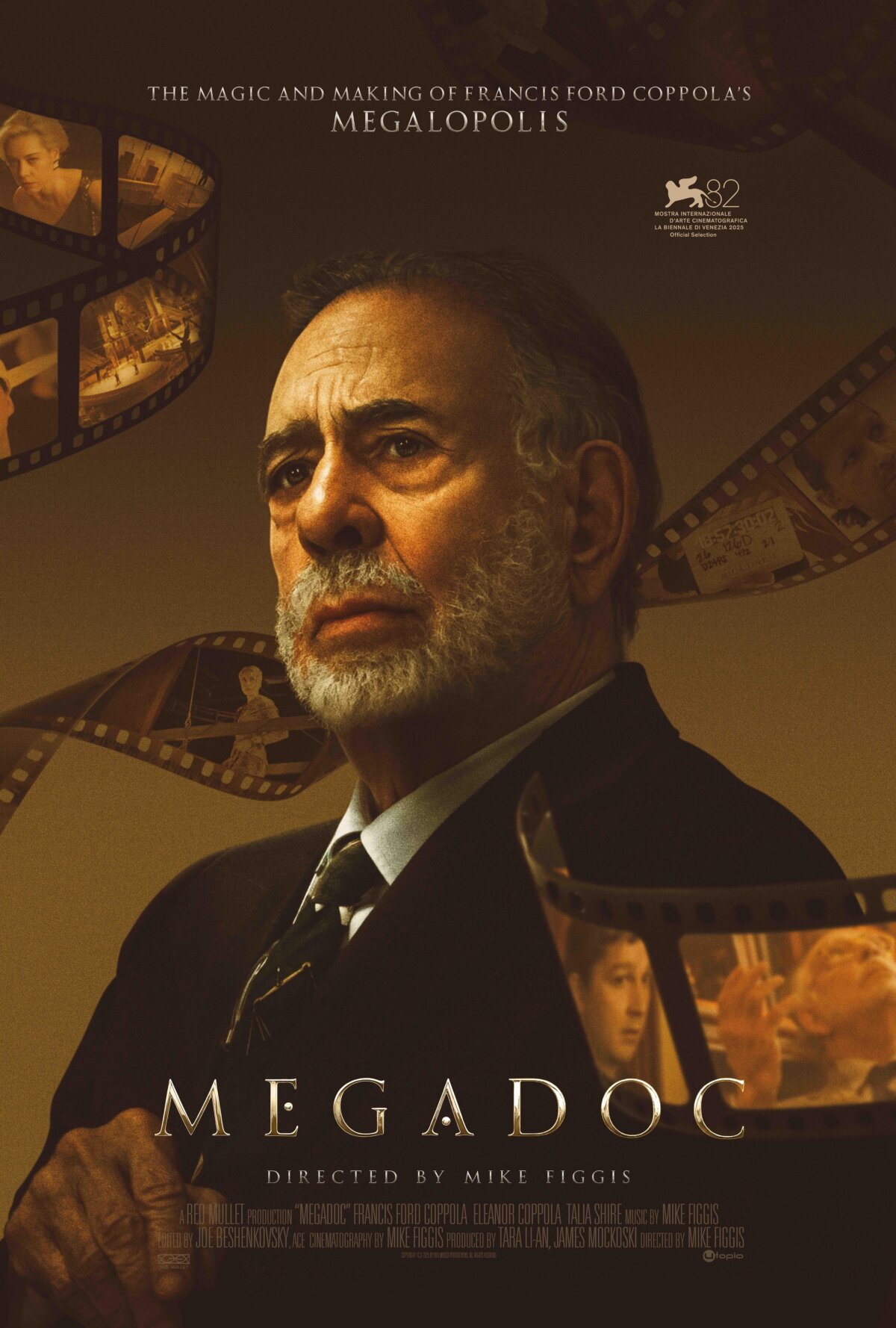
Far from fawning hagiography, “Megadoc” finds Figgis viewing Coppola and all aspects of the filmmaking process through a nonjudgmental, dispassionate lens. However, Figgis fails to include an event that occurred during filming at Atlanta’s Tabernacle nightclub; this could have shed a light on Coppola’s alleged questionable on-set behavior.
This particular omission aside, Figgis gets everything right. Filmmaking is an artistic version of a sausage factory. The finished product looks great, but the process itself is messy. You also have a writer-director-producer-financier with a (mostly deserved) gargantuan ego that encourages his actors to follow his script to the letter and then encourages improvisation. This is a huge contradiction in terms.
40 Years in the Making
Honing the story for the better part of four decades, it’s probably a good bet that Coppola knew quite well what he wanted before shooting, but gave the actors the illusion that they were “collaborating.” For veterans Jon Voight, Dustin Hoffman, and Laurence Fishburne, this meant sticking to what was on the page.
For younger performers Shia LaBeouf and Aubrey Plaza, this was received as literal and they behaved in turn. While Plaza pretty much rolled with the flow, LaBeouf, a notoriously difficult actor to work with, butted heads with Coppola with regularity.
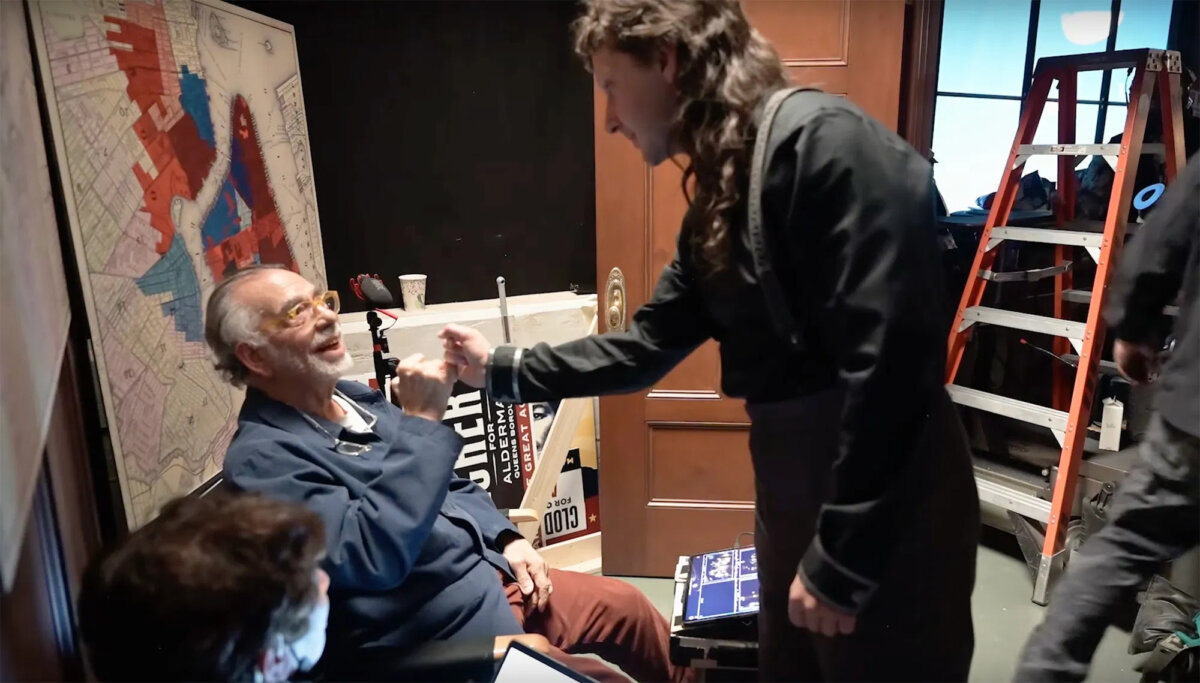
Initially, Coppola indulges LaBeouf, even when the actor takes it upon himself to alter dialogue and suggest camera angle changes and character motivations. On more than one occasion, Coppola rightfully busts a gasket and puts the petulant LaBeouf in his place.
Tension and Clashing
Including all of this tension and clashing in the finished film might seem anti-productive but, for me, this was the ultimate goal for Figgis. Creating art, especially in movies, is very exacting and leaves little, if no room, for error.
The sentiment behind “Show me a calm movie set, I’ll show you a bad movie” couldn’t be more apropos than it is here, something of which Figgis is keenly aware. At one point, he says his documentary, or any movie like it, wouldn’t work without some degree of clashing, controlled chaos, or unintended mishaps.
Coppola completists will greatly appreciate the inclusion of archival footage of table reads and auditions from 2001 and 2003 featuring then mostly unknown, now famous performers such as Ryan Gosling, Uma Thurman, and Virginia Madsen reciting lines from the screenplay. Also included in these passages is Giancarlo Esposito who played the role in the movie he auditioned for decades earlier.
In addition to tanking at the box office, “Megalopolis” mostly struck out with critics and currently has a 46 percent favorable rating on Rotten Tomatoes.
Minority Opinion
I was in the minority and think that the movie is among Coppola’s finest efforts. I liked it for many of the same reasons Coppola felt he had to make it. I admired the daring of it and his unquenchable desire to see it through to fruition on his own terms.
It is unfortunate that the creation of art these days, especially with movies, is dependent and contingent on appealing to the lowest common denominator and returns on investment. This was never a concern with Mozart, Beethoven, Rembrandt, or Alfred Hitchcock.
Bully for Coppola putting his money where his mouth is and seeing his passion project through to completion. Praise also to Figgis for sticking to the ultimate documentarian credo of remaining neutral, sticking to the facts, and leaving his emotions on the sidelines.
The film is now playing in theaters and streaming on Apple TV, Amazon Prime, and Fandango at Home.
‘Megadoc’
Documentary
Director: Mike Figgis
Running Time: 1 hour, 47 minutes
Not Rated
Release Date: Jan. 9, 2026
Rating: 4 stars out of 5
What arts and culture topics would you like us to cover? Please email ideas or feedback to features@epochtimes.nyc
