




NR | 2 h 14 min | Drama | 1960
Screenwriter and director David Swift’s 1960 film “Pollyanna” draws on New Hampshire-born Eleanor Porter’s early 20th-century children’s novel of the same name. Portraying the unfailingly cheerful title character catapulted debutant Hayley Mills, daughter of British actor John Mills, to stardom. She won the rare Juvenile Academy Award for her performance.
Eleven-year-old orphan Pollyanna Whittier (14-year-old Mills) ends up in the care of her aunt, Polly Harrington (Jane Wyman). Unmarried and unhappy, Polly’s dreary domain runs large, as the town is named “Harrington Town” after her late father. Because of her wealth, the townsfolk feel beholden to her; even the local minister, Rev. Ford (Karl Malden), takes his fire-and-brimstone sermon cues from her. Worse, everyone else mirrors her dreariness.
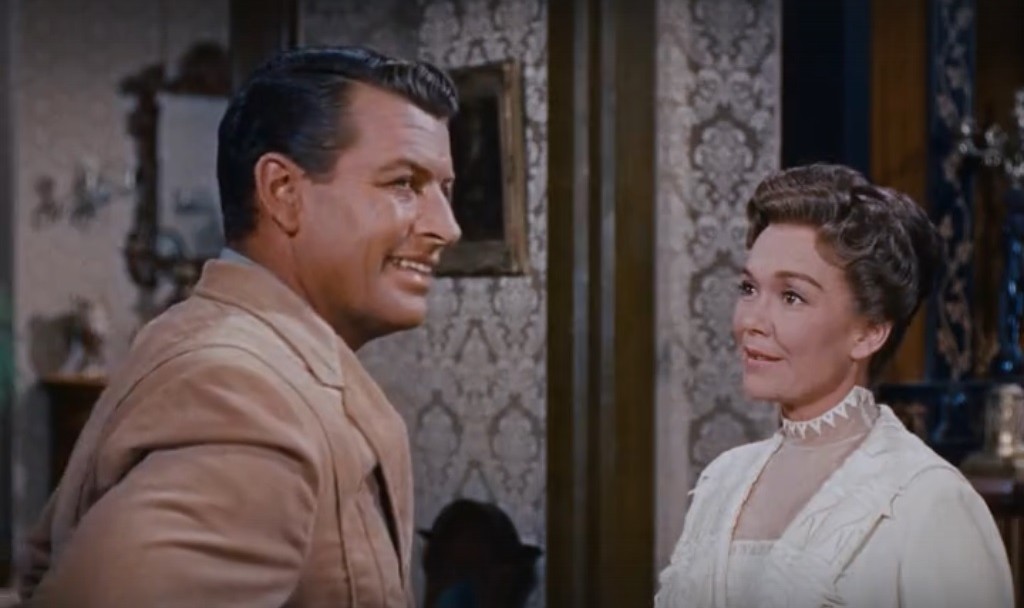
That’s about to change. Little Pollyanna is too grateful and too giving to allow Polly’s pessimism to prevail. Soon, her youthful cheerfulness catches on. Instead of brooding about one thing or another, everyone starts seeing the sunny side of life. Pollyanna’s contagious positivity touches Polly’s old flame, Dr. Edmond Chilton (Richard Egan), maid Nancy Furman (Nancy Olson), aging recluse Mr. Pendergast (Adolphe Menjou), and even hypochondriac Mrs. Snow (Agnes Moorehead).
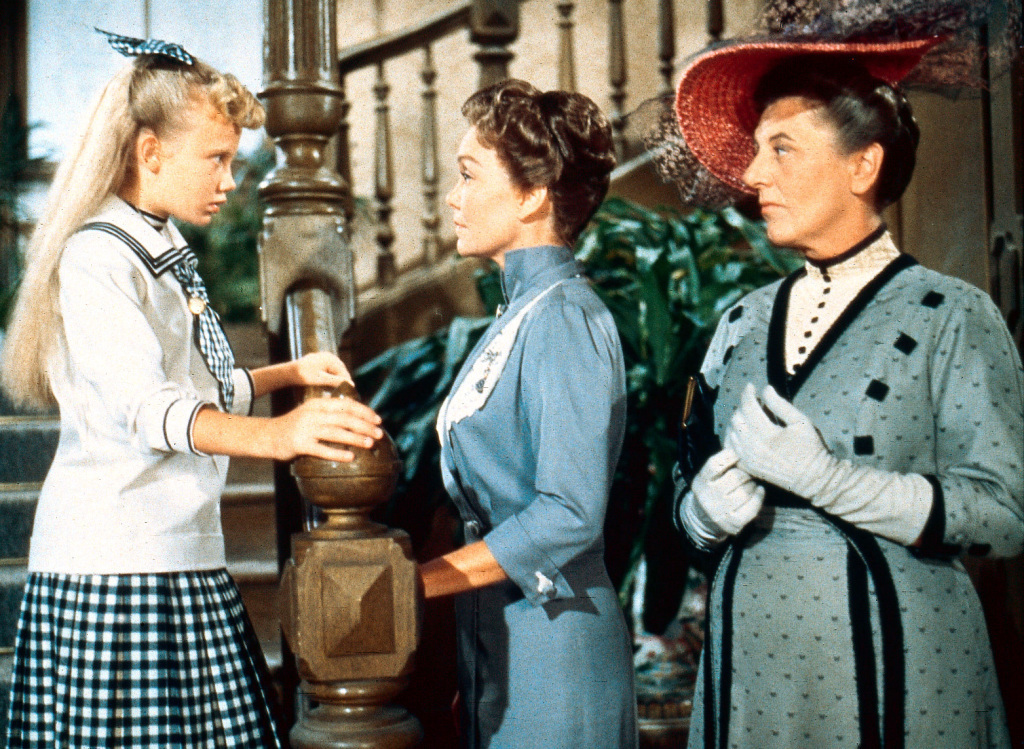
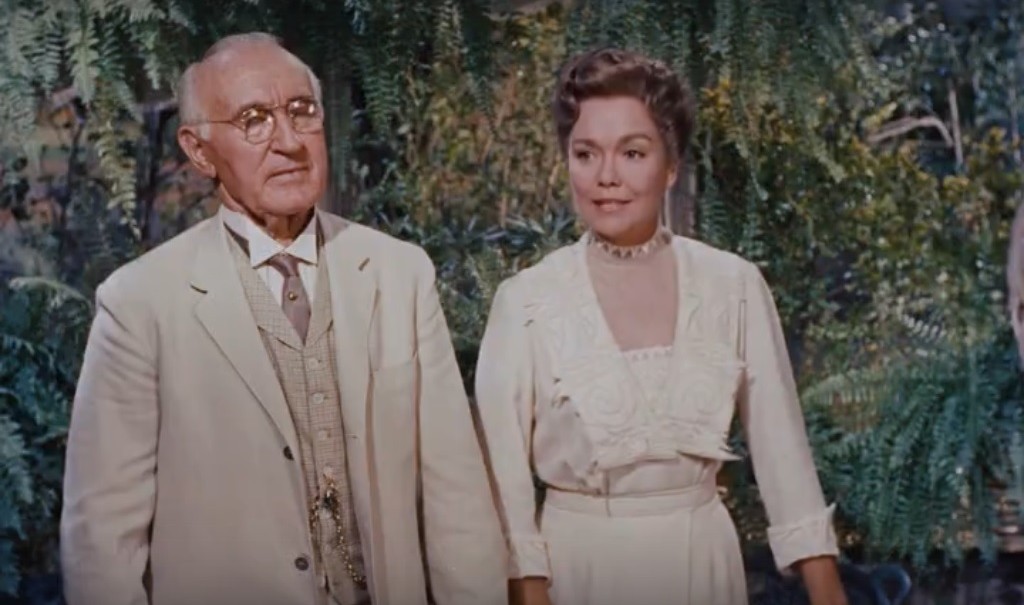
Meanwhile, Mayor Karl Warren (Donald Crisp) rallies the community to rebuild the town’s crumbling orphanage building, with unsolicited help from Pollyanna and her orphan playmate Jimmy Bean (Kevin Corcoran).
However, Polly will have none of it. She’d rather just tinker with the building so that it preserves her father’s legacy than overhaul it to suit its swelling contingent of 32 orphans. After all, she figures, it’s not called “Harrington House” for nothing. That sets the stage for a showdown between indefatigable optimist Pollyanna and the town’s pessimists, led by pouting Polly.
Mills lacks the endearing chubbiness of a Shirley Temple, but she bears the buoyancy of a young Margaret O’Brien; see how she mouths the words “gorgeous,” “beautiful,” and “wonderful,” putting a sugary spin on almost everything and everyone she sees.
Sensibly, Swift’s screenplay tempers Pollyanna’s cheeriness. He all but sheds the fairytale aura of Porter’s literary heroine and imbues the onscreen character with a touch of realism. Here, Pollyanna doesn’t smile at every turn; she scowls almost as often. Instead, it’s her grateful disposition that counts. It’s also what lends her power and agency.
Notice Swift’s low angle shot as Pollyanna walks through a crowd of adults who are busy fundraising. You see her relative helplessness, yet you also sense her resolving silently, even as a child, to make a difference.
Optimism Bests Pessimism
Pollyanna’s story is a lighthearted but necessary take on faith and hope.
Pessimists believe that they are realists, who are better than optimists. However, optimists don’t deny the dark side of life; they’re simply better at finding the bright side because they’re the only ones looking for it.
Pollyanna chides Mrs. Snow not to morbidly dwell on her (distant) impending death. The little girl isn’t suggesting a denial of death or the dark but an embrace of life and light. Pollyanna disapproves of her aunt’s snooty, duty-bound charity. She teaches the town that giving of your things to others is good, but giving of yourself is better.
Little Pollyanna derives her unflappable optimism from a locket gifted to her by her father. It has an inscribed quote from Abraham Lincoln that reads, “When you look for the bad in mankind expecting to find it, you surely will.” Her father taught her to play the “glad game,” which challenges one to look for something good in every situation. This taught her to focus on what she has instead of what she doesn’t have.
In one scene, Pollyana admires the rainbow-like glint on Mr. Pendergast’s dreary wall from sunlight shining through his chandelier’s prisms, exclaiming, “Isn’t it beautiful?” He tries to superciliously put her in her place by grumpily observing, “But when the sun sets, it’ll be gone.” Pollyanna gently persists, “Sure, but it’ll be back … when the sun comes again.”
In her own way, Pollyanna seems to say that God’s grace, like sunlight, falls on everyone. It’s only those who invite it to shine on them who end up amplifying it through their grateful personhood. They exude, as if magically, the beauty and joy of a rainbow. Unsurprisingly, Pollyanna exudes just that.
Optimism isn’t about believing that only good things happen. It’s about seeking and finding God’s light and love even amid darkness and death. It’s why the sea in the song “America the Beautiful” is a “shining” sea; it’s beautiful because it reflects sunlight.
Watch as Pollyanna, wrapped in a stars and stripes banner, leads the town in prayerfully wishing blessings upon America, “God shed His grace on thee.”
You can watch “Pollyanna” on Apple TV, Amazon and Disney+Hulu/HBO Max
‘Pollyanna’
Director: David Swift
Starring: Hayley Mills, Jane Wyman
Not Rated
Running Time: 2 hours, 14 minutes
Release Date: May 19, 1960
Rated: 3 stars out of 5
What arts and culture topics would you like us to cover? Please email ideas or feedback to features@epochtimes.nyc
