One day in the dead of winter, Lisa Jones looked outside into landscape of snowy southern Alberta and thought, “What a wonderful day to photograph birds!”
An avid wildlife photographer, Jones is sometimes willing to endure pain and discomfort in the elements to find her feathered subject matter.
Despite the bitter cold, Jones grabbed her camera and drove north of Calgary, hoping to snap a few snowy owls. The roads were icy and dangerous, yet she was determined. Though she found no owls she did see a specimen she hadn’t encountered often—a ring-necked pheasant looking regal against the ivory-white snow.
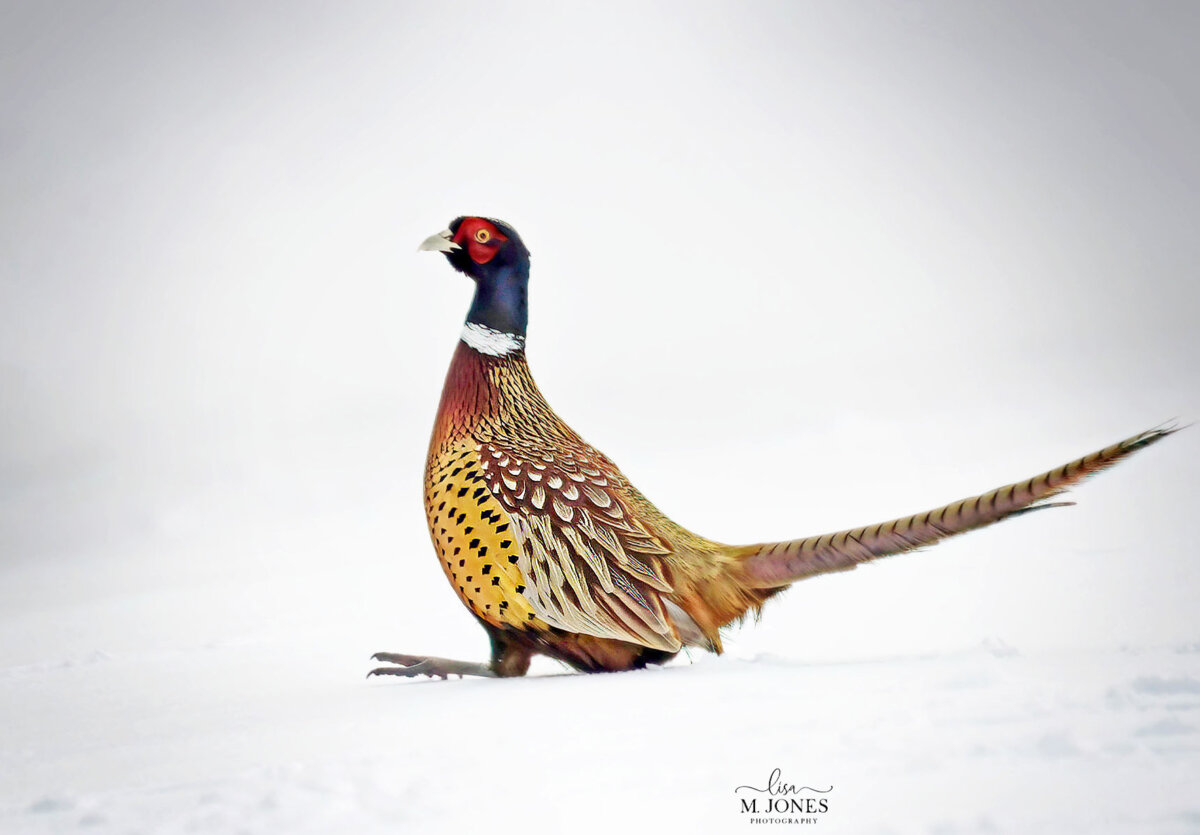
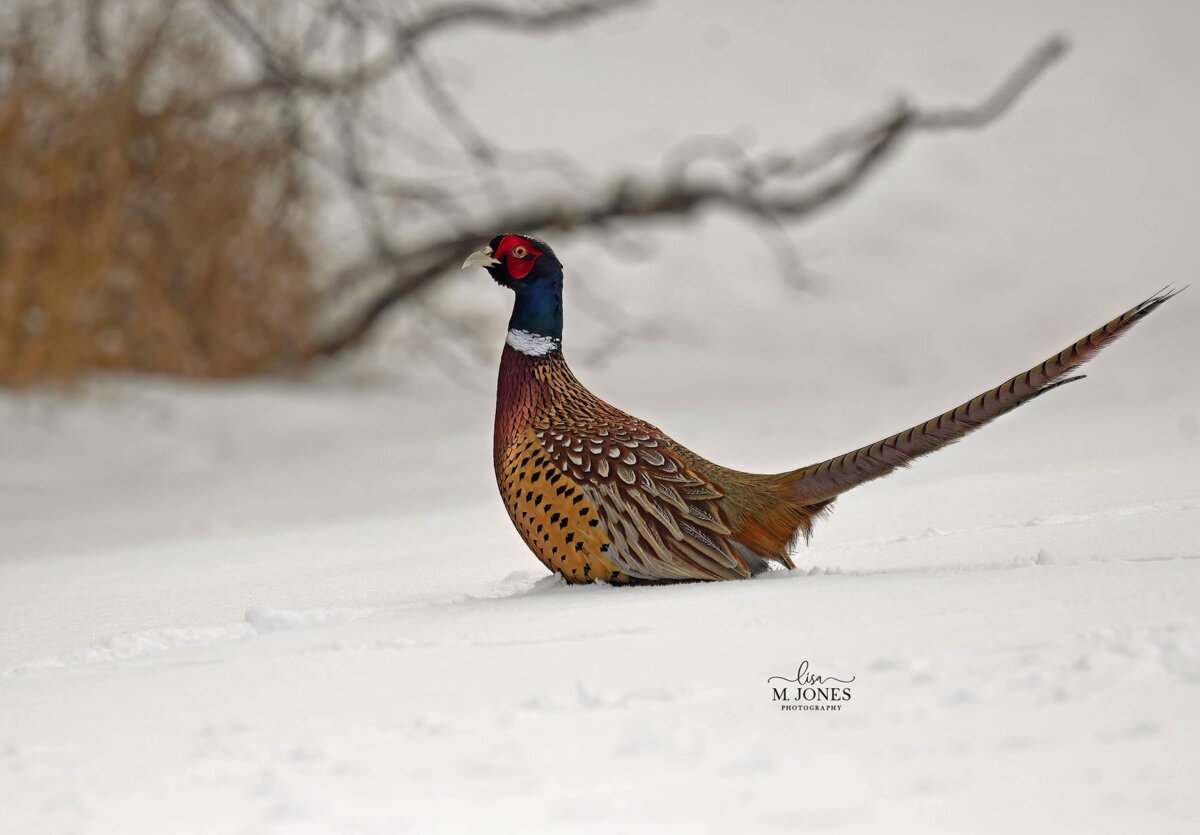
“My excitement began to build upon seeing this gorgeous bird in the snow,” Jones told The Epoch Times. “Trying to be as still and quiet as possible, I lowered the car’s window and propped my camera on the windowsill.”
As ring-necked pheasants are notoriously skittish, Jones was certain this male would immediately bolt, but she was fortunate enough to capture a few shots before it fled.
“They don’t stick around for long,” she said. “This is why I have never gotten a crisp photo of one until this day.”
While the ring-necked pheasant is readily found in places like Alberta and, more prevalently, in the countryside of England and Ireland, myriad other pheasant species live in Asia, where they are endemic. The beauty and variety of these birds is legendary and worthy of perusal.
Following are images of six of the world’s most drop-dead gorgeous pheasant species.
1. Ring-Necked Pheasant
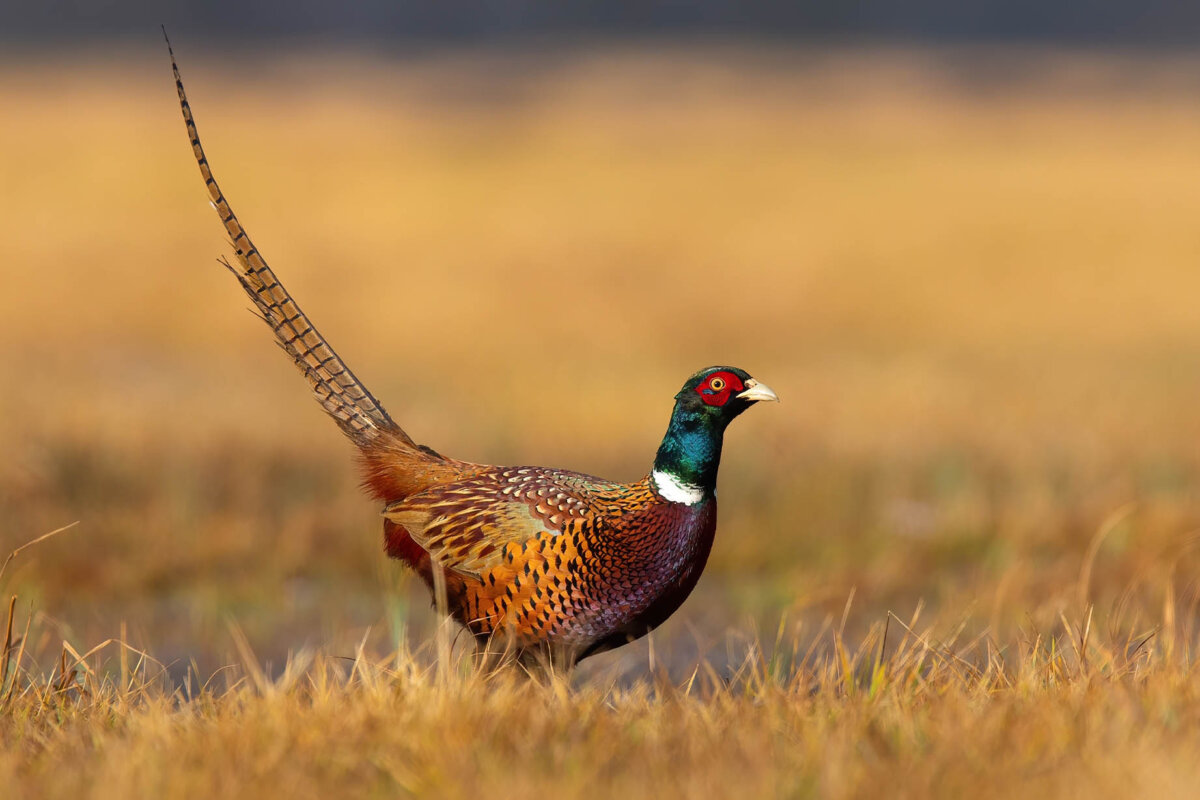
In the world of pheasants, each bird is a living work of art—including members of this most common of all pheasant species. The ring-necked pheasant looks regal with its iridescent turquoise neck band and fiery-gold body plumage. A shock of red paints its face and wattle while a ring of white feathers circles its neck like fine lace.
First introduced to Europe by the Romans, ring-necked pheasants are the most populated bird species in places like the UK. As popular game birds, their numbers today are only growing larger.
“Ring-necked pheasants are native to Asia but were introduced to Alberta in 1908 and are now well established in Alberta farmlands,” Jones said. “To cope with the extreme cold, they sometimes remain dormant for days at a time but will occasionally venture from their safe cover in search of food, which may be what this male was doing,”
2. Golden Pheasant
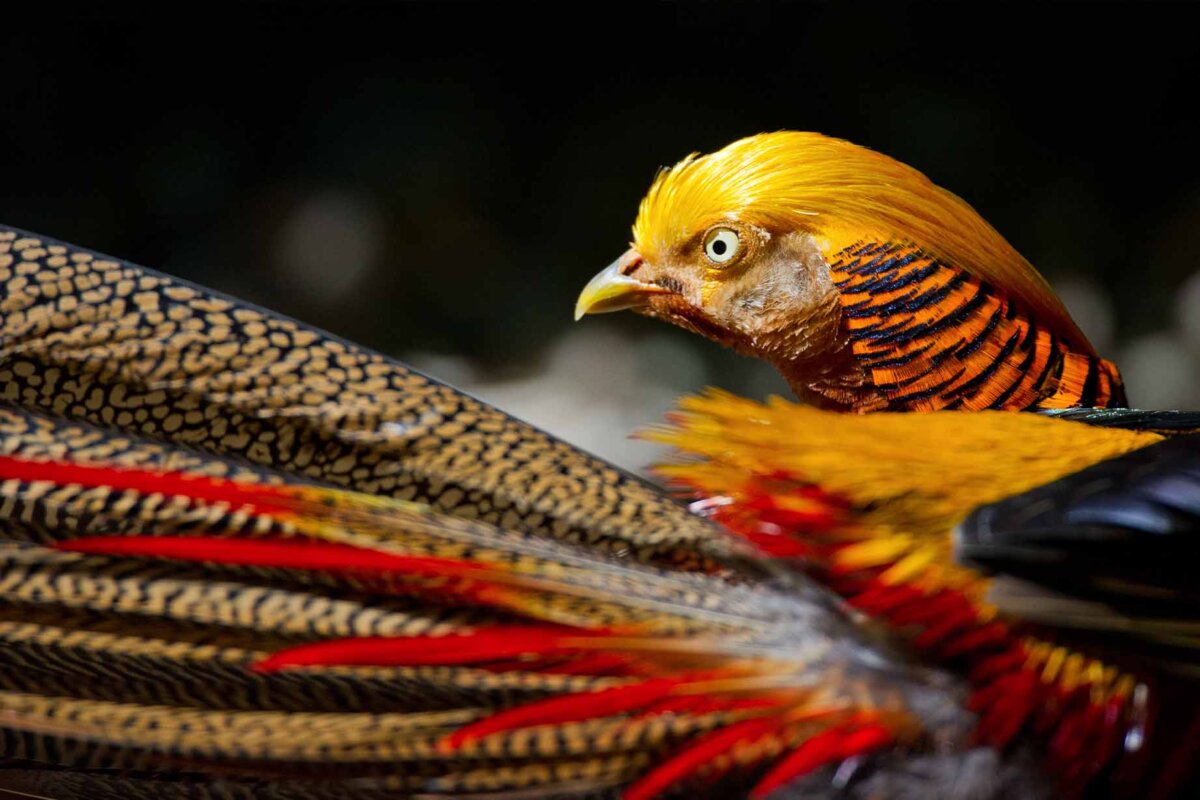
Wearing a radiant feather cape the color of 24-carat gold, this pheasant looks like a living legend from the Middle Kingdom in Asia. The golden pheasant really does originate from China and is also known as the Chinese pheasant. Sporting a golden crest like the sun and fiery red body, its deep blue wings and emerald-green back feathers sparkle like jewels. Its long tail moves with the grace of a phoenix.
Native populations of golden pheasants are found in the mountains of Western China, yet this species was later introduced to regions across the Americas and Europe.
3. Swinhoe’s Pheasant
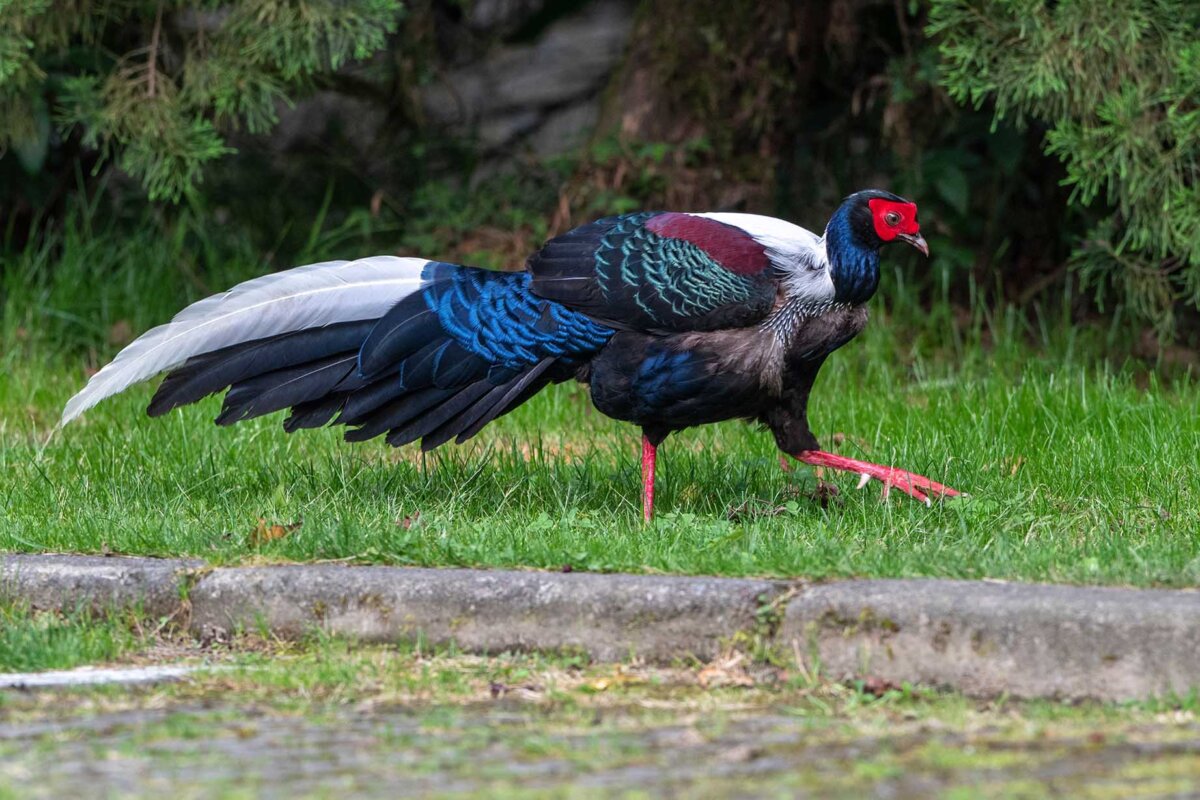
Sometimes a pheasant can become a national emblem—just like Swinhoe’s pheasant, which is endemic to the mountains of central Taiwan and is also known as the Taiwan blue pheasant. Males sport a glossy blue-purple chest and rump, red wattle, and white nape. With feathers matching the colors of the island’s national flag, Swinhoe’s pheasant became the unofficial symbol of Taiwan.
During mating, the wattles of male Swinhoe’s pheasants swell up while they hop about ritualistically and then run a circle around females. He will show off his fanned tail and make whirring noises with his wings.
4. Himalayan Monal
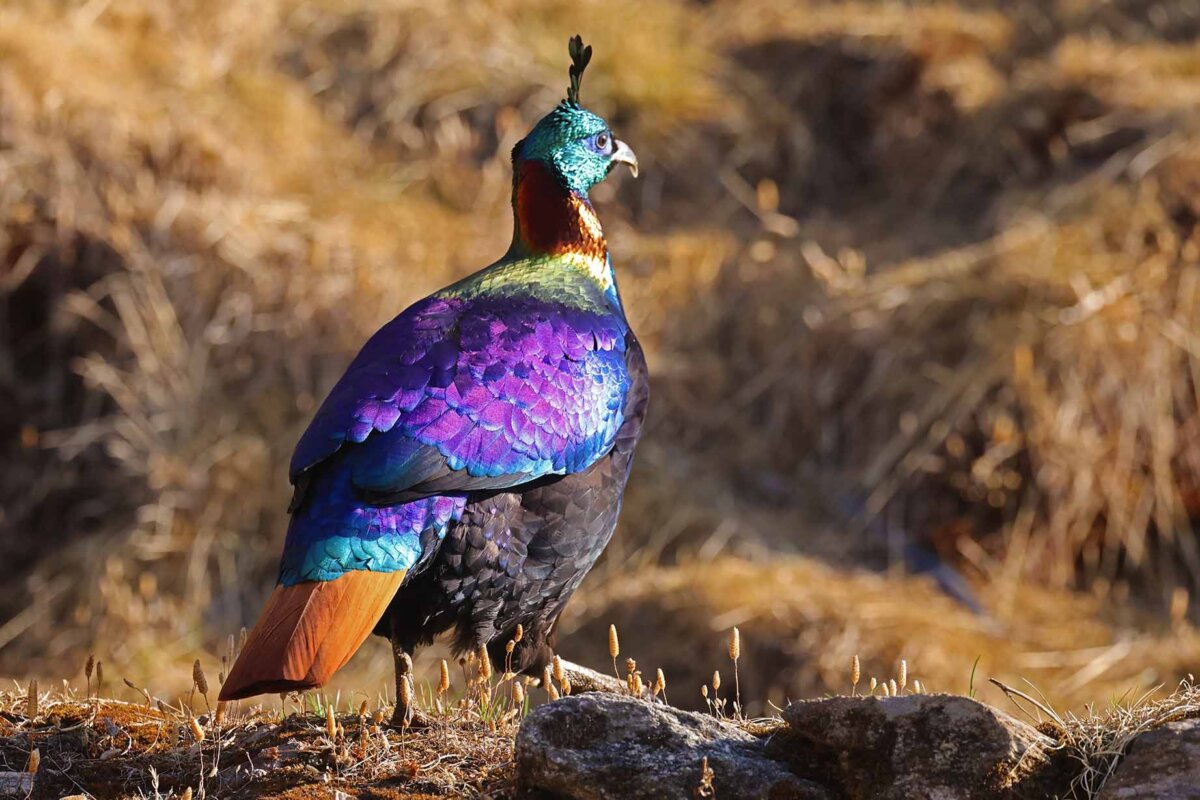
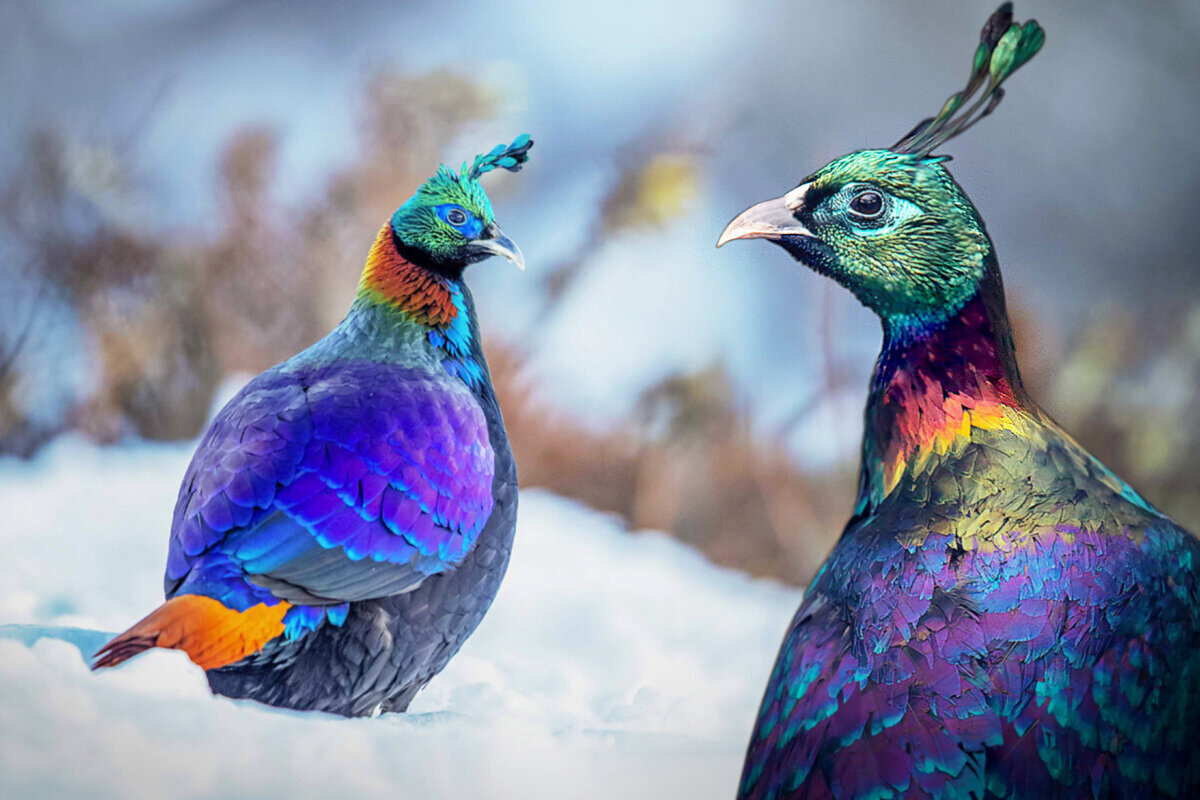
Nepal’s national bird is a highly emblematic pheasant called the Himalayan monal. Surviving in high elevations where the air is thin and bitterly cold, nestled amid a snowy mountain backdrop, it paints the environment with its feathery cloak, displaying iridescent blue, fiery copper, emerald green, and deep violet.
Males perform a dance when mating, fanning their wings, bowing, and circling in mesmerizing show. In this icy habitat, the Himalayan monal digs under the snow to feed on young shoots, leaves, insects, and other invertebrates.
The Himalayan monal’s native range also includes Afghanistan, Pakistan, India, southern Tibet, and Bhutan.
5. Reeves’s Pheasant
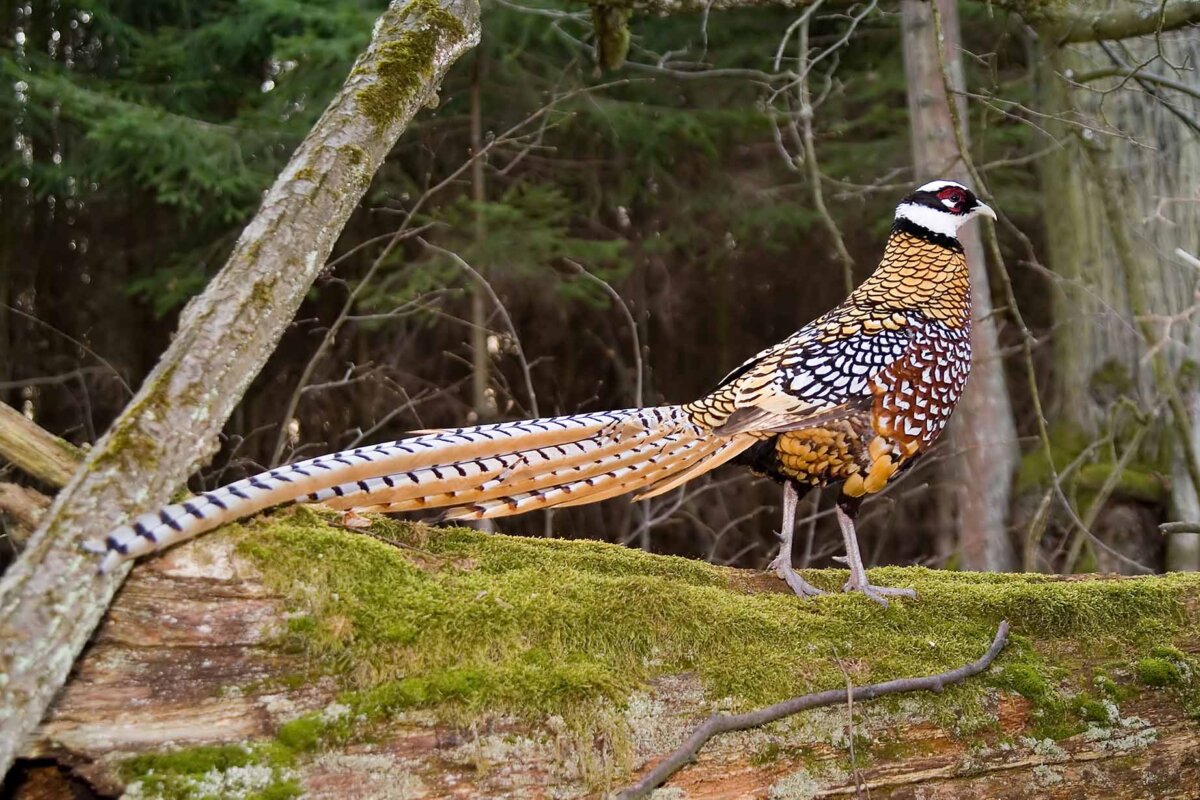
This shimmering gold and black wonder hails from the forests of central China. Its barred tail is the longest of any bird, according to Guinness World Records, flowing through the air like a ribbon of living silk. Males are distinguished by their reddish body, black eye patches, white head, and neck feathers that look like layered dragon scales.
During mating, Reeves’s pheasant unfurls its long tail in all its glory. Because of its regal appearance, the ancient Chinese linked this pheasant with the attributes of virtue and authority.
The bird is named after John Reeves, the British naturalist who first introduced live specimens to Europe in 1831.
6. Lady Amherst’s Pheasant
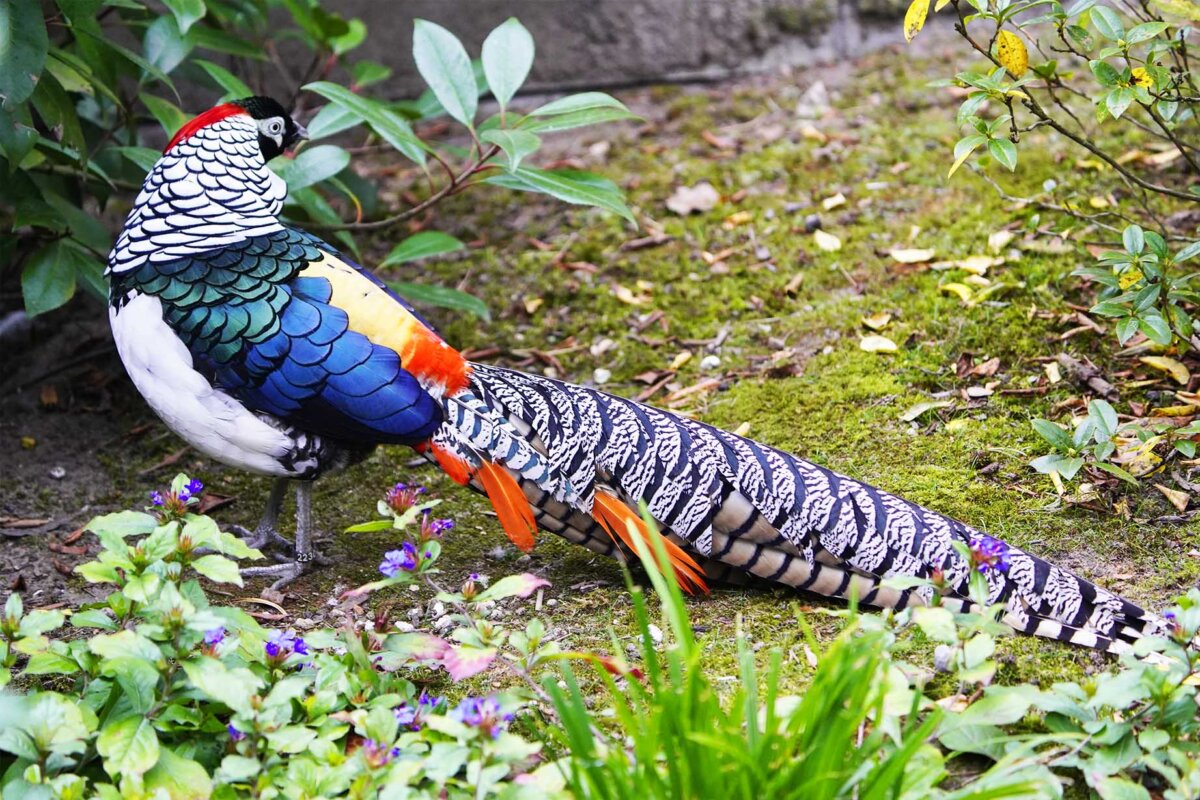
Hidden in the dense bamboo forests of southwestern China and northern Myanmar, this pheasant stands out like a brilliant painting amid the foliage. Male Lady Amherst’s pheasants sport distinctive neck capes, like layered white and black scales, and a red head crest. They have an emerald-green back, a scarlet and yellow rump, blue and brown wings, and body plumage the color of ivory-white and deep black. This pheasant shimmers like woven silk and metal.
Male Lady Amherst’s pheasants can even lift their neck cape magnificently when mating. Because it lives in such thick undergrowth, however, little is known about the behaviour of this splendid bird.
More Pheasant Facts
As ground-dwelling birds, pheasants prefer to walk rather than fly over long distances, though they are capable of rapid vertical take-offs. They can reach speeds of 60 miles per hour for short bursts in the air. Pheasants nest on land, exposing them to predation, which is one reason they don’t live long, less than a year on average.
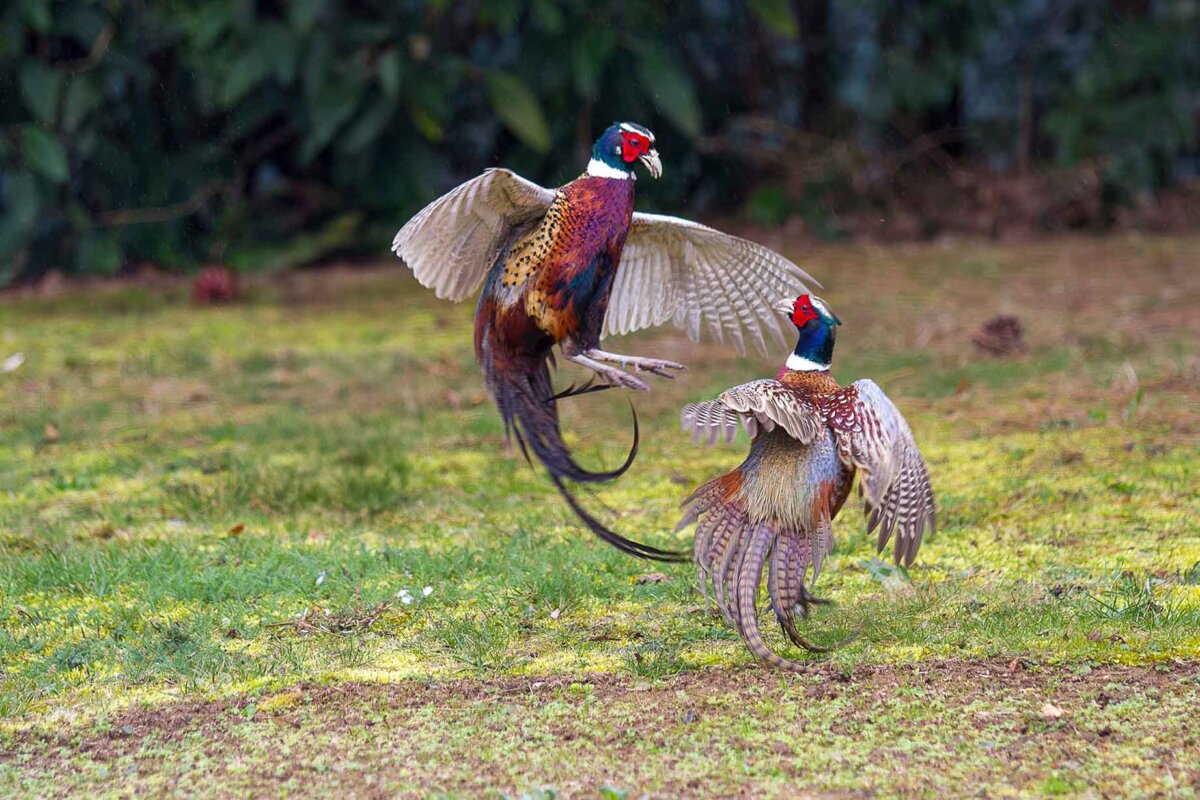
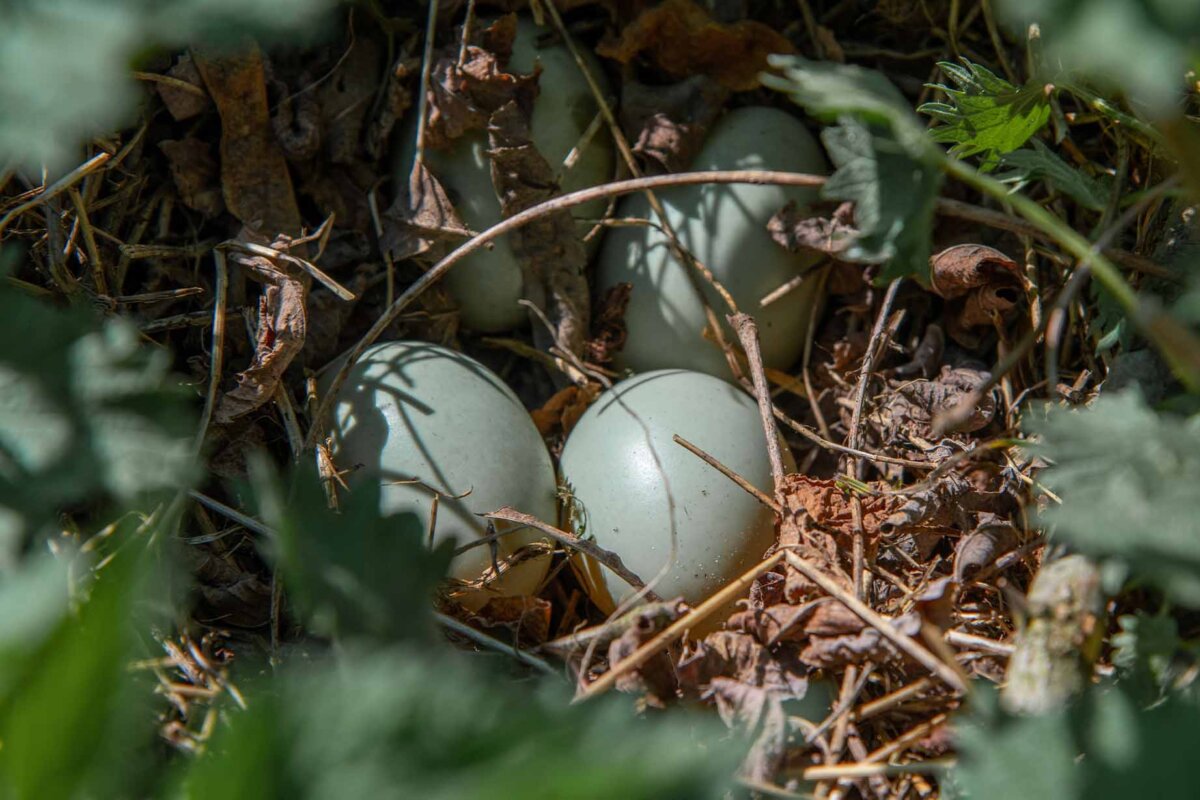
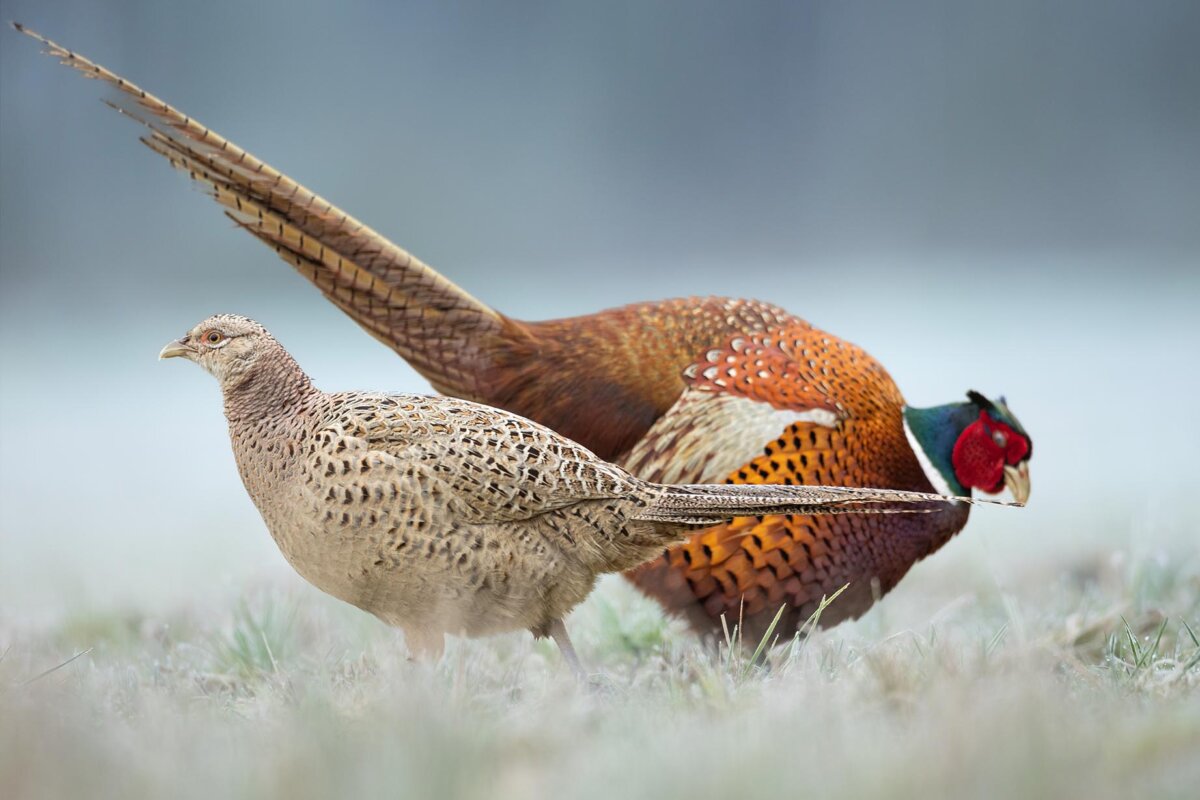
Pheasants display sexual-dimorphism, with males looking much more vibrant than females, which are more drab, featuring mottled feathers the color of sand that blend into the grasses. Males practice “harem-defense polygyny,” mating with multiple hens then protecting them in their territory. Hens typically lay 8–15 olive-brown eggs in round nests.
To entice females, male pheasants may make elaborate dances or unfurl their tail feathers, which can, in some species, extend six feet or longer. To get attention, their calls sound like a rusty sink valve, making a “caw-cawk,” while their beating wings snap successively like a snare drum and can be heard up to a mile away.
These prized omnivorous game birds feed on seeds, grains, roots, berries, insects, and even small vertebrates. They prefer to live in the countryside near forests or hedgerows.