Musical forms, that is, types of compositions, are a mere template for artists to fill with creative content. It’s a starting point that gives the composer limits to both work in and transcend. The fugue, for example, started out as a form in which the answering voice—the second melody that imitates the first—was always at a certain pitch (the perfect fifth) above the original key. But Bach pushed back against that rule. By the time Beethoven came along, his idea of “fugue” was almost unrecognizable. The same goes for the sonata form, which underwent a major transformation from its earliest to its latest iterations.
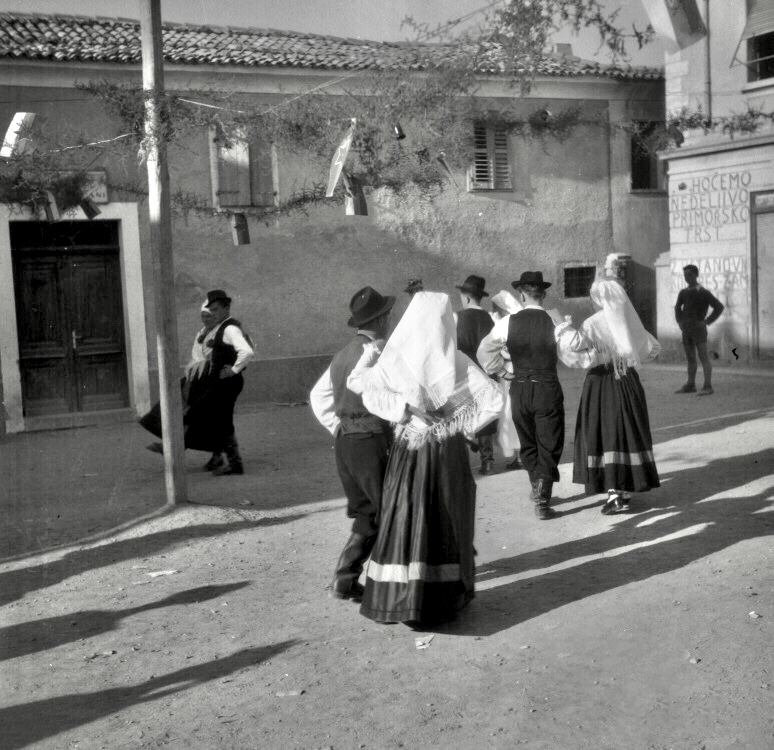
The mazurka is a short dance form that has been employed by many composers but is most closely associated with Frederic Chopin (1810–1849), who composed more than 50. The mazurka is a Polish dance distinguished by its rhythm. In three-four time, like the waltz, it’s nonetheless very un-waltz like because it emphasizes the measure’s second or third beat instead of the first. The waltz is ONE-two-three, while the mazurka is one-TWO-three.
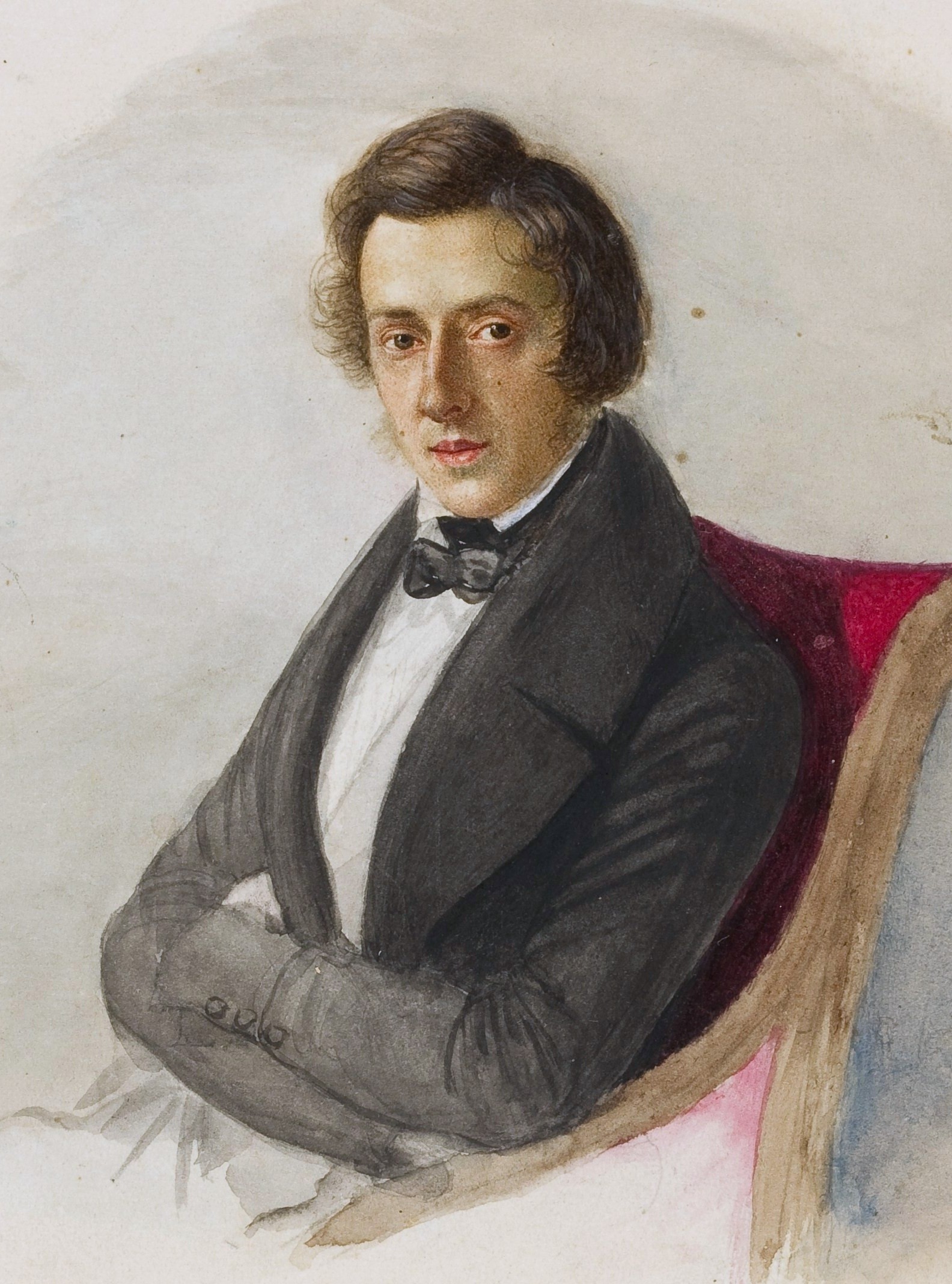 Watercolor portrait of Polish composer Frederic Chopin was painted by then-16-year-old Maria Wodzinska. (Public Domain)
The Mazurka’s Special Charm
For Chopin, mazurkas were clearly statements of national pride. He composed his first mazurka at the age of 15, while still living in Warsaw, and continued to write them into the last year of his life when he died an expat in Paris. Some celebrate the sharp accent of beat two at a fast tempo (allegro or vivace). Others relax the accent and probe more deeply at slower tempos (moderato, or even lento). Here are two Chopin mazurkas that exemplify this expressive breadth
The Mazurka in B-flat, Op. 7, No. 1. (Listen)
Marked “Vivace,” this is a study in rhythmic energy. The first measure announces the displaced accents by shaping a melody that rises from one to two and from two to three. Finally in the third measure, it reaches a top so high that all it can do is fall. And fall it does, with the distant bottom notes of each measure on beat two for the rest of the short phrase. (0:01–0:08) The whole affair repeats with slight variation. This is the A section. The B and C sections come next, and in both the accent is also on the second beat. After B and again after C we return to the joyous A section. No wonder this was one of Chopin’s best-loved pieces in his lifetime.
Mazurka in A minor, Op. 17, No. 4. (Listen)
The tempo of Mazurka in A minor is indicated as “Lento, ma non troppo” or “Slow, but not too much so.” The mood is meditative. The second beat remains the accented count throughout, but its effect is softened by the slow tempo. After a haunting introduction, the main subject is announced at 0:12, a figure that gently rises from beat one to beat two, then again, but higher. Once more there is the device of emphasizing second beats as the deeply lower notes of two-beat phrases (0:22–0:30). This is technically a mazurka, but its sensibility is that of a nocturne.
Chopin hangs his musical statement on the rhythm of the mazurka, but the statement itself is delivered through harmony. For although this is a piece in A minor, the A minor chord is hardly ever affirmed. Its single appearance in the main subject is at o:45-:49. It’s as if Chopin were saying, ‘No, I defy this fate.’ Only at the end is A minor at last established.
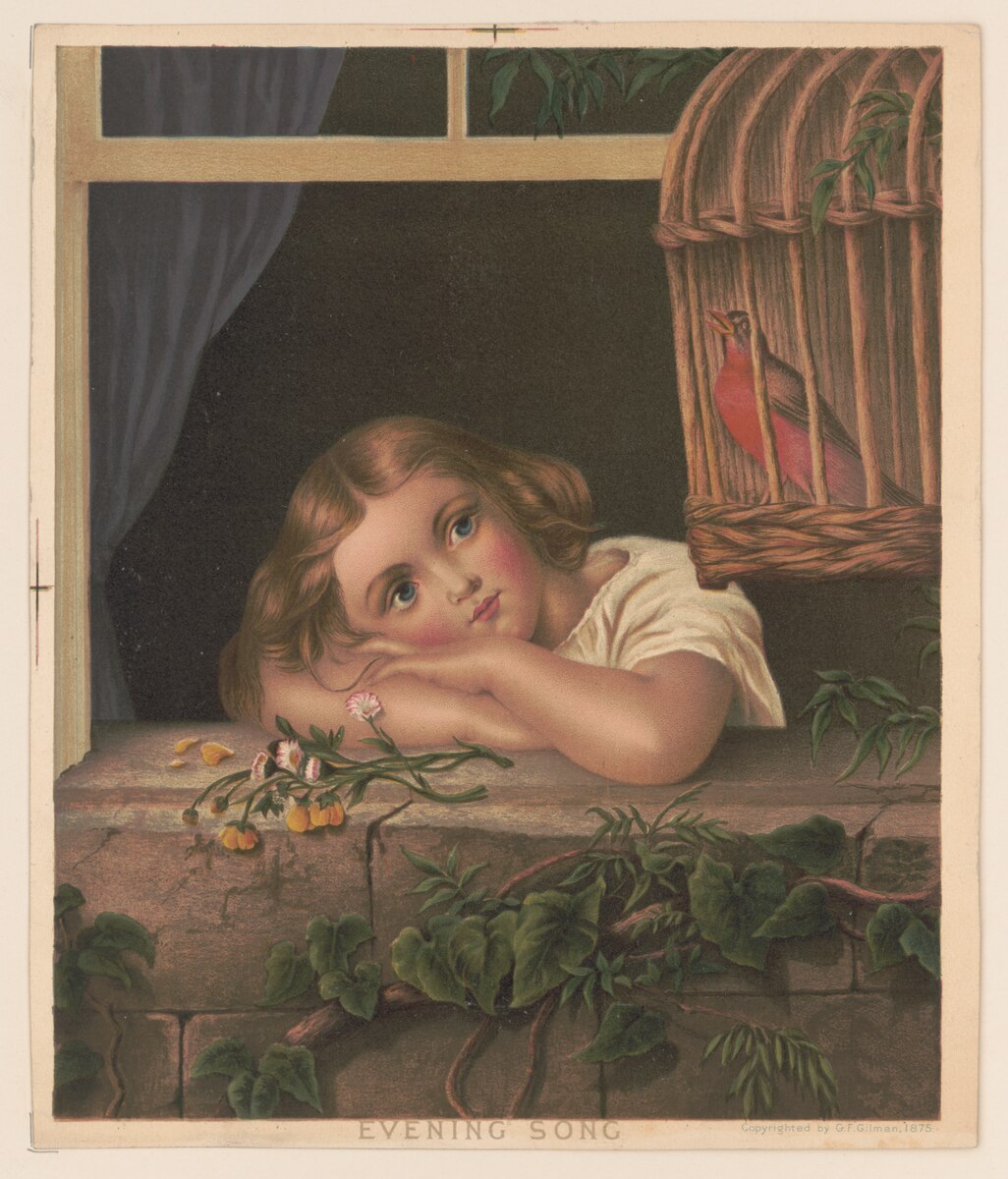 “Evening Song,” 1875, Gillman. The flowery, lighthearted tone of Chopin’s mazurkas belies a deeper patriotism. (Public Domain)
Each mazurka is a world unto itself, yet each one is in some way a Polish protest against the Russian incursion that drove the composer from his home. Robert Schumann wrote of them:
“If the mighty autocrat of the north knew what a dangerous enemy threatened him in Chopin’s works in the simple tunes of his mazurkas, he would forbid this music. Chopin’s works are cannons buried in flowers.”
What arts and culture topics would you like us to cover? Please email ideas or feedback to features@epochtimes.nyc