



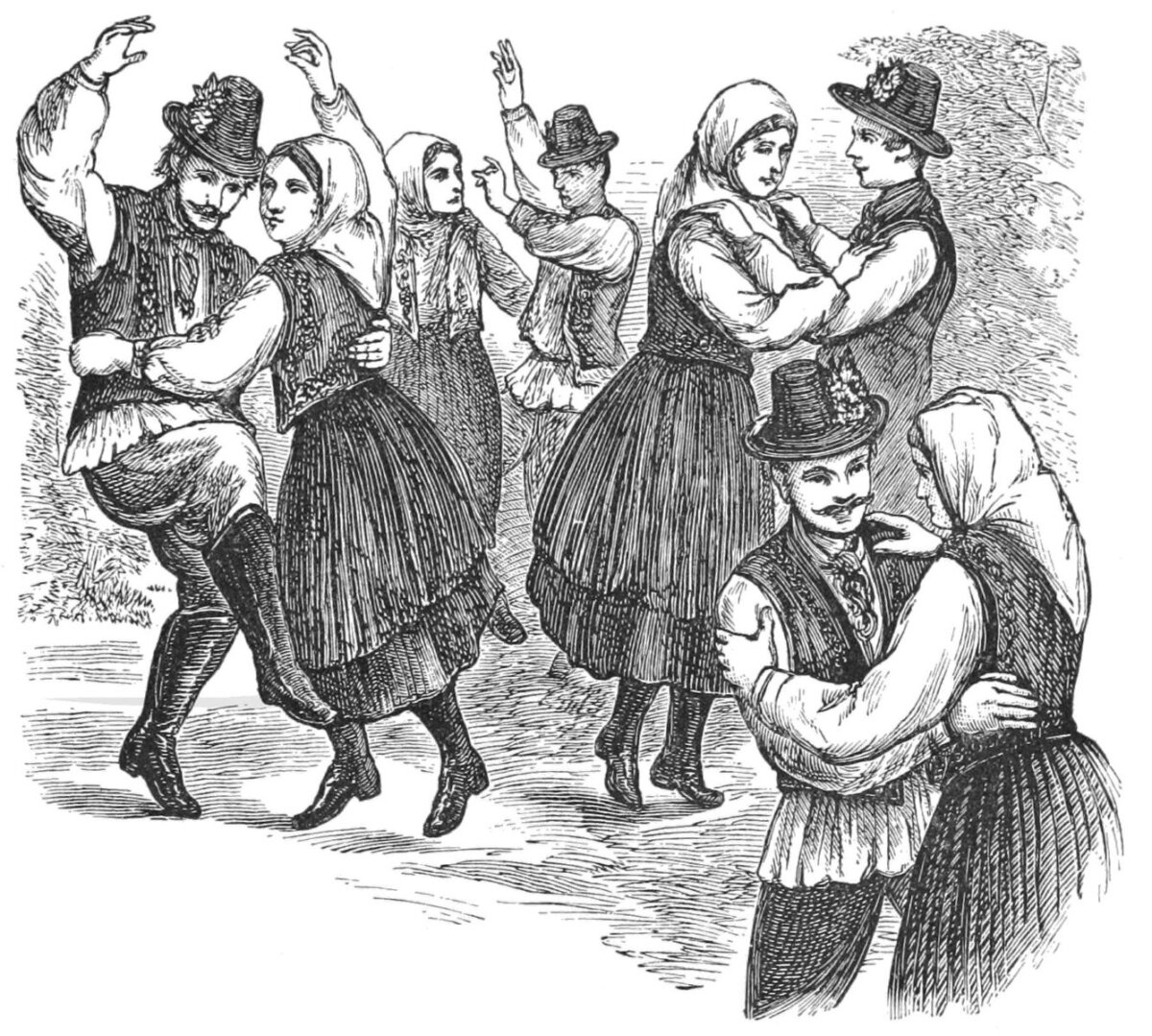
Eduard Remenyi was looking for an accompanist.
The Hungarian violinist was staying at the Le Soleil hotel in Hamburg during January of 1853. He was due to perform for a Mr. Helmrich, one of the great merchant princes of the region, when his accompanist called in sick. On the hunt for a replacement, he had little idea just who he was about to engage as a substitute.
But who was Remenyi? The details are sparse. We know that his real name was Eduard Hoffman and that he was born in Miskolc, Hungary. He was a contemporary of the great violinist Joseph Joachim and had studied at the Vienna Conservatory at around the same time.
Remenyi was exiled from his homeland for revolutionary activities. But most infamously, he claimed to be a victim of the theft of one of the world’s most recognizable tunes.
Who was the thief? None other than Johannes Brahms.
Remenyi and Brahms
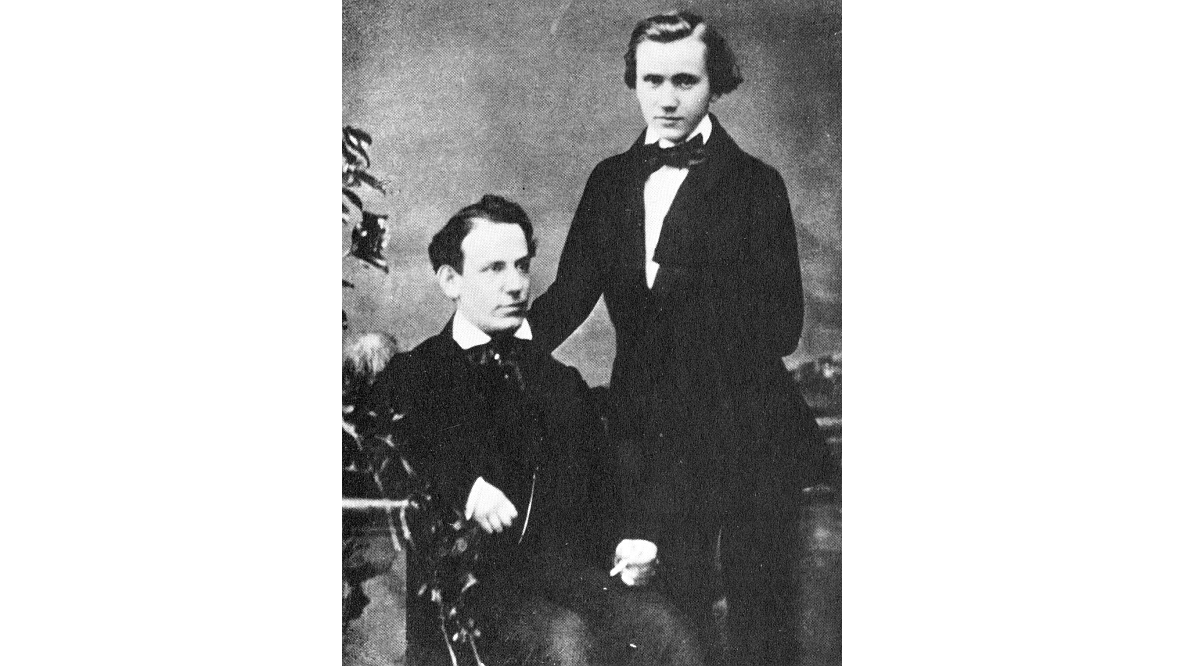
Music dealer Auguste Böhm recommended an accompanist to Remenyi. The violinist inquired about the pianist. Böhm responded: “He is a poor piano-teacher, whose name is Johannes Brahms. He is a worthy young man, a good musician, and very devoted to his family.”
They met for rehearsal on the day of the soirée. Remenyi was shocked. He thought the 19-year-old to be a genius, greatly superior to his previous accompanist, even soliloquizing to himself, “Fate has laid her fingers on my friend.”
They ended up missing the party at Helmrich’s, playing together into the early hours of the morning. The guests were furious, and Remenyi became a laughingstock in Hamburg. He couldn’t have cared less; instead, he took Brahms on a tour of Germany, proclaiming him to be a genius wherever they performed.
During this time, Brahms met Joachim in Hanover. Joachim, who remarked that he had “never in … [his] artistic life … been more completely overwhelmed” than by Brahms’s playing. Joachim gave him a letter of introduction to meet Franz Liszt. What followed was a humiliation for Remenyi.
According to an account by The Etude in 1906, Remenyi took Brahms to meet Liszt. The unthinkable happened. During a private performance by the legendary virtuoso, Brahms appeared to doze through the music. The guests present were offended, and Remenyi felt mortified and thunderstruck by the behavior.
Remenyi wished to continue his studies with Liszt, but felt it was no longer appropriate for Brahms to stay. He sent Brahms back to Joachim, to visit Robert Schumann. They would fall out of touch.
One day, while dining with Liszt, they caught news of the young composer in the Leipzig New Musical Journal. The article was by Schumann and read: “[A] new musical messiah has arrived, and that Minerva stood at the cradle of Johannes Brahms.”
Remenyi was in tears out of joy for his friend. He eagerly waited for a letter from Brahms. It never came. Brahms later released a few sets of works undeniably influenced by his Hungarian benefactor, causing hidden resentment to surface.
The ‘Hungarian Dances’
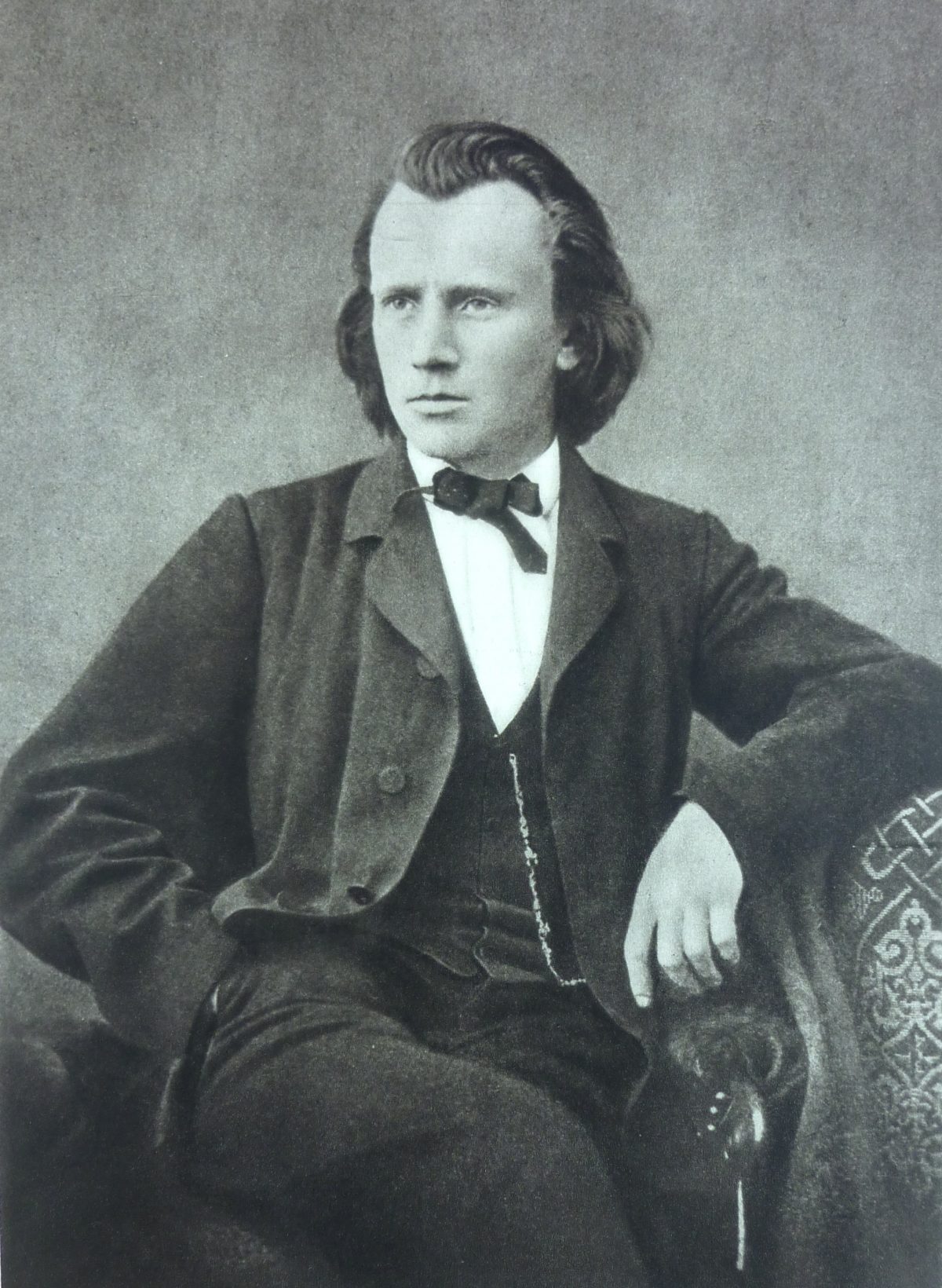
Brahms (1833–1897) went on to become one of the pillars of Romantic era. He composed four symphonies, four concertos, a requiem, and numerous folk song arrangements.
A series of folk song arrangements became his most popular works. The “Hungarian Dances” were composed over the course of two decades for piano four hands, being orchestrated by Brahms and other composers over the years.
All seemed well, until on Jan. 18, 1879, the New York Herald released an article titled: “A Twenty‑Five Years Secret. Revelations That Will Stir the Musical World. Remenyi and Johannes Brahms. Who Composed Brahms’ Celebrated Hungarian Dances?”
Did Remenyi truly compose the “Hungarian Dances?” During their time together, Remenyi introduced Brahms to the music of his homeland. In a lecture by musicologists Larry Todd and Katharina and Michael Uhde,“Hypothesizing What Brahms Could Have Heard in 1853,” Remenyi composed a number of Hungarian melodies which he showed to Brahms, sometimes without telling him their origin. He also introduced the colorful genre of gypsy music and dances to Brahms, jubilant csardas and verbunkos with irregular rhythms and patterns that made an impact on the young composer.
The facts become more complicated. Out of 21 “Hungarian Dances,” Brahms only entirely composed Nos. 11, 14, and 16, with the others being “arranged.” In particular, the famous No. 5 was based on the csardas “Bartfai emlek” (“Memories of Bartfa”) by Hungarian composer Bela Keler, which Keler also claimed was plagiarized from him.
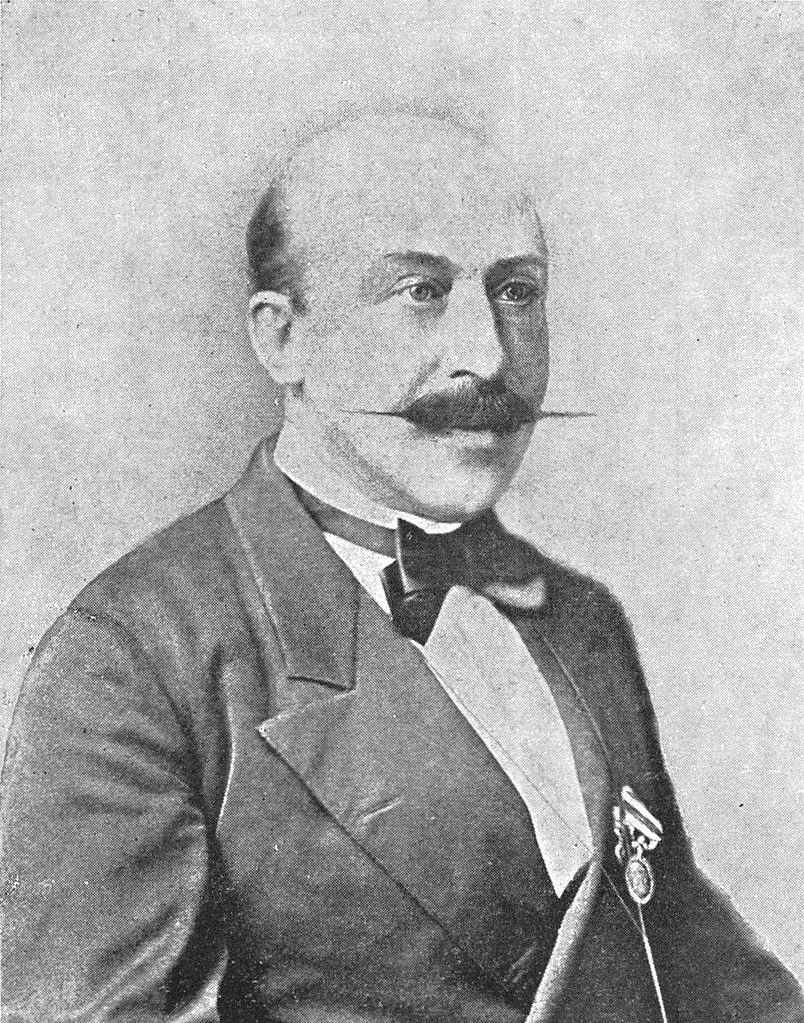
Remenyi alleged that Brahms arranged his melodies without giving credit, while Brahms claimed that they were folk tunes he heard in his travels.
Did Brahms steal the melodies from Remenyi? Brahms was most definitely influenced and introduced to Hungarian music by the violinist, but the great popularity of the works is in large part due to the brilliant arrangement and orchestration. We may never know the true origin of some of these memorable melodies, but we can thank Brahms for bringing the vibrant colors of Hungarian culture into the mainstream with his masterful compositions.
This performance of Brahms Hungarian Dance No. 5. for orchestra is by the Berlin Philharmonic, led by Claudio Abbado. (Listen)
Stomping brass and lively strings bring to life gypsy dance figures. The clashing and shimmering of cymbals punctuate climactic moments, while the rapid swelling and fading of the strings impart a mischievous character.
What arts and culture topics would you like us to cover? Please email ideas or feedback to features@epochtimes.nyc
