



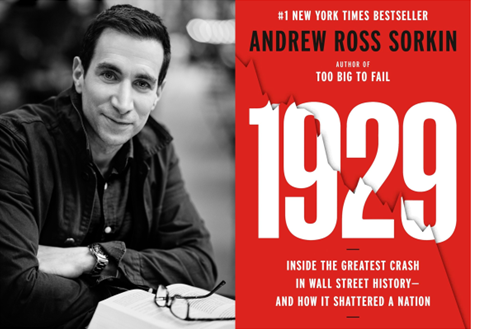
Andrew Ross Sorkin’s immersive history of the Wall Street Crash of 1929 is as riveting as it is provocative. Readers follow the key players in their day-to-day risk-taking activities, their bad decision-making, and dire missteps. They will see crises on the horizon and how the fallout will ignite the Great Depression.
Sorkin has the credentials to put together this lesson in advanced economics. His previous work “Too Big to Fail,” released in 2010, was a bestseller, called an “extraordinary achievement,” and was the basis for the HBO movie of the same name.
This new book, “1929: Inside the Greatest Crash in Wall Street History and How it Shattered a Nation” is sure to become another triumph in clear analysis of a complex and pivotal time in American history.
So that readers can reference the key players and their roles, Sorkin names the infamous cast of characters, including bankers, economists, journalists, and politicians in the opening pages. The list includes the heads of the Federal Reserve and major corporations like Ford and Chevrolet. There’s Winston Churchill, his son Randolph, and the head of the British Labour Party. Though we may believe this crash was solely an American event, it had ramifications that stretched across the globe.
Follow the Players
In the Prologue, Sorkin gives a highly detailed account of the activities of one such player, the chairman of National City Bank, Charles Mitchell. It’s Monday, Oct. 28, 1929, and the time is 5:30 p.m. We see events in real time. At the onset, readers will dread the calamity about to come.
Returning to his office, Mitchell tries to project calm and confidence despite the “crushing afternoon” on the stock exchange. Written in a narrative, minute by minute account, it reads like a thriller in an easy-to-follow style for readers unfamiliar with the flow of the stock market and how financial institutions operate.
This book stands out among others on the same subject matter because Sorkin’s focus on the human element of the story and the failings humans possess. It’s about greed and optimism, denial and fear. Ordinary people in powerful positions made flawed decisions, and bad judgment, to stem the tide of the approaching tsunami, continued to drive the events.
US Banks at Risk
Mitchell plays a big role as the story unfolds. He was uneasy with the amount of stock purchased on credit—which, at the time, was a new investment option. He experienced great distress as he tried to analyze what steps to take to keep his bank afloat and not trigger rumors.
Aside from the frenzy to contain the stock market’s downfall, other matters were at play. The large amount of American capital loaned to Germany after World War I put U.S. banks in a precarious position.
Over the course of eight years of research, Sorkin had first-ever access to confidential board minutes of the Federal Reserve Bank from 1929. He also visited the Baker Library on the Harvard campus. There, Sorkin found a “wealth of detailed diaries and letters” kept by Thomas Lamont, a senior partner with J.P. Morgan & Co.
In one of the later passages, Sorkin narrates Lamont’s morning commute to his office at 23 Wall Street a few days before the crash. There, Lamont would await the opening bell to receive the “ticker,” which gave the play-by-play of trading activity. Like the rest of the world, he learned that major companies like Montgomery Ward saw its stock plunge and U.S. Steel “dissolve like a sandcastle in the rain.”
Required Reading
Though this book reads like a perfect storm of financial mismanagement, it remains as much a lesson as it is a piece of history. How much of the 2008 Wall Street panic was caused by the same excessive speculation, overextension of credit, greed, and unrealistic expectations? Sorkin’s work should be a requirement for anyone considering a career in finance, whether it be banking or investments in stocks and bonds.
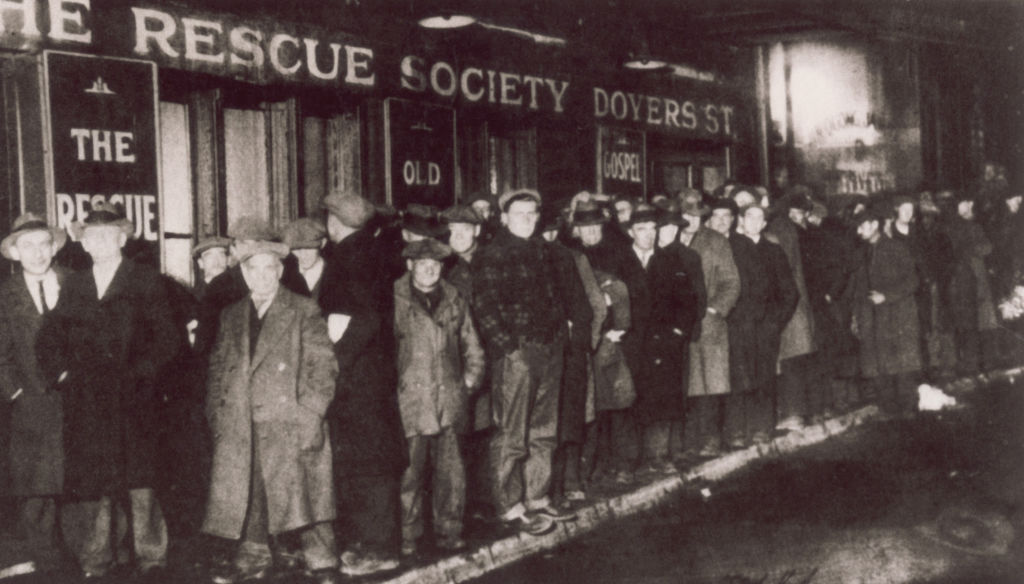
Because of the Wall Street Crash of 1929, many financial institutions either went out of business or took years to recover. But ordinary workers and families ultimately paid the price. Described are the homeless who set up a tent city across from Mitchell’s Central Park home. Sorkin writes, “the homeless problem in New York, which was now getting closer to the homes of the city’s elite, was the newest feature of the stock market’s collapse.”
Across the country, similar communities of homeless, called Hoovervilles, cropped up around the country. The term referred to the public’s belief that President Herbert Hoover wasn’t doing enough to provide relief for the poor and unemployed.
Entering the 1930s, 11,000 banks had closed, “nearly thirteen million Americans were without jobs, and the unemployment rate was almost 24%.” People were living in shacks and standing in breadlines, while drifters rode the trains looking for work.
These dark times ignited passions that led to the passage of much-needed reforms. Banks pooled monies together to form the FDIC to protect customer accounts. Unemployment insurance was put into place.
In the Afterword, Sorkin reflects on that period that took place almost a century ago. He rates the actions of government leaders like Hoover and Roosevelt, but avoids pointing the finger at anyone, or any one action.
However, having taken this deep dive into what led to the crash, Sorkin comes away with a theory: Had one man not succumbed to tuberculosis the year before the crash, he could have “held off the crash or at least successfully steered the economy through it.”
Through this immense work, this award-winning journalist and founder and editor-at-large of an online daily financial paper, is sending a message. No system is foolproof, and human nature will always want to believe the good times will last forever.
Sorkin is saying it’s not enough to understand how this all happened, but to remember “how easily we forget.”
‘1929: Inside the Greatest Crash in Wall Street History and How It Shattered a Nation’
By Andrew Ross Sorkin
Viking: Oct. 14, 2025
Hardcover, 592 pages
What arts and culture topics would you like us to cover? Please email ideas or feedback to features@epochtimes.nyc
