
Every year, Rome attracts millions of tourists. People from all corners of the globe board transatlantic flights to visit the Colosseum, taste Italian cuisine, and stroll through the eternal city’s charming streets.
For many, Rome also represents the legacy of the Roman Empire, one of history’s great civilizations. The Roman Empire left indelible marks throughout Europe, North Africa, and Asia Minor, including a vast network of durable infrastructure. From bridges to roads to subterranean cisterns, Rome’s public projects exemplified a commitment to longevity that’s worth pondering today.
A Very Short History of Rome
Rome began as a small settlement on the banks of the river Tiber. Although archaeological evidence shows human activity as early as 1700 B.C., the city’s mythical founding was in 753 B.C., when Romulus killed his twin brother Remus and proclaimed himself ruler.
 “The Shepherd Faustulus Bringing Romulus and Remus to His Wife,” 1654, by Nicolas Mignard. Dallas Museum of Art. (Public Domain)
Early Rome was a monarchy. The last of its legendary “seven kings” was the tyrannical Tarquinius Superbus (“Tarquin the Proud”), who had secured power by murdering his wife, his elder brother, and his predecessor.
In 509 B.C., the Romans expelled Tarquin, after whose exile Rome became a republic ruled by an aristocratic senate and two consuls with equal power. The transition sparked several bloody wars, including an attempted invasion of Rome by Tarquin and his Etruscan allies that inspired the legend of Horatius, the brave soldier who singlehandedly prevented the invading army from entering Rome.
The republic lasted almost five centuries, during which Rome expanded its rule across the Mediterranean. Civil wars and economic stagnation eventually broke it from within. In 27 B.C., Octavian Augustus proclaimed himself Rome’s first Emperor. The Roman Empire began with the “Pax Romana,” a period of relative peace, commercial growth, and cultural flourishing that paved the way for world dominance.
The empire reached its largest size in A.D. 117, when it covered almost 2 million square miles. But in due time, it, too, began to fracture, largely due to the same reasons that had weakened the republic. By the 4th century, it splintered into East and West. The Western Roman Empire collapsed in A.D. 476, leaving behind power vacuums that continued into the Middle Ages. The Eastern Roman Empire lasted until A.D. 1453, but its history was fraught with existential threats from start to finish.
Among many other things, ancient Rome now symbolizes political sophistication, military prowess, and cultural magnificence. An important but overlooked part of its immense legacy is its impressive network of durable infrastructure, which has much to teach today.
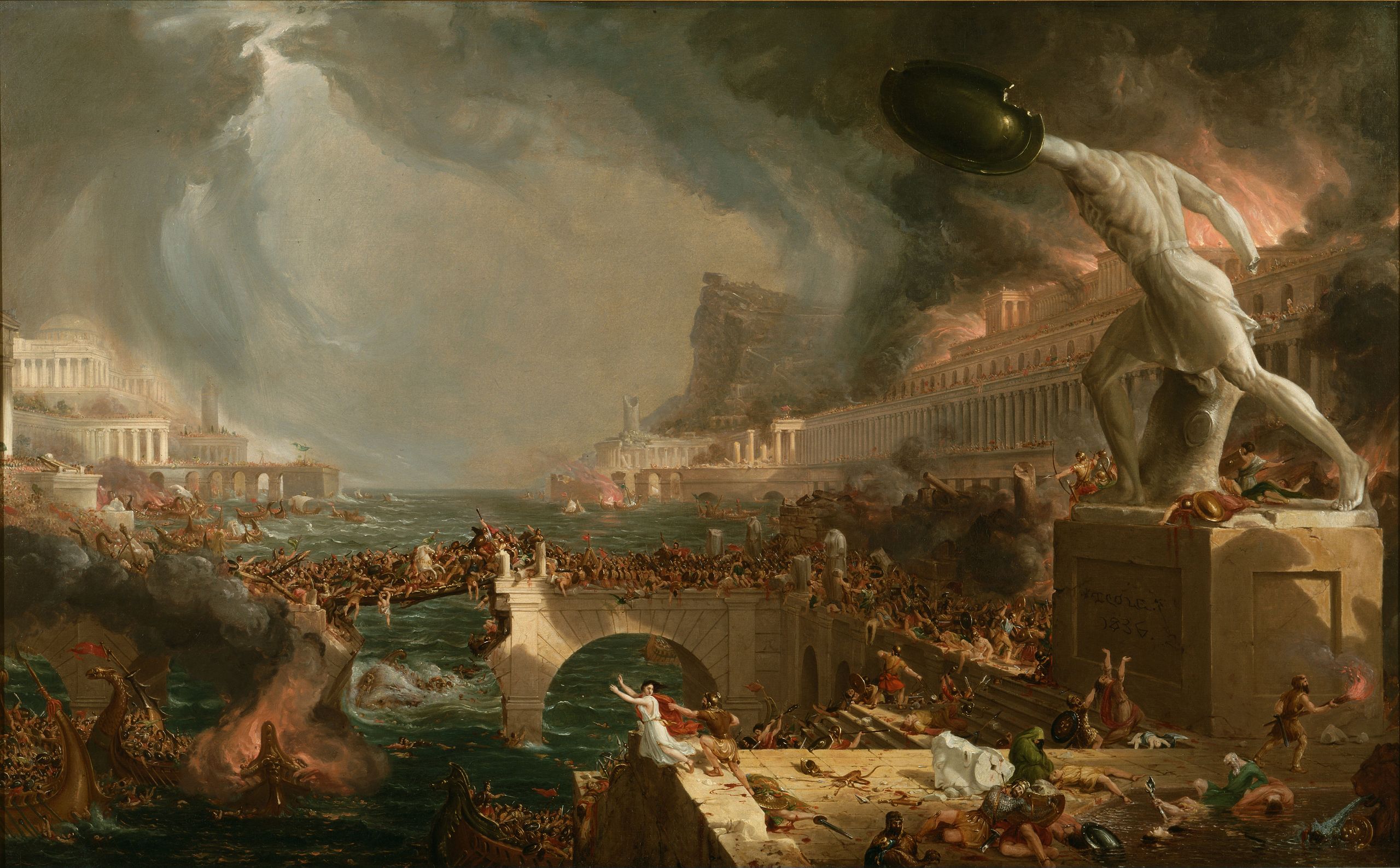 “Destruction,” 1836, by Thomas Cole, from “The Course of Empire” series. (Public Domain)
Masters of Engineering
“The three most magnificent works of Rome, in which the greatness of her empire is best seen, are the aqueducts, the paved roads and the construction of the sewers,” wrote the ancient historian Dionysius of Halicarnassus (circa 60 B.C.–circa 7 B.C.) in “Roman Antiquities.”
Engineering set Rome apart from the beginning. Tarquin oversaw the construction of one of the world’s earliest drainage systems, called the “cloaca maxima” (“greatest sewer”) after Cloacina, a primordial Roman goddess of cleanliness and purification. The sewer ensured remarkably clean streets and fresh water supply, fostering a healthy population capable of working, building, and fighting—three activities at which the Romans excelled. Parts of the drain system are still used today.
Rome was also the central nexus of an intricate network of roads, which never really stopped growing. During the imperial era, Roman roads extended from modern Scotland to modern Turkey, from the Nile’s riverbed to Germany’s forests. They were built especially to withstand floods and other environmental hazards. Roads also encouraged commerce, streamlined urban expansion, and facilitated military operations across vast areas. Indeed, all roads led to Rome.
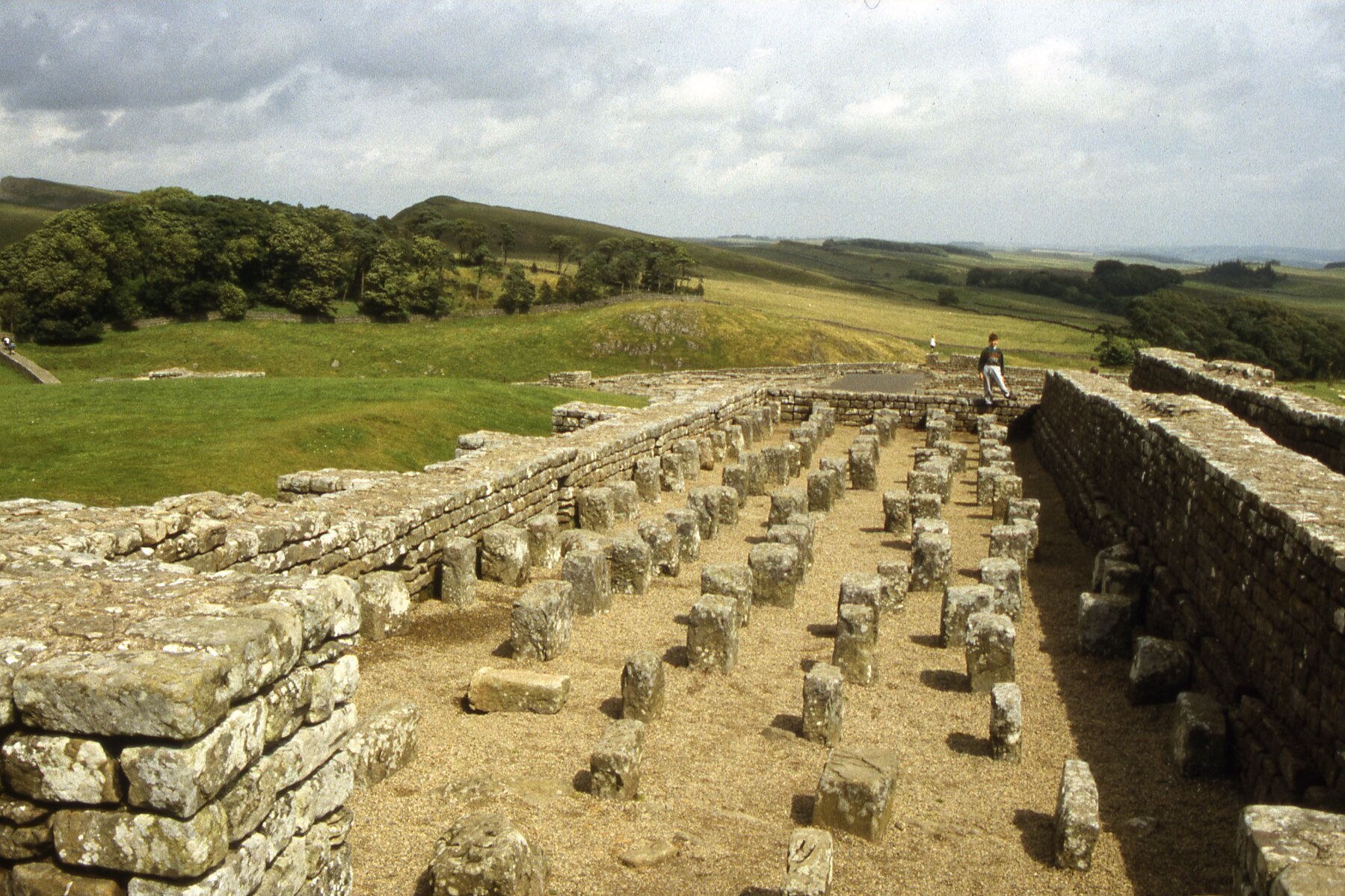 “Housesteads Roman Fort,” 1997, by Colin Park. The hypocaust circulated hot air, which heated the rooms above. Today, all that survives is a ruin of the fort’s lower floor. (GeographBot/CC BY-SA 2.0)
Among other noteworthy Roman inventions is the “hypocaust,” a central heating system that relied on underground corridors to distribute hot air in enclosed rooms. An ancient (but less wasteful) precursor to air conditioning, the system was sometimes used in temples, imperial halls, and other significant public buildings.
Concrete: The Romans’ Secret
Behind most of Rome’s infrastructure was a special material: concrete. Generally, marble was for palaces and monuments, and wood was for portable military technology. Concrete was for virtually everything else.
Roman concrete isn’t quite like modern concrete. Made from dry quicklime, water, and volcanic ash, Roman concrete has a self-healing property scientists have only recently understood. When its lime clasts come into contact with water, they release calcium, which fills any crack that might have opened over time. This simple process explains why there are so many extant Roman ruins, whereas the number is much smaller for, say, the ancient Greeks or the ancient Persians. The most noteworthy example of a standing building in Roman concrete is the Pantheon, the world’s oldest and largest unreinforced concrete dome.
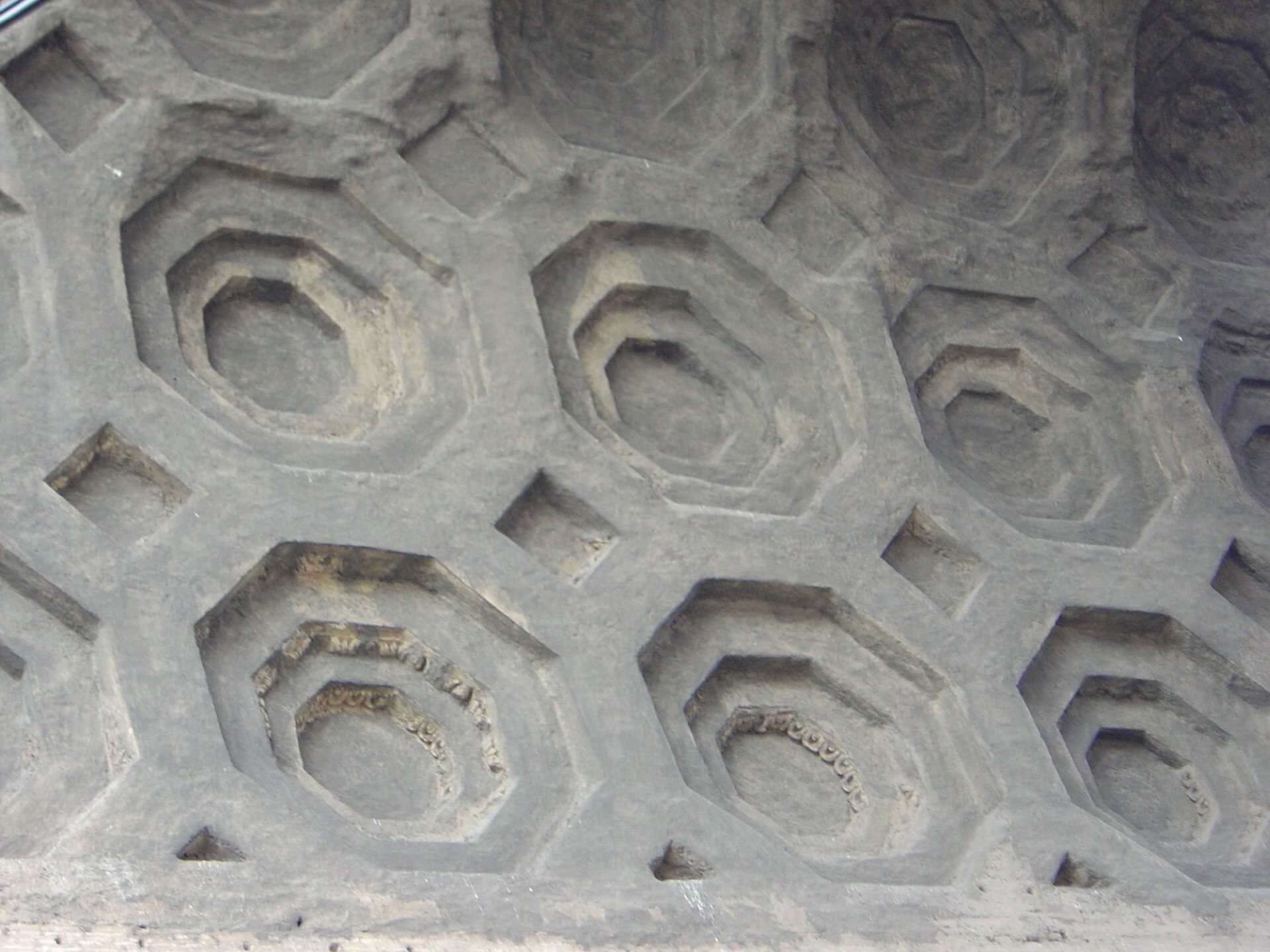 A surviving sample of Ancient Roman self-healing concrete in a vault in Rome. (Michael Wilson/CC BY-SA 2.0)
The Roman Aqueducts
Roman concrete was most effective in aqueducts and harbors, where water flowed constantly. In “Building for Eternity: The History and Technology of Roman Concrete Engineering in the Sea,” a diverse team of scholars documented the vast maritime infrastructure that sustained what they called the West’s first “global economy.” Thanks to concrete, the Romans could install harbors on any coastline, establishing commercial and military dominance more quickly than their competitors.
Though less relevant for commerce, aqueducts were equally essential to Rome’s flourishing. The first Roman aqueduct was built in 312 B.C., when the city’s adjacent water sources failed to meet a growing population’s demands. It was named “Aqua Appia” after Appius Claudius Caecus (340 B.C.–273 B.C.), the same statesman who built the Appian Way, one of Rome’s oldest-functioning roads.
At the empire’s peak, the number of functioning aqueducts was in the hundreds. Between 312 B.C. and A.D. 226, the city of Rome alone built 11. The shortest was the Aqua Appia, which extended for a little over 10 miles. The longest ran for 57 miles, an impressive length for the times. Although the word “aqueduct” invokes iconic concrete arches, aqueducts were mostly underground. Arches were used sparingly in urban areas to preserve walkable space or to terraform austere stretches of land.
The aqueducts had obvious practical value. They delivered fresh water to public fountains, drained sewers and public baths, enabled irrigation in arid and remote areas, and strengthened Rome’s resilience during war.
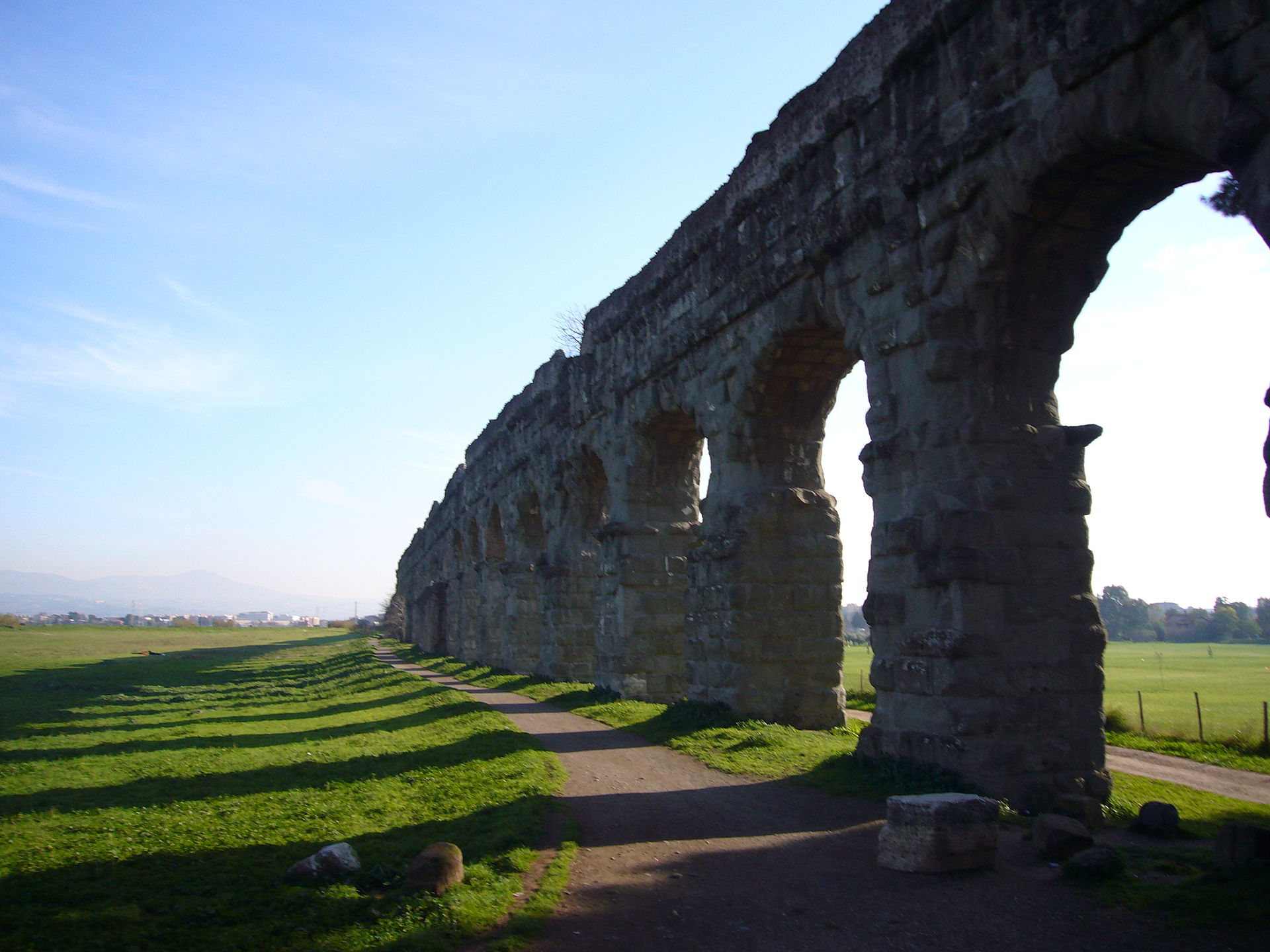 Thousands of years later, the ruins of the Aqua Appia aqueduct remain. This section is in an Italian park. (Lalupa/CC BY-SA 3.0)
Unsurprisingly, the aqueducts appealed to unlawful citizens, who often took advantage of the convenient technology. In a two-book treatise, the Roman statesman and engineer Sextus Julius Frontinus (circa A.D. 40–A.D. 103) observed that sometimes “water was also being diverted from [the aqueducts] unlawfully by individuals” through unauthorized pipe extensions and other means.
Frontinus led the way in an empire-wide revamping of Rome’s aqueducts, whose immense potential he was the first to articulate. A learned engineer, he was familiar with the work of his predecessor Vitruvius, a Roman polymath whose manual “De Architectura” laid the foundations for Western art and architecture.
In his eighth book, Vitruvius discussed natural springs, the quality and uses of water, and some of the techniques involved in building aqueducts. His discussions were based on three architectural principles—stability, utility, and beauty—which summarized the Romans’ deeply held conviction that infrastructure played a fundamental role in the making of a great civilization.
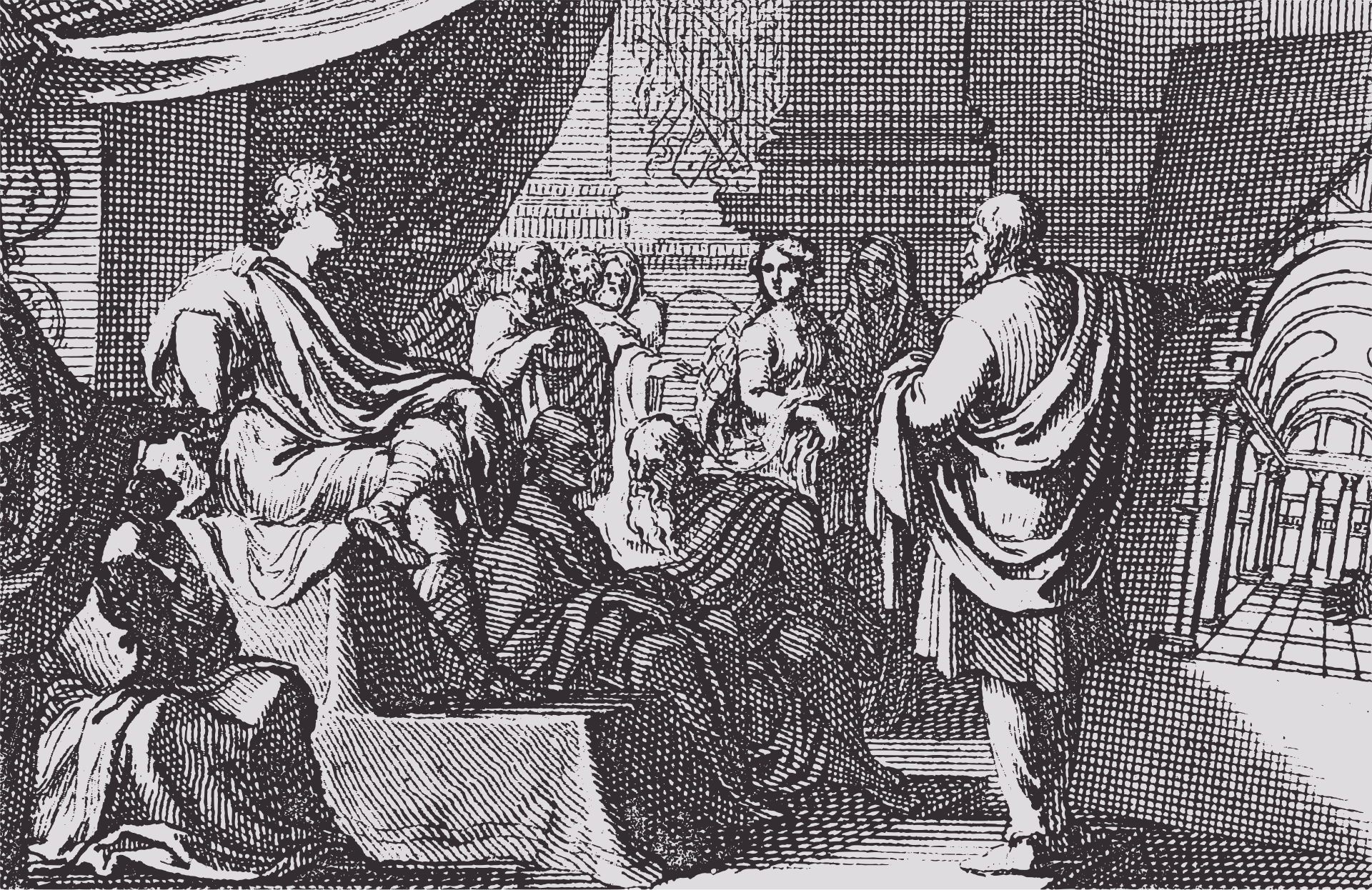 A 1684 engraving depicting Vitruvius presenting “De Architectura” to Augustus. (Public Domain)
Cohesion, Prudence, and Longevity
The Romans didn’t discover concrete by chance. Engineers interested in finding the best materials to build durable, efficient structures eventually figured out the right mixture. Behind their interest were several motives, including social and military pressures. But behind those pressures was a deep-seated belief that Rome was going to last forever.
Romans shared an optimism about the future that was grounded in cohesion, prudence, and longevity. There’s perhaps no better place to observe this optimism than in their infrastructure. Their road networks provided unparalleled cohesion that was matched by a shared commitment to make Rome thrive, internal disputes notwithstanding. Their obsessive care for structural durability and maintenance illustrated remarkable prudence, also reflected in their meticulous administration of old and new territories.
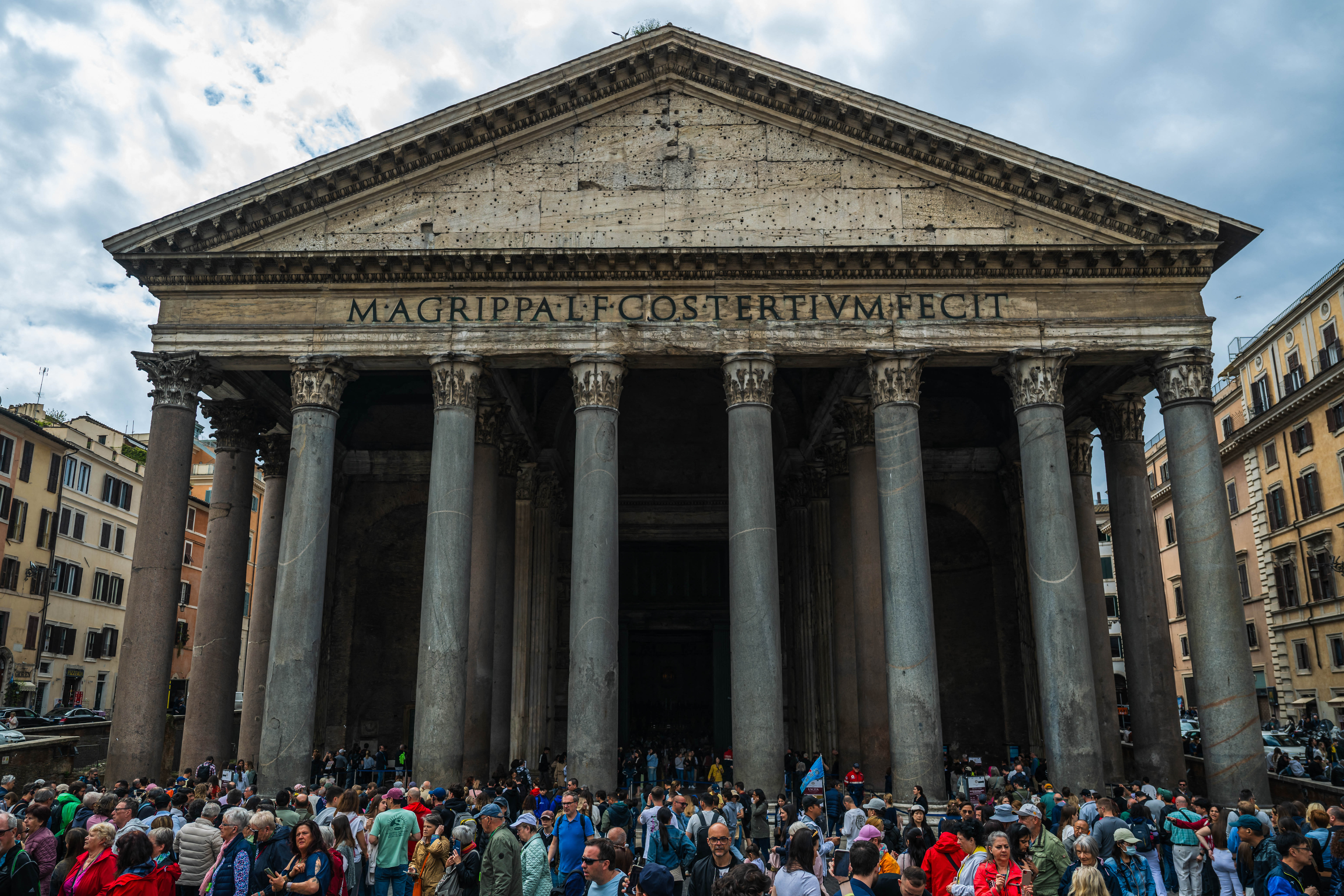 Tourists stand in front of the Pantheon, a 2nd century Roman temple, in Rome, on April 24, 2025. (Andrej Isakovic /AFP via Getty Images)
 Some of the Romans’ objectives remain highly questionable. After all, they were avid and often merciless subjugators who settled for nothing less than world dominance. But they at least believed in their civilization’s potential, and they certainly knew what they stood for. Their desire for longevity came to life in durable infrastructure that has outlived its creators, reminding us that civilizations cannot attain greatness without solid foundations.
What arts and culture topics would you like us to cover? Please email ideas or feedback to features@epochtimes.nyc