



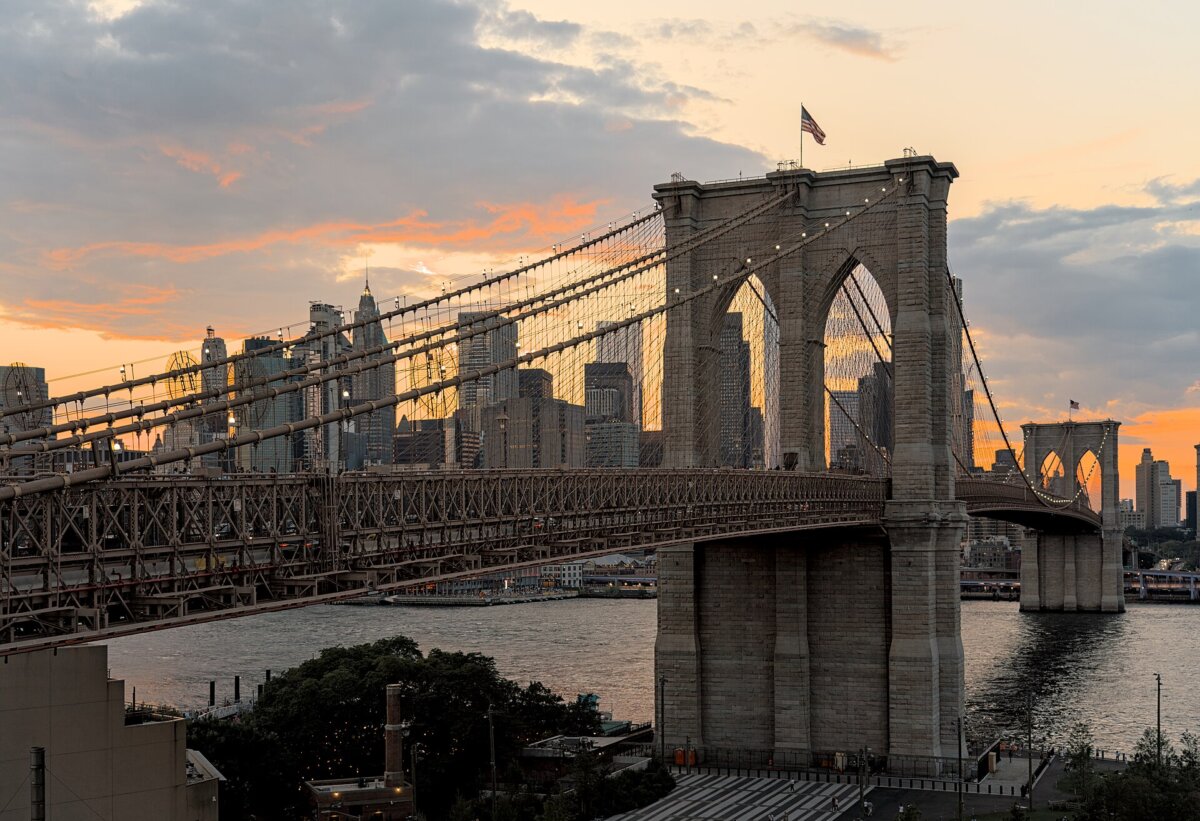
According to a 2024 study by the New York City Department of Transportation, an average of 28,845 pedestrians and 5,504 cyclists traverse Brooklyn Bridge’s pedestrian promenade each day. This 1.1 mile path, elevated above five lanes of traffic, rises to a high point flanked by the bridge’s two recognizable gothic arches, which are set into neo-Gothic towers.
While residents cross the bridge on foot or bicycle primarily for work-related reasons, visitors to the city often walk the great bridge simply for the experience. Views of the shimmering One World Trade Center Freedom Tower and Lower Manhattan are prominent from this vantage point. And, to ascend to the bridge’s high point approximately 160 feet above the surface of the East River and look up at the massive stone towers is enthralling. However, that’s where the focus often ends.
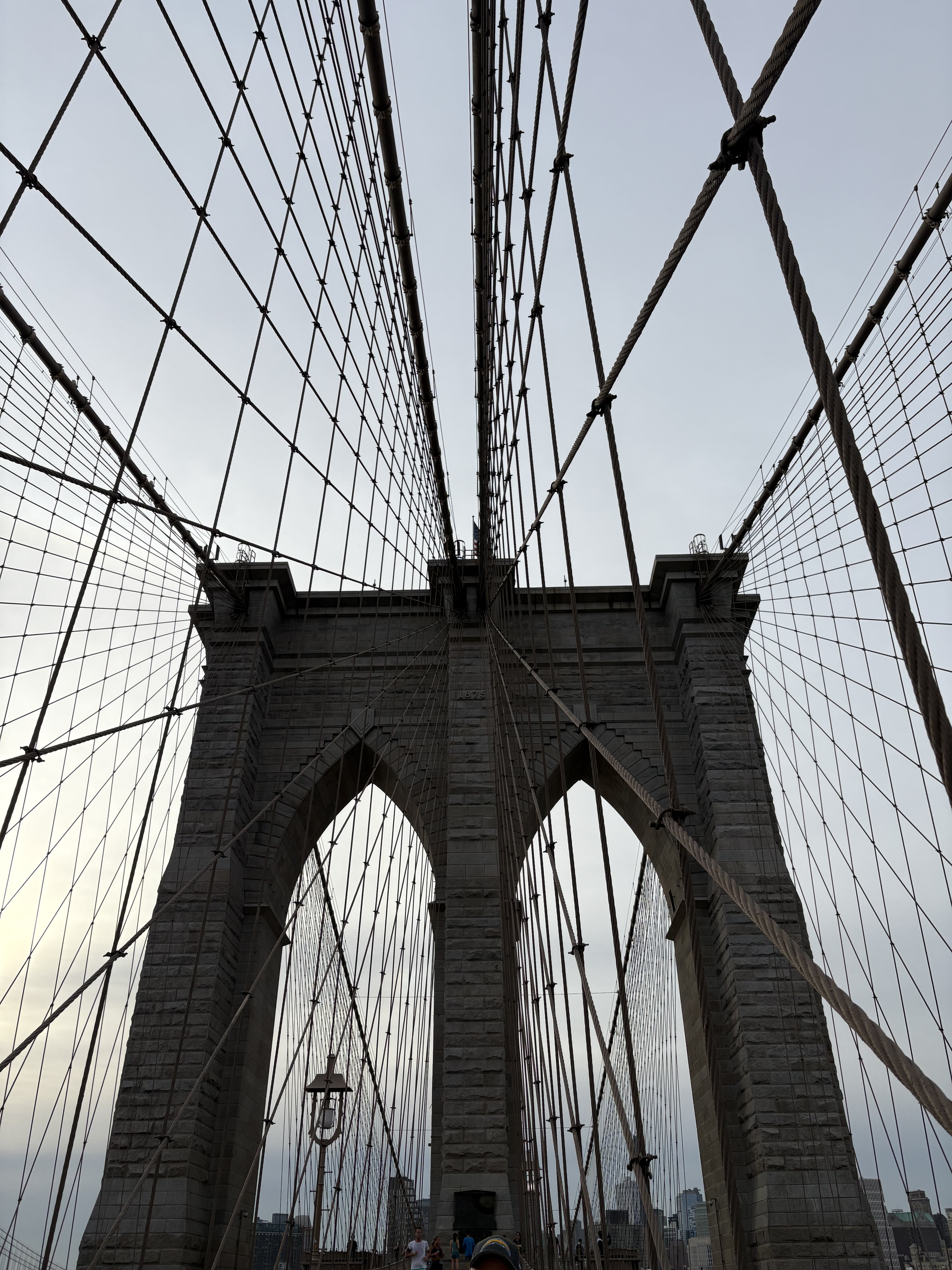 The Brooklyn Bridge is one of New York City’s most recognizable landmarks. (Deena Bouknight)
Yet, at the bridge’s apex are interesting historical information and images on bronze plaques and panels. Taking a few moments to view them provides a better understanding of one of America’s most celebrated structures.
A Storied History
When the Brooklyn Bridge, which spans the East River from Manhattan to Brooklyn, was completed in 1883, it was dubbed a great architectural and engineering feat. It was then the longest steel-wire suspension bridge in the world. To educate pedestrians, permanent bronze displays offer up the who, what, why, and how of the illustrious bridge.
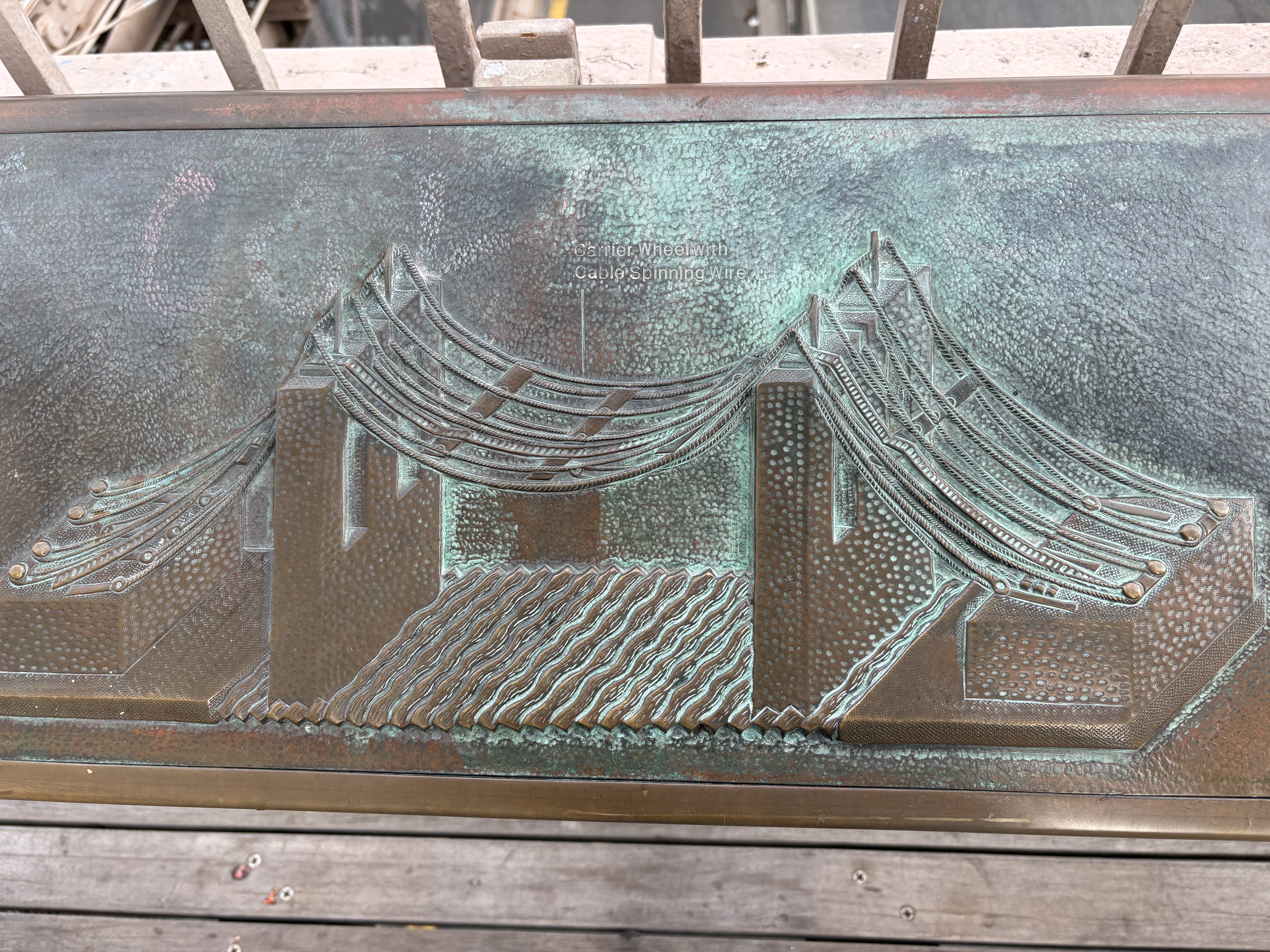 Bronze plaques depict the building process of the historic Brooklyn Bridge. (Deena Bouknight)
For example, one plaque, “Erected by the Cities of New York and Brooklyn,” lists the names of the project’s trustees as well as the names of the two principal civil engineers: John A. Roebling and his son, Washington A. Roebling. Affixed to one of the stone tower’s pillars near that plaque is the New York Landmarks Preservation Foundation plaque. It provides information about what the father-and-son team achieved.
Most impressive and comprehensive are the lengthy bronze panels that note historical highlights and little-known facts about the bridge’s construction process and the people involved in the project. In bas relief style—meaning images are raised just slightly from the bronze surface—the Brooklyn Bridge Commemorative Plaques were completed in the mid-1980s by New York City-based Excalibur Bronze.
Through a written and visual history, the bronze plaque series artistically informs viewers about the bridge’s construction from 1869 to 1883. One of the panels spotlights the bridge’s master mechanic, Frank Farrington, who was the “first to cross the East River by a traveler wire” in August 1876. With the information provided on the panel is the likeness of Farrington holding his hat, with his hair flowing as he grasps tightly to the wire.
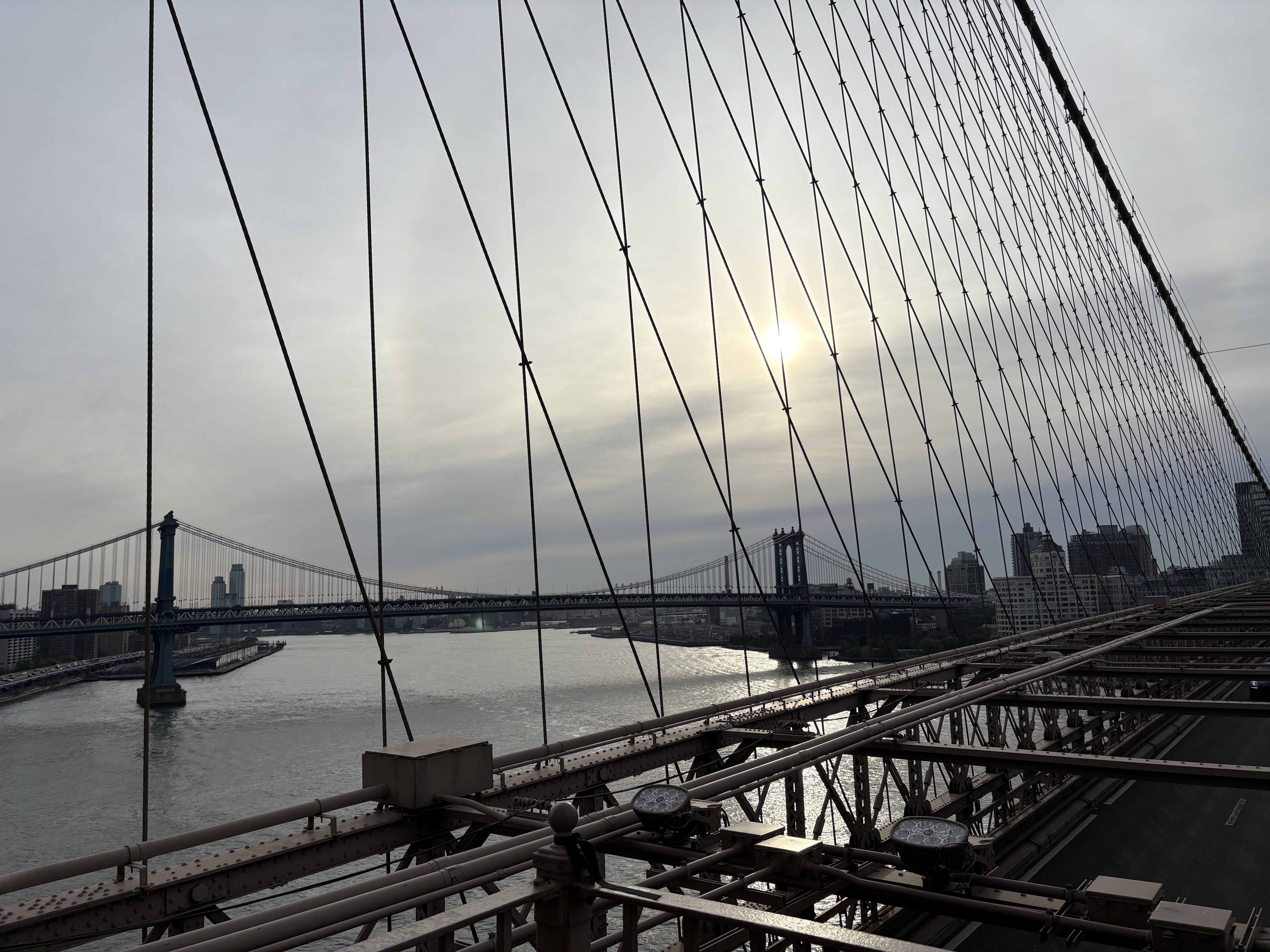 The view of the city from the Brooklyn Bridge is worth the walk. (Deena Bouknight)
Another plaque image is of an engineer’s rendering of the bridge’s design. An additional one showcases how workers stayed dry as they constructed the bridge’s foundation under the East River.
Any pause at this pedestrian promenade’s highest point will allow a fantastic view. Enhance the moment by stopping to admire the nearby bronze historical signs that commemorate the ingenuity and labor involved in the construction of the Brooklyn Bridge.
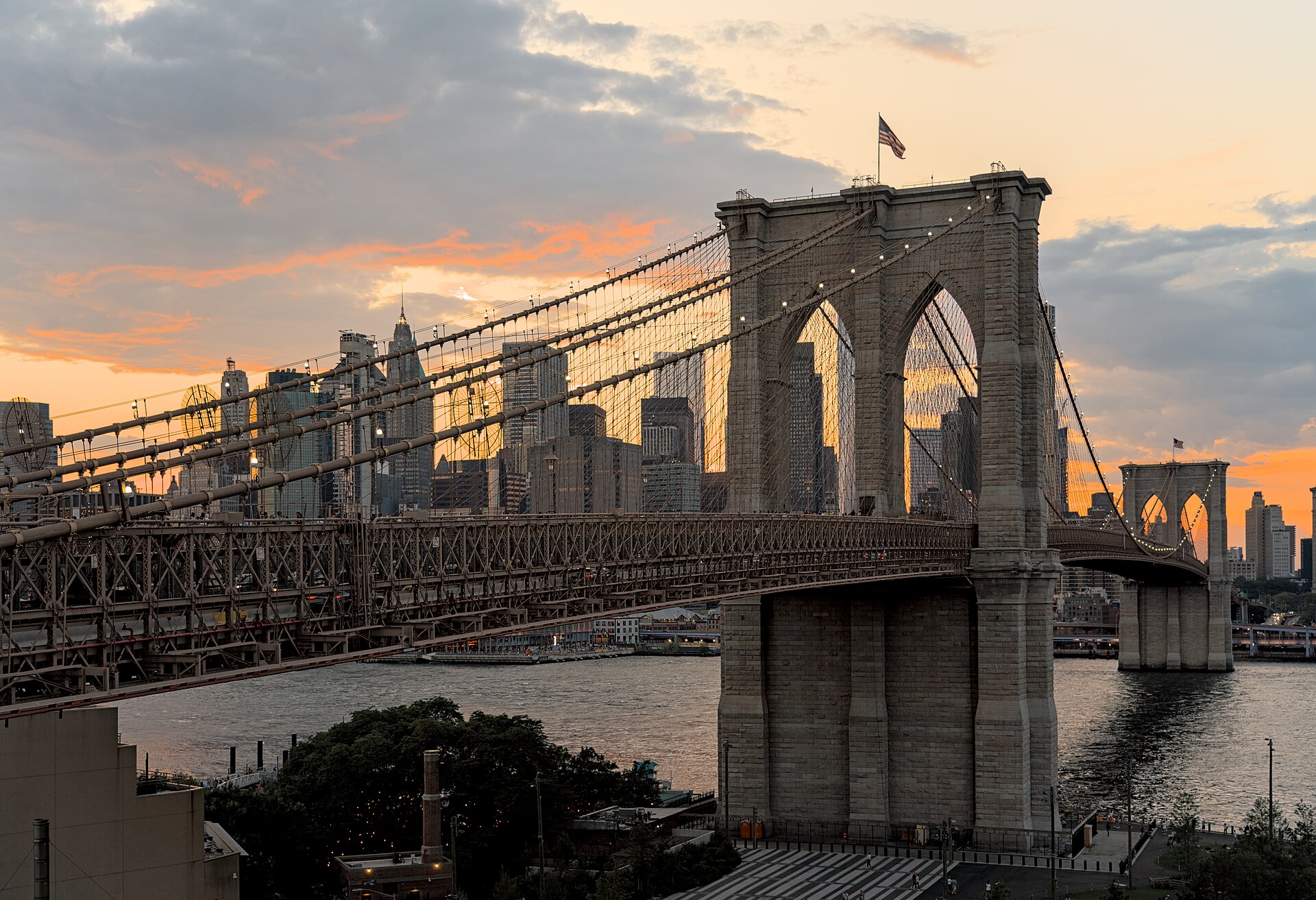 The Brooklyn Bridge at sunset, from a rooftop terrace at 60 Water St. (ThibautRe/CC BY-SA 4.0)
What arts and culture topics would you like us to cover? Please email ideas or feedback to features@epochtimes.nyc
