While working as a spy just before World War II, Frank Foley bent the rules to enable thousands of Jews to escape persecution in Germany. Foley’s cover remained solid while he helped with various rescues and military intelligence operations. This short, quiet, bespeckled man passed under the radar of his enemies.
Foley was born in Highbridge, Somerset, England on Nov. 24, 1884 to an engineer father. The boy, who was raised Catholic, studied at St. Joseph’s Roman Catholic School and Stonyhurst College in his early years. He wanted to become a priest initially and briefly studied at a Roman Catholic seminary in Poitiers.
But Foley soon chose to pursue a life of academics instead of the priesthood. In 1908, he traveled across Europe by taking various teaching jobs along the way. He eventually became fluent in German and French.
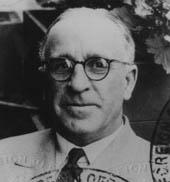 Maj. Frank Foley before 1940. (Public Domain)
A Spy in Plain Sight
By the time World War I broke out, Foley was living in Germany and was forced to escape back to England. Once home, he joined the war efforts with the Bedford and Hertfordshire Regiment in 1915. He was eventually sent to the Western front in February 1917.
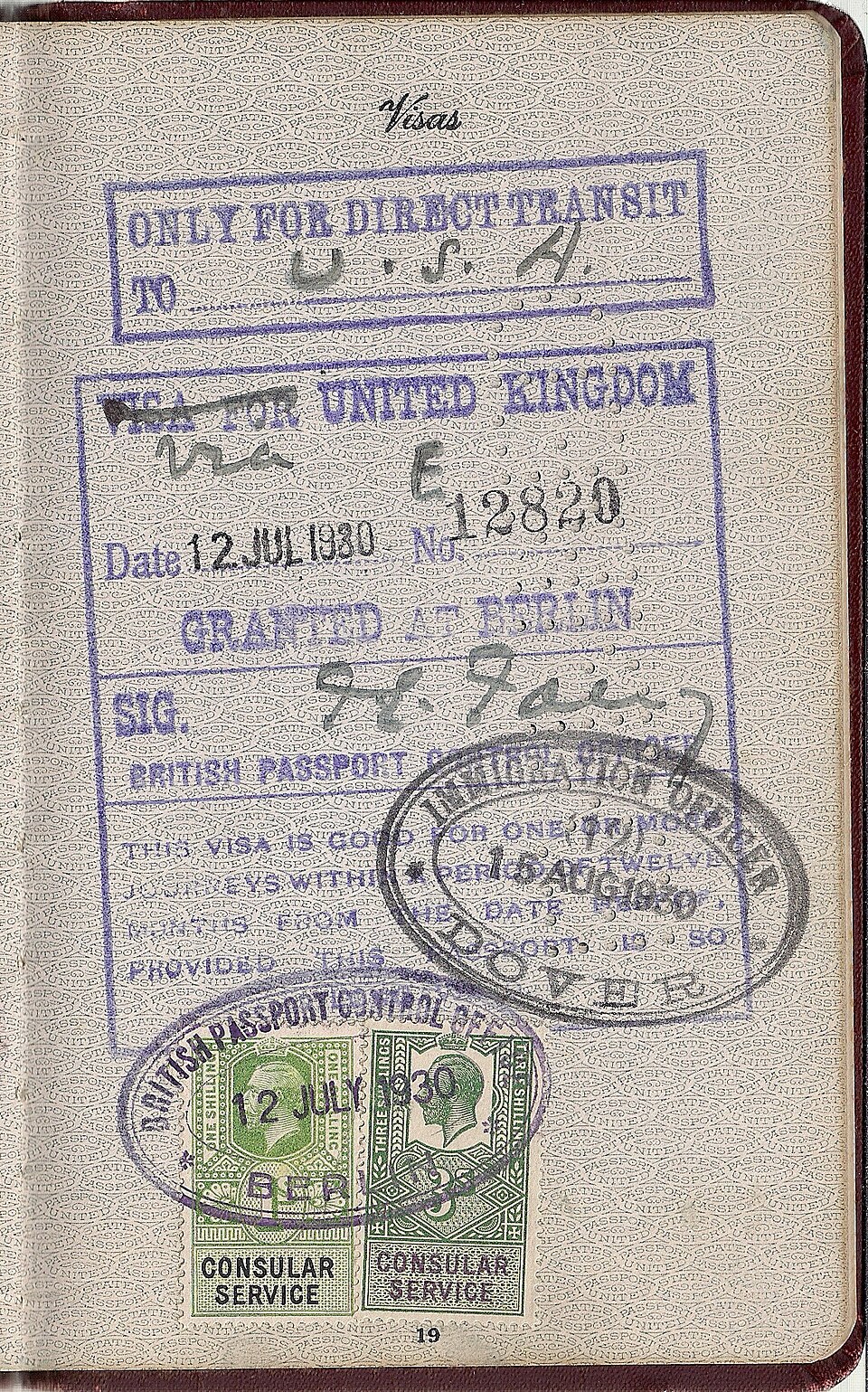 A British visa from Berlin signed by Frank Foley. (Public Domain)
Foley didn’t spend much time on the front lines. On March 21, 1917, he was seriously injured in combat when a German bullet struck his left lung. After a six-week hospital stay, Foley knew he was no longer fit for combat on the front lines. However, a senior officer noticed his language skills and talked him into applying for the “secret service” of the British military’s Intelligence Corps.
In 1919, Foley was hired by Military Intelligence (MI6) and sent to the British embassy in Berlin. His true job in Germany was to spy, but he worked undercover as the director of the passport control office.
While in Berlin, Foley kept his pulse on the political climate. Once he noticed that Adolph Hitler and his Nazi Party were rising to power, he fed information to the British. When Hitler took over Germany in 1933, the dictator urged Jews to leave the country.
Foley quickly saw the writing on the wall, especially since he was in charge of the passport office. His faith convinced him to help. Foley knew he had to do everything he could to help the German Jews leave the country even if it meant risking his life. He had no diplomatic immunity; if Foley was caught as a spy in Germany he would have been arrested and executed.
Every Jew in Germany was in danger, but strict immigration rules made it difficult to help them. Foley began breaking and bending the rules to approve over 10,000 visas to help Jews relocate to England and British Mandate Palestine.
Sometimes, Foley even went a step further to help rescue Jews from persecution. He visited Jewish internment camps with passports and helped people escape. He often hid people inside his Berlin apartment until he could secure a forged passport for them.
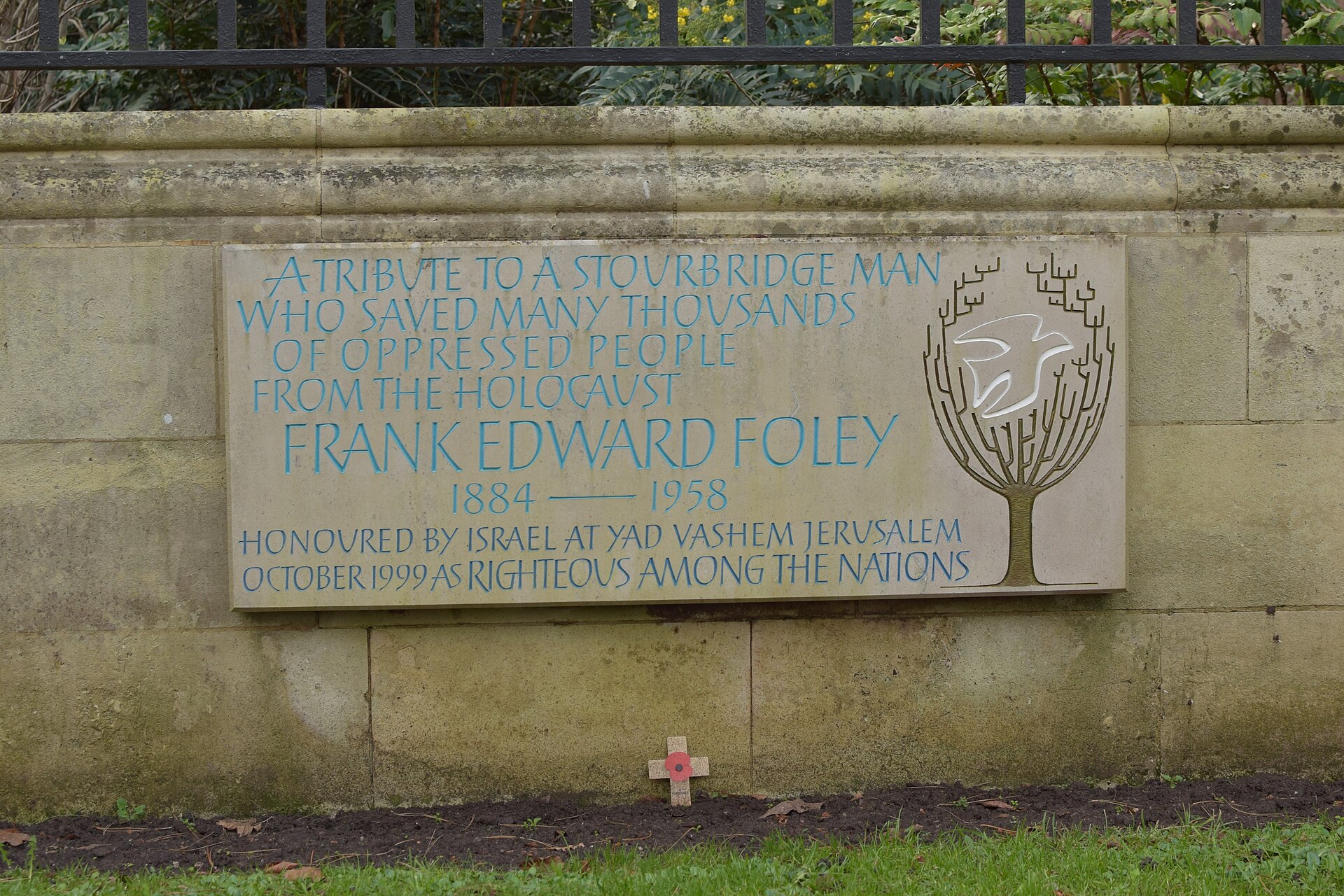 At Mary Stevens Park in Stourbridge, England, is a memorial plaque for Maj. Frank Foley. (Pikipeedia/CC BY-SA 4.0)
Once the war began in September 1939, Foley and his wife returned to England. However, before he fled Germany, Foley left a giant stack of pre-approved visas with a note on them saying they were to be used for people hoping to flee the country.
Foley was eventually stationed in Norway to run MI6 agents that had been planted in Nazi Germany. Due to his ability to recruit German double agents, Foley caught wind of Germany’s invasion of Norway in April 1940. Before he fled Norway, he aided the country’s commander-in-chief, General Otto Ruge, by contacting his home country to request assistance against the invasion.
Foley continued to manage a network of double agents working MI5 and MI6, called the “double cross system,” until WWII ended. After the war, he returned to Germany to help find Nazi war criminals. He retired to Stourbridge, England in 1949 where he lived a quiet life. He never took credit for his rescue efforts. He died in 1958.
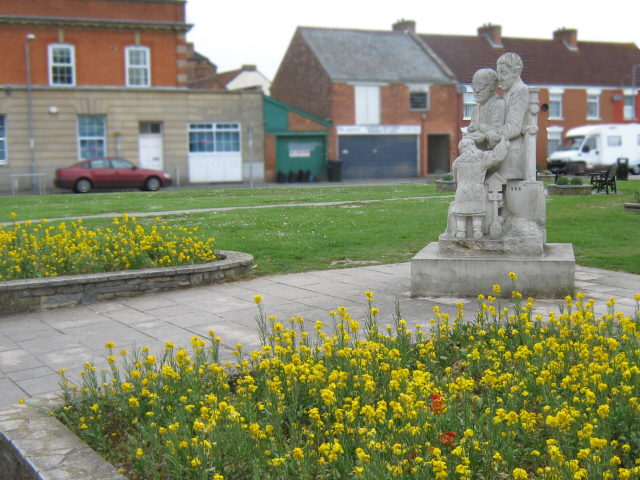
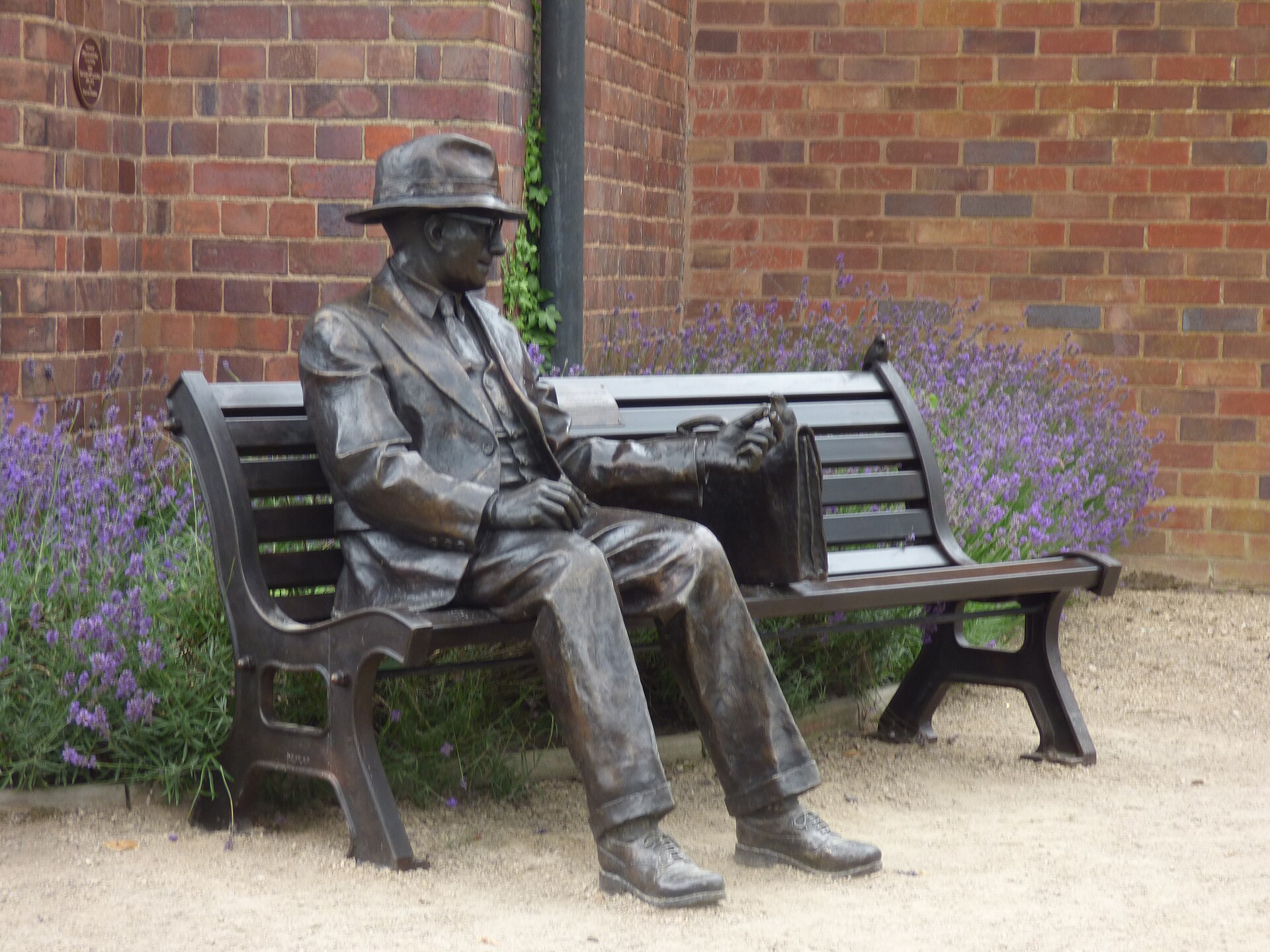 A bench and statue of Maj. Frank Foley was unveiled in 2018 at Mary Stevens Park in Stourbridge, England. (Elliott Brown/CC BY-SA 2.0)
Foley never receive true recognition for his efforts until Israel awarded him the title of Righteous Among the Nations in 1999. In 2004, a remembrance plaque was erected in Stourbridge on the 120th anniversary of his birth. Foley received no official recognition from the British government until he was named a British Hero of the Holocaust in 2010.
What arts and culture topics would you like us to cover? Please email ideas or feedback to features@epochtimes.nyc