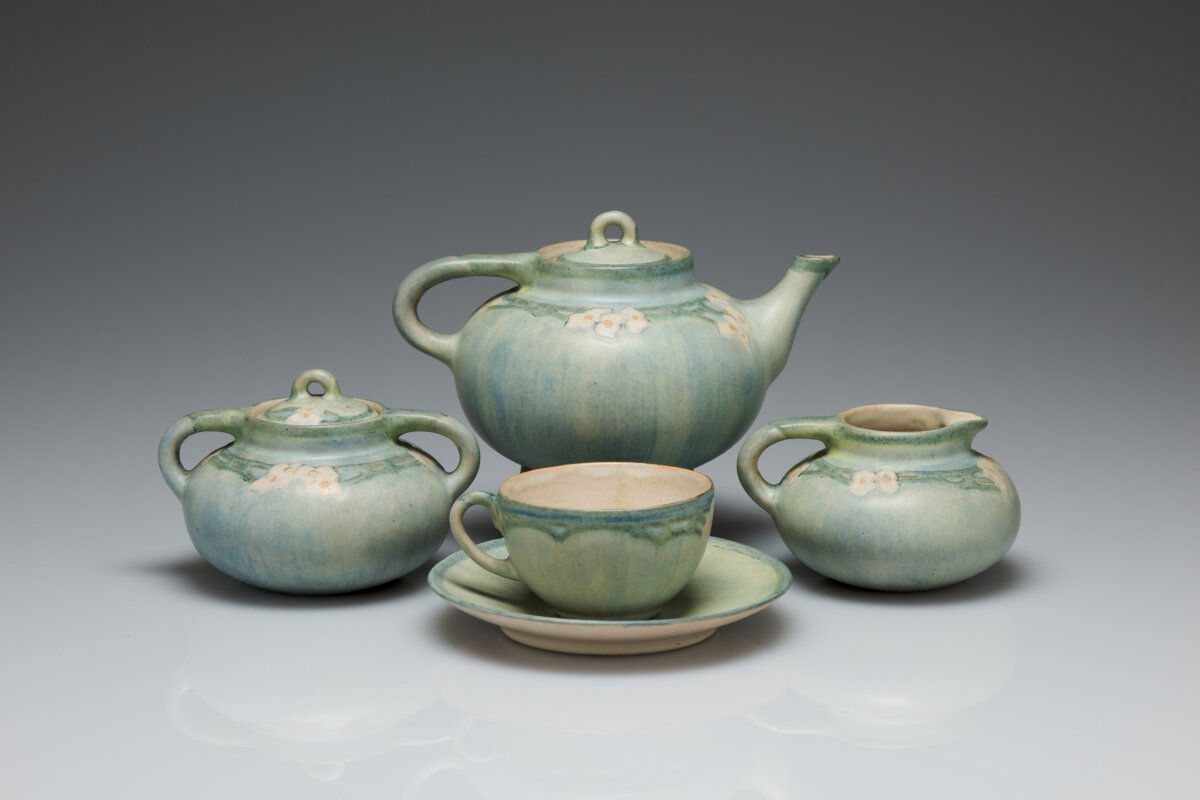
Newcomb Pottery was a singular artistic enterprise established in New Orleans just before the turn of the 20th century. One of its founding members, the ceramicist and educator Mary G. Sheerer (1865–1954), stated famously that “the whole thing was to be a southern product, made of southern clays, by southern artists, decorated with southern subjects!” Indeed, the clay came from the state’s bayous. The designs featured romanticized Southern motifs drawn from nature.
Male employees of Newcomb Pottery threw the vessels, as it was then considered unladylike for a woman to sit at a potter’s wheel. However, women artists chose the object’s shape, designed its motifs, and applied the decoration and glazes. The resulting work was critically acclaimed both domestically and internationally, making Newcomb Pottery one of the country’s most significant art potteries of its day.
Shaping Character
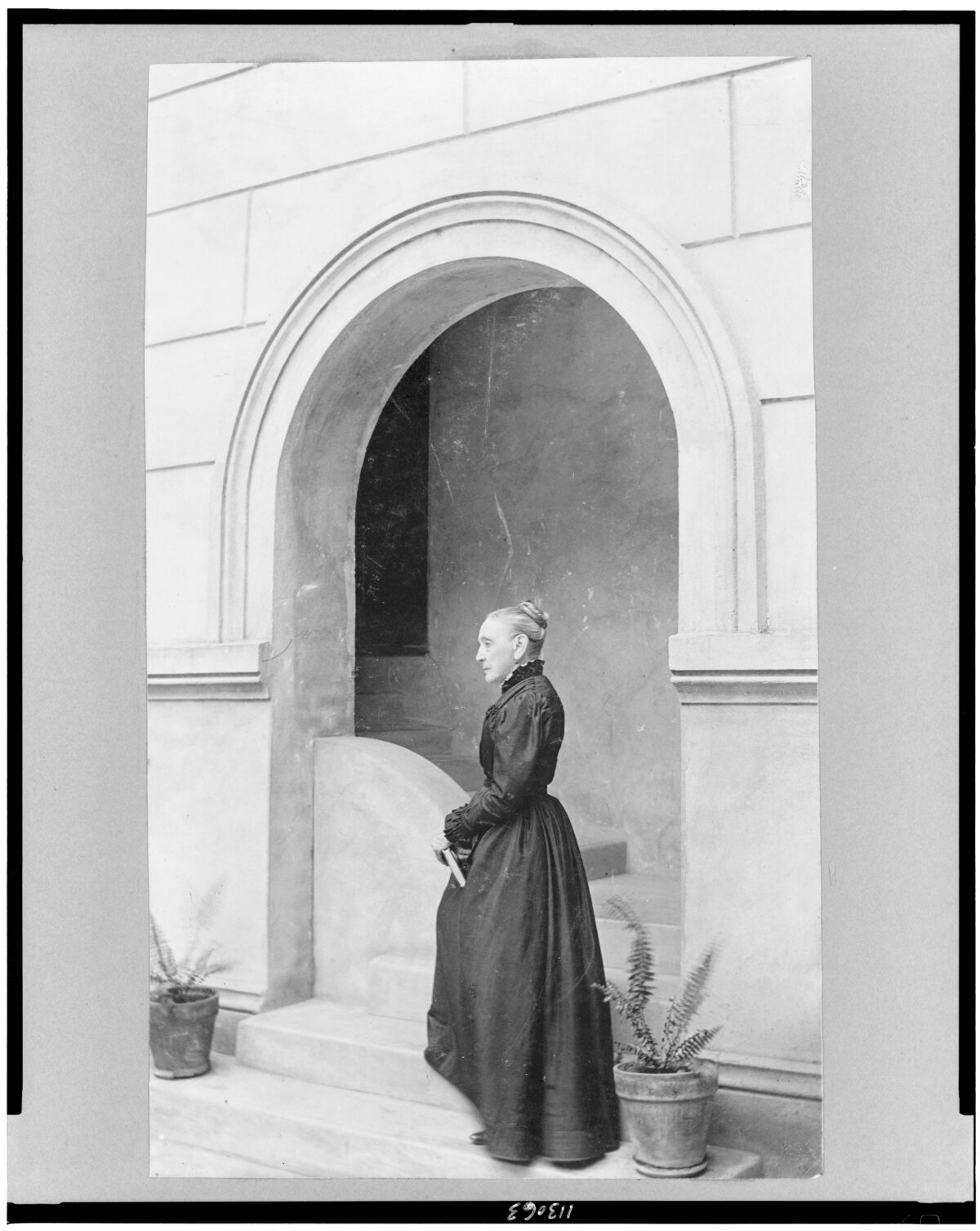
The history of the Pottery begins with the 1886 founding of the Tulane University affiliate H. Sophie Newcomb Memorial College, which was the nation’s first coordinate college for women. Newcomb College’s vigorous art program was overseen by the artist Ellsworth Woodward (1861–1939). In addition to pottery, the curriculum included painting, sculpture, mechanical and architectural drawing, woodcarving, embroidery, metalworking, jewelry, bookbinding, and printmaking. Some of these subjects were also formalized as enterprises with artisanal wares offered for sale. Pottery remains the most famous output.
Education in the arts was intended to give Newcomb’s females students the skills to pursue a respectable vocation at the time. In 1894, Woodward made an instrumental move, engaging Sheerer as an Instructor of China Decoration and Design. Sheerer, who later became assistant director of Newcomb Pottery, had trained at the Cincinnati School of Art, which was highly inspired by the English Arts and Crafts movement, as well as at the Art Students League in New York and the Pennsylvania Academy of Fine Arts. A recognized authority on ceramics, she was instrumental in shaping the character of Newcomb ceramics.
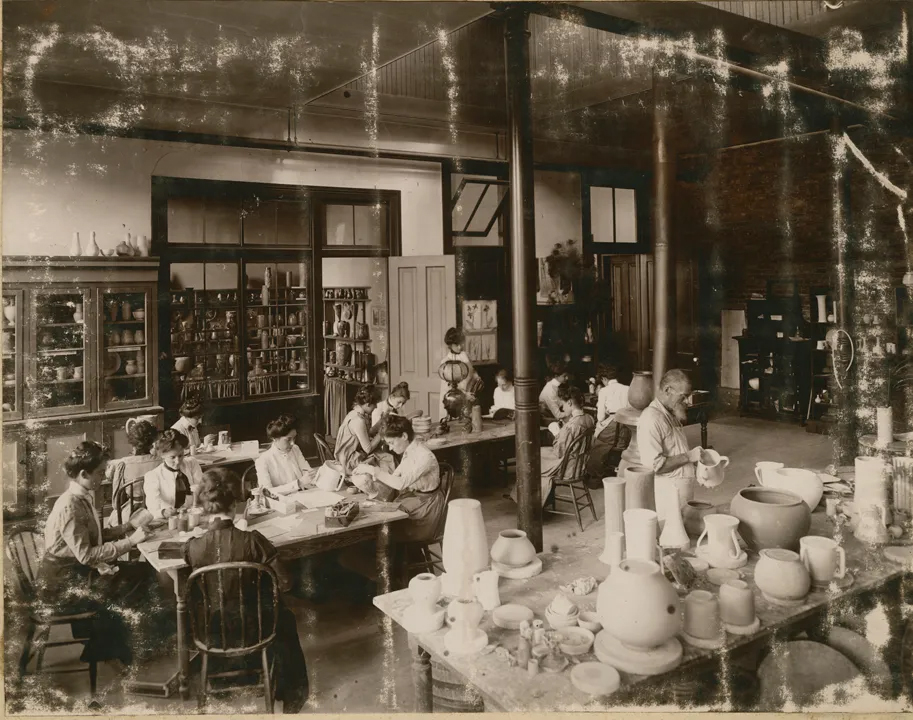
Newcomb Pottery was launched by the art faculty in 1895. Students were hired by the Pottery after graduation, and proceeds from sales were divided between the school and the makers. A year after its founding, the Pottery exhibited publicly for the first time and received rave reviews. Examples were sent to Paris to be displayed in the Exposition Universelle de 1900, and Newcomb was awarded a bronze medal. Shortly thereafter, the Tiffany Glass Company invited Newcomb to join them in exhibiting at the Pan-American Exposition in Buffalo, New York. This time, the Pottery enterprise won a silver medal. In total, Newcomb potters earned eight international exhibition medals before 1916. Fired-up word spread, with demand for vessels exceeding supply.
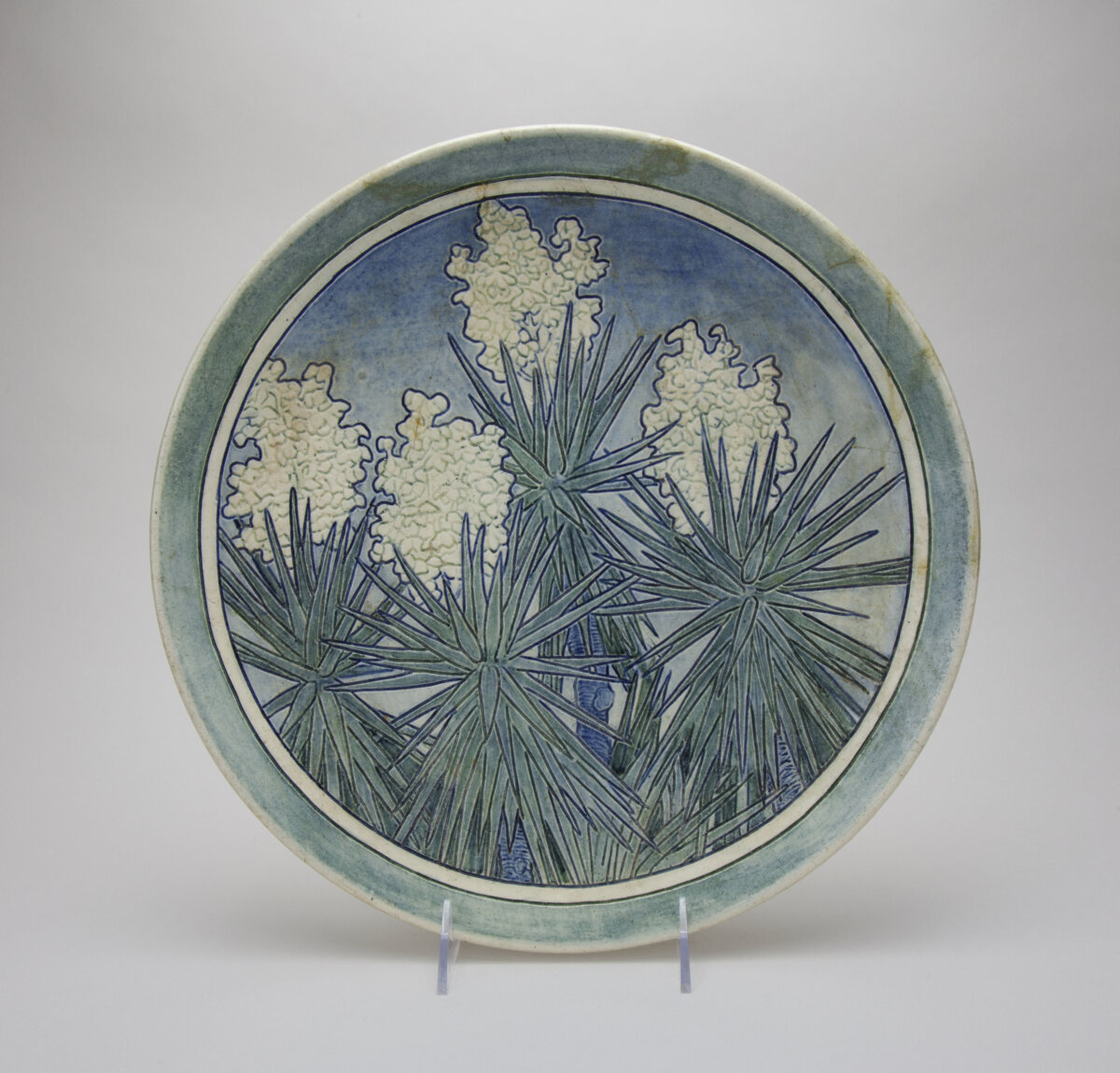
The runaway success of Newcomb Pottery was partially due to the aesthetic and practical criteria of the ceramics set by Woodward and Sheerer. This burnished the pottery’s distinctive and commercial qualities. Each object had to be functional, whether it was a plate, bowl, cup, or vase. Southern aspects were emphasized; no two vessels were alike; and all wares were made by hand. The other intrinsic factor that propelled their fame was the talented makers themselves.
Functional Beauty
The Newcomb Pottery’s founders were influenced by the Arts and Crafts movement that emerged in Britain in the latter part of the 19th century. Inspired by the philosophy of designer William Morris and writer John Ruskin, it was a reaction against the Industrial Age’s mass production. The movement believed in the importance of the individual artist hand-making beautiful and useful everyday objects, which were inspired by nature in earth-toned colors and stylized forms.
These tenets were taken up by the Pottery, and in the early 20th century, it was the most famous embodiment of this movement in the American South. Throughout its multi-decade tenure, Newcomb Pottery explored a range of colors, such as yellow, pink, and lavender, and different styles, including Art Nouveau and Art Deco. However, its quintessential examples are in an Arts and Crafts aesthetic with a foggy blue-green palette, soft matte glaze, and sculpted low-relief motifs.
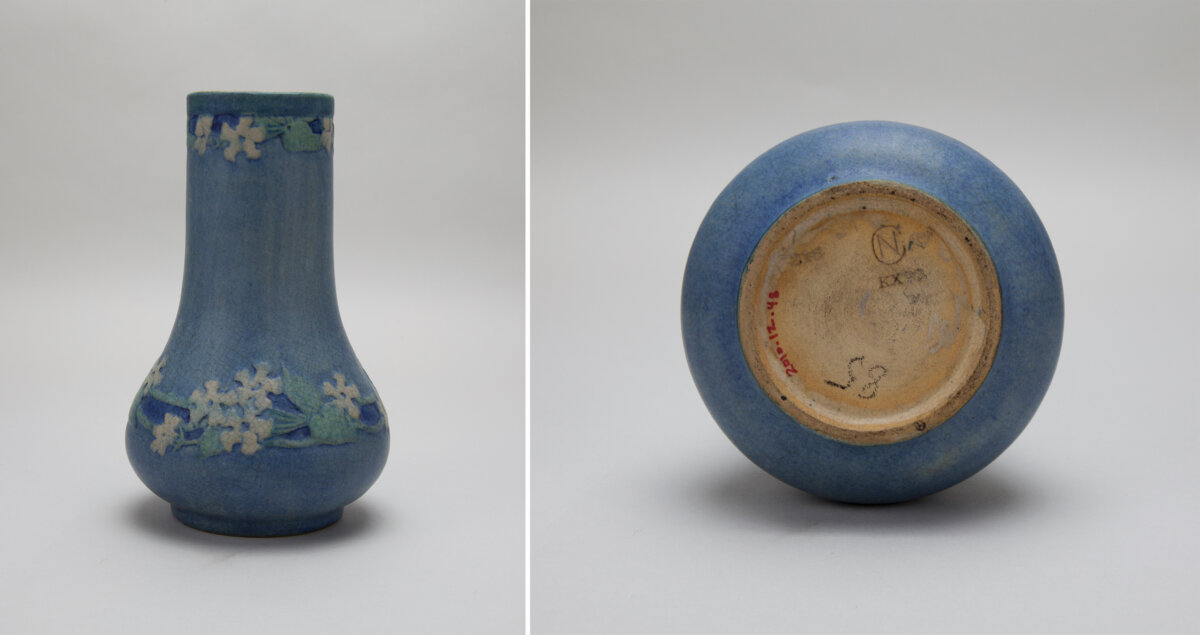
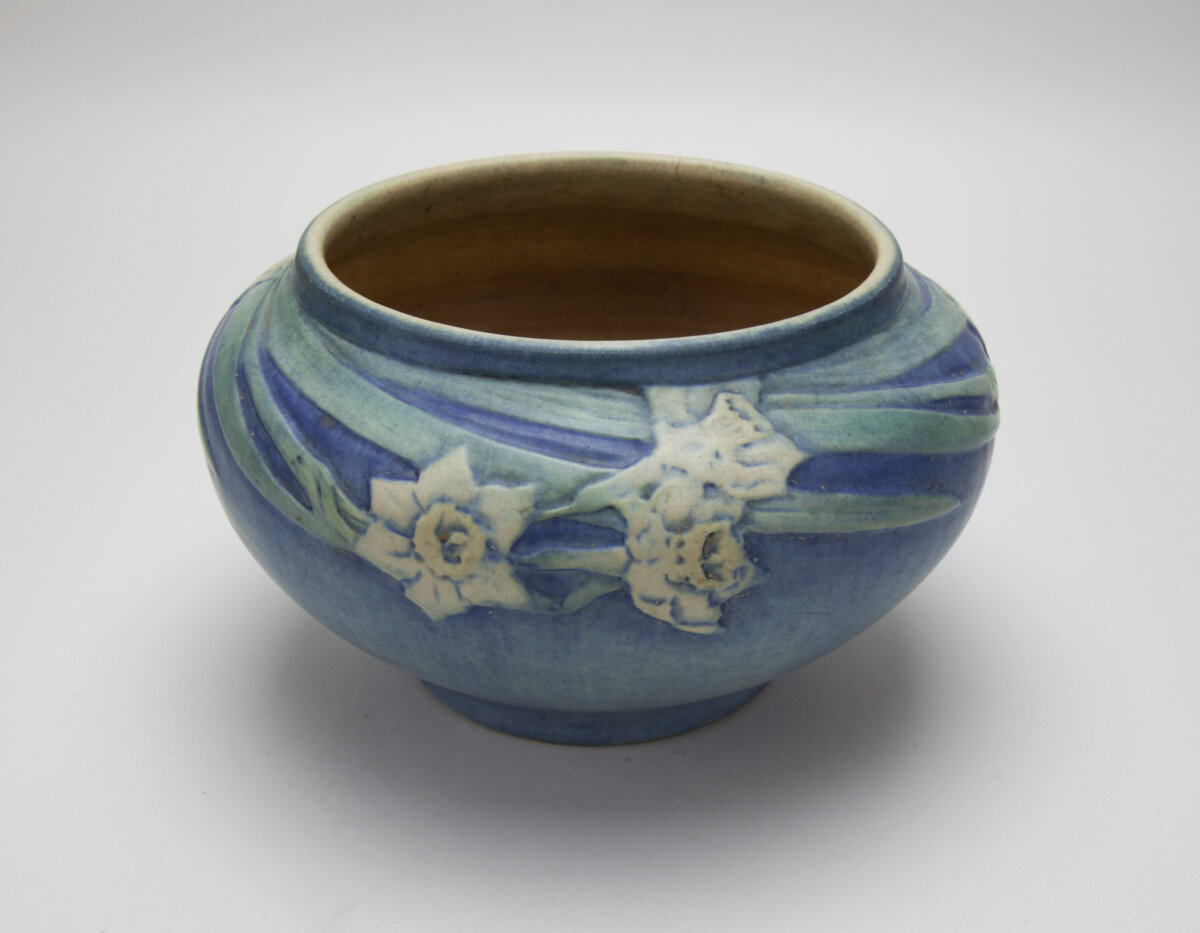
The decorative hallmarks of this cohesive style are many types of regional flora and fauna. Its span includes magnolias, the five native, beardless Louisiana irises, jonquils, water lilies, crepe myrtles, cypresses, Spanish moss-covered trees, marsh birds, winged insects, fish, and even alligators. A spotlight is on the five native beardless Louisiana irises, which were first documented in the 1820s by John James Audubon.
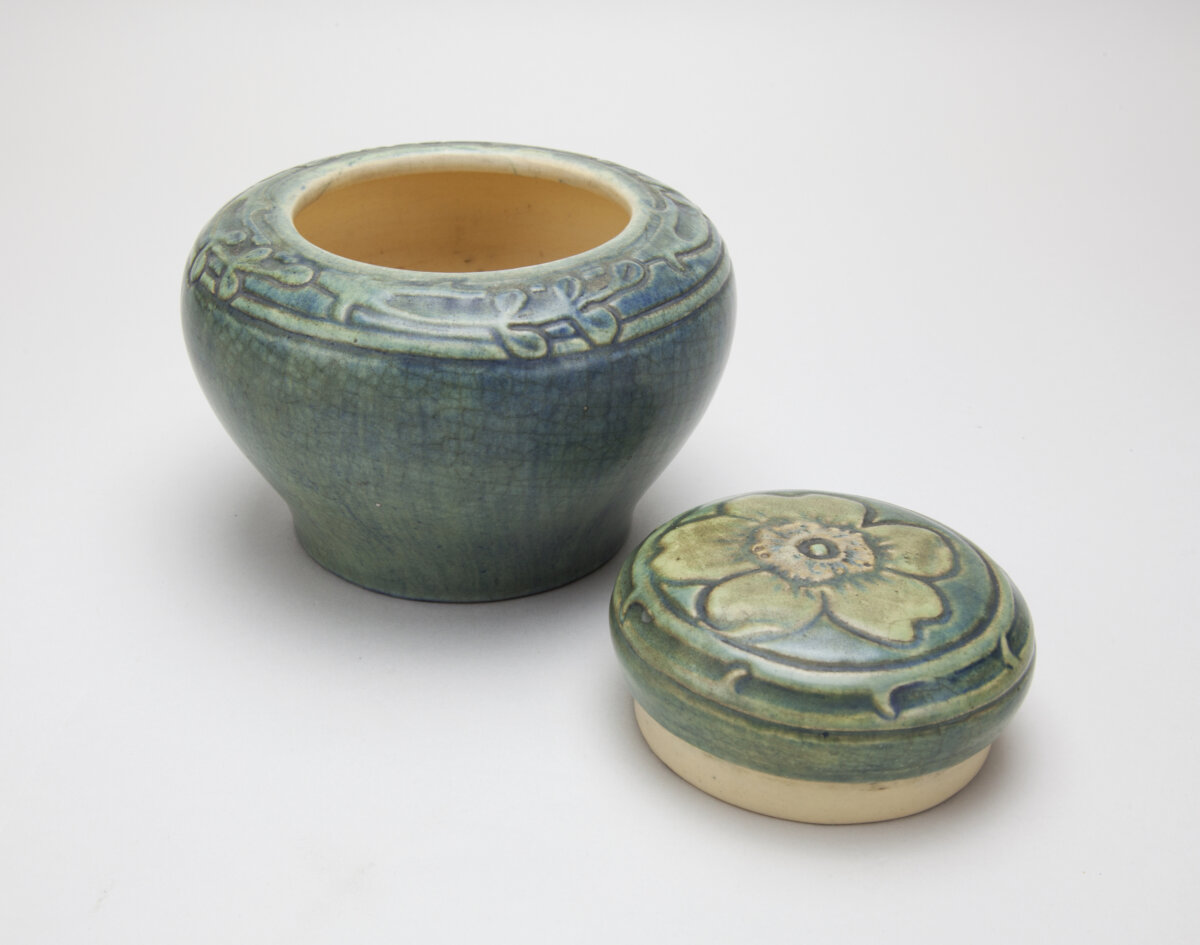
Louisiana’s state flower is the velvety white blossom of the Southern Magnolia, or Magnolia grandiflora. It was a popular motif with Newcomb craftswomen. An example is “Jar with Magnolia Lid” by Mary Louise Dunn (1889–1964). Made in 1911, it is part of the collection of Newcomb Art Museum of Tulane (NAM), which has the world’s largest collection of Newcomb Arts and Crafts.
Emblems of the South
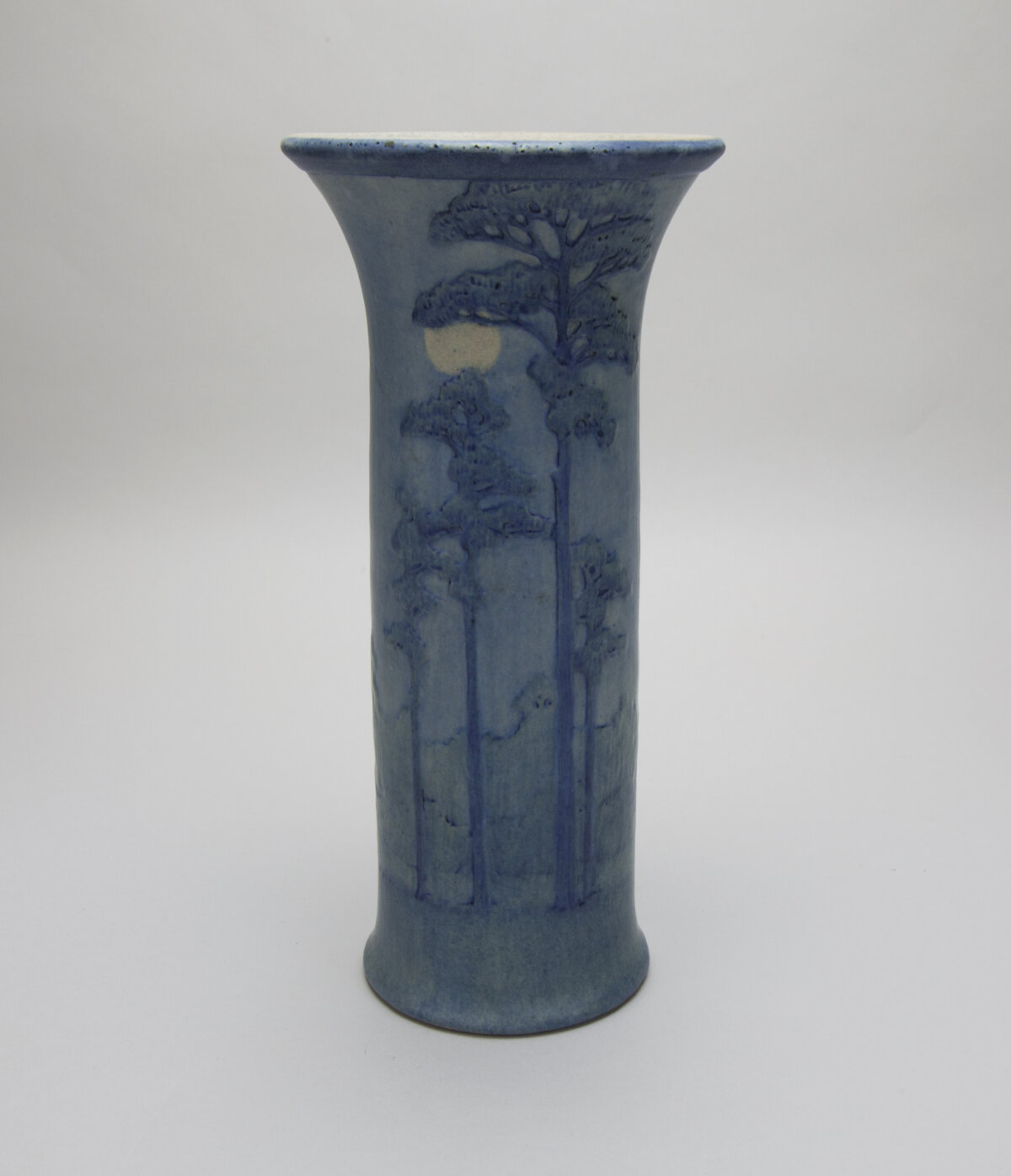
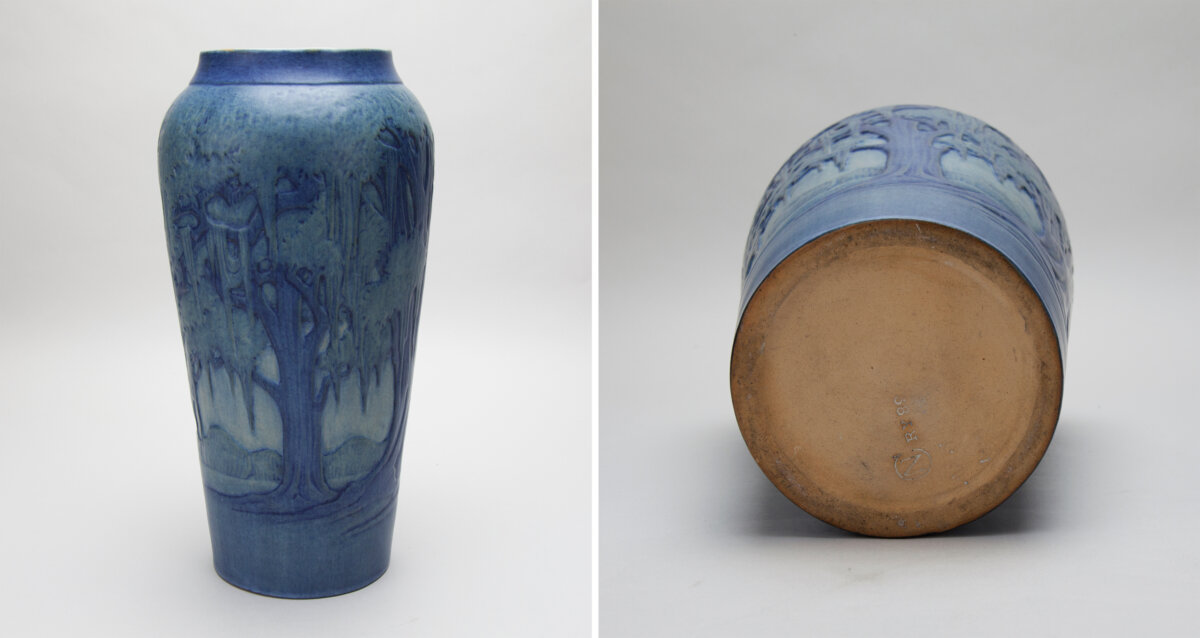
One of Newcomb’s most important pottery decorators was Anna Frances “Fanny” Connor Simpson (1880–1930). An undergraduate and graduate student, she joined the Pottery enterprise in 1908 and stayed until 1929. She was a participant in nearly every Newcomb Pottery exhibit held during her lifetime. NAM’s holdings include a 1920 “Trumpet Vase with Cypress Tree,” which she designed. This indigenous bald cypress that can grow in water and reach up to 100 feet tall is Louisiana’s state tree.
Simpson’s 1929 “Vase with Live Oak, Moon and Moss Design” at NAM showcases a tree native to the southeastern U.S. that is considered emblematic of the Old South.
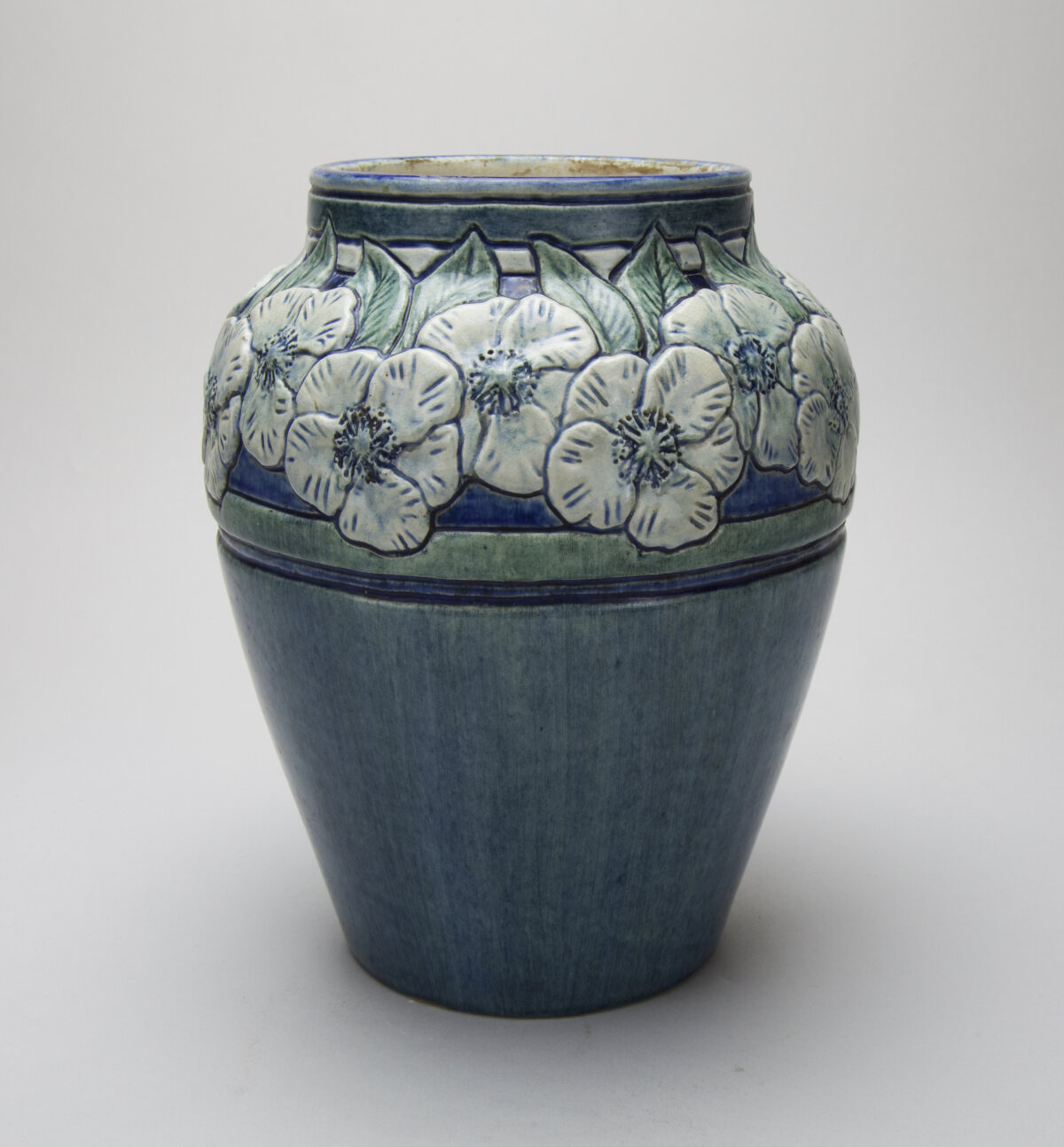
An early example of a blue and green Newcomb ceramic with a glossy finish (unlike the standard matte finish used from 1910–1930) is NAM’s 1906 “Vase with American Pillar Swamp Rose Design.” Leona Nicholson (1875–1966) was the artist. Active with Newcomb until 1929, she was also an independent studio ceramist who handbuilt her own pieces. Nicholson’s work was exhibited in museums across the country, and she was the first New Orleans woman to receive Boston Society of Arts and Crafts distinction and title of “Master Craftsman.”
The sales of Newcomb Pottery declined in the 1930s. There are numerous reasons for the downturn in popularity, including new employment opportunities for women, the retirement of Woodward and Sheerer, and the public’s changing aesthetic taste. New Newcomb leadership made the decision to turn away from production and focus on education. The Newcomb Pottery enterprise closed at the end of the 1939–1940 academic year.
Newcomb Pottery lasted an impressive almost 50 years. In its heyday, it was one of the country’s most successful and exceptional art potteries. It left an important artistic and social legacy, provided employment to around 90 Newcomb graduates, and created some 70,000 one-of-a-kind pieces. Notable for virtuosity, complex creative design, and technical mastery, these sophisticated and beautiful ceramics continue to be valued by collectors and inspire artists to this day.
What arts and culture topics would you like us to cover? Please email ideas or feedback to features@epochtimes.nyc