



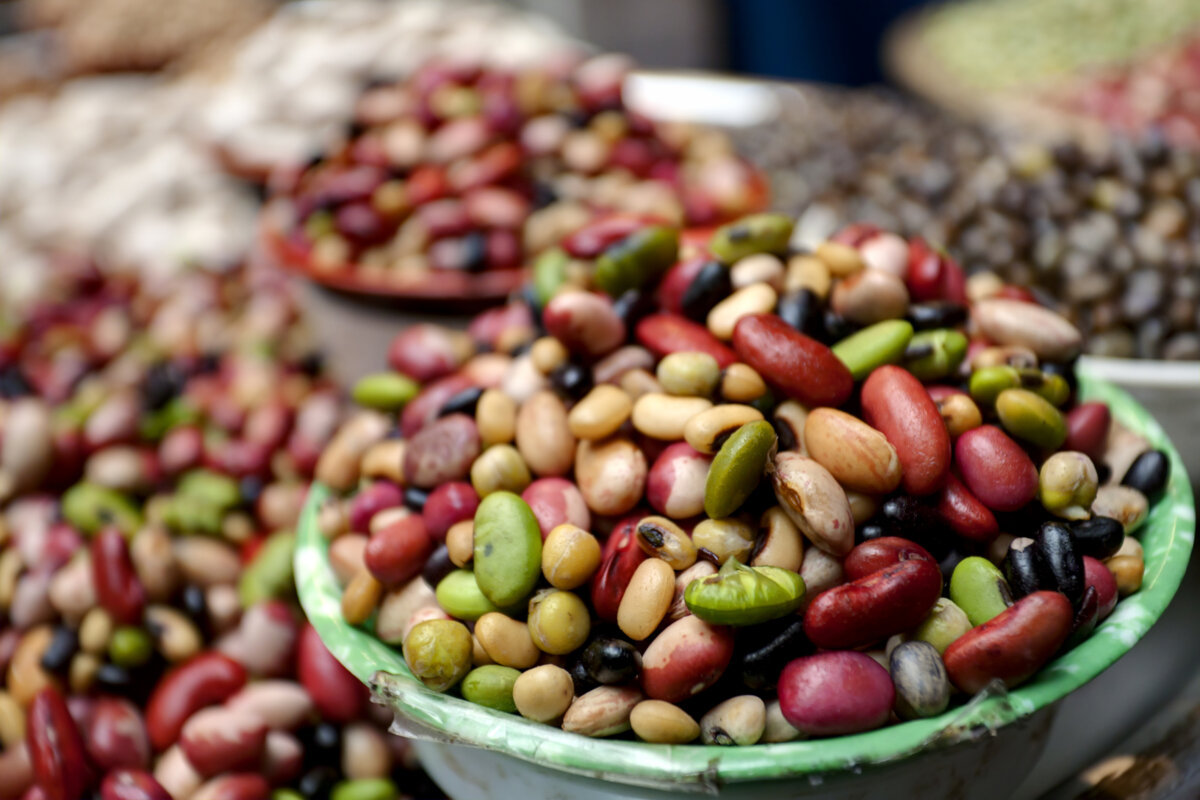
Let’s be clear: Canned beans are simply not as tasty as the dried beans you cook yourself.
Yes, canned beans are convenient, speedy, and nutritious. But cooking dried beans is much easier than you think. First of all, you do not need to soak dried beans overnight. Second, beans cooked from scratch create their own broth to use in soups, stews, and sauces.
The book “Cool Beans: The Ultimate Guide to Cooking with the World’s Most Versatile Plant-Based Protein” from food writer Joe Yonan smashes a lot of bean myths. Don’t soak! Do salt! Yes, most beans take three or more hours of simmering, but it’s all unattended. (Pressure cookers such as Instant Pots can speed up the process.) The end result will be firm-textured, silky beans deliciously enhanced with the herbs and aromatics that have shared the pot.
Beans are among the oldest and most universal sources of protein. They are a staple pantry item in the homes of cooks across the globe—Mexico, India, Nigeria, Israel, China, Italy, Japan, Spain, Morocco, and Peru. Finally, thanks to the growing interest in plant-based proteins, they’re catching on here.
The Midwest Heartland region—Minnesota, North Dakota, and Michigan—is the nation’s largest producer of dried beans. The farmland’s rich soils and long, cool growing season are especially well-suited to pinto, kidney, and black beans. Plus, these crops are also good for the land. Beans are “nitrogen fixers” that improve the soil’s fertility, prevent runoff into our waters, capture carbon, and shelter pollinators.
Beans are immensely affordable, uniquely adaptable, and flexible. Categorized as both a protein and a vegetable, they’re extremely nutritious, packed with antioxidants and heart-healthy fibers, are far lower in calories than animal proteins, and contain no fat. Their benefits may also be a dietary key to a long and healthy life, according to Blue Zone founder Dan Buettner.
How to Cook Beans
When cooking beans, there are a few simple basics to remember:
- Put the beans into the pot and add enough water to cover them by about 3 inches.
- Add about 1 tablespoon of salt to 1 pound of beans.
- Add aromatics to the pot: a few cloves of garlic, a small onion, a bay leaf, herbs, and a few peppercorns.
- Do not add tomatoes or acids until the very end; they tend to harden the beans and slow the cooking.
- Set the pot over high heat, bring to a boil, reduce the heat, cover, and simmer until done. Start checking the beans after about 2 hours, although they may take longer. When they are tender and creamy, remove from heat.
- Store cooked beans in their broth in the refrigerator for up to a week or freeze.
- 1 pound of dried beans will yield 5 to 6 cups of cooked beans, plus 2 to 3 cups of stock.
- 1 can of beans is equal to 1 to 2 cups cooked beans, depending on the size of the beans and the size of the can.
Black Bean Sweet Potato Chili
Serves 4 to 6
This rich, satisfying chili is just right for a wintry night. It comes together in less than an hour (assuming you’ve already cooked the beans). Feel free to switch out the black beans for kidney or pinto beans, and don’t forget all the accompaniments.
- 2 to 3 tablespoons vegetable oil
- 1 onion, finely chopped
- 2 cloves garlic, smashed
- Coarse salt and freshly ground black pepper, to taste
- 2 tablespoons maple syrup
- 3 teaspoons ground cumin
- 1 cup bean stock, vegetable stock, or water
- 2 chipotles in adobo with their sauce, or to taste
- 1 pound sweet potatoes, scrubbed and cut into 1-inch pieces
- 1 (28-ounce) can diced fire-roasted tomatoes
- 2 tablespoons fresh lime juice
- Salt and freshly ground black pepper, to taste
- 5 cups cooked black beans (see How to Cook Beans above)
- Chopped cilantro, for garnish
- Sliced avocado, shredded Cheddar cheese, corn chips, for serving
Film a large heavy pot with the oil, and set over medium heat. When the oil begins to ripple, add the onion and garlic, season with salt and pepper, and cook until translucent, about 2 to 3 minutes. Stir in the maple syrup, cumin, and stock and bring to a simmer. Add the chipotles and sauce, sweet potatoes, tomatoes, and lime juice. Season to taste with salt and pepper. Increase the heat and bring to a boil.
Reduce the heat to a simmer, cover the pot, and cook until the sweet potatoes are tender, about 30 to 40 minutes; stir in the cooked beans and continue cooking another 3 to 5 minutes. Taste and adjust the seasonings. Serve garnished with the cilantro and pass the avocado, cheese, and corn chips alongside.
Moroccan Bean, Squash, and Tomato Stew
Serves 4 to 6
This hearty, simple vegetarian stew is comfort in a bowl. Hunks of squash add a sweet earthiness to the vibrant notes of ras el hanout, a complex and aromatic spice blend available in many supermarkets. This Moroccan seasoning of cumin, coriander, turmeric, cinnamon, nutmeg, cloves, ginger, and pepper is well worth keeping on hand. Serve this fragrant stew with plenty of pita to sop up all the goodness left in the bowl.
- 2 tablespoons olive oil
- 2 medium onions, halved and sliced
- 3 cloves garlic, smashed
- 1/4 cup chopped parsley, plus more for garnish
- 1 red pepper, seeded and cut into 2-inch pieces
- 1 cup peeled, cubed butternut squash, sweet potato, or carrot
- 2 to 3 tablespoons ras el hanout (see Tip below)
- Salt and freshly ground black pepper, to taste
- 2 cups bean or vegetable stock, more as needed
- 1/4 cup tomato paste
- 5 to 6 cups cooked pinto or white beans (see How to Cook Beans above)
- 1 to 2 tablespoons lemon juice, to taste
- Pepitas, for garnish
Film a large deep pot with oil, and set over medium heat. Add the onions, garlic, parsley, red pepper, squash, and ras el hanout, and season generously with salt and pepper. Stir the vegetables with the spices and cook until fragrant, about 3 to 5 minutes. Stir in the stock and tomato paste, bring to a boil, then reduce the heat and simmer until the squash is tender, about 15 minutes.
Stir in the beans and lemon juice and continue cooking until the flavors have combined and the beans are heated through. Taste and adjust the seasonings. Serve garnished with pepitas and additional parsley.
Tip: Substitute ras el hanout by using 2 teaspoons ground cumin, 1 teaspoon ground coriander, 1 teaspoon paprika, 2 teaspoons ground ginger, 1 teaspoon cinnamon, 1 teaspoon ground nutmeg, and a generous pinch of cayenne or cloves.
Lemony Pasta, White Beans, and Olives
Serves 4 to 6
Braising cooked beans with good olive oil, garlic, and lemon turns the classic Italian Pasta e Fagioli (pasta and beans) into a speedy, robust one-dish dinner. Black olives add a fine umami boost to the velvety beans. Serve the pasta with a crisp green salad and hunks of rustic bread.
- 1 pound pasta of choice
- 1/4 cup extra-virgin olive oil, plus more as needed
- 2 large shallots, thinly sliced
- 4 cloves garlic, smashed
- 1/4 cup chopped kale
- 1/4 teaspoon crushed red pepper, plus more as needed
- Salt and freshly ground black pepper
- 5 to 6 cups cooked cannellini beans
- 1/2 cup bean stock or vegetable stock, or more as needed
- Zest and juice of 1 lemon
- 1/2 cup pitted black olives, chopped
- 1 1/4 cup chopped parsley
- 1/4 cup grated Parmesan cheese, plus more for finishing
Cook the pasta in a large pot of heavily salted water until tender but still firm, about 10 to 12 minutes. Drain and set aside.
Preheat the oven to 350 degrees F. Generously grease a baking dish with oil.
Film a large deep skillet with the 1/4 cup of oil, and add the shallots, garlic, kale, red pepper flakes, and salt and pepper. Cook until the kale is wilted and tender, about 3 to 5 minutes. Stir in the beans and toss to coat with the vegetables, then stir in the stock and simmer for 3 to 5 minutes. Add the lemon zest and juice, olives, and parsley, then fold in the pasta, adding more stock as needed. Fold in the cheese.
Transfer the pasta to the baking dish. Sprinkle with more Parmesan, and bake until the cheese is nicely melted, about 3 to 4 minutes. Serve garnished with a drizzle of oil and a pinch of red pepper flakes.
Dear Readers: We would love to hear from you. What topics would you like to read about? Please send your feedback and tips to features@epochtimes.nyc.
