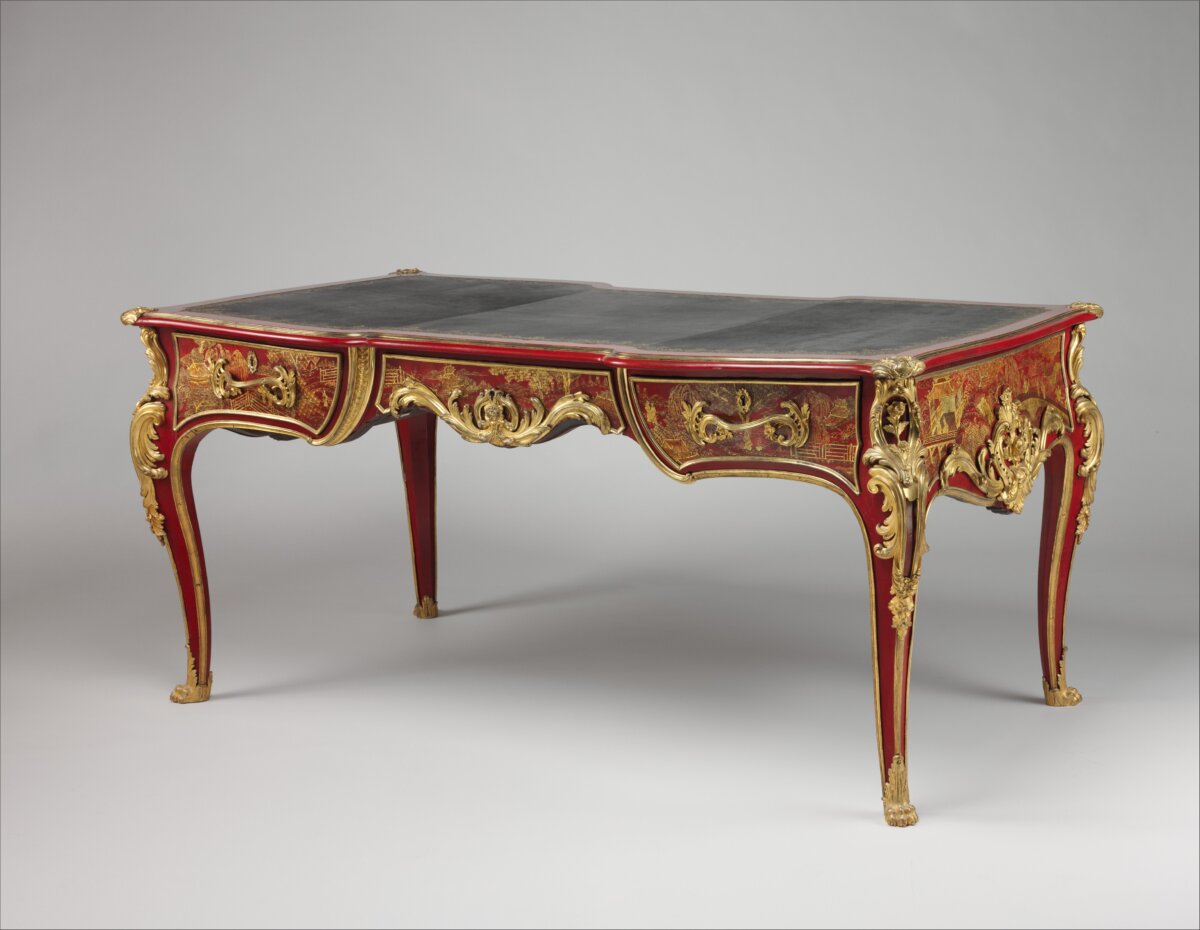
There are many superlatives associated with New York’s Metropolitan Museum of Art, which is the most-visited museum in the country. Among its many rarefied treasures is a 1759 red-lacquered oak writing table (bureau plat) made by Gilles Joubert for King Louis XV of France. The Met cites it as “one of the finest and most important pieces of French eighteenth-century furniture to be found in America.” Many experts consider it the best furniture piece ever made for Louis XV (1710–1774).
The incredibly prolific Joubert (1689–1775) had a long and successful career as a craftsman. He supplied furniture to the French royal household for over 25 years, delivering more than 4,000 items. In 1763, he was appointed “ébéniste du roi” (cabinetmaker to the king). From there, during a 10-year period Joubert made or oversaw the creation of “about 2,200 [objects] … including forty-four writing desks, more than five hundred commodes, over a thousand small tables,” according to the Getty Center in Los Angeles.
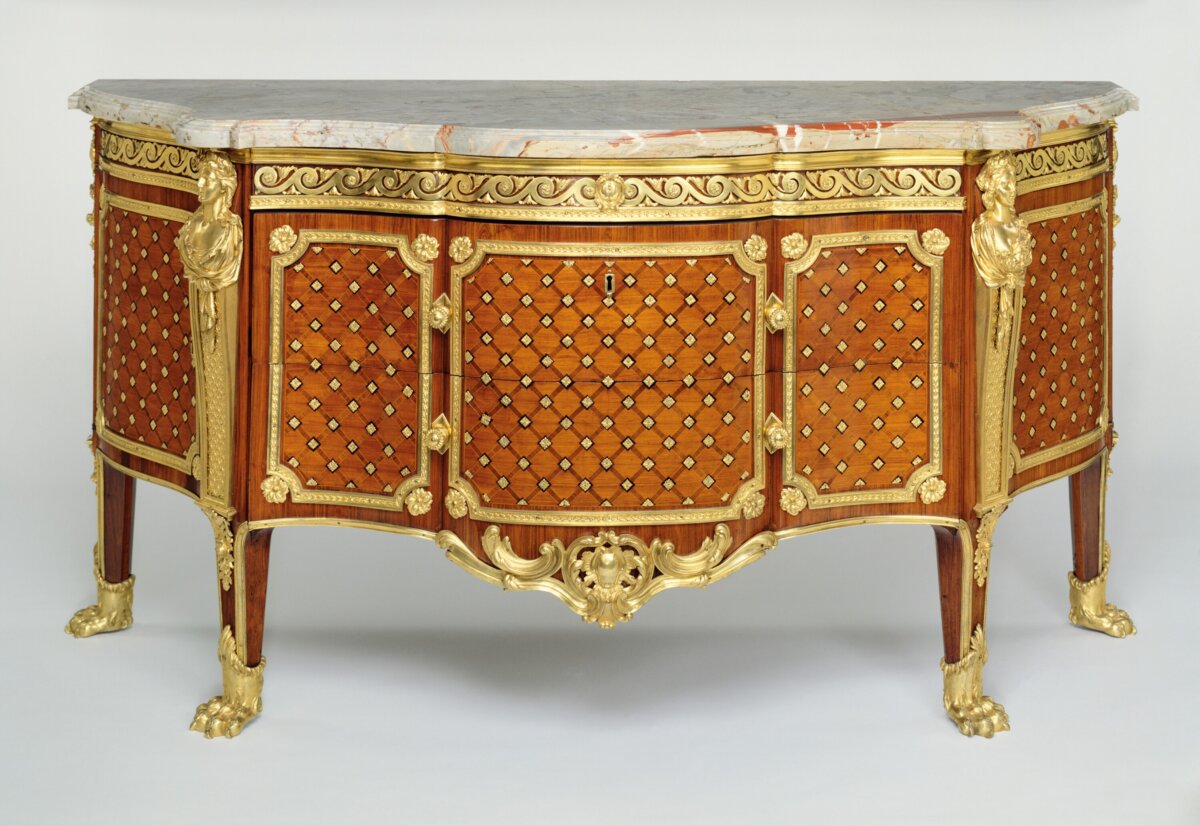
The Getty owns one of his commodes, made in 1769 for Madame Louise (1737–1787), a daughter of Louis XV. Joubert was 80 years old when the large chest of drawers arrived at Versailles for the princess’s bedroom. It is an impressively luxurious item with thick gilding, substantial marble top, and detailed gilt-bronze rosettes.
The Met’s rectangular writing table was also made for Versailles, specifically Louis XV’s Cabinet Intérieur. This was a small, sumptuous study where the king conducted daily business. With windows overlooking the palace’s courtyard below, it was one of the monarch’s most beautiful private rooms. The flat-topped desk is recorded as delivered on Dec. 29, 1759. It remained in the Cabinet Intérieur for the rest of Louis XV’s reign and into that of his grandson and successor, Louis XVI (1754–1793)
Exactly 27 years after its arrival, it was replaced by a new marquetry writing table made by “ébéniste” Guillaume Benneman for Louix XVI. Decorated with gilt-bronze mounts, it is veneered with 12 marquetry panels displaying fruit, flowers, and the royal cipher. Today, it is in the collection of Waddesdon Manor in Buckinghamshire, England.
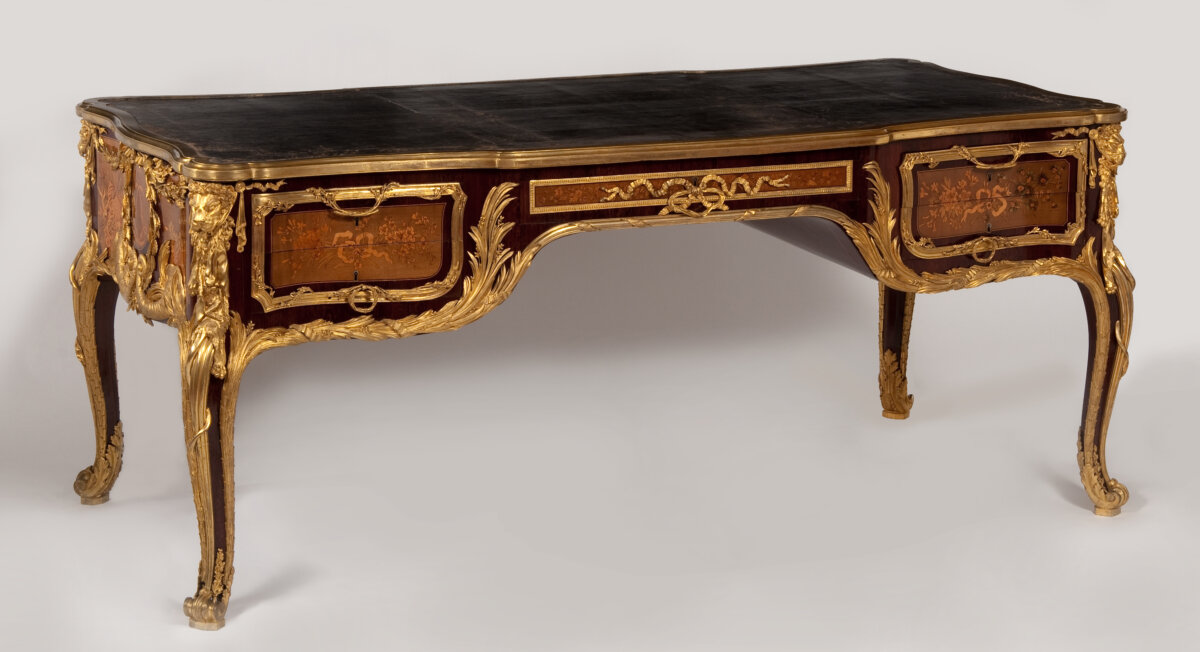
Joubert’s bureau plat passed into the collection of the king’s brother, the then comte de Provence who later became Louis XVIII (1755–1824). It remained at Versailles, and, in 1787, it was restored. When the monarchy was overthrown, the French Revolutionaries sold off confiscated royal property, including this desk during 1793 to 1794.
Chic Asian Aesthetics
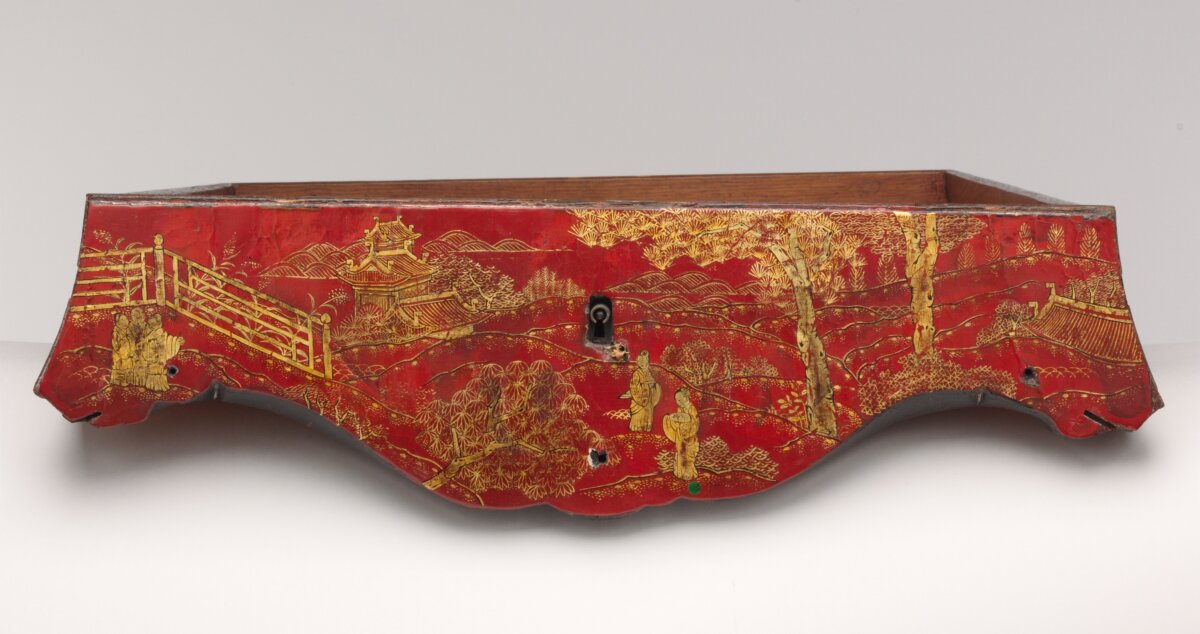
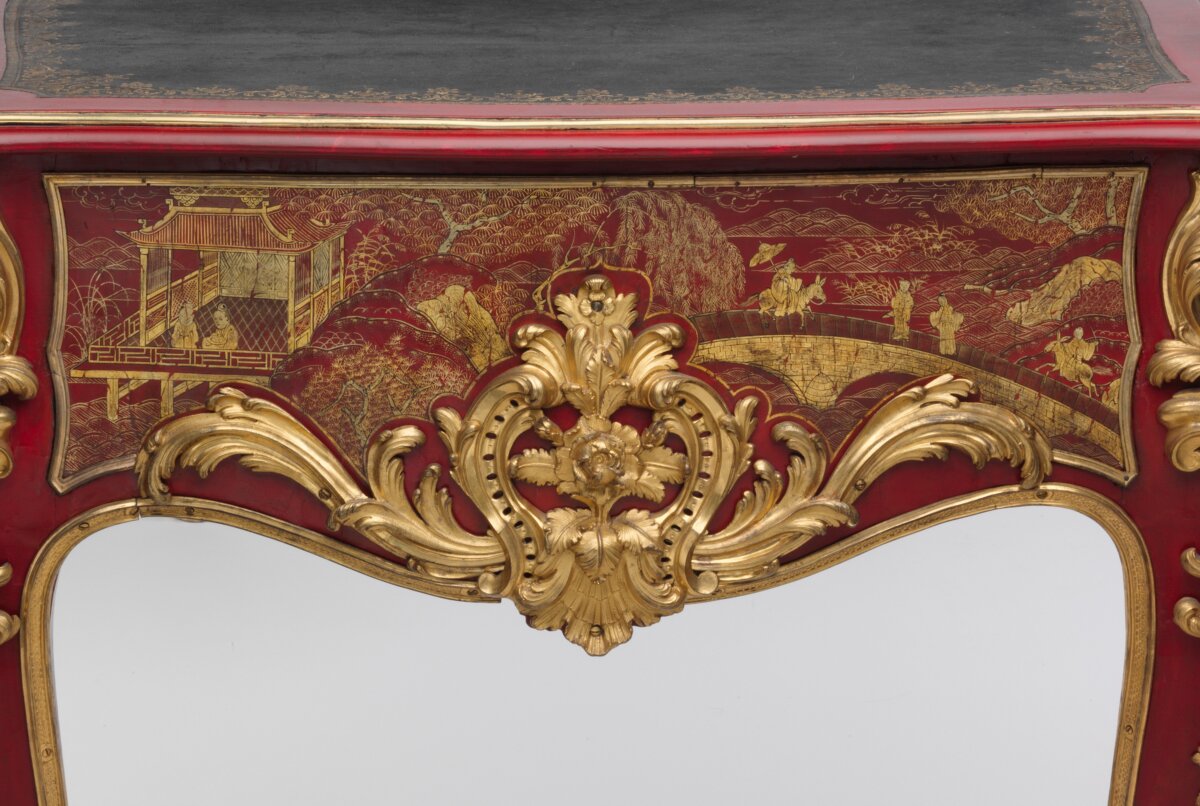
The vibrant, brilliant crimson lacquer and gold surface decoration Joubert used for the writing table evokes an Asian aesthetic. In France, during the middle of the 18th century, Chinese red-and-gold lacquer was considered exotic and the height of chic. French craftsmen imitated its look as veneer for furniture.
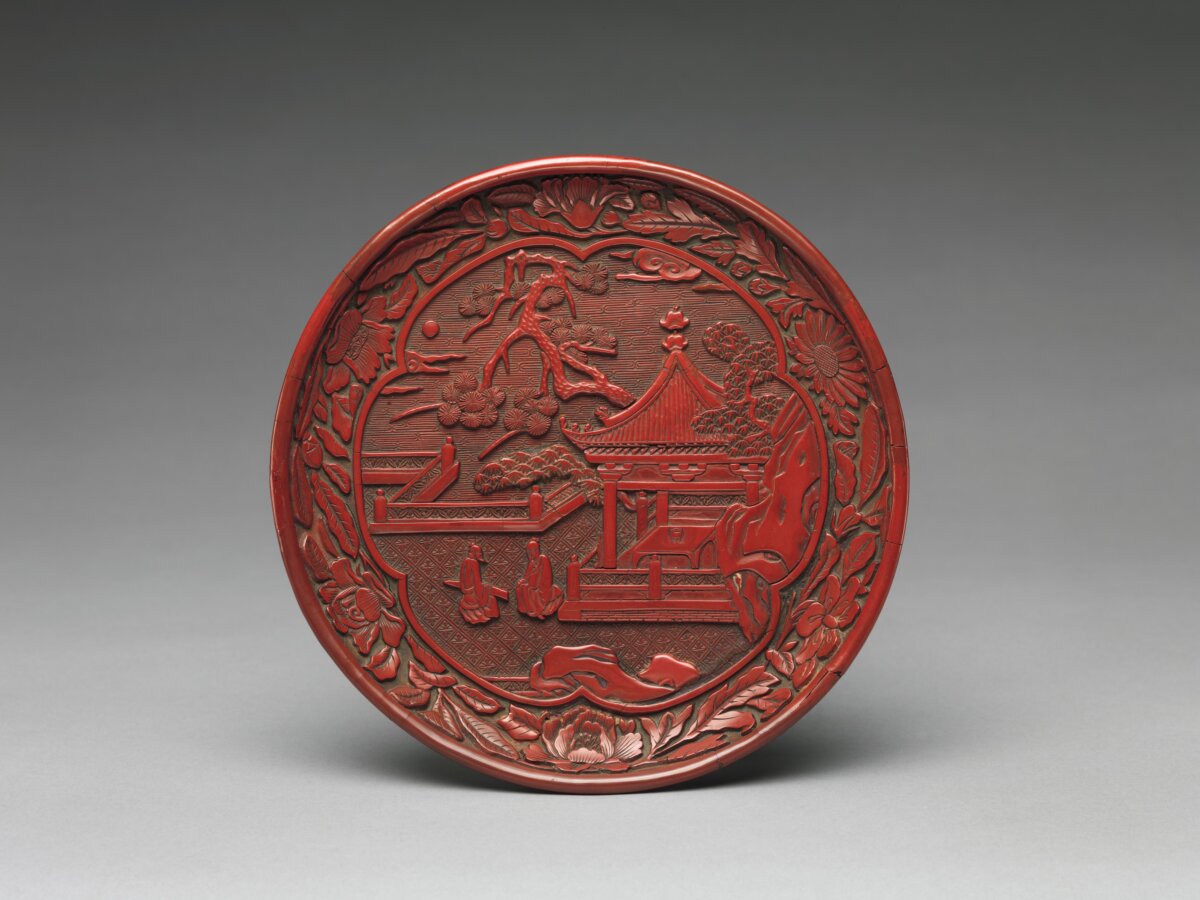
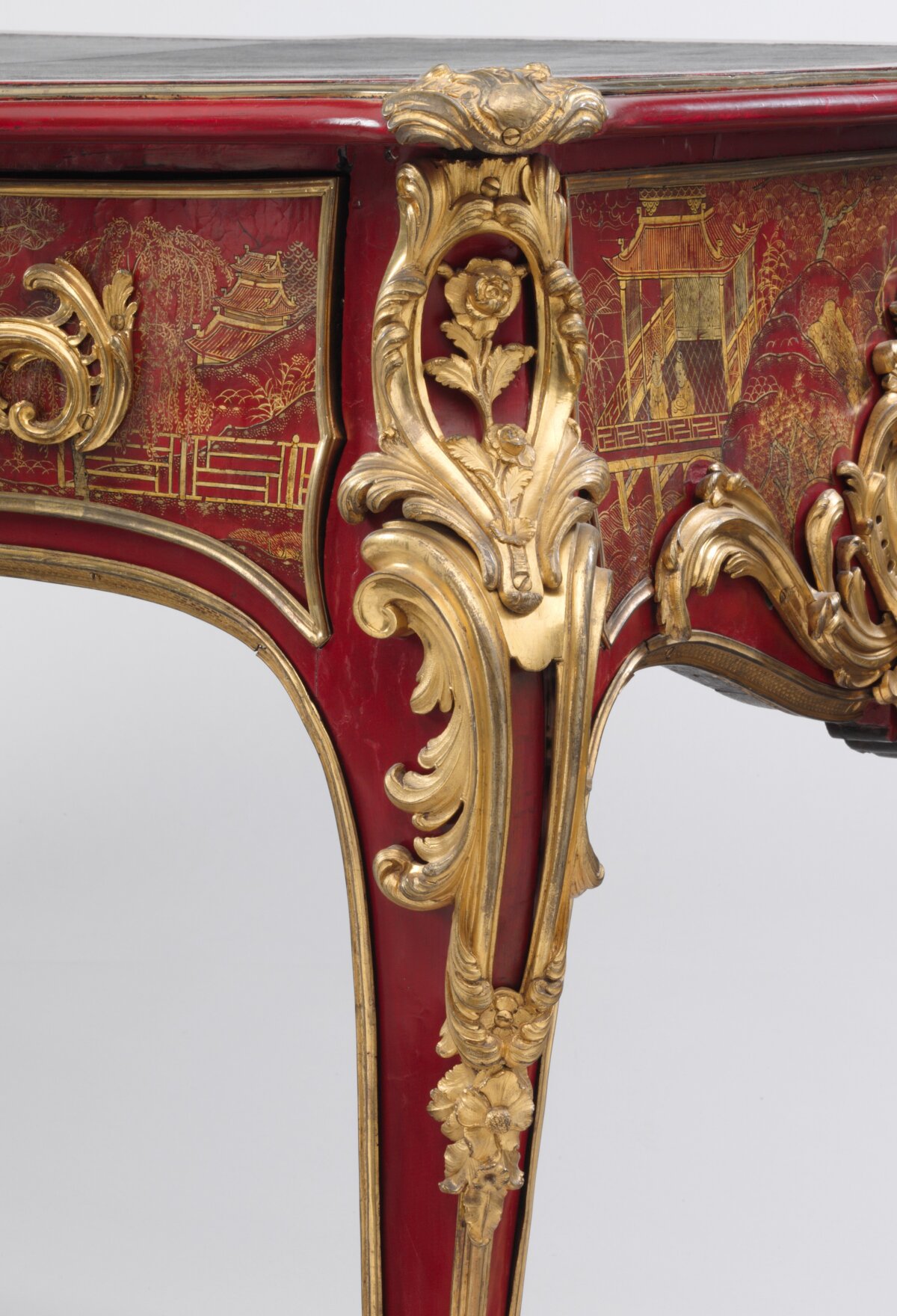
The bureau plat’s lustrous lacquered surface features scenes of a pseudo-Asian landscape. The table’s elegant serpentine outline is emphasized and protected by partly pierced gilt-bronze mounts.
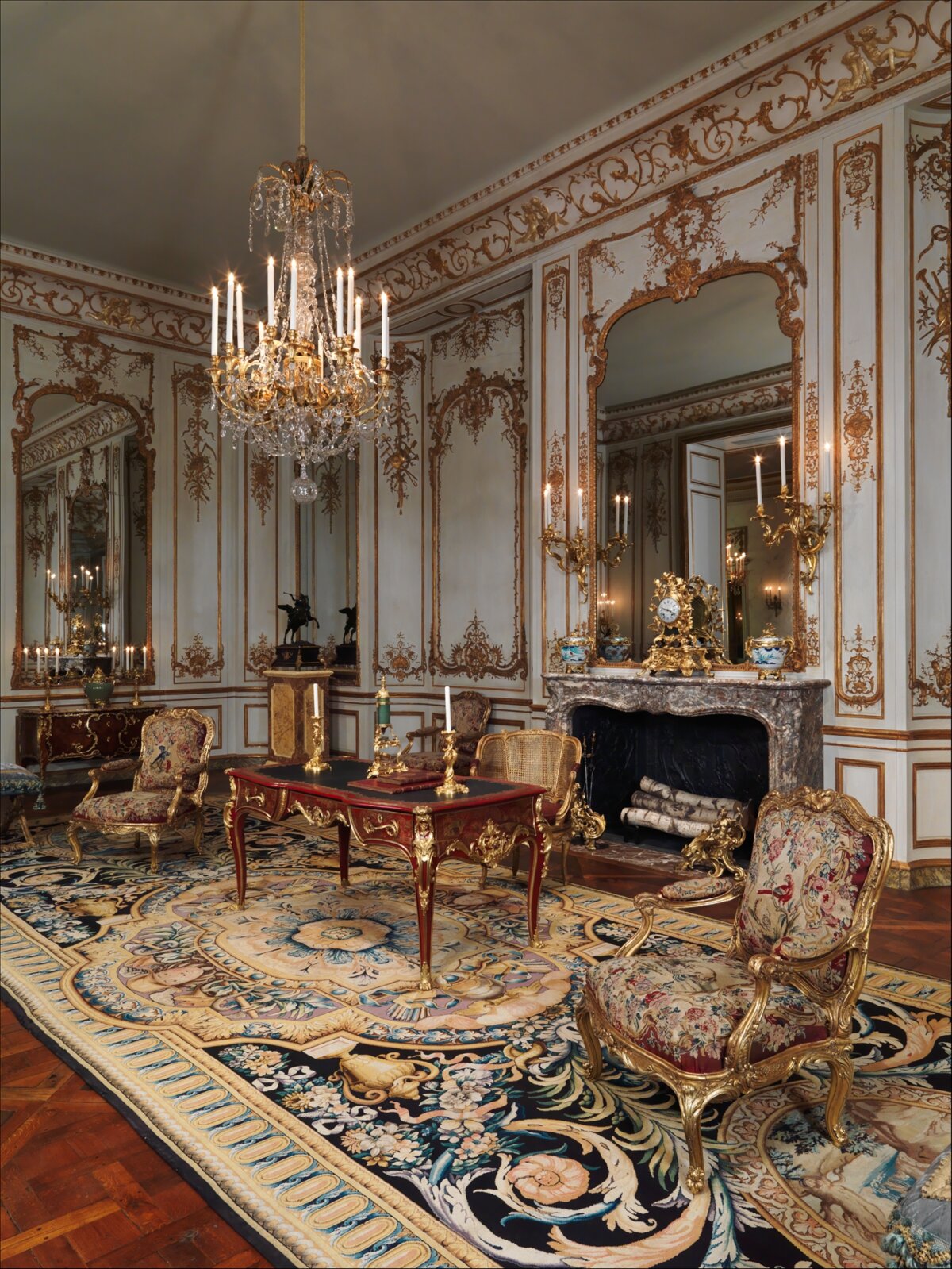
The Met acquired Joubert’s exquisite piece in 1973, as a gift from the noteworthy art patrons Mr. and Mrs. Charles Wrightsman. Ten years previously, the couple had funded the Museum’s purchase of what became the foundation for one of The Met’s period rooms in the Wrightsman Galleries devoted to 17th and 18th-century French decorative arts. It was boiserie, or wood paneling, made during the reign of Louis XV, from an 18th-century private Parisian townhouse, the Hôtel de Varengeville.
The star of this evocative palatial reception room is Joubert’s outstanding writing table with royal provenance.
What arts and culture topics would you like us to cover? Please email ideas or feedback to features@epochtimes.nyc