



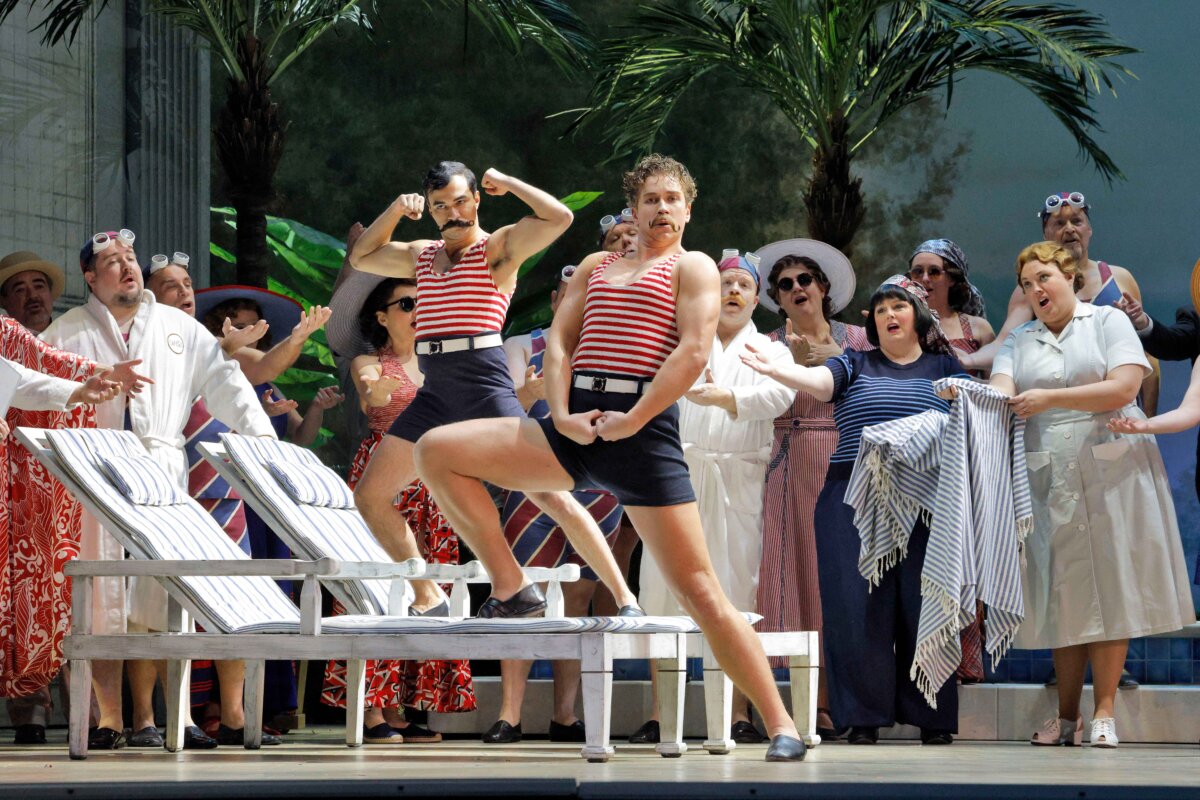
When it first opened on Jan. 26, 1790 in Vienna, “Così fan tutte” wasn’t very well received, nor did it have the same success as Mozart’s previous operas. Fast forward to the 20th century, and Mozart’s comic farce suddenly was one of the favorites of opera repertoire. It continues to be produced throughout the world. Now, it’s being presented in a delicious production at the Lyric Opera of Chicago.
In comparison to Mozart’s previous hits “The Marriage of Figaro” and “The Magic Flute,” “Così fan tutte” was considered frivolous by opera aficionados of the time. The title loosely translates to “Women are like that” or “so do they all.” Both titles refer to the assumption that women are unfaithful.
The opera, with music by Mozart and a libretto by Lorenzo Da Ponte, was performed only five times before Emperor Joseph II died, which caused theaters to close. Mozart (1756–1791) died a few months later, passing away in the belief that his “Così” was a failure.
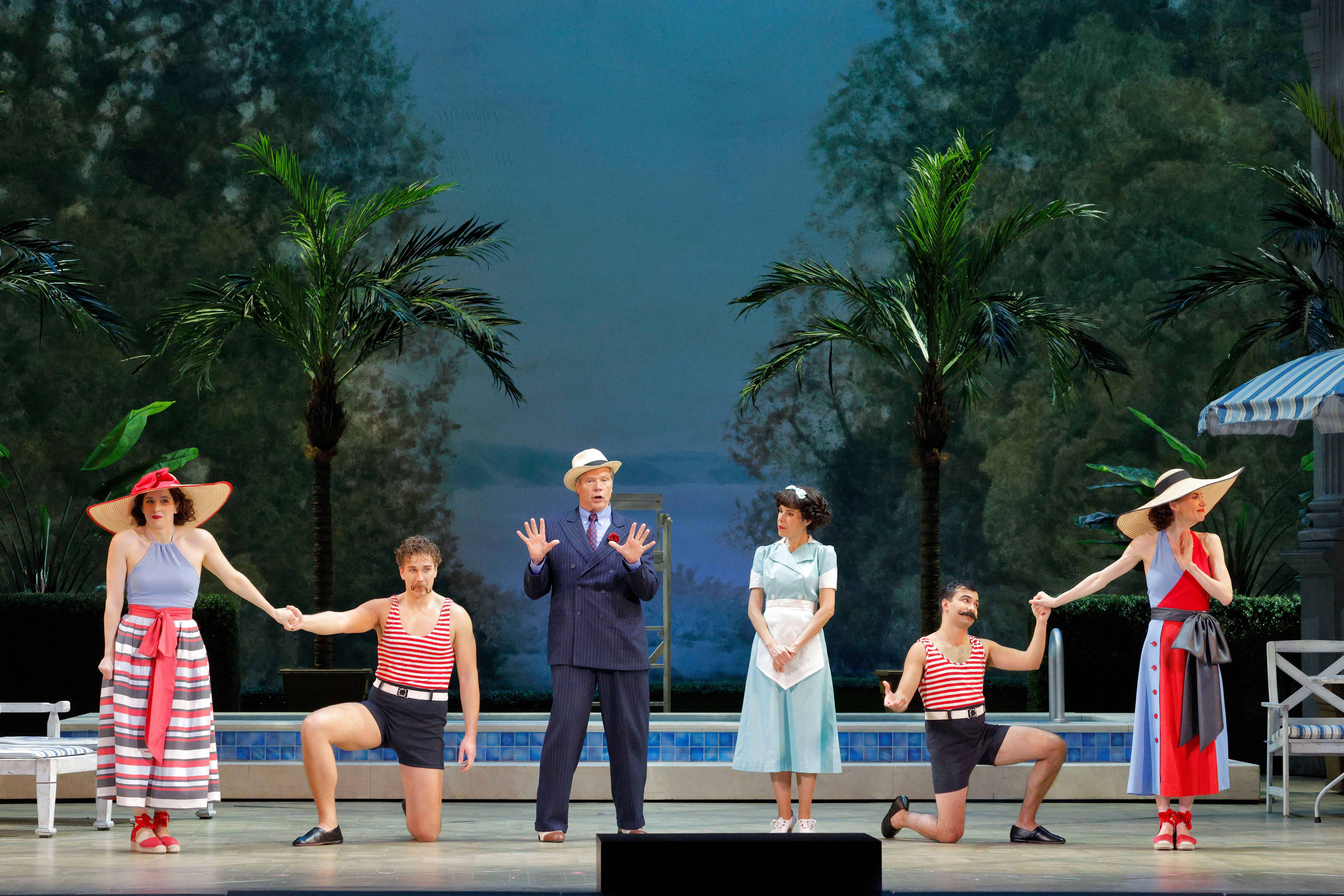 The company of “Così fan tutte.” (Cory Weaver)
Lyric’s sparkling and whimsical production proves just how wrong the early critics were. The story begins with an old philosopher, Don Alfonso (Rod Gilfry), who insists that all women are fickle and bets two young men that their fiancées will not stay faithful if tempted. He engages the worldly and cynical maid, Despina (Ana Maria Martinez) to help him in his mischievous effort to win the wager.
The two men, soldiers Fernando (Anthony Leon) and Guglielmo (Ian Rucker), agree to the wager, which kicks off a hilarious exploration of the chaos in love and relationships. The men tell their fiancées, the sisters Fiordiligi (Jacquelyn Stucker) and Dorabella (Cecilia Molinari), that they have been summoned to war. In reality, they return later, in disguise. Each man tries to woo the other’s fiancée.
It seems that the women begin to fall for the new suitors, and it’s easy to see why. In disguise, the men are much more attentive, more complimentary, and more appealing than they were as their normal selves, for during this ruse, they no longer take their fiancées for granted.
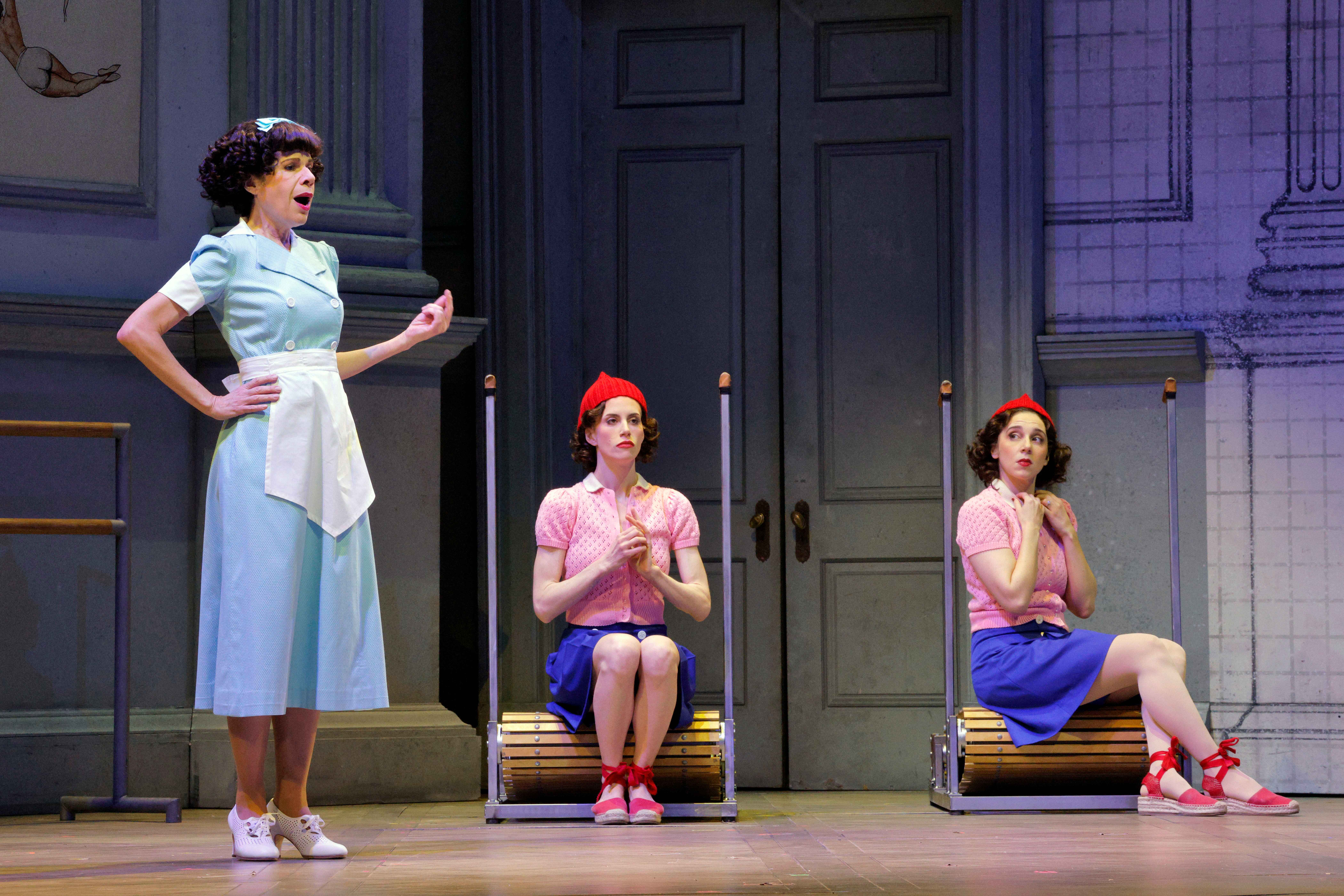 (L–R) Despina (Ana Maria Martinez), Fiordiligi (Jacquelyn Stucker), and Dorabella (Cecilia Molinari), in “Così fan tutte.” (Cory Weaver)
A Stellar Production
The opera is elegantly staged by revival director Roy Rollo and based on Michael Cavanagh’s original direction. With the orchestra masterfully conducted by maestro Enrique Mazzola, and the Lyric Chorus directed by Michael Black, the satirical work moves swiftly with humorous scenes on the themes of love, fidelity, and human nature. Originally set in 18th-century Naples, designer Erhard Rom has moved the action to a sunny seaside country club in the 1930s. Constance Hoffman’s costuming is a period gem that recalls a nostalgic moment of innocence and happiness in America’s early 20th century.
“Così” isn’t the easiest of operas to sing, but everyone in the ensemble delivers terrific performances. Stucker’s soprano stands out with “Come scoglio,” in which she professes unwavering love to her intended, and she and Molinari’s mezzo soprano work well together, especially when they harmonize with “Soave sia il vento.”
Furthermore, baritone Rod Gilfry brings a charm to the role of Don Alfonso that makes him almost too adorable to be a villain. Anthony Leon sang the showstopper with a velvety tenor “Un’aura amorosa” and Ian Rucker was in great form as the baritone Guglielmo. In addition, Ana María Martínez is engaging as Despina; she is hilarious when she takes on the role of a notary and a doctor as she conspires with Don Alfonso.
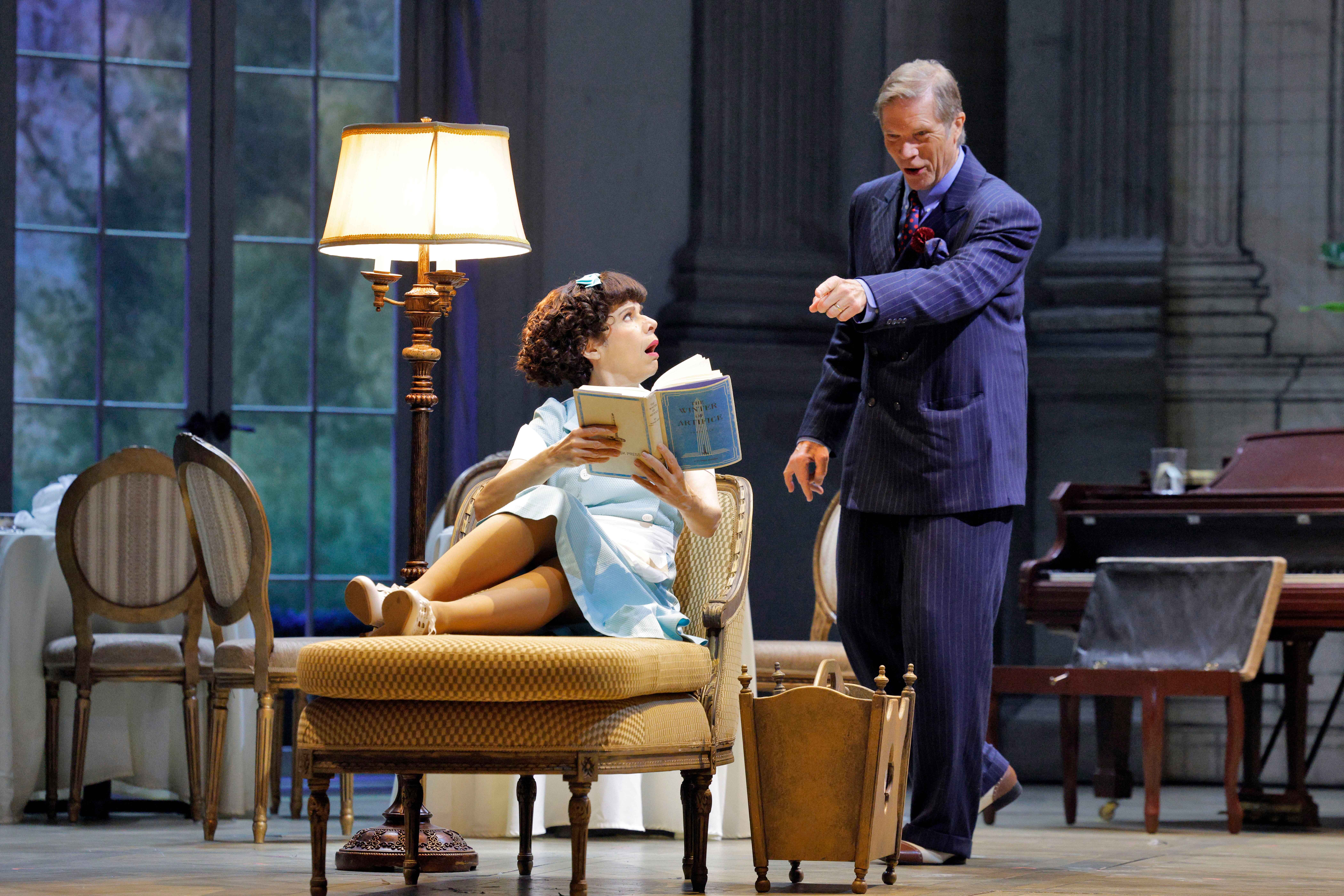 Despina (Ana Maria Martinez) is surprised by Don Alfonso (Rod Gilfry), in “Così fan tutte.” (Cory Weaver)
What may be of interest to Shakespeare buffs is the similarity between this opera and the Bard’s “A Midsummer Night’s Dream” (1596). “Così” also has romantic confusions and disguises. The difference is that the machinations in “Midsummer” are supernatural, while “Così” is propelled by human entanglements. That said, “Così” isn’t just a romantic comedy; it’s a dazzling work with glorious music from a composer that many consider the greatest ever.
Behind the opera’s breezy playfulness and laughter, though, “Così fan tutte” offers a deeper meaning. Indeed, it focuses on the messiness of infatuation and the foolishness of humanity. It makes the point that when it comes to human nature, logic and reason aren’t enough. Indeed, there really is no good reason to explain the frailties of romance, love, and human attachments.
Experiencing “Così fan tutte” is a feast for the senses, and a perfect confection for Valentine’s Day.
“Così fan tutte”
The Lyric Opera of Chicago
20 N. Wacker Dr., Chicago
Tickets: 312-827-5600 or LyricOpera.org
Runs: 3 hours, 30 minutes (one intermission)
Closes: Feb. 15, 2026
What arts and culture topics would you like us to cover? Please email ideas or feedback to features@epochtimes.nyc
