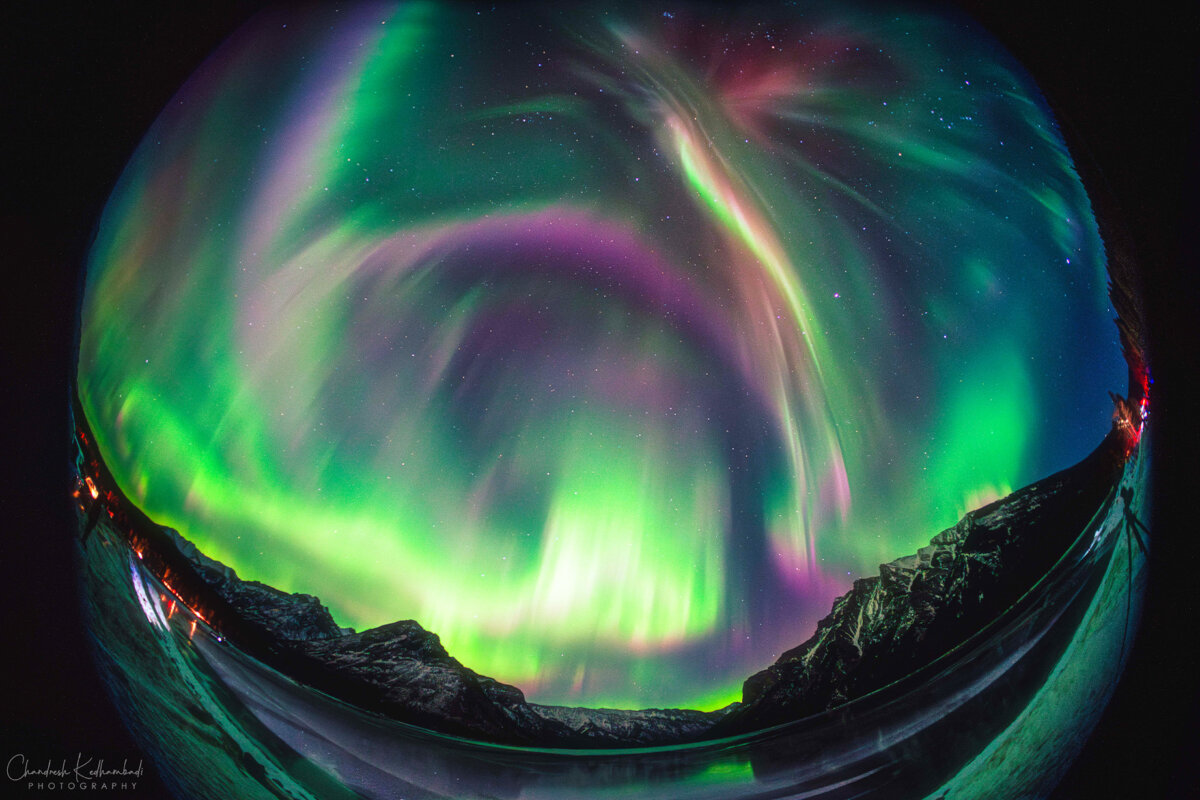
There’s a buzz of excitement again in the aurora-hunting community in Calgary, in the Canadian Prairie province of Alberta. The fading climax of the current 13-year solar cycle, it appears, is now offering up an epic geomagnetic afterglow.
In the wake of the big solar storms and subsequent auroras in October 2024, several solar substorms bombarded Earth’s atmosphere last month. Night photographers noted some of the best northern lights they’d ever seen.
All these fresh sightings began with Finland, where aurora enthusiasts first saw major spikes in the space weather data. Eye-popping and rare aurora colors danced hundreds of miles over a winter wonderland.
Dazzling pictures of the Finland night sky went viral in astrophotography communities online, and Canadian aurora chasers, including Chandresh Kedhambadi from Calgary, started planning to capture any substorms that came their way.
“Those pictures were just kind of off the charts,” Kedhambadi, 50, told The Epoch Times. “The colors were just insane, I mean the orange and the pinks and that sort of thing.”
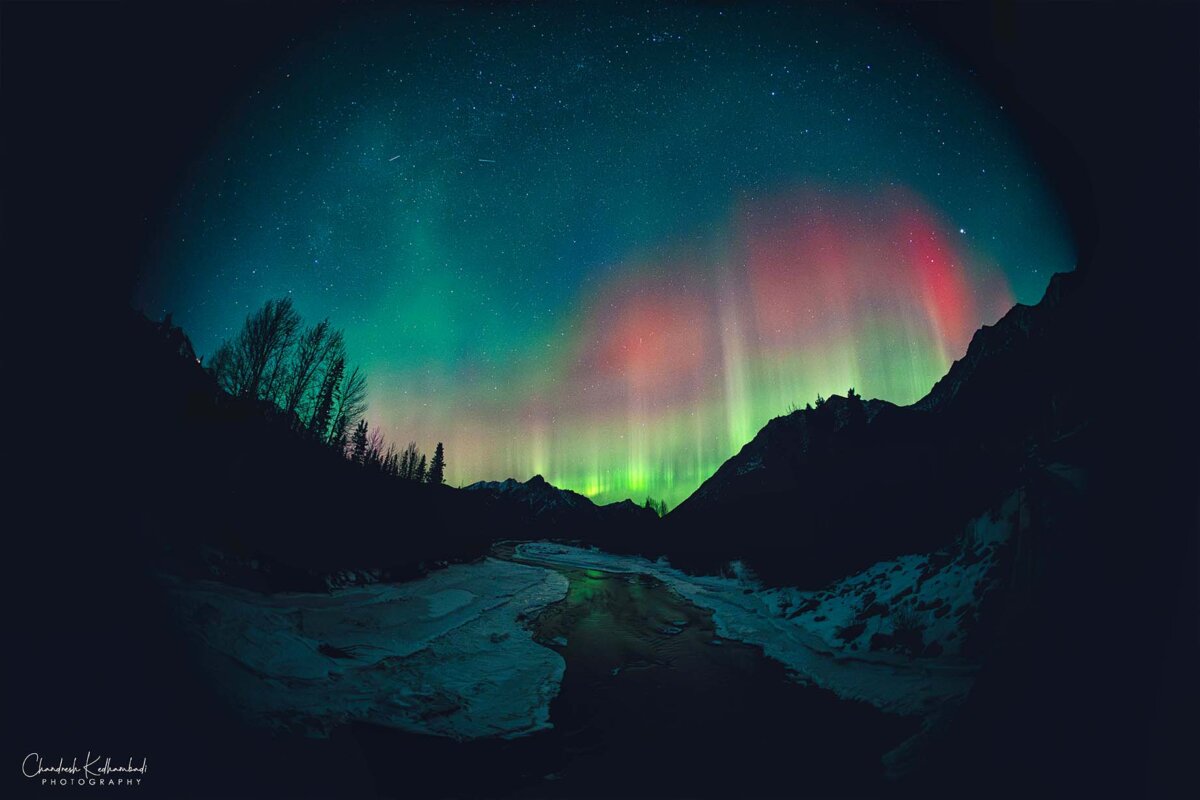
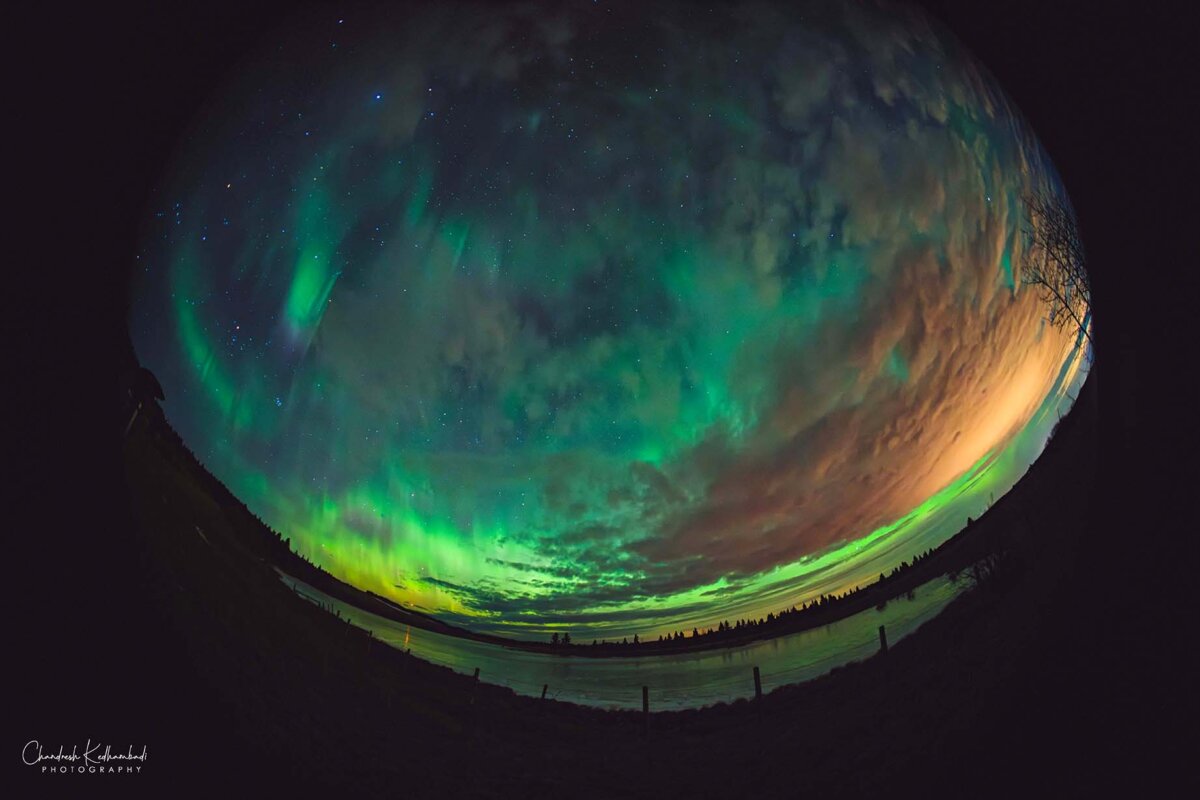
He was sure Alberta would catch the tail end of this geomagnetic storm, since aurora activity over northern Europe must carry over into Canada to some extent. Auroras aren’t tied to any geographic location, but rather the Earth’s invisible magnetic field, so the northern lights will generally travel from east to west as Earth rotates.
Anticipating a big northern lights show mid-January, Kedhambadi, a chemical engineer by training, kept his eyes on the solar weather data.
“It was already G1, G2 conditions,” he said. “It was rated to be one of the biggest aurora storms, or a solar storm, in the last 20–25 years.” He was right. The substorm would reach G5 levels, though officially classified as G4.
His only worry was the weather. Aurora hunters follow the science of “possibility and probability,” he said. The probability of having a good night always boils down to weather and having clear skies.
Jan. 20 turned out to be the night when everything aligned. Kedhambadi, who moderates the Alberta Aurora Chasers Facebook group, sent out a thread telling its followers to “get your pants on,” meaning the data indicated the possibility of this being a wild night.
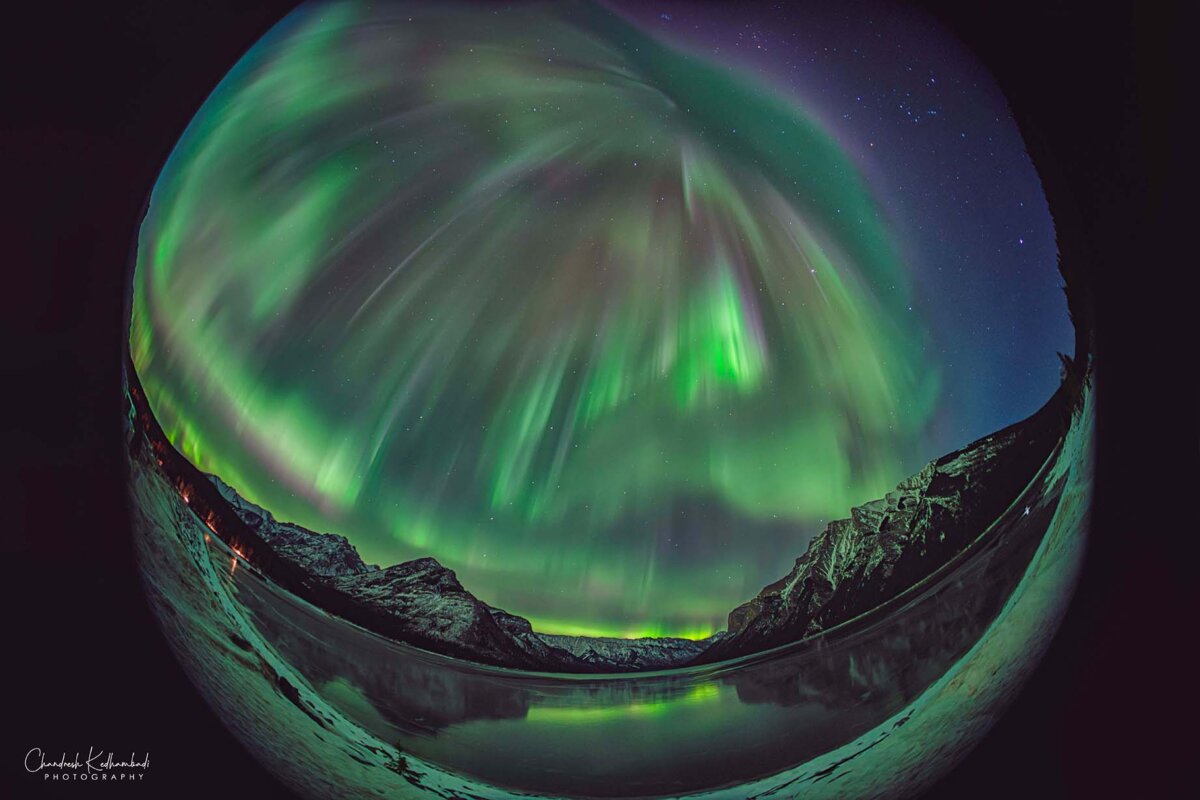
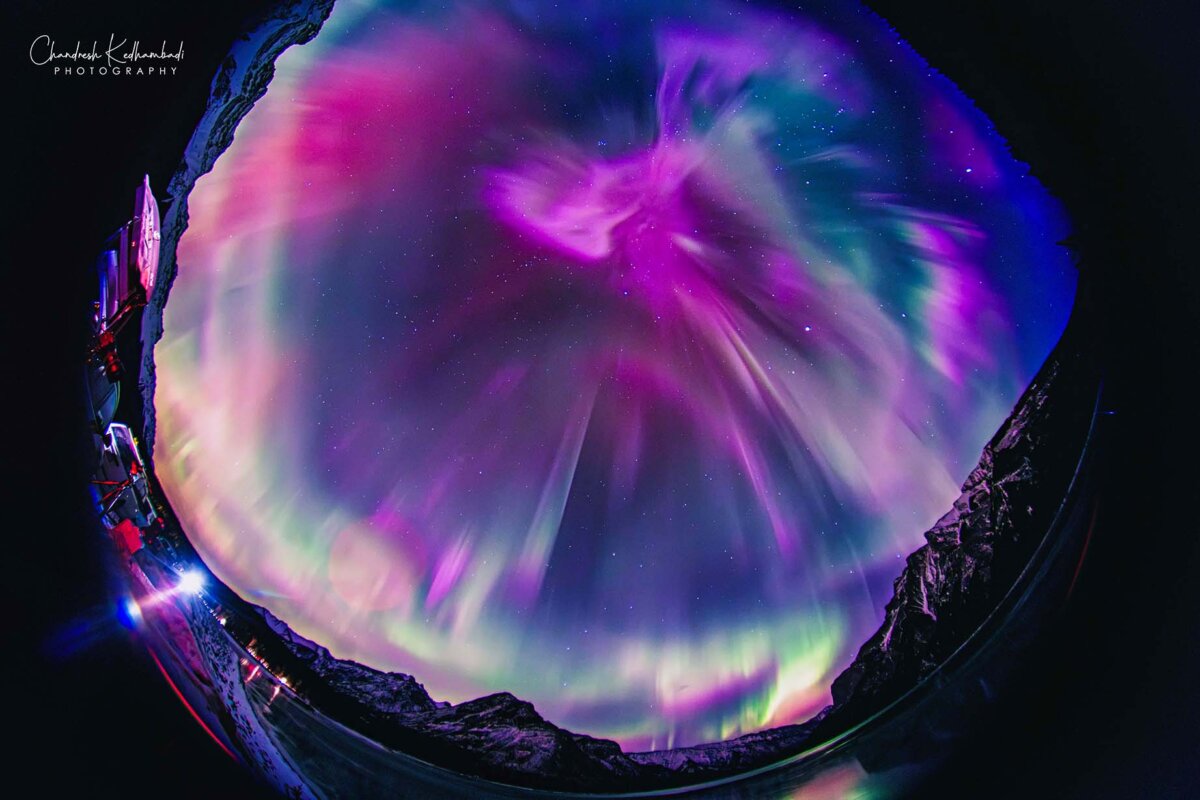
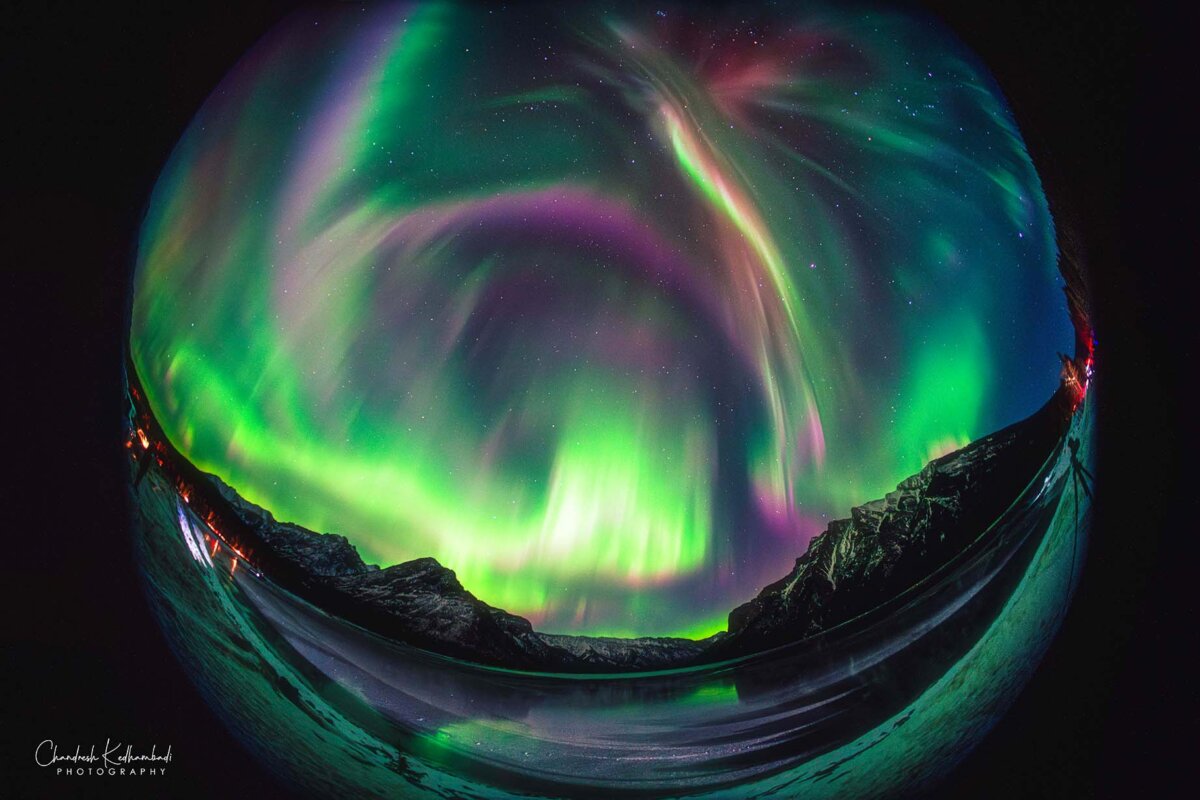
With his gear stowed in his SUV, Kedhambadi headed south to Kananaskis, though his plans took a turn after pink pillars appeared dancing in the sky due north. Fully prepared to spend the night hunting auroras, he headed to Banff National Park and was blown away.
The “magical” night Kedhambadi spent photographing northern lights directly over Lake Minnewanka is now “etched in memory forever,” he said.
“It was one of the best shows I have ever seen,” he said. “It was so bright, you could see the pink lining the green. You could see a bit of the red in there as well. Normally you don’t see pinks, and reds are very hard for the human eye to see.”
For Kedhambadi, who grew up immersed in nature on his grandparents’ coffee plantation in Bangalore, India, seeing the northern lights had been a lifelong dream. He just didn’t realize they danced this far south until he moved to Alberta in 2008. Spotting northern lights for the first time during his days driving through the province’s oilpatch was a pinch-me moment for Kedhambadi. It inspired him take up night photography.
“You kind of feel like a kid in a candy shop, you feel like a kid watching that Disney movie, or going to Disneyland,” he said. “In the last two to three years, I think that feeling has been rekindled I would say probably four or five times.”
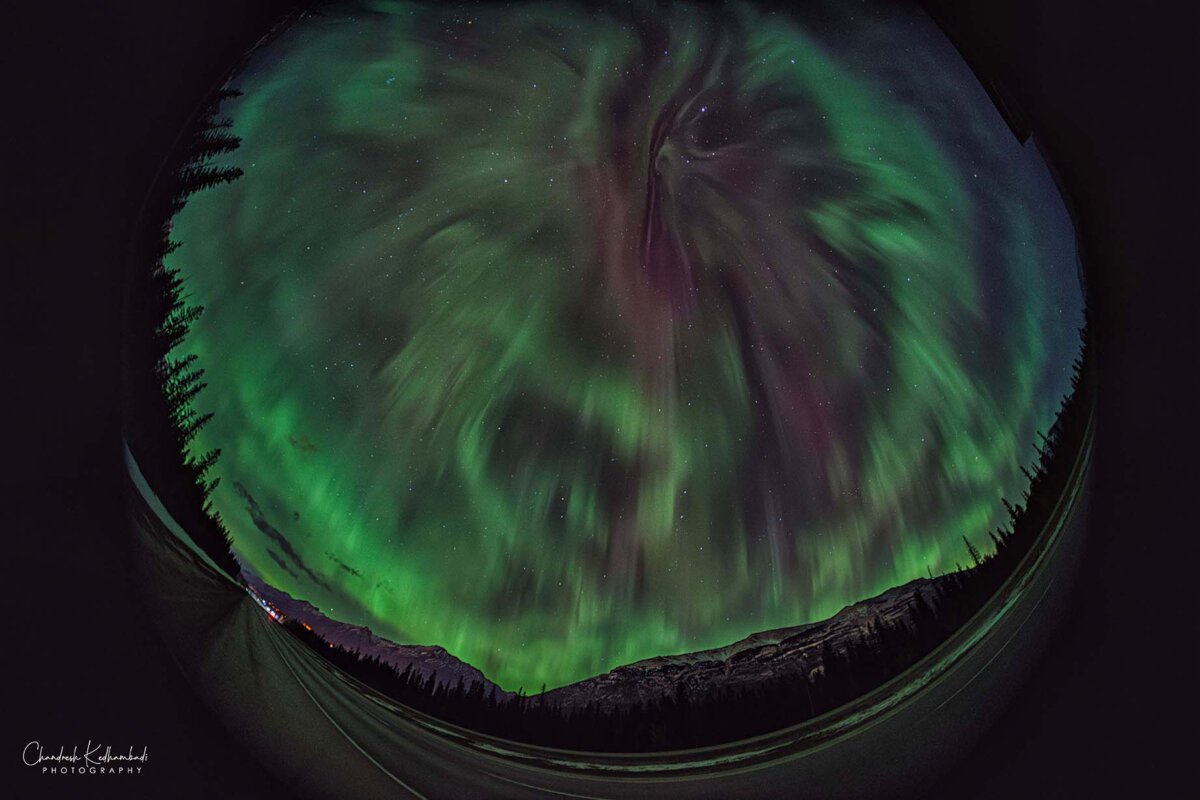
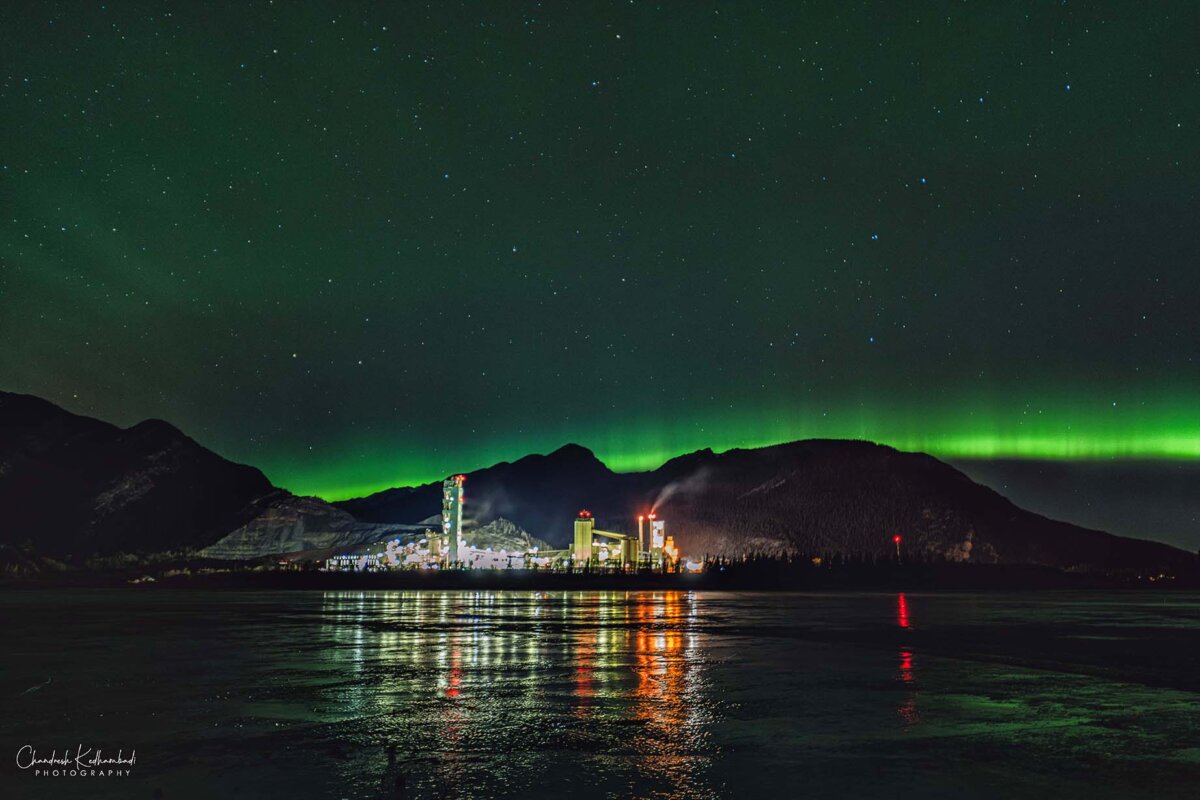
This was one of those nights. Erecting three tripods by the lakeside, including his astro-modded Cannon and trusty Sony A7R3, Kedhambadi went to work. His 240-degree fisheye lens “does justice” in capturing the true experience, he said.
The night was still young after Kedhambadi captured his stunning panoramas by the lakeside. He was intent of visiting almost every scenic location around Banff until the wee hours. He relished every minute, collecting precious pictures, making lifetime memories.
“I moved back to Canmore. I shot at Three Sisters, and then from Three Sisters on my way back I stopped at Sibbald Creek, because the auroras were still going strong,” he said.
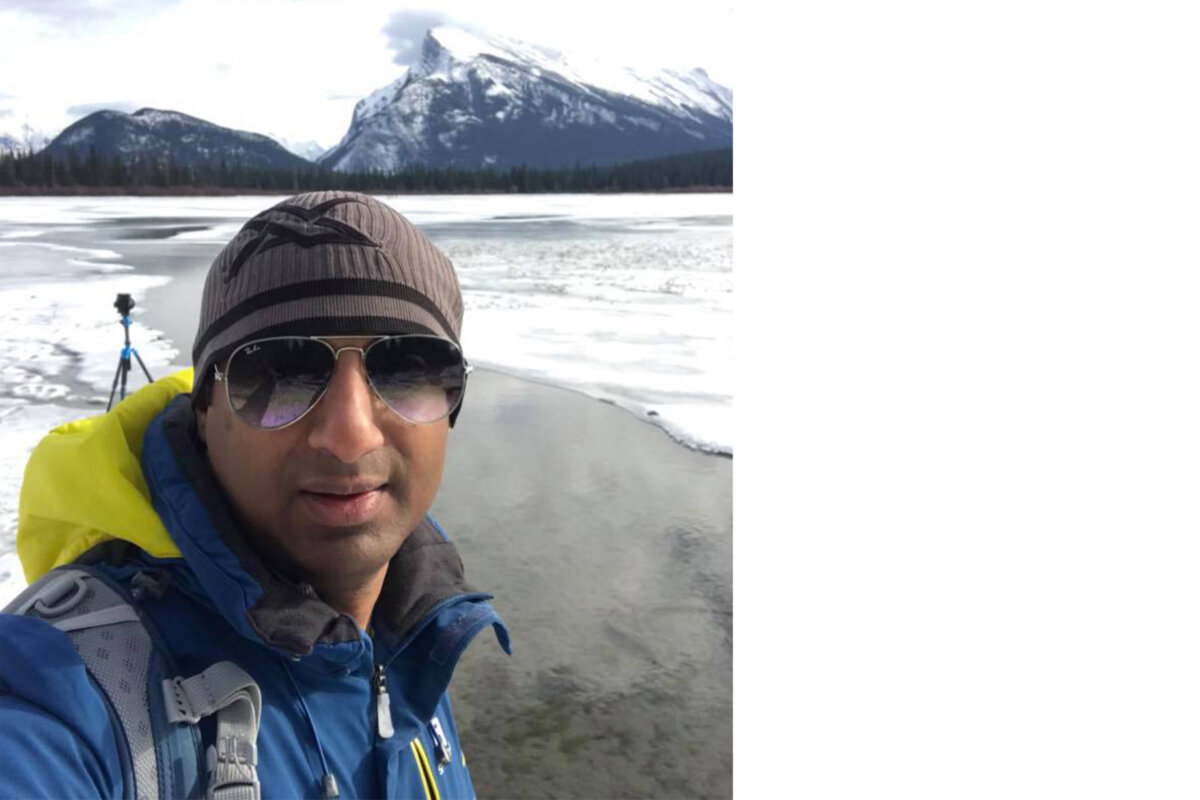
By about 4:00 a.m., Kedhambadi’s batteries were dying while the auroras, too, were starting to subside, though the photographer was still going strong. He was pumped by a potent mix of adrenaline and imagination.
“Nights like that are what you live for as an aurora chaser,” he said. “Because those big nights, you know, are not coming that often.”