
Generally, nothing can replace hands-on experience when learning a new skill or craft.
The 16-year-old can sit beside a driving instructor and watch her parallel park, but put that teen behind the wheel and the car is likely to smack the curb several times before he gets it right. A pottery student can read an entire textbook on the subject, but give her a potter’s wheel and a lump of clay and odds are she’ll have a mess on her hands for a while.
The same is true for the skill and craft that go into a marriage.
“Most life skills that really matter don’t come with instruction manuals or even, sometimes, the bare minimum in training,” Julia Dezelski told The Epoch Times. Dezelski, associate director for marriage and family life at the U.S. Conference of Catholic Bishops, is mother to four children ranging in age from 1 to 8 and is married to Francis, an engineer.
“When I had my first child, I didn’t get a class on how to change a diaper or calm an inconsolable baby,” she said. “There are books out there, but you still really have to learn on the go. I think the same is the case for marriage.”
Like rookies on a playing field, newlyweds can take pointers from veterans such as Dezelski.

Embrace Service and Sacrifice
This year, Dezelski will appear as a guest panelist for National Marriage Week, celebrated annually from Feb. 7 to Feb. 14. The theme for this year’s event, available online, is “Together With Purpose.” Topics include meaningful ways to express love and commitment to a spouse and how couples can serve one another.
Dezelski is a strong advocate for servanthood in marriage.
“By servanthood, I’m not referring to servile behavior, but really living an authentic life of service,” she said. “It’s a profound form of love. It’s serving one another, even to the point of laying down your life for another, and in marriage that is really part and parcel of what marriage looks like.”
“My husband and I, in our marriage ceremony, were crowned,” she said. “We wore crowns because we’re Eastern Catholic, and those crowns were explained to us as symbols of martyrdom. So we were not being crowned as queens or princes. We were being crowned as martyrs, basically to reinforce the fact that we were laying down our lives for one another.”
Servanthood rarely requires so drastic an act as death. Instead, Dezelski said, it involves the small acts couples do daily for one another. In her own marriage, she noted that her husband often makes coffee and breakfast for her in the morning—”He knows I won’t make it for myself,” she said—and she cleans up the kitchen afterward.

Through her work and friendships, Dezelski is constantly on the watch for new ideas.
“One thing I heard is not my idea, but I really liked it,” she said. “I can’t say I practice this every day, but it’s still a great idea to ask your spouse in the morning: ‘What can I do to help you today? What burdens are you carrying, what workload do you foresee, and what’s one thing I can do to help you?’”
Seek Mentors in Marriage
Serving each other—and, by extension, serving the marriage—is face-to-face love, but Dezelski also recommended that couples look outward for models of good marriages.
“I think marriage takes a lifetime of learning from the models around us, especially learning virtue,” she said. “I benefited from the solid marriage of my parents, thank God, but that’s not so common today. Many young people just don’t have the same role models, and they aren’t prepared for what a good marriage takes, like sacrifice, humility, accountability, communication skills, and many other things.”
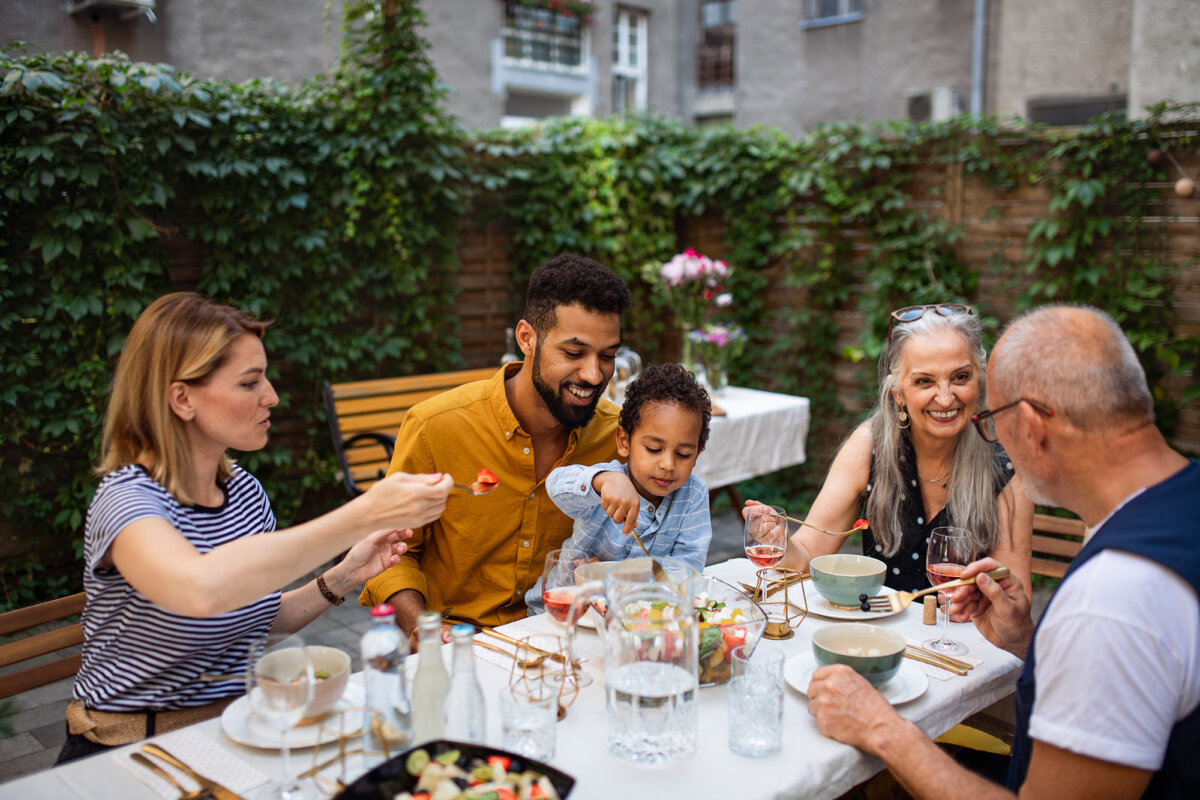
While encouraging young couples to learn from older ones, Dezelski also hopes that married couples will help guide newlyweds. A Vatican document issued in 2022, “Catechumenal Pathways for Married Life,” called for mentoring partnerships in the Roman Catholic Church’s marriage preparation program.
“This particular document asks us to renew the way we prepare engaged couples by walking with them in a real, intentional journey toward marriage,” she said. “One way to do that is with a mentor couple to walk alongside that engaged couple and journey with them toward marriage.”
Dezelski recently put that idea into practice while speaking with a woman in her parish who was starting a young adult group. The woman wasn’t sure how to get peers involved in parish life.
“We started brainstorming,” Dezelski said. “I asked, ‘Are there any dating couples among you?’ and she said, ‘Yes.’”
She suggested getting dating couples to visit the married couples in their homes for dinner. Afterward, the married couple could go out for an hour and leave the dating couple to babysit the kids.
“That’s a nice kind of hands-on experience with family life,” she said.
Live the Virtues Daily
According to Dezelski, underpinning all good marriages are the virtues: the classical virtues of courage, wisdom, justice, and temperance; the theological virtues of faith, hope, and charity; and related virtues such as kindness, perseverance, and integrity.
Dezelski brings both experience and education to that emphasis. After high school, she spent more than 10 years working and studying in Rome, where she earned a doctorate in sacred theology from the Pontifical University of St. Thomas Aquinas–Angelicum. In 2018, she spoke at the World Meeting of Families and in 2022 led a U.S. delegation to the event.
Modeling healthy marriages and relationships, she said, begins in the family.
“It goes back to modeling virtues and teaching them in the home,” Dezelski said. “I see more and more that this has to be done intentionally, woven into the fabric of our homes, because virtues are not emphasized in the broader society the way they used to be.”
Even an ice storm that kept her family indoors for nearly a week became an opportunity, according to her.
“It gave us the opportunity to work on virtues like patience and kindness toward one another,” she said. “It was a practical week for virtue-building.”
Like countless parents, Dezelski has found that reading stories to children reinforces those lessons.
“I’m not a great storyteller, so I turn to the pros and stories of heroic virtue, like the lives of the saints or heroic [figures] such as our Founding Fathers,” she said. “There are great books for kids, like those by William Bennett. One short story a day can really make a difference in your household.”
Stories—even classics such as Aesop’s fables—can keep virtues front and center for adults as well, according to her.
Move in the Same Direction
Communication and shared intentions are key to marriage and family life. Dezelski divides a day into four arenas of activity—work, play, talk, and prayer—and encourages couples to reflect on how they approach each one.
“How do we serve one another in our work and our talk?” she asked. “Are we lifting each other up or cutting each other down? Do we enjoy recreation together or are we on our own in our own siloes? Who are we praying for? Are we looking only inward, or also outward to the needs of others?”
“How are we pivoted towards service and serving one another in the family?” she asked.
Ask the questions, Dezelski said, and the answers can strengthen your marriage.
Couples interested in taking part in this year’s National Marriage Week program, scheduled for Feb. 7 to Feb. 14, can find the schedule and more information at MarriageWeek.org.