



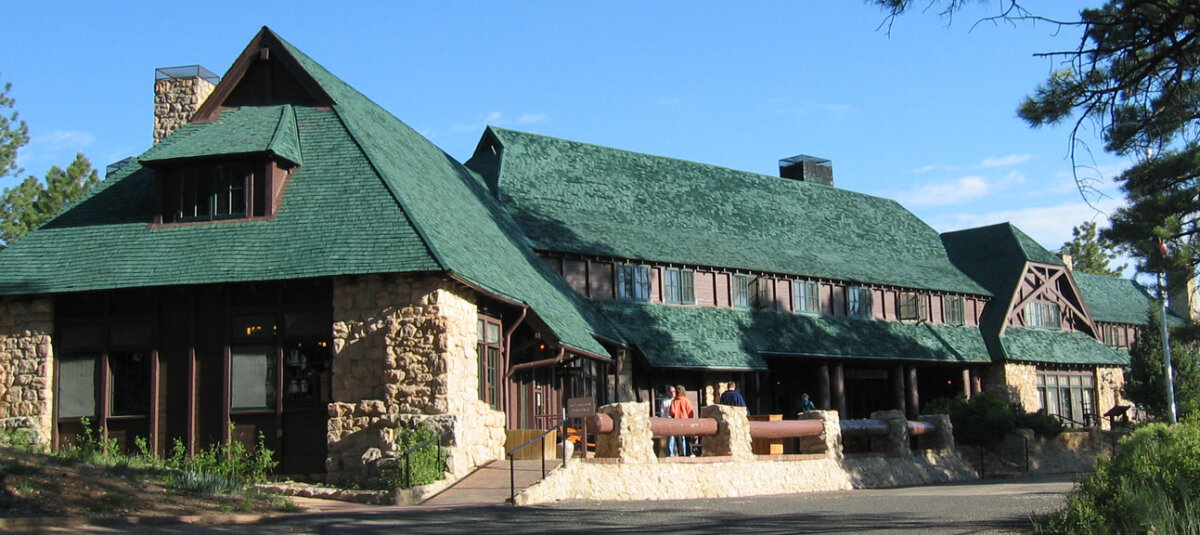
Of the United States’s 63 national parks, Utah’s Bryce Canyon ranks No. 8, according to an April 2025 U.S. News and World Report, for its “jaw-dropping natural wonders and unforgettable terrains,” as well as its “scenic beauty.” There’s more here than just the natural beauty, however. Tucked into a wooded area and surrounded by looming Ponderosa pines is the Bryce Canyon Lodge, rich in history and historical artifacts.
Many visitors to stunning sections of Bryce Canyon National Parks as the Amphitheater or Rainbow Point are occupied by the sight of remarkable red rock formations called “hoodoos.” They often drive right by the lodge, unless they plan to stay there.
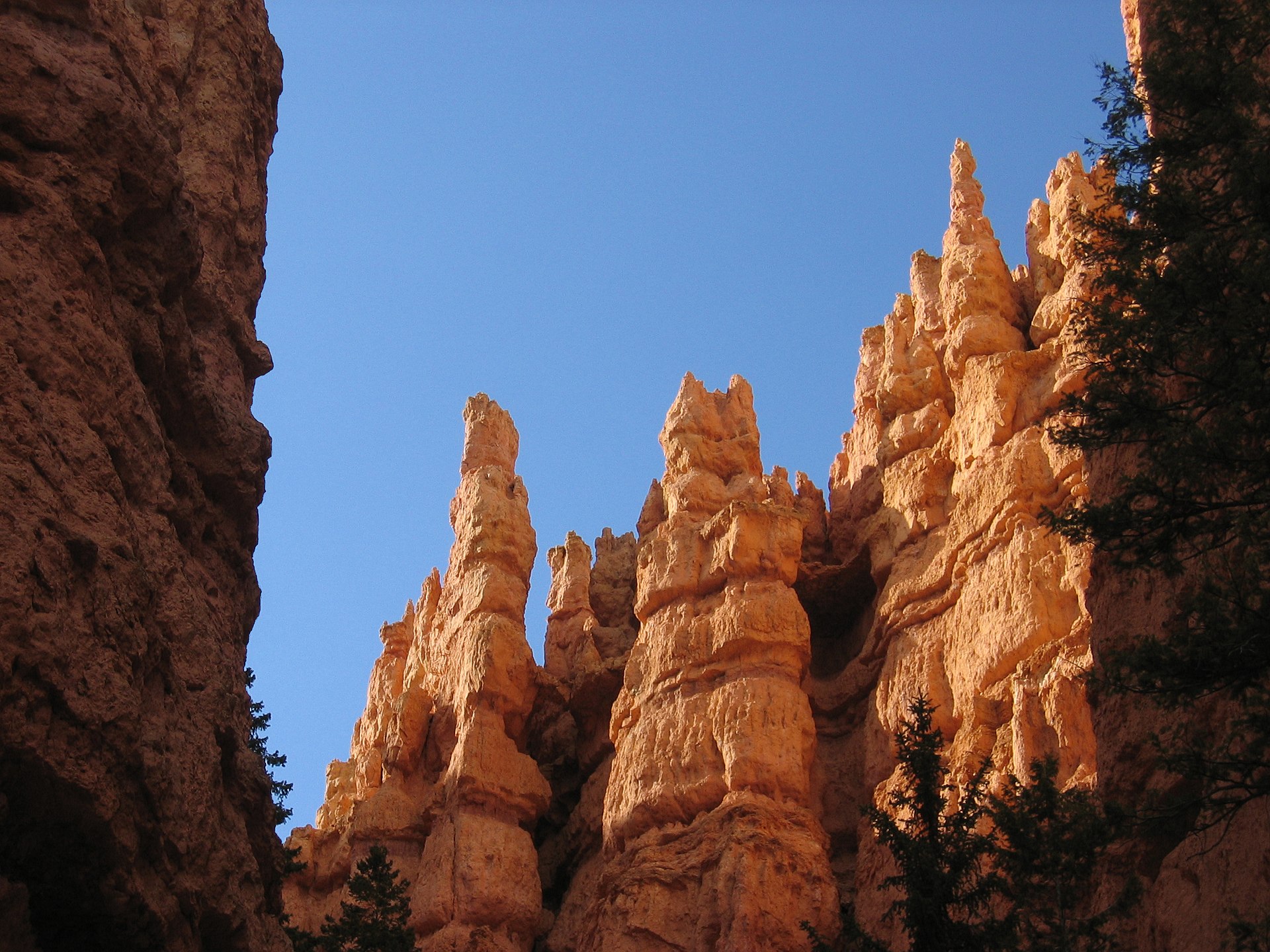 The hoodoos at Bryce Canyon are a sight to behold. (John Zander/CC BY-SA 3.0)
Rich Lodge History
What visitors are missing out on is the creativity of American architect Gilbert Stanley Underwood (1890–1961), who became noteworthy for designing the lodge at Bryce Canyon and other national parks. He was tasked with establishing an architectural plan in a rustic style using native materials. The chosen site for the lodge also took into consideration the natural surroundings, set within a grove of trees and 700 feet from one of Bryce’s plateaus.
In an April 17, 1924 broadcast, when the lodge construction was underway, a Michigan congressman and chairman of the subcommittee for Department of Interior appropriations, Louis B. Cramton, spoke about the project: “The architecture is all in harmony.”
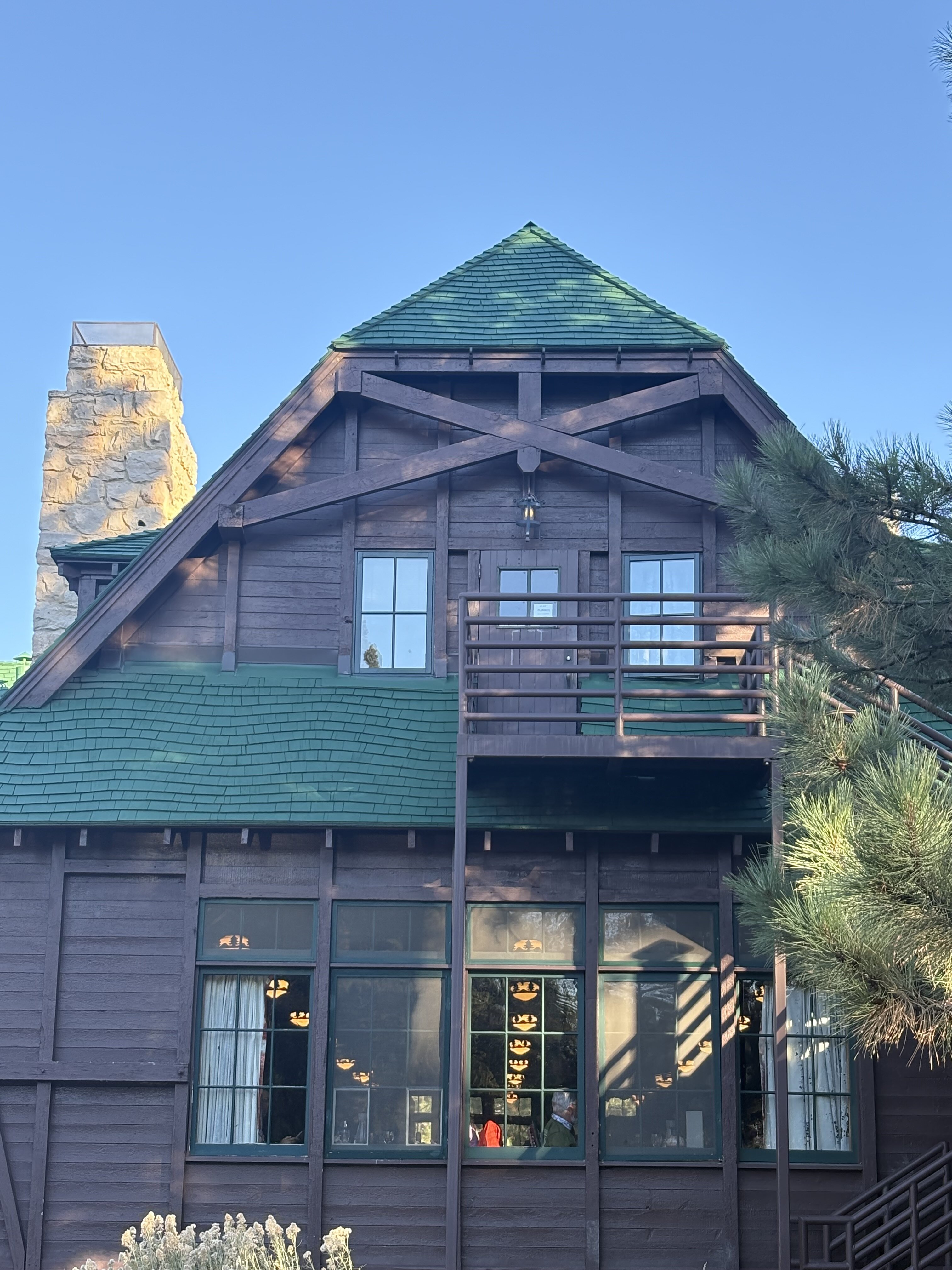 The eclectic style of the Bryce Canyon National Park lodge and other lodges is due to the architectural influence of Gilbert Stanley Underwood. (Deena Bouknight)
Completed in 1925 by the Utah Parks Company, the lodge’s visible natural materials are primarily locally quarried fieldstone and massive Ponderosa pine logs. The cedar shingles on the deeply pitched hipped roof are painted forest green.
A Society of Architectural Historians report on Bryce Canyon Lodge noted: “The visual rhetoric of the rustic style has conditioned the modern perception of the American West and America’s canonic representation of our relationship to nature.”
Massive logs serving as crude columns stand like solid sentries as one enters through the main doors. Inside the lodge, which celebrated its 100th anniversary just last year, are polished wood-paneling walls covered in oversized black-and-white historic photographs showing early hikers and horseback riders.
The lodge’s large stone fireplace features a supporting corbel arch at its opening. Both the dining room and the auditorium—where countless dances and events have taken place—present an impressive vaulted ceiling with exposed log trusses.
Activities Galore
A variety of dances been a common activity over the years at Bryce Canyon Lodge, including native dance demonstrations by the area’s Paiute Indians. Guide-led mule and horse rides continue to be popular. In fact, hanging from a ceiling chain inside the lodge, over one of the desks, is an old hand-carved “Horse & Mule Rides” sign on the smoothed surface of a large, otherwise bark-covered log.
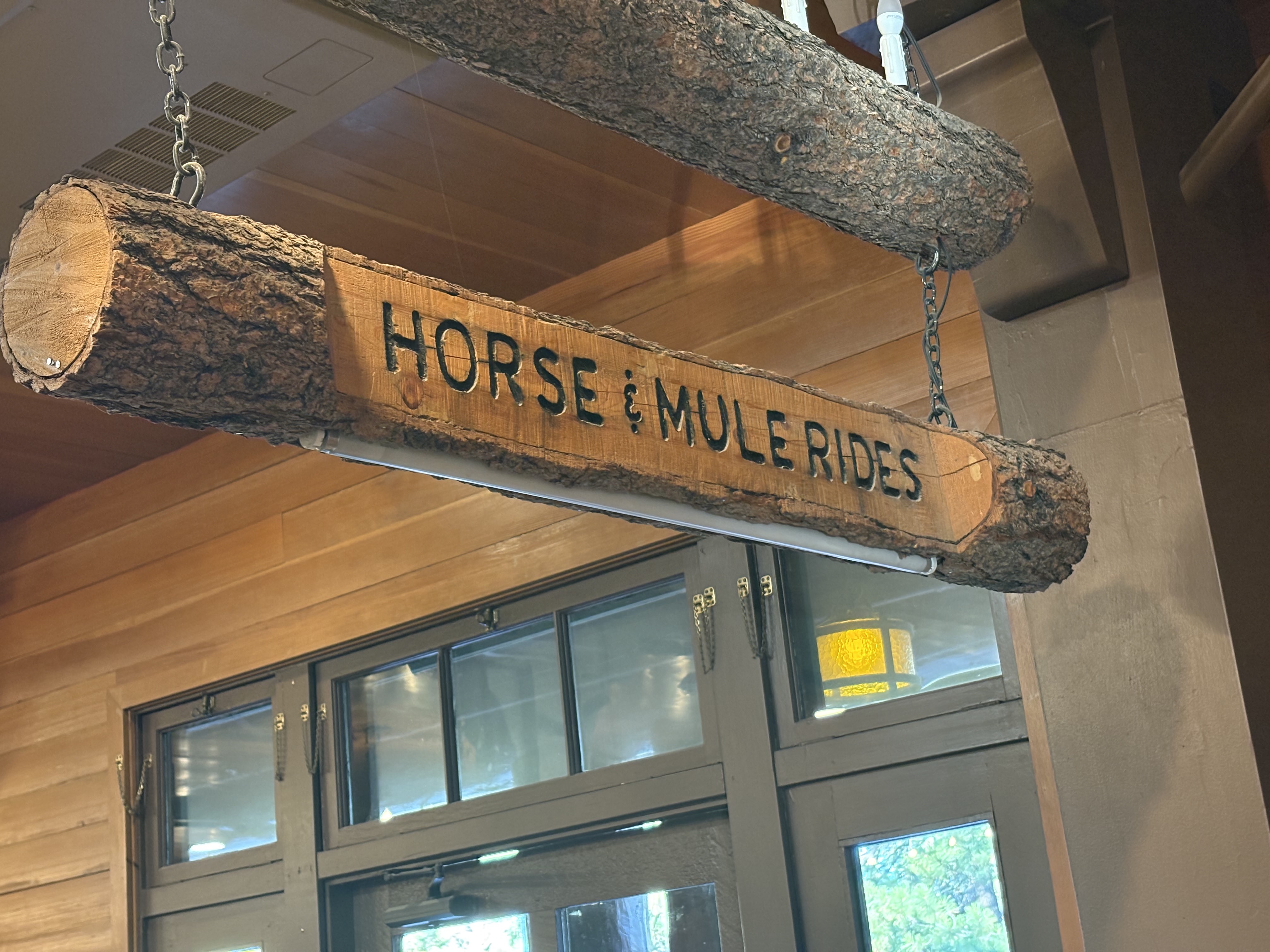 “Horse & Mule Rides” is carved into a log in the lodge at Bryce Canyon National Park. (Deena Bouknight)
In the early years of Bryce Canyon Lodge, “lodge employees awaited guests’ arrival, and after dinner would entertain them with an ‘Employee Show,’ complete with dancing, variety shows, and a full swing band,” reported National Park Service Bryce Canyon U.S. Department of the Interior in its Centennial Newspaper. The publication further shared, “Once the time arrived for a tour to depart toward a new destination, the staff would gather in front of their parks’ lodge and bid adieu with a ‘sing-a-way’.”
One reason Bryce Canyon Lodge became a reality was because the Utah Parks Company was a subsidiary of the Union Pacific Railroad, which promoted travel to some of America’s more remote parks beginning in the late 1800s. In 1924, Bryce Canyon wasn’t yet a national park, but it was officially a national monument. But the writing was on the wall, due to the unique area’s growing popularity. In 1928, it became the nation’s 17th national park.
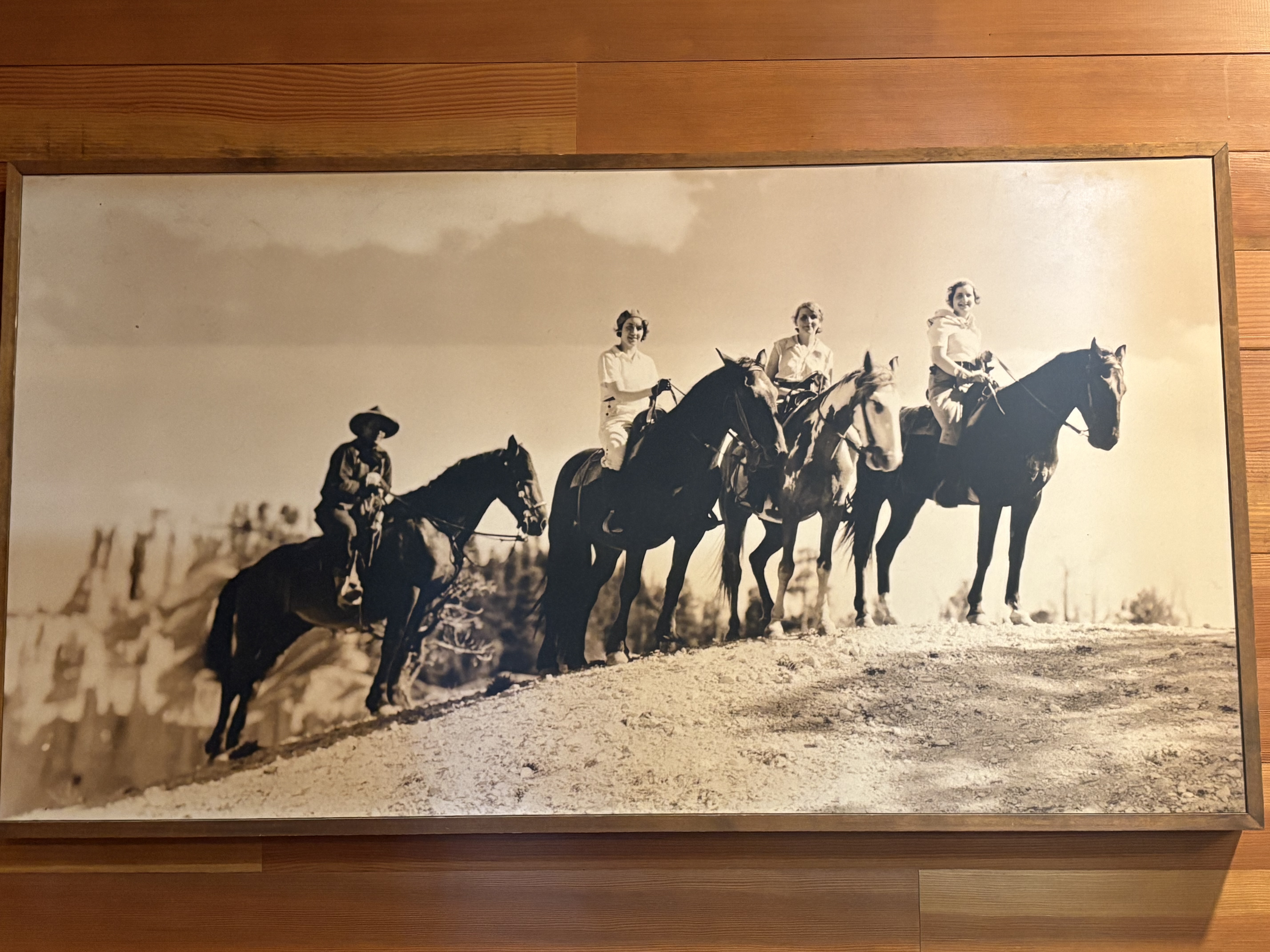 The history of the arid deserts and massive rock formations comes alive in this national park. (Deena Bouknight)
Passengers could travel by train to Cedar City, Utah, and then be transported by wagon—and later car or bus—to Bryce Canyon. But until 1925, visitors to Bryce Canyon had no lodge in which to secure accommodations and provisions. If they planned to stay the night in the park, they had to carry camping supplies with them.
Because of its important architectural and cultural history, Bryce Canyon Lodge achieved National Historic Landmark status in 1987.
What arts and culture topics would you like us to cover? Please email ideas or feedback to features@epochtimes.nyc
