



NEW YORK—Music can’t simply wash away years of pain or magically restore broken family bonds, but it can certainly serve as a starting point. This is made heartbreakingly clear in “The Porch on Windy Hill.” Billed as “a new play with old music,” the show is currently in the midst of an encore engagement at Urban Stages.
It’s late spring in 2021, and pandemic restrictions have recently lifted. Mira (Tora Nogami Alexander) is a classical violinist. She and her live-in boyfriend Beckett (Morgan Morse), a musicologist from Brooklyn, who specializes in the history of rural American folk music, are on a trip through the South to visit local music festivals, shindigs, and pickin’ parties as he collects material for his doctorate. When car trouble requires a sudden change of route, Mira suggests they stop at the town of Windy Hill in Western North Carolina to check out the performances at a local church.
A Sudden Change
When they arrive, Mira is shocked to see Edgar Wilson (David M. Lutken) among the musicians. Wilson is her 75-year-old grandfather, from whom she’s been estranged nearly 18 years. The estrangement began when, at the age of 7, she was on the receiving end of certain remarks made during a family gathering. Apparently, it was the culmination of events concerning her parents’ mixed-race marriage; Mira’s father is Korean. The event led her parents to angrily depart with her. They moved to New York soon after and cut all contact with Edgar, something Beckett never knew before this day.
After Edgar invites the couple to his home, the three find themselves on Edgar’s front porch in awkward silence as Beckett does his best to make conversation. Though at first he comes off as overeager, he soon connects with Edgar over their mutual love of music. The younger man earns Edgar’s respect via a demonstration of his own musical talents. Mira, who has long felt uncomfortable with folk music, is initially reluctant to join them. Yet, she soon does exactly that.
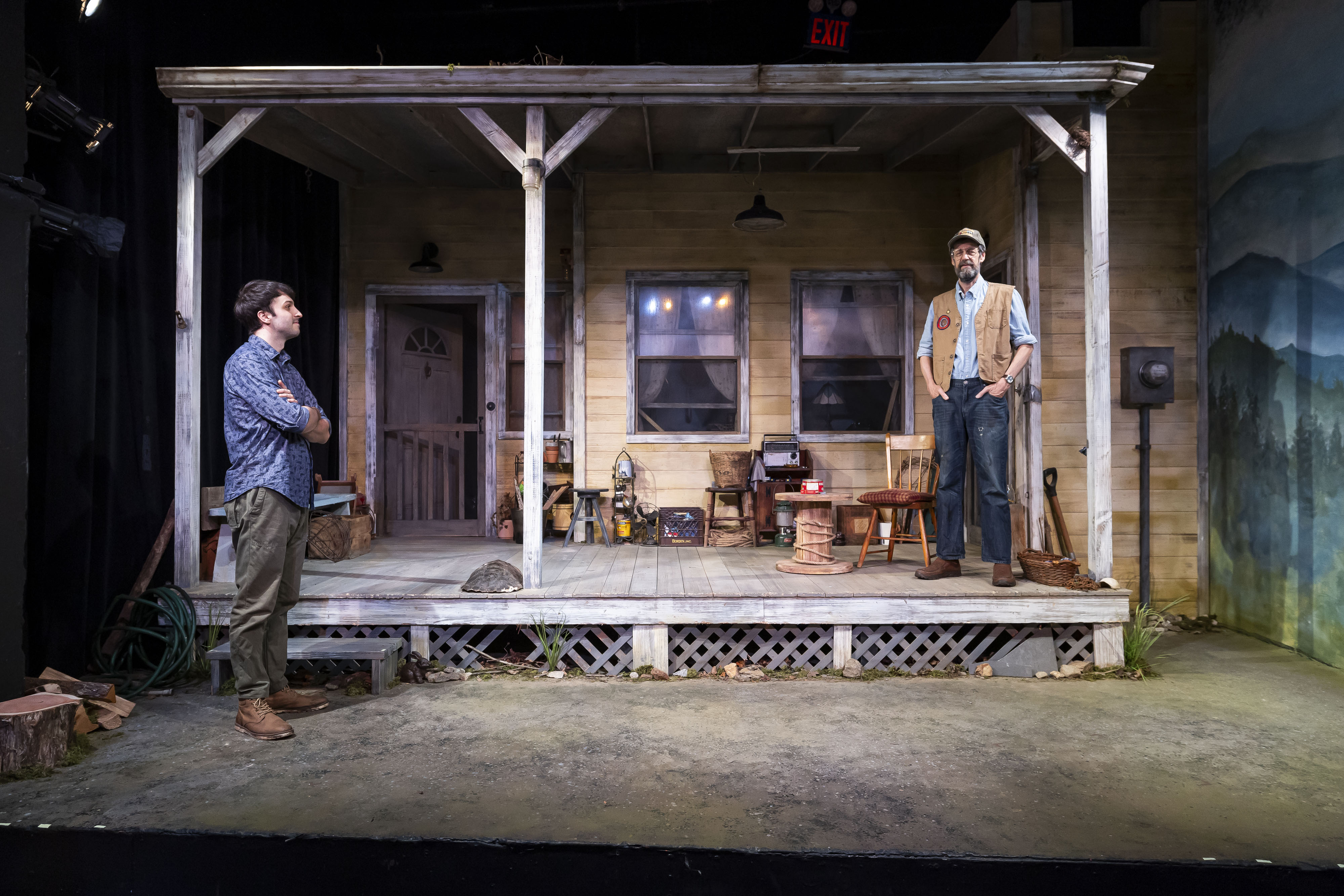 Beckett (Morgan Morse, L) tries to get to know Edgar (David M. Lutken), in “The Porch on Windy Hill.” (Ben Hider)
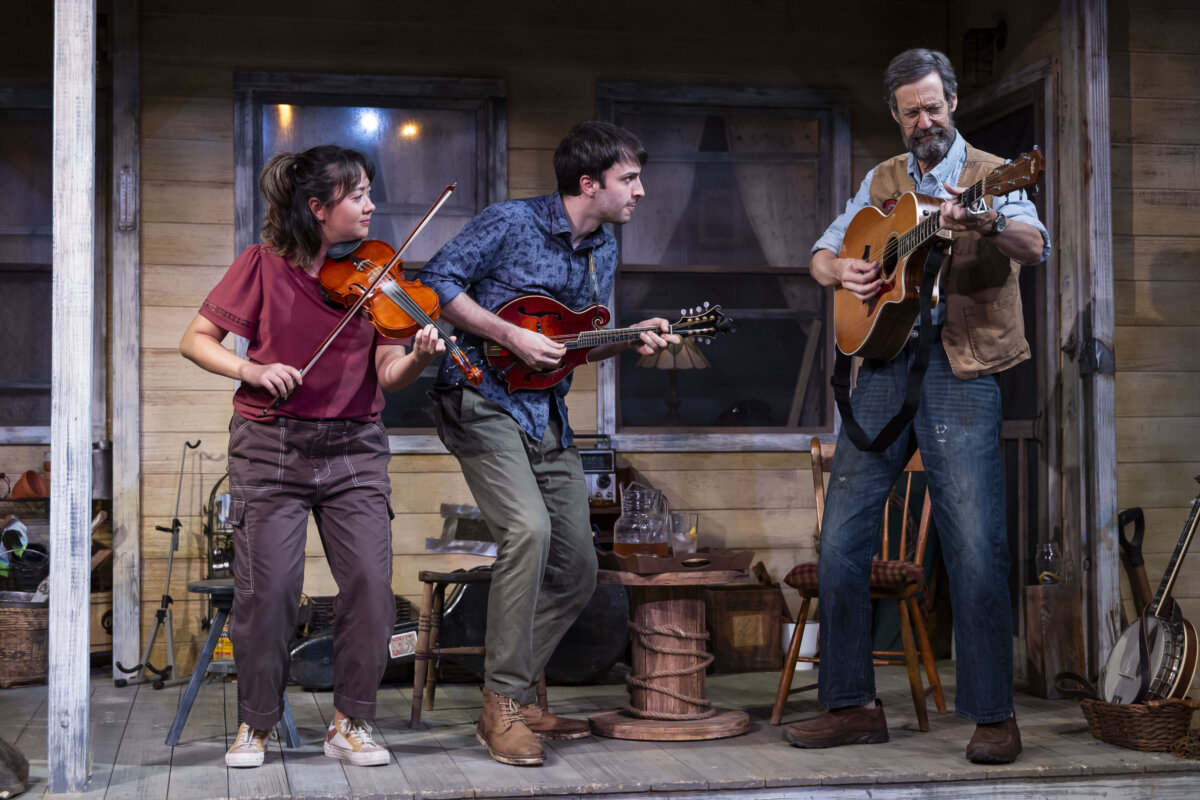
The trio soon performs together like a well-oiled machine. In just a short time, the three—each of whom plays multiple instruments during their time together—create their own down-home pickin’ party. One can imagine actually being on that North Carolina porch surrounded by a sea of fellow music lovers reveling in the unfolding performances.
An Undercurrent of Questions
Despite any musical harmony they might seek to create, it’s not long before tentative steps toward reconciliation clash with recollections of what was and wasn’t said nearly two decades earlier. This leads to a discussion of cultural conflicts and a belated understanding that ignoring others’ wrongful actions and attitudes simply because it’s more convenient isn’t acceptable. The play also asks exactly whose job it is to reach out after such an incident, and for how long they are supposed to even try.
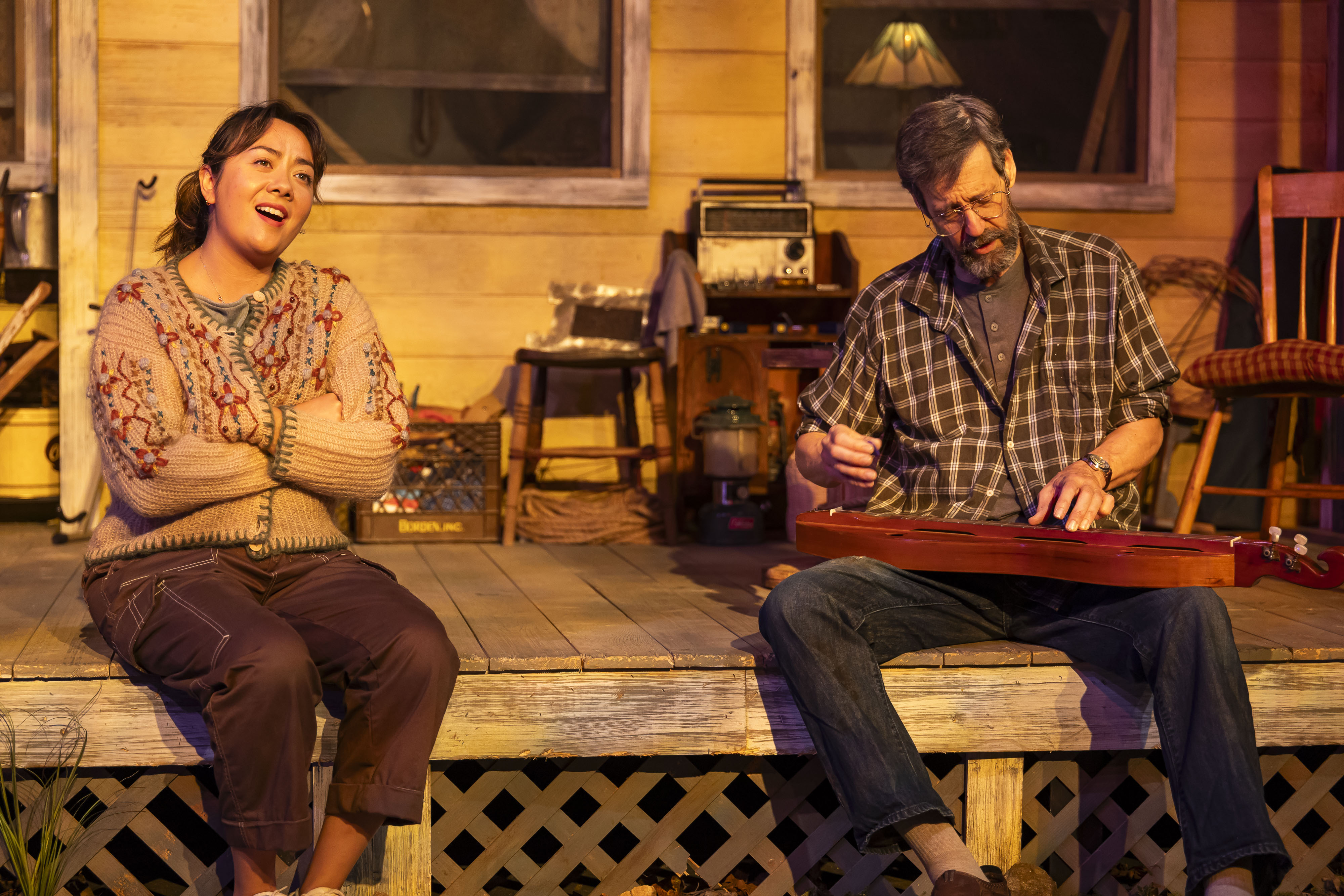 An olive branch is passed between Mira (Tora Nogami Alexander) and her grandfather Edgar (David M. Lutken), in “The Porch on Windy Hill.” (Ben Hider)
The main theme of the story is the concept of change and that being able to adapt and respond to outside influences is essential for growth. This truism applies not only to relationships but to music. It’s explored in the Beckett and Edgar’s conversations about musical interpretations and preferences. They acknowledge that sometimes, the interpretation of lyrics can change over time and eventually be accepted as meaning something else entirely.
Providing an emotional anchor all its own is the music. Each song has its own history—some of which Beckett is all too happy to explain: the first hillbilly hit record was “Little Old Log Cabin in the Lane.” The characters express emotions related to the tunes as well.
Lutken is excellent as a man deeply steeped in musical tradition who is delighted to be able to get back to performing with others after over a year of COVID’s forced isolation. He also has deep feelings and isn’t always comfortable sharing them. Alexander powerfully shows the conflict she feels when torn between embracing a past she has tried to bury, while looking for answers to questions she long since stopped asking.
Morse brims with enthusiasm in a fish-out-of-water situation. He delighted he can play alongside someone like those he is documenting, even as he wrestles with exactly when to insert his opinion on family matters that may not always be welcome. Mira never chose to share with him this part of her past.
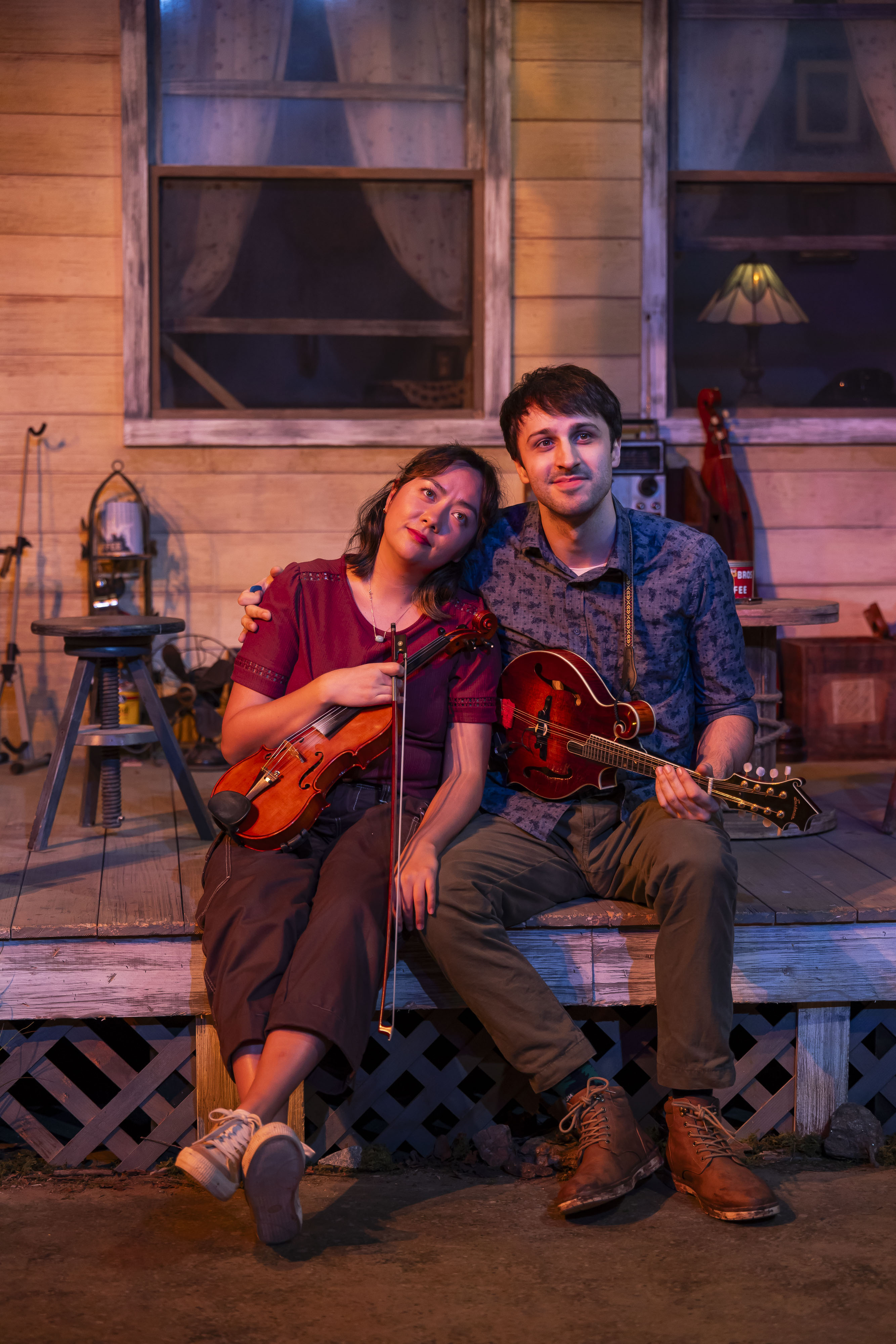 Mira (Tora Nogami Alexander) bonds with her banjo-loving boyfriend, Beckett (Morgan Morse), in “The Porch on Windy Hill.” (Ben Hider)
Adding to the backcountry feel perfectly is the weather-beaten porch of Edgar’s house, which comprises most of Andrew Robinson’s set. There, the three performers sit, play music, sip tea or indulge in something stronger. All that’s missing is a rocking chair.
As “The Porch on Windy Hill” makes clear, it’s never too late to seek forgiveness and address the past. While an immediate happy ending may not be in the cards, there is the chance that it just might happen someday.
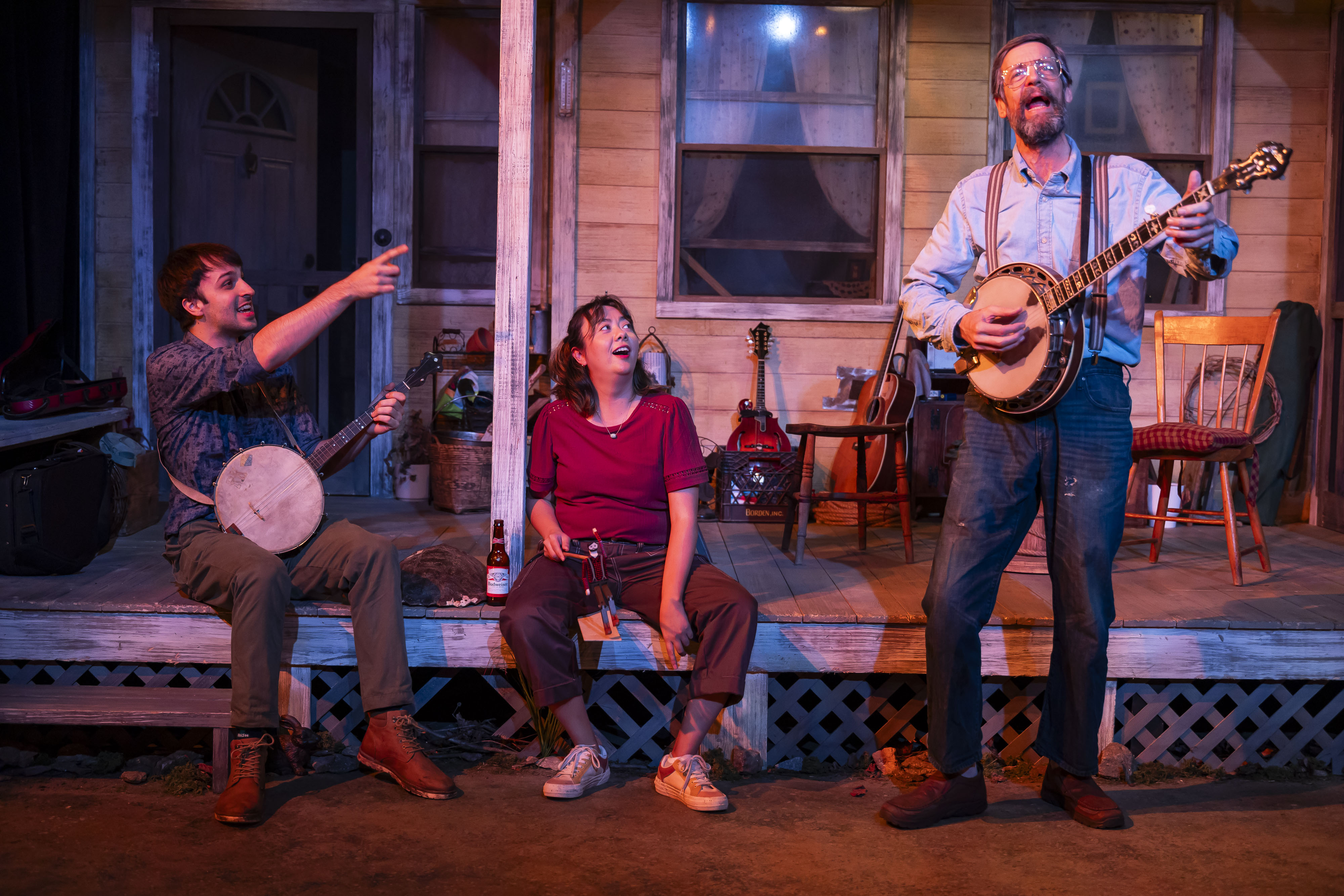 (L–R) Forgiveness can lead to fellowship and renewed friendship, as Beckett (Morgan Morse), Mira (Tora Nogami Alexander) and Edgar (David M. Lutken) discover, in “The Porch on Windy Hill.” (Ben Hider)
‘The Porch on Windy Hill’
Urban Stages
259 W. 30th St., Manhattan
Tickets: www.urbanstages.org/porch
Running Time: 2 hours, 10 minutes (one 15-minute intermission)
Closes: March 8, 2026
What arts and culture topics would you like us to cover? Please email ideas or feedback to features@epochtimes.nyc
