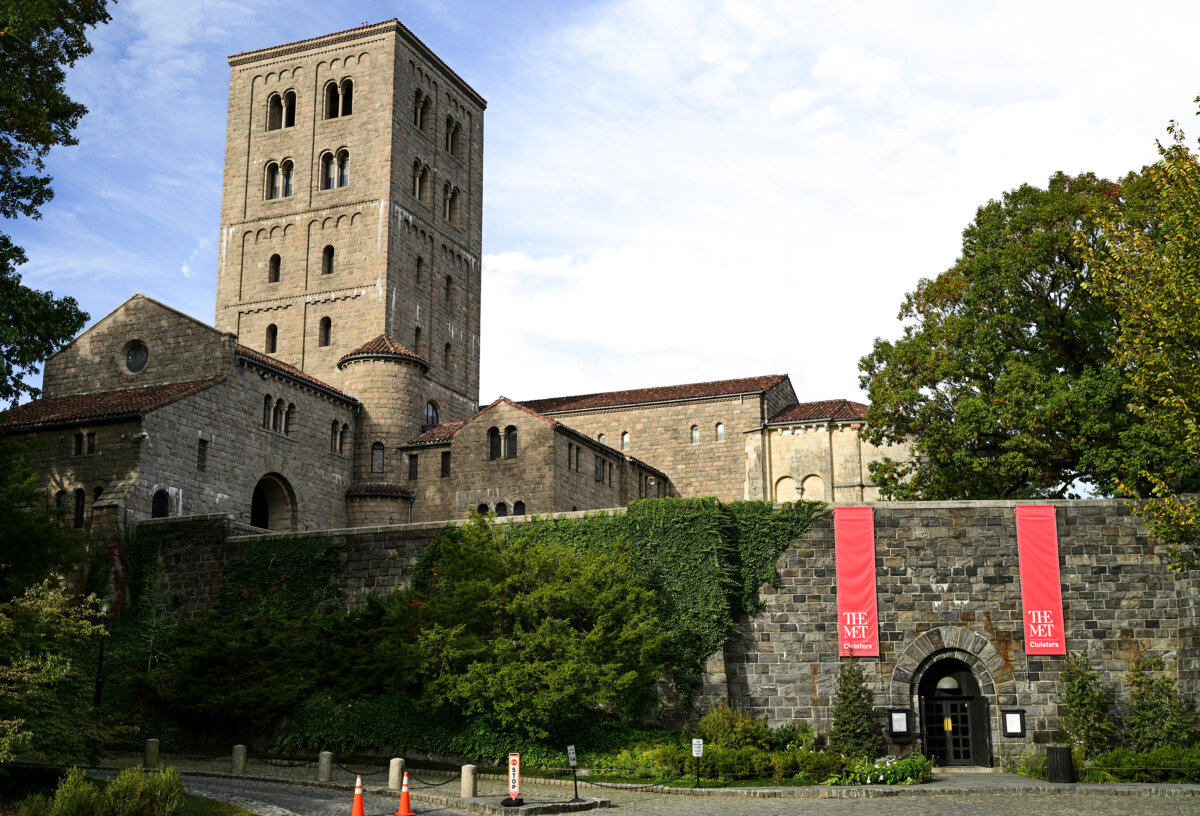
The Met Cloisters is the only American museum dedicated exclusively to medieval art and architecture. Constructed of limestone and granite from European ruins, the building’s facade merges Romanesque and Gothic architectural elements to evoke the austere, fortified impression of a medieval monastery. Cobblestone pathways and steps lead up to the building’s main entrance, which is set into a steep hillside. (Conservationist/Shutterstock)
Nestled in Fort Tryon Park in the northern part of the New York City borough of Manhattan, overlooking the Hudson River, is the Met Cloisters. This exquisite New York City museum houses medieval fine art, decorative art, and architectural fragments. Constructed from 1933 to 1938, its harmonious amalgamation of ecclesiastical medieval architecture with modern-built structures evokes an immersive atmosphere. Its galleries contain approximately 2,000 Western European artworks dating predominantly from the 12th through 15th centuries, including the famous Unicorn Tapestries.
Medieval monastic life centered around a cloister, a large open courtyard bordered by covered walkways and with access to all other buildings. The core of the Met Cloisters’ collection, from which the museum takes its name, consists of architectural elements from four French cloisters. These were the foundation for an Upper Manhattan museum founded by George Grey Barnard.
In 1925, it was bought by John D. Rockefeller Jr. for the Metropolitan Museum of Art. Two years later, Rockefeller hired the Olmsted brothers to landscape a nearby tract of land. Rockefeller donated this land, named Fort Tryon Park, to the city on the condition that four acres would be set aside for a reimagining of the Met’s new medieval branch. Charles Collens, engaged as architect, collaborated with Met curators, taking European study trips to plan how to design a building that incorporated Barnard’s original architectural features and new medieval museum acquisitions in a manner that harked back to authentic historic architecture.
Today, the Met Cloisters is beloved by visitors for its ability to transport one to the Middle Ages. At a distance from Manhattan’s tourist centers, it requires a journey suggestive of a pilgrimage. Its parkland setting obscures the modern world. Landscaped outdoor spaces harmonize with the museum’s interiors. Rockefeller’s purchase and preservation of 700 acres of the New Jersey Palisades across the Hudson River ensures an ongoing pristine vista that enhances the Met Cloisters’ architecture and art.
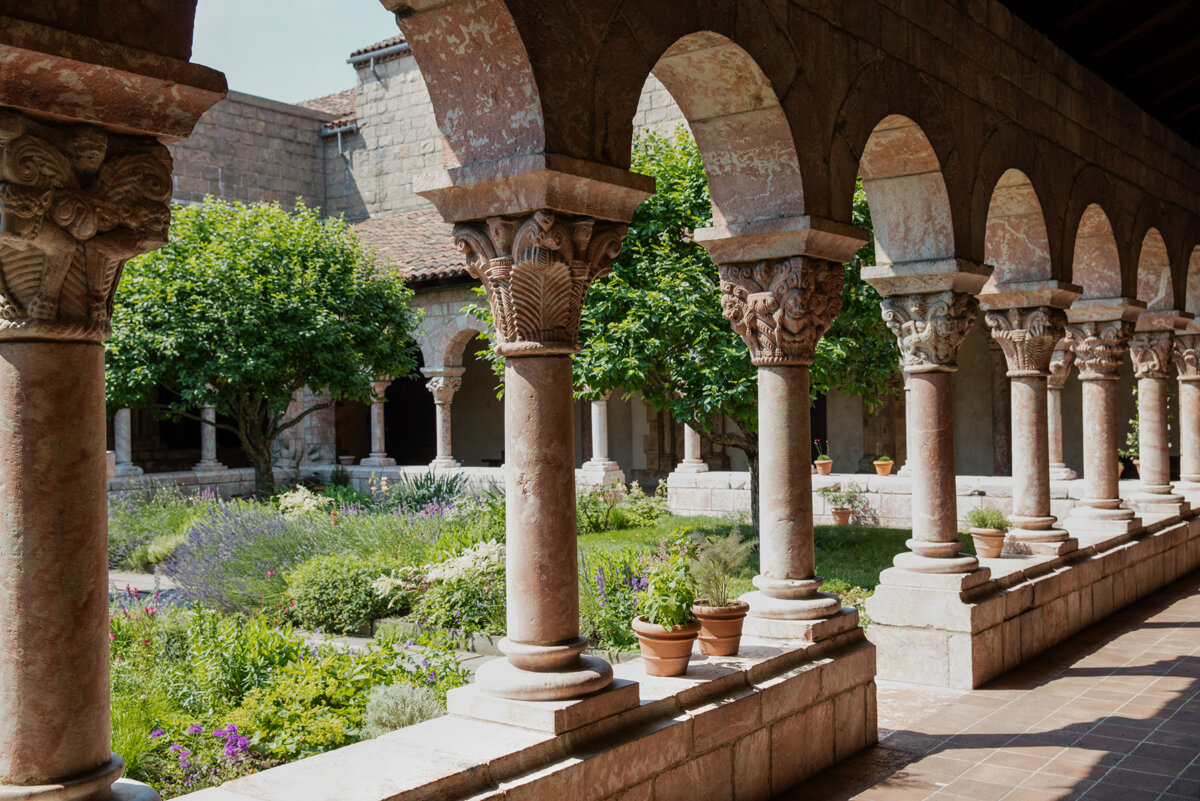
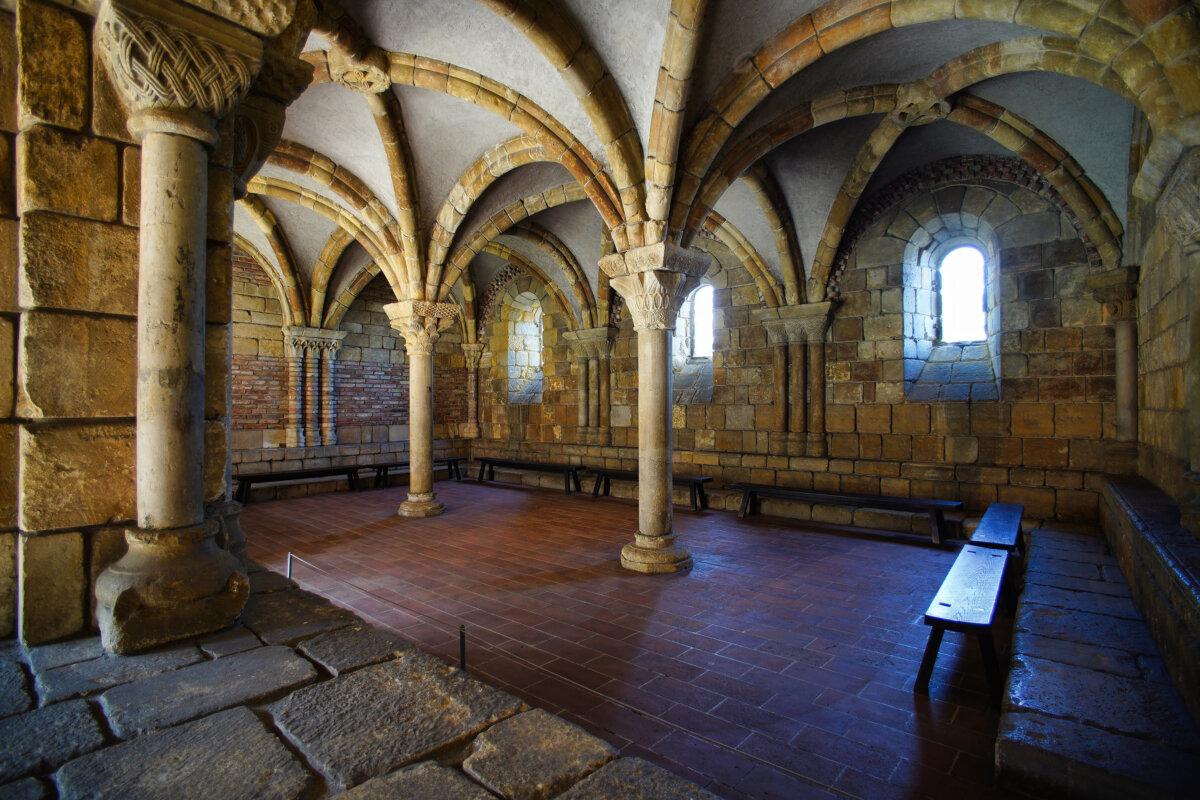
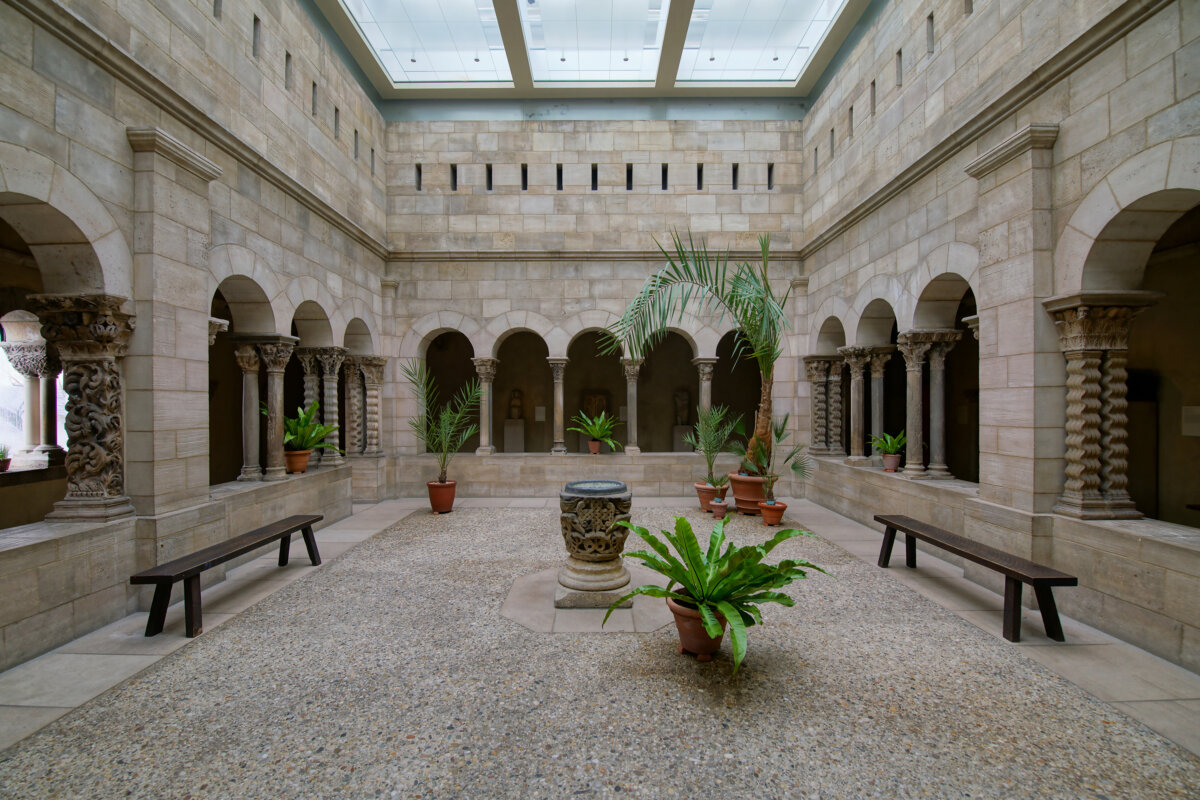
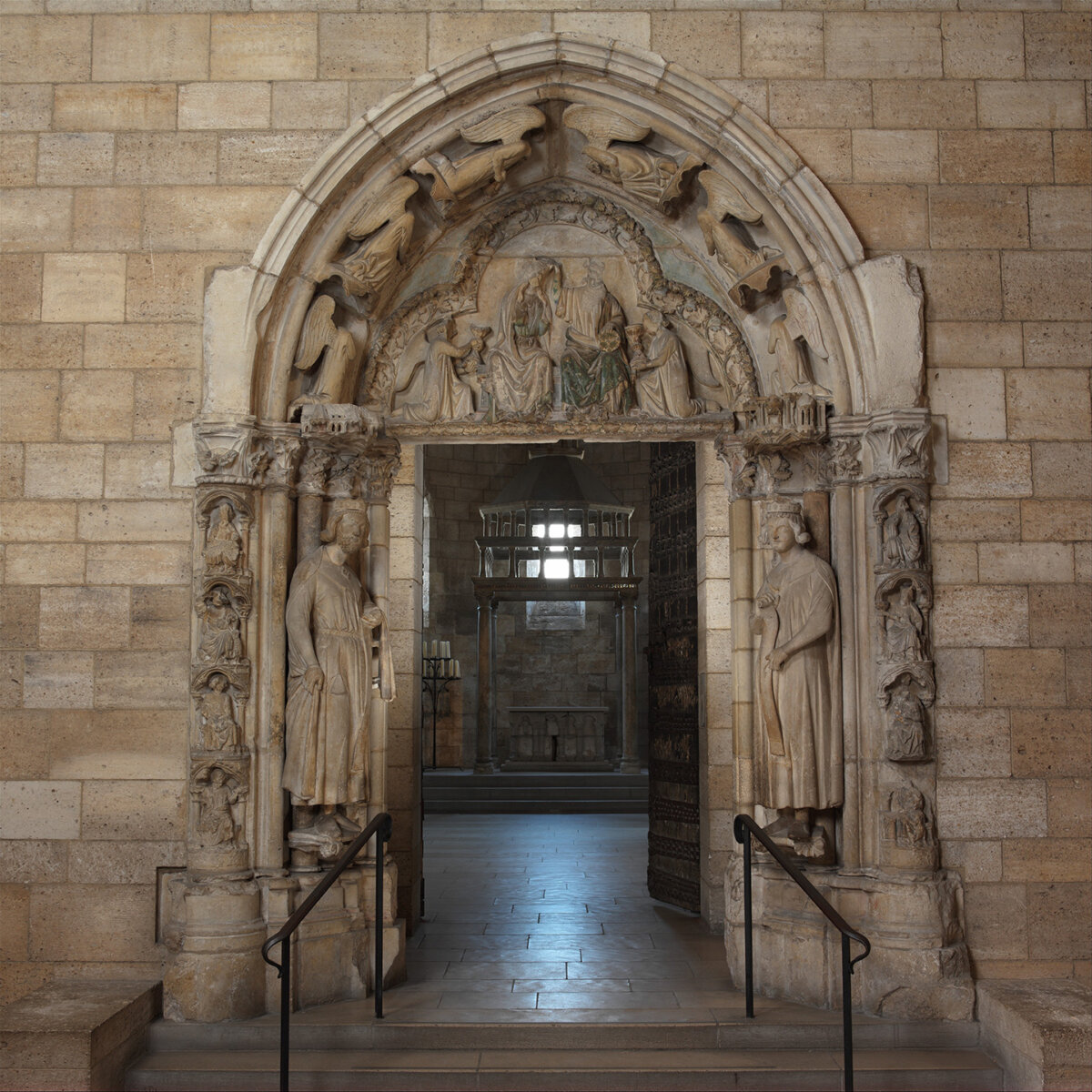
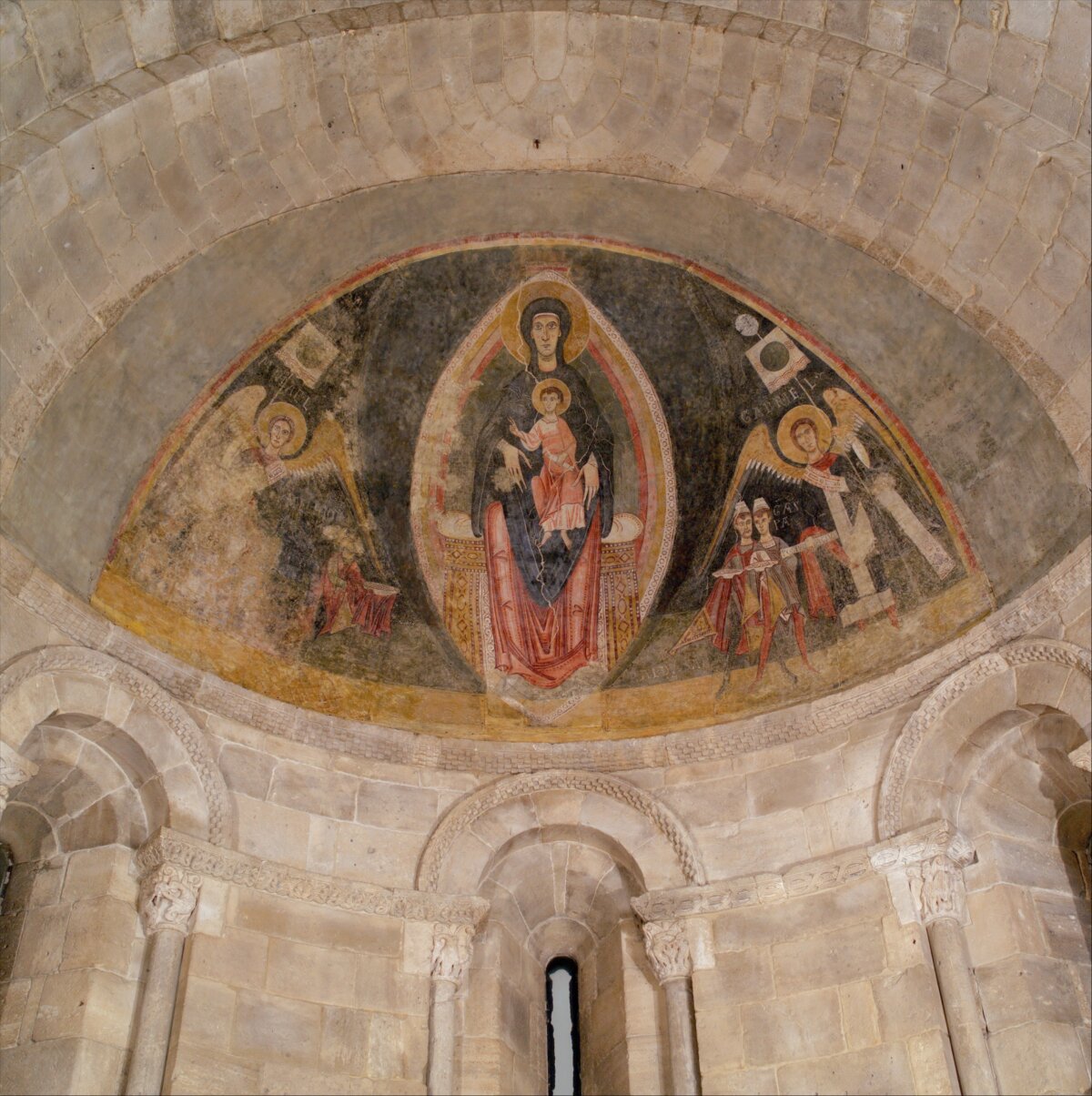
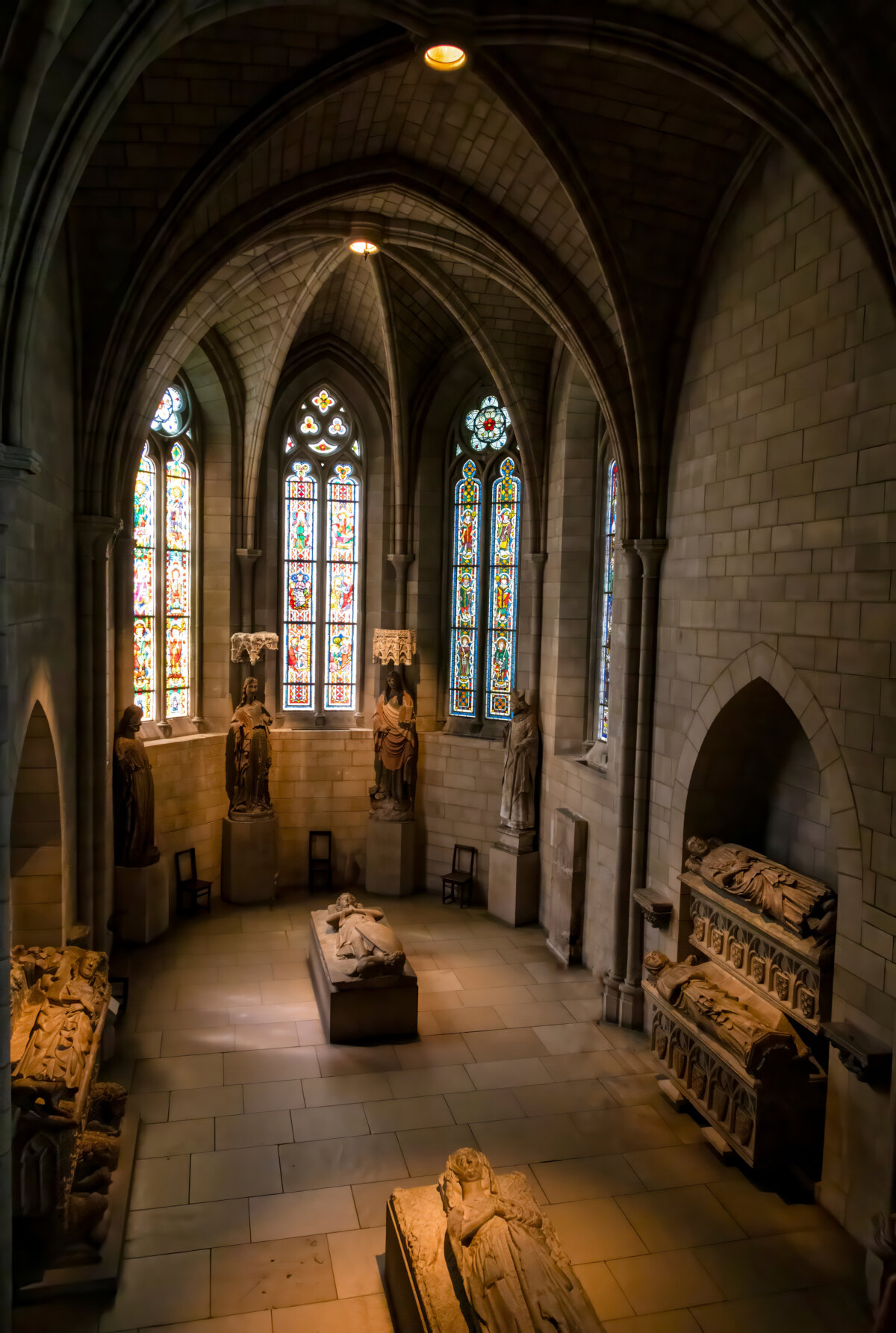
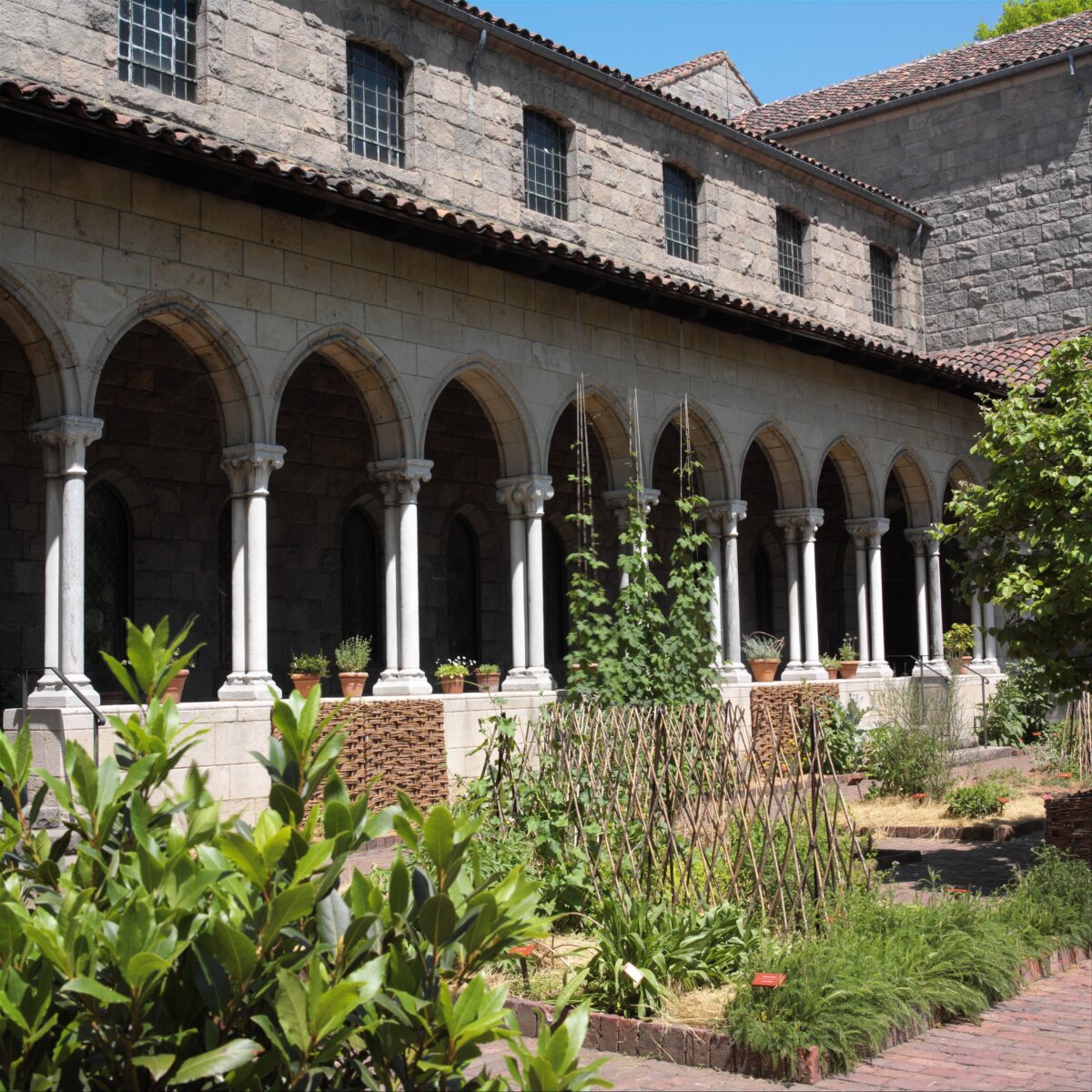
The pink-marbled Cuxa Cloister is at the heart of the museum’s floor plan. The 12th-century cloister from the Benedictine monastery of Saint-Michel-de-Cuxa in the northeastern Pyrenees was originally about twice the size of the Met Cloisters’ current configuration. Combining medieval fragments collected by George Grey Barnard and supplemented with Charles Collens’s modern elements, its capital carvings depict wild and fanciful creatures that range from simple to intricate. (The Met Cloisters) Next to Cuxa Cloister, adhering to a medieval monastic plan, is the Romanesque chapter house from Notre-Dame-de-Pontaut, formerly in Aquitaine, France. Monks, seated on the continuous stone bench running along the walls, used it as their daily meeting place in which to conduct the abbey’s liturgical and administrative business. Its heavy rib vaults are supported by freestanding monolithic columns. Damaged during the 16th century’s French Wars of Religion, it was later used as a stable. (Mariusz Lopusiewicz/Shutterstock) Among Barnard’s original treasures were 140 elements from Saint-Guilhem-le-Désert near Montpellier, France, including capitals, columns, and pilasters, that the museum used to reconstruct the cloister. Founded in the early 9th century, the Benedictine abbey was a popular pilgrim’s destination en route to Santiago de Compostela. Its beautiful and imaginatively carved capitals feature classical foliate motifs and biblical narratives. Severely damaged during centuries of conflicts, by 1850 components were displayed in a local private garden. (Mariusz Lopusiewicz/Shutterstock) The Burgundian Gothic doorway from the abbey of Moutiers-Saint-Jean serves as an entry to the Met Cloisters’ Langon Chapel. The limestone doorway, originally a portal from the cloister to the abbey’s church, dates to about 1250. The carved angels of the pointed arch likely lost their heads during the Wars of Religion. The jamb statues of kings were removed during the French Revolution. The Met Cloisters reunited them serendipitously. (Public Domain) The Romanesque apse of the church of San Martín at Fuentidueña is on permanent loan from the Spanish government. It is covered by a barrel vault and a half dome and has typical thick walls and small windows. Its displayed fresco, painted in the apse of another church sacked during the Spanish Civil War, was inserted by the museum. The chapel’s superb acoustics makes it a popular concert venue. (Public Domain) The mostly modern Gothic Chapel by Collens was inspired by 13th-century French chapels at Carcassonne and Monsempron. It houses limestone tomb effigies, including mid-13th century ones of a crusader knight and a noblewoman. Overlooking them are brightly colored 14th-century Austrian stained-glass panels from a church in Carinthia, Austria, and a castle chapel near Vienna. (jrtwynam/Shutterstock) The Bonnefont Cloister was believed to have come from near Bonnefont-en-Comminges, but now six of the double capitals have been traced to a different monastery. Overlooking the park and the river, the cloister’s L-shaped arcade frames a medieval herb garden, one of the most specialized plant collections in the world. The Cloisters grows up to 300 kinds of plants based on the 400 known species from the Middle Ages, including specimens used for making pigments and dyeing textiles. (Public Domain)
What arts and culture topics would you like us to cover? Please email ideas or feedback to features@epochtimes.nyc.
Michelle Plastrik is an art adviser living in New York City. She writes on a range of topics, including art history, the art market, museums, art fairs, and special exhibitions.