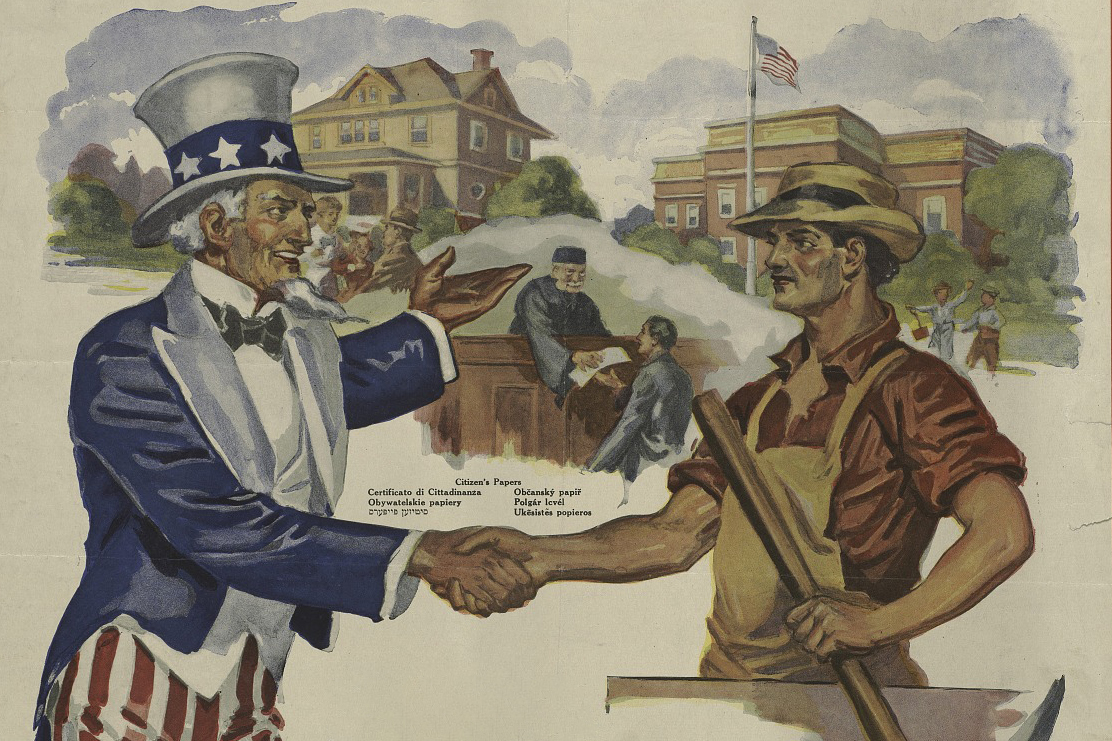
America had a problem. Immigration had stretched America’s cultural ties to the breaking point. The country’s lax immigration policies had opened the door for more than 25 million immigrants to flood America’s shores between 1880 and 1924. A vast majority of these immigrants fled from Europe for various reasons—famines, exorbitant taxes, wars, or political or religious persecution. To immigrants, America was the “city on a hill.” To Americans, the city was crumbling.
Philander Claxton, the U.S. commissioner of education, articulated concerns about the influx of immigrants:
“In 1910 there were in the United States approximately 13,000,000 foreign-born persons, and about 20,000,000 more with one or both parents born in foreign countries. About 3,000,000 of the foreign-born over ten years of age could not speak English and about 1,650,000 could not read or write in any language. Nearly 50 per cent of the foreign-born population were males of voting age, but only 4 in every 1,000 attended school to learn our language and citizenship.”
Beyond a lack of education among immigrants, further concern focused on a lack of loyalty to the United States. Europe—stretching from England to Russia—was being transformed through new sociopolitical theories, specifically communism and anarchism. Propagators of anti-capitalist theories preached to the working masses and agitated against employers. These theories were now being propagated in America.
The Rise of Unions
The International Working Men’s Association (IWMA) was founded in 1864 in London to create “a central medium of communication and cooperation between Working Men’s Societies existing in different countries.” Two of its leading members were the Russian exile and anarchist Mikhail Bakunin, and German exile and political theorist, Karl Marx, who had also been exiled from Paris. The IWMA was a collection of trade unionists, communists, and anarchists that ebbed and flowed between relatively reasonable working demands and outright revolution.
Shortly after the Civil War, this international labor movement found a place in the United States. The National Labor Union (NLU), established in 1867, and the Knights of Labor, established in 1869, began to spread an anti-capitalist agenda in a country whose economic principles were founded on capitalism. Furthering America’s involvement in this movement, the headquarters for the IWMA were moved to New York in 1872. But with the IWMA separated from its European heart, the organization dissolved in 1876. The NLU preceded the IWMA’s dissolution in 1873.
The Knights of Labor continued and helped organize strikes. It had lofty goals; these included enshrining the eight-hour workday, eliminating child labor, and increasing membership and local assemblies across the country. By 1886, the labor union boasted thousands of local assemblies and approximately 1 million members in the United States. Additionally, the Federation of Organized Trades and Labor Unions (later reformed as the American Federation of Labor) and the American branch of the International Working People’s Association (IWPA) were both established in 1881. This latter group, composed primarily of anarchist immigrant workers, was instrumental in the clash among labor, industry, and government.
The Start of May Day
The economic influence labor unions wielded was substantial. Strikes had proven persuasive. Congress even passed legislation that benefited unions through the Alien Contract Labor Law of 1885, which made it illegal to hire immigrants before they arrived in America. Labor unions feared such immigrants would be hired by non-union employers, driving down wages and displacing union workers. The law neither decreased the influx of immigrants nor keep labor unions from witnessing a downward spiral the following year.
The upheaval strikes caused and the retaliation taken against strikebreakers (“scabs,” as they were called) proved untenable. Violence reached a fever pitch in Chicago in May 1886. On May 1, the IWPA organized a collective strike that saw tens of thousands of workers march for an eight-hour workday. The strike continued, and on May 3, it turned violent, resulting in police killing two people. The following day, anarchist leaders printed leaflets calling for “Revenge!”
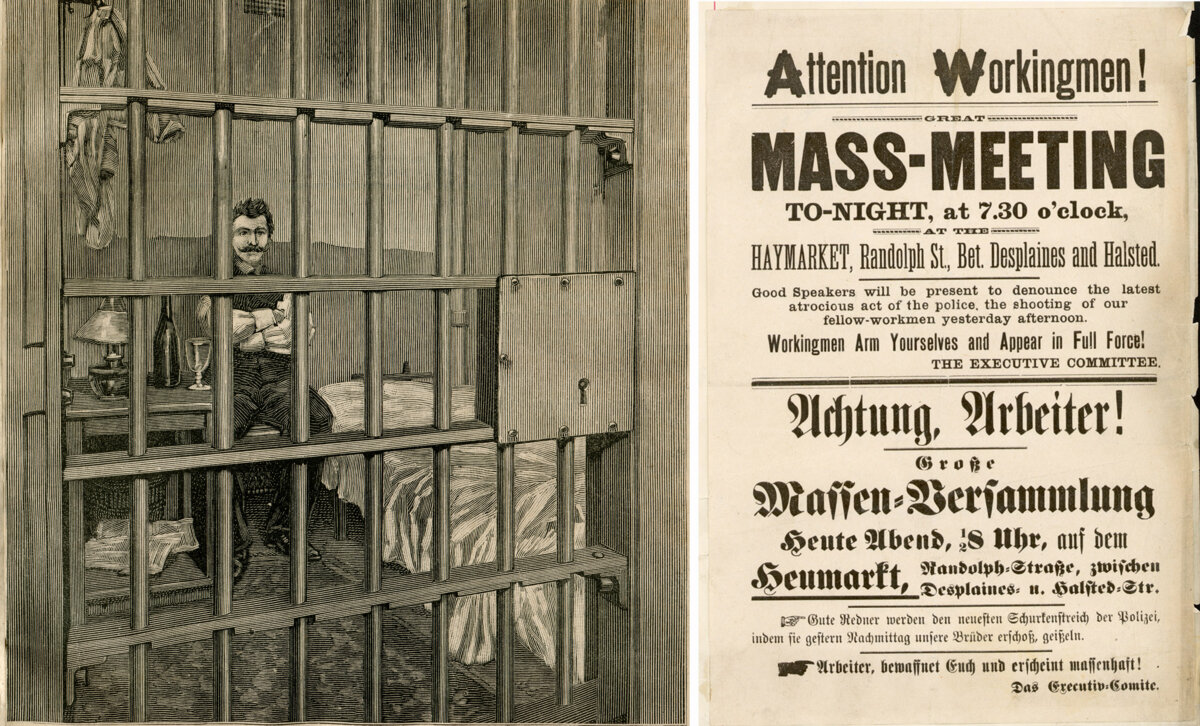
On May 4, it appeared the day would end without revenge. But as the crowd dwindled, a speaker called for violence, prompting the Chicago police to descend upon the crowd to disperse it. A bomb was tossed at the police, instantly killing an officer. Police opened fire. By the end of the riot, at least eight were dead (seven officers), and possibly 100 wounded (60 officers). The Haymarket Affair seemed to confirm fears Americans had about the influence of communist- and anarchist-led labor movements.
In June, eight anarchists stood trial as accessories to murder. Though none were identified as the person who threw the bomb, their inflammatory speeches were enough for a seething jury to sentence seven of the eight to death. Ultimately, three were pardoned by the governor, shortly after the hangings.
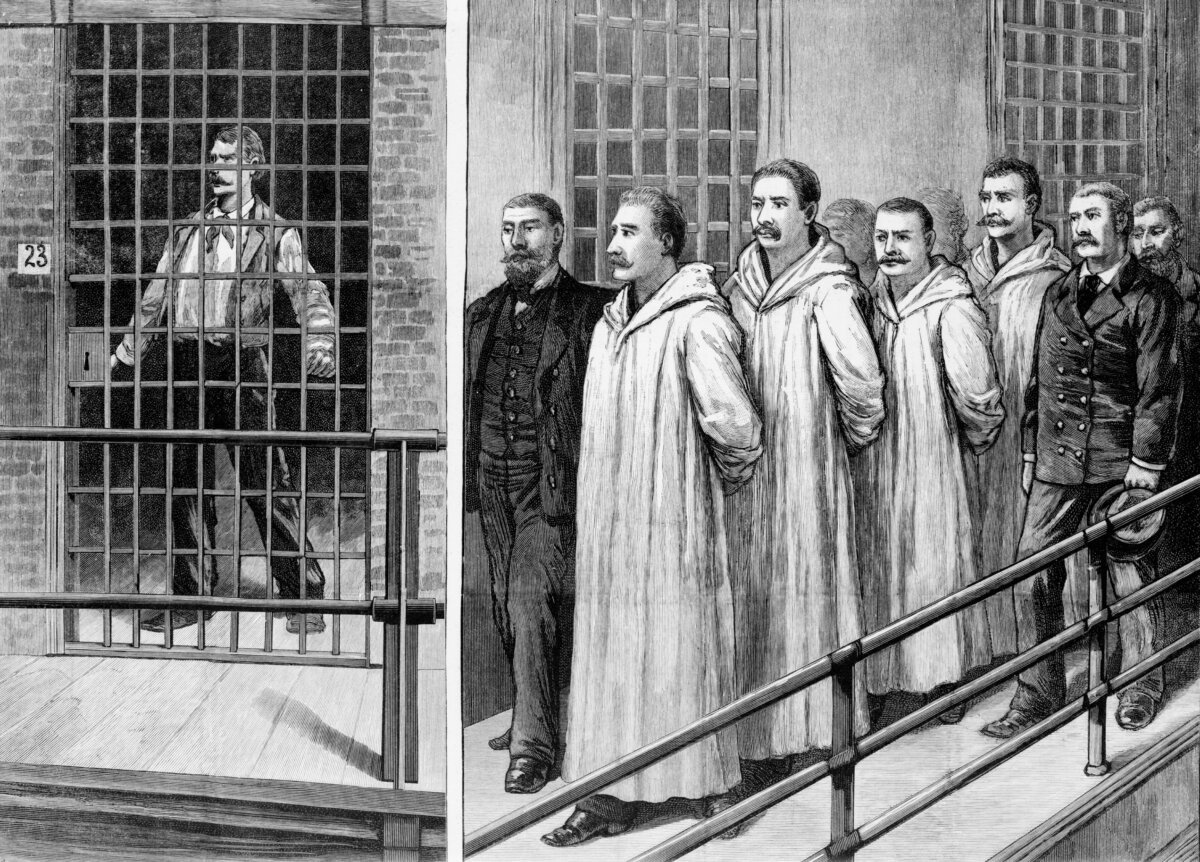
Despite criticisms of an unfair trial, the labor movement was stifled in the United States. The international movement, however, marked the event. Each May 1, socialists, unionists, communists, and anarchists around the globe commemorated the Haymarket Affair, typically citing the fight for an eight-hour workday as the reason. They called the day May Day.
The Americanization Movement
As the 19th century transitioned into the 20th, America witnessed its largest influx of immigrants during a period known as the Great Wave. The 1890 and 1910 censuses recorded the highest percentages of foreign-born residents within the population at 14.8 and 14.7 percent, respectively. During this period, a disproportionate number of immigrants came from southern and eastern Europe. These groups clashed with American culture in ways more glaring than those from northern Europe.
Four years after the 1910 census, war erupted in Europe, leading to more European immigrants. Fuel was added to the fire when communists incited a revolution in Russia, overthrew the tsar, signed a peace treaty with Germany, murdered the Russian royal family, and embroiled Russia’s streets in violence and bloodshed that led to a civil war. Americans, and the West in general, were appalled and justifiably terrified by the communist movement. The increase in immigrants, World War I—creating strong anti-German sentiment—and the revolution in Russia—launching America’s first Red Scare—accelerated the growth of a new movement in America.
The Americanization Movement began in New York, where most European immigrants landed. In 1915, the National Americanization Committee (NAC) was formed, coordinating with schools, courts, business organizations, churches, clubs, and government departments.
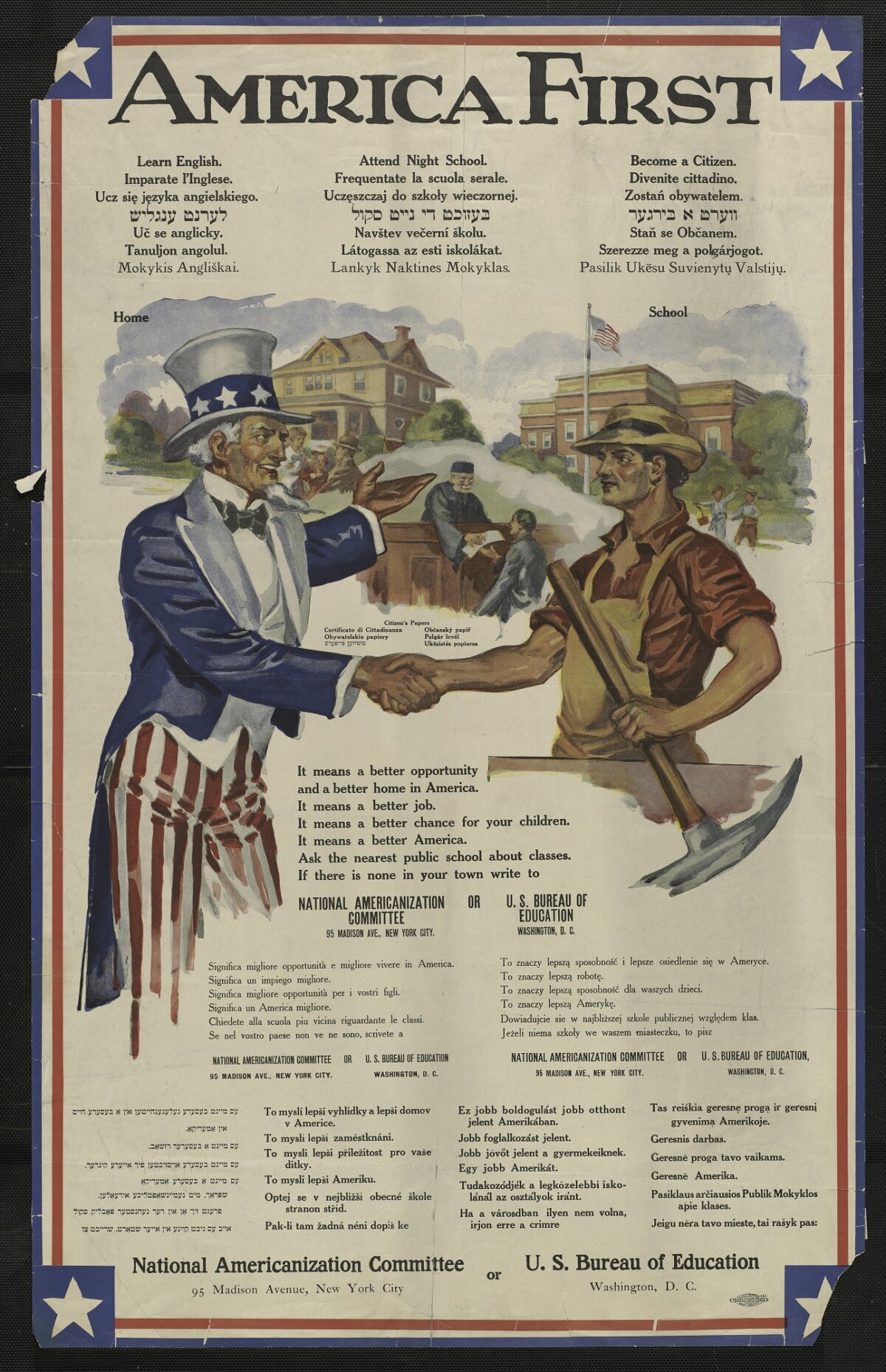
“The NAC had numerous objectives, among them was “interpreting American ideals, traditions, and standards and institutions to foreign-born peoples … unit[ing] in a common citizenship under one flag … combating of anti-American propaganda activities and schemes and the stamping out of sedition and disloyalty … [and t]he creation of an understanding of and love for America and the desire of immigrants to remain in America, have a home here, and support American institutions and laws.”
Cities across the nation adopted the mission, and city and state Americanization Committees soon emerged. The NAC recommended cities bring “American citizens, foreign-born and native-born alike, together on our national Independence Day to celebrate the common privileges and define the common duties of all Americans, wherever born.” Along with additional Fourth of July activities, it was decided to host an Americanization Day.
The Start of Loyalty Day
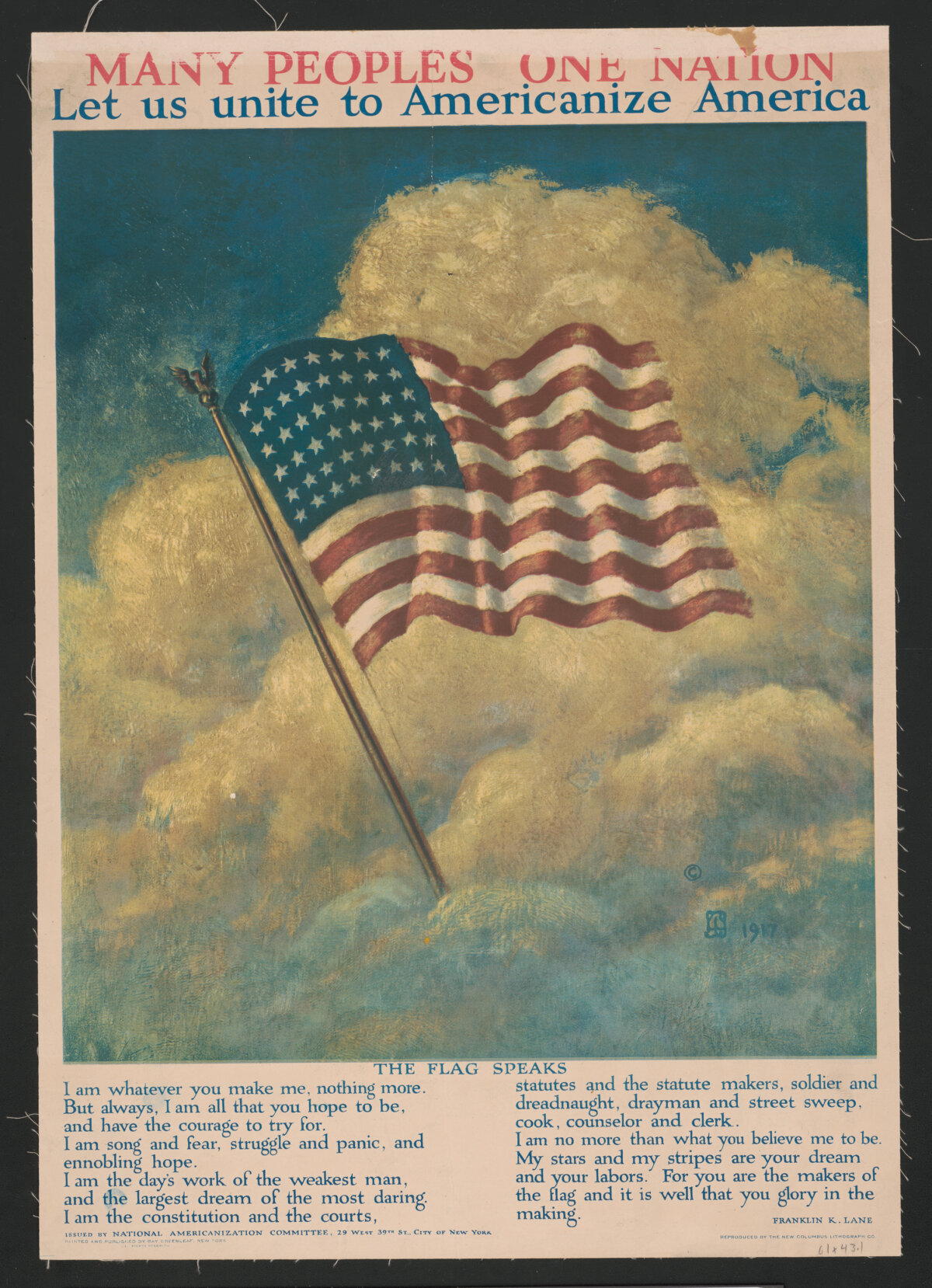
One date seemed most appropriate. With the Red Scare ongoing, the first Americanization Day took place on May 1, 1921, to offset communist May Day celebrations. It began an annual tradition of parades and patriotic activities. On May 1, 1930, approximately 10,000 members of the Veterans of Foreign Wars (VFW) held a rally in Manhattan’s Union Square for Americanization Day.
The annual parades and rallies, which the VFW called “Americanism rallies,” continued through the interwar years, the Great Depression, and World War II. When the war ended, the Cold War began, pitting Americans against the Soviets.
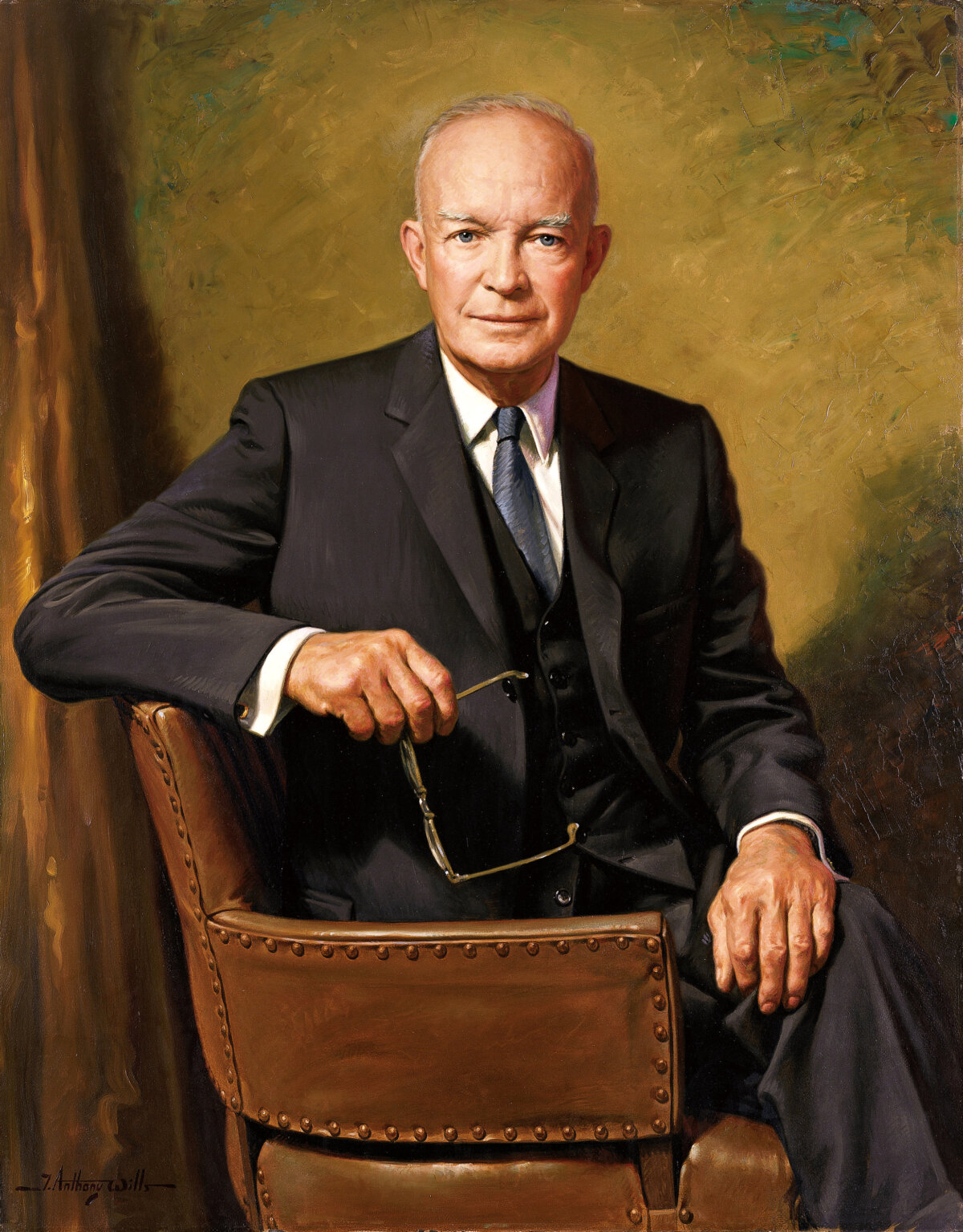
For the VFW, “Americanism rallies” now seemed even more necessary. In 1949, the VFW passed a resolution at its Golden Jubilee to have the day recognized by the federal government as a holiday called “Loyalty Day.” Congress passed a resolution on April 27, 1955, designating May 1, 1955, as “Loyalty Day.” President Dwight D. Eisenhower issued a proclamation on April 28, stating that “a special day be set aside for solemn re-evaluation of those priceless gifts of freedom which are our heritage, to the end that we may stimulate and renew that high sense of patriotism which has signalized our glorious history as a Nation.”
One single day, though, was hardly enough. The VFW lobbied for an annual holiday. Three years later, on July 18, 1958, Congress passed a joint resolution to “designate the 1st day of May of each year as Loyalty Day … as a special day for the reaffirmation of loyalty to the United States of America and for the recognition of the heritage of American freedom; and the President of the United States is authorized and requested to issue a proclamation calling upon officials of the Government to display the flag of the United States on all Government buildings on such day and inviting the people of the United States to observe such day, in schools and other suitable places, with appropriate ceremonies.”
On May 1, 2025, President Donald J. Trump followed a long American tradition, when he proclaimed, “As our Nation commemorates Law Day, U.S.A., and Loyalty Day, we reaffirm our loyalty to the Constitution, and we renew our pledge to preserve and protect our glorious inheritance of fairness, equality, and freedom against all threats, foreign and domestic.” Recalling the history of the proclamation, he noted, “First proclaimed by President Dwight D. Eisenhower in 1955, Loyalty Day was inaugurated to directly counter commemorations of May Day—which was frequently celebrated by communist groups—and to serve as a beacon of hope to all those still blighted by the horrors and injustices of communism and tyranny.”
What arts and culture topics would you like us to cover? Please email ideas or feedback to features@epochtimes.nyc.