



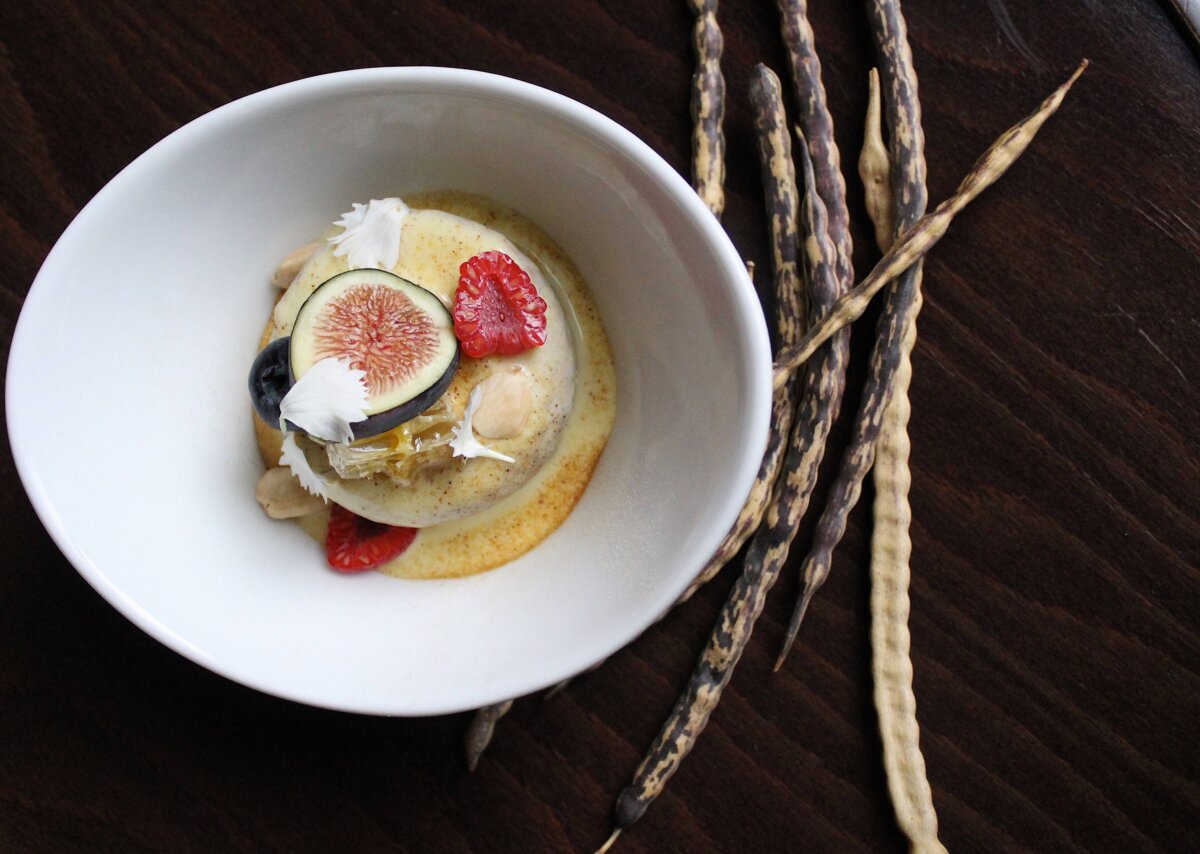
Great ingredients make great dishes. But some ingredients are more powerful than others. They carry history, amazing flavor, and incredible versatility. American Essence asked top chefs which ingredients they consider their gold standards—the ones they return to again and again, which represent the unique terroir of where they’re sourced.
Their answers are as diverse as the geography of America: nutty mesquite beans, smoked lake trout that whispers of campfires, and crisp apples that immediately conjure fall memories.
Some of these ingredients are humble. Some may be unfamiliar to many Americans. But all of them, according to the chefs who champion them, are worthy of celebration.
These responses have been edited for clarity and brevity.
Chesapeake Bay Oysters
Harley Peet, Bluepoint Hospitality
Easton, Md.
Gold standard ingredient and what makes it shine:
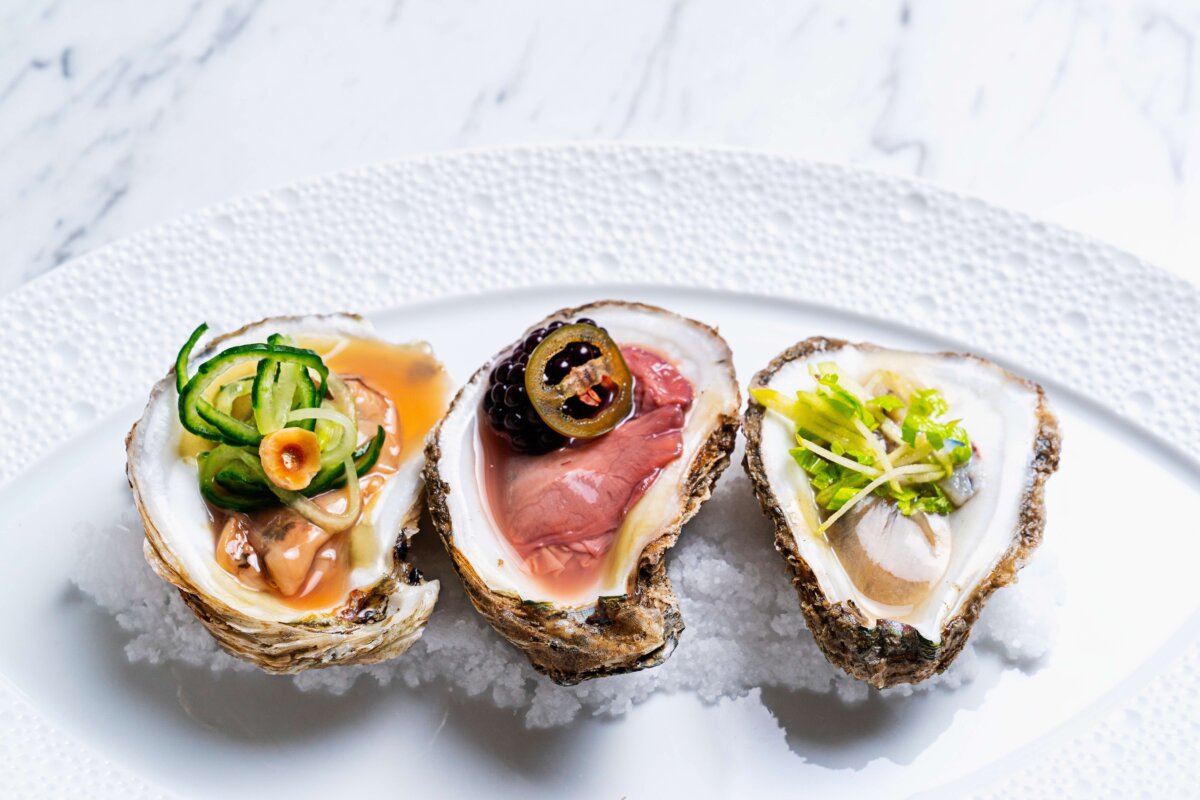
Since arriving to the Eastern shore more than 20 years ago, I have devoted much of my time to learning about the local waterways and advocating for sustainability. I sought out watermen and fishermen to foster my continuing education on the local environment and have developed a true passion for preserving and celebrating the Chesapeake’s bounty. One of its culinary treasures is the Chesapeake Bay oyster. It is a thick-shelled oyster with ample meat that fills its shell. This makes it really versatile—an excellent choice for baking and half-shell preparations. The sweetness and salinity of Chesapeake oysters are perfectly balanced.
Ingredient backstory:
The water’s salinity level and a very particular bottom structure contribute to the distinctive aspects of this regional oyster. The beauty of the Chesapeake Bay oyster is that it’s one item, a showcase piece, and nothing needs to be done to make it excellent.
My rendition:
I only like to use local oysters in season, so depending on the year and the salinity levels, this could mean a heavier focus on stews and baked oysters or an emphasis on raw oysters. At Bas Rouge, we offer decadent dishes like a truffle-topped version of oysters Rockefeller or the smoked oyster soup with celery, onion, bacon, Yukon gold potato, chives, and a warm milk foam.
Shoutout to:
I’ve developed a really close relationship with Nick Hargrove and Derek Wilson with Wild Divers Oyster Company in Wittman, Maryland. Since Nick and Derek hand-harvest oysters, the naturally thicker shell is an easier shuck and there is a 99 percent yield. Hand-harvesting also results in the least amount of damage to a reef habitat as compared to dredging and tonging.
Mesquite Beans
Steve McHugh, Cured
San Antonio, Texas
Gold standard ingredient and what makes it shine:
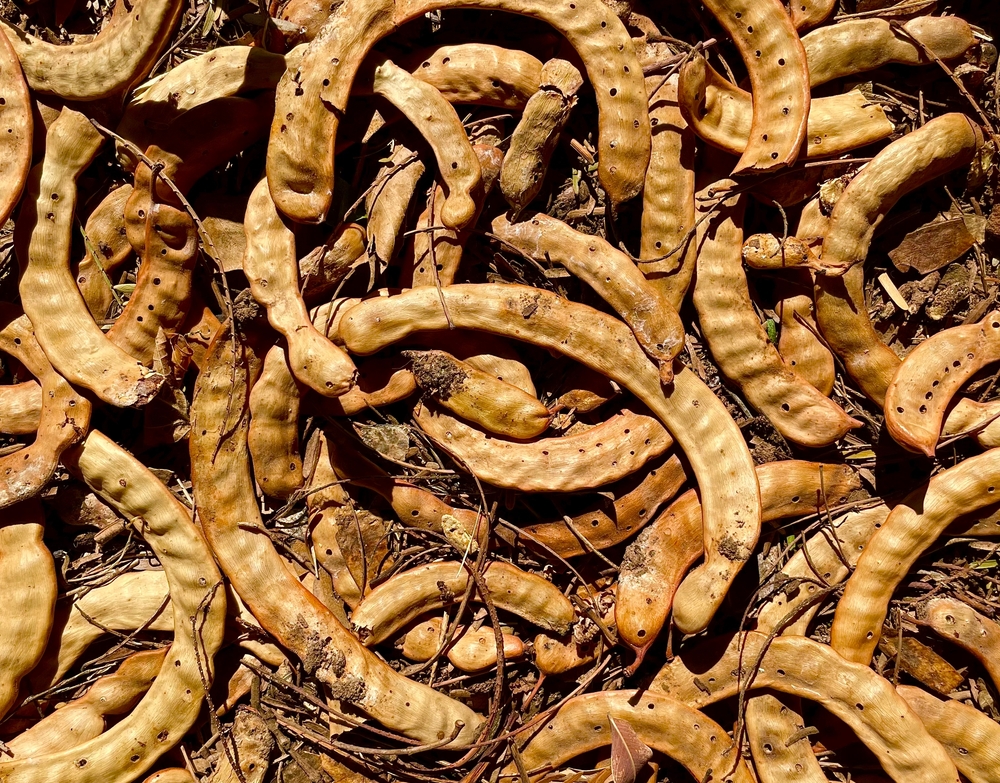
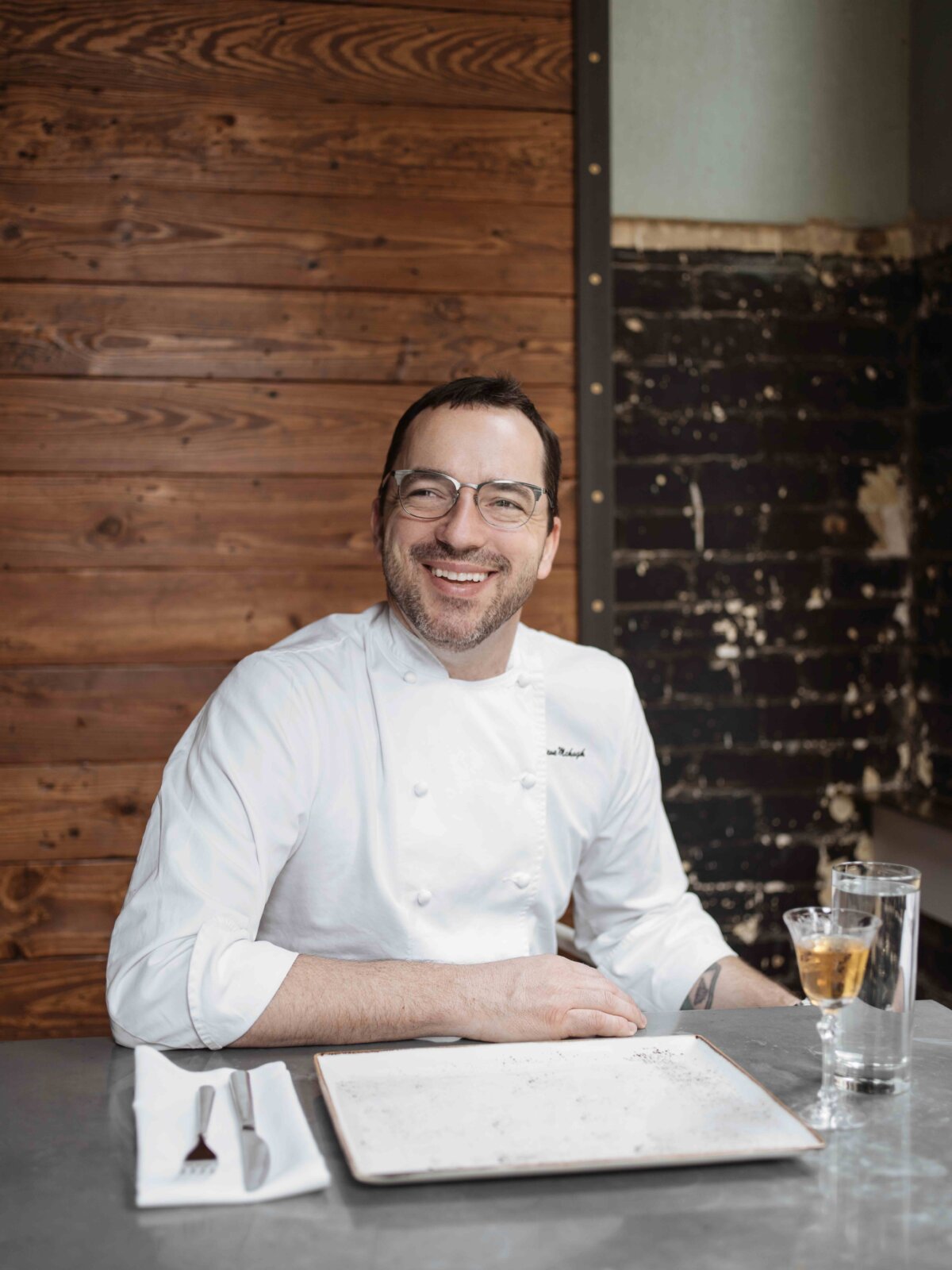
When I moved from New Orleans to San Antonio more than a decade ago, I began to explore the history of the food in the city and surrounding region. I started down this path of trying to learn what people ate before the Spanish arrived. This included cactus, rabbits, snakes, small pigs, and the occasional buffalo—but those aren’t things people can survive on. I came to discover that the nomadic tribes really survived on mesquite beans. As Spanish and westward-expanding American settlers arrived and brought their own crops with them, the beans were largely forgotten, and it’s been exciting to be a part of their renaissance.
To make mesquite flour, the pods first need to be gathered. The beans need to be rinsed and cleaned, and toasted in the oven. Then, the pods should be snapped into small segments and pulverized into a powder with a food processor. The powder then needs to be filtered. Continue to grind and sift until the pods have been milled into a powder. It can be jarred and stored in a cool place.
It’s such a versatile ingredient. It has endless savory and sweet applications. It is also a great natural sweetener—mix a couple of tablespoons into chili, smoothies, or even your morning coffee.
Ingredient backstory:
Mesquite is Texas’s native food source and has such a rich history in the state, dating back to the indigenous peoples. Historically, it has also provided nutrition and sustenance to cattle and wildlife during seasons of drought. And while mesquite trees are native to Texas, they are also considered by some to be a troublesome, weed-like species that requires careful regulation because of their resistance to removal methods, which also makes the culinary resurgence in popularity even more important as it helps to control its growth.
There is something incredibly unique about the flavor. I have spent a lot of time trying different ingredients and experimenting in the kitchen, and I always find it particularly exciting when you try something unlike anything else! We have this idea of mesquite being this bitter, smoky barbecue thing. But it can be really sweet. It’s chocolatey, it’s coconutty, it’s caramelly, almost graham crackerish.
My rendition:
Mesquite can be used as a substitute for a portion of the flour in most recipes for baked goods—brown butter chocolate chip mesquite cookies are a favorite of mine.
Shoutout to:
Cappadona Ranch in Linn, Texas, is an excellent source of mesquite. The Cappadona family harvests mesquite beans on this 2,500-acre ranch. The Cappadona Ranch has really been at the forefront reintroducing this bit of our Texas history. They produce everything from mesquite jellies to mesquite teas.
Grits and Cornmeal From George Washington’s Gristmill
David Guas, Bayou Bakery, Coffee Bar & Eatery and Neutral Ground Bar + Kitchen
McLean, Va.
Gold standard ingredients and what makes them shine:
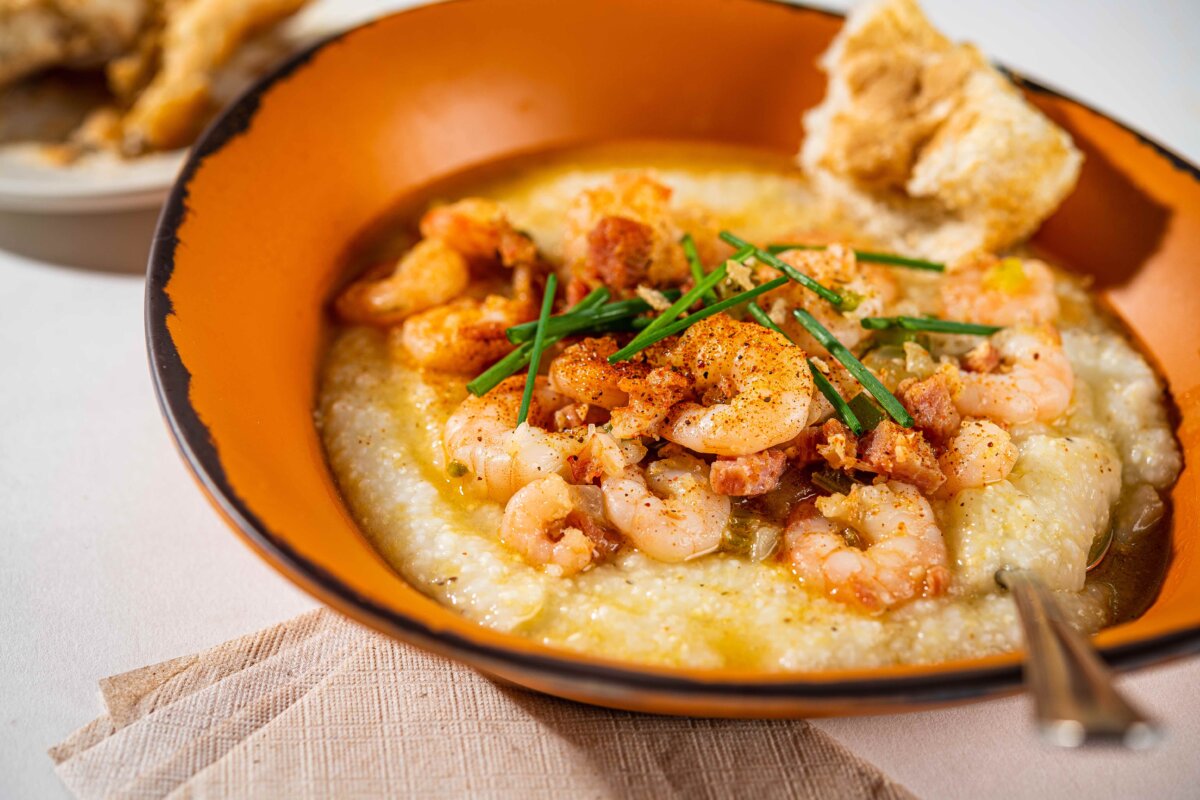
I feel very lucky to have the exclusive use of the grits and cornmeal produced from George Washington’s Gristmill in Mount Vernon, Virginia—the same machine used by Washington himself in 1771. The historic gristmill is an innovation. It not only increased the production of grain and flour but also eliminated the need for manual labor.
Ingredient backstory:
The gristmill is operated by a water mill beneath the building as opposed to the horsepower and physical labor that its predecessors had used. The gristmill at Mount Vernon is the only milling system in America that still operates on this design. I work really closely with the master miller and am able to request that grits and cornmeal are a custom grind, achieving a specific texture and weight. It’s a nice, coarse texture from being ground with stones that are over 1,500 pounds each. There’s something very unique about wood and leather versus metal machinery.
The distillery and the mill are on 7 acres just 3 miles away from the main estate in Mount Vernon. I discovered it when touring the property over a decade ago. Since then, I have made the trip to Mount Vernon every other week to pick up my order in person.
My rendition:
We utilize the grits and cornmeal in items like our classic cornbread, lemon chess pie, grits, and cornmeal sable cookies.
Smoked Lake Trout, Wild Rice, Bourbon Barrel Maple Syrup
Abra Berens, Granor Farm
Three Oaks, Mich.
Gold standard ingredients and what makes them shine:
Smoked lake trout: Smoked fish has an outsized role in Great Lakes cuisine. The process speaks to the Finnish immigrants who moved to this region for mining jobs in Michigan’s Upper Peninsula and the north woods of Wisconsin and Minnesota. It is most ubiquitously used in smoked fish dip, mixed with cream cheese, sour cream, and chives. I flake it into salads or serve it on a slice of hearty rye bread with a scattering of pickles and dill.
Truly wild rice: Minnesota is the wild rice epicenter, but it is a part of a broader Great Lakes cuisine. Wild rice foraging is still a mainstay of many indigenous tribes and a significant source of income for their communities. The best wild rice is hand-harvested. The forager goes into the paddocks in canoes and knocks the rice into the canoe, after which it is parched over a fire, lending a slightly smoky, tea-like flavor. A shopper should be looking for rice that is mottled in color and not shiny onyx black. It is a flavor like no other!
Bourbon barrel maple syrup: Maple syrup is a huge part of the Great Lakes cuisine and beyond. A couple of folks are aging their maple syrup in recently drained bourbon barrels, adding significant depth of flavor to the syrup. I like the syrup coming from Iron Fish Distillery in Thompsonville, Michigan, and Blis in Grand Rapids, Michigan.
Lemon Cucumbers
Damarr Brown, Virtue Restaurant
Chicago, Ill.
Gold standard ingredient and what makes it shine:
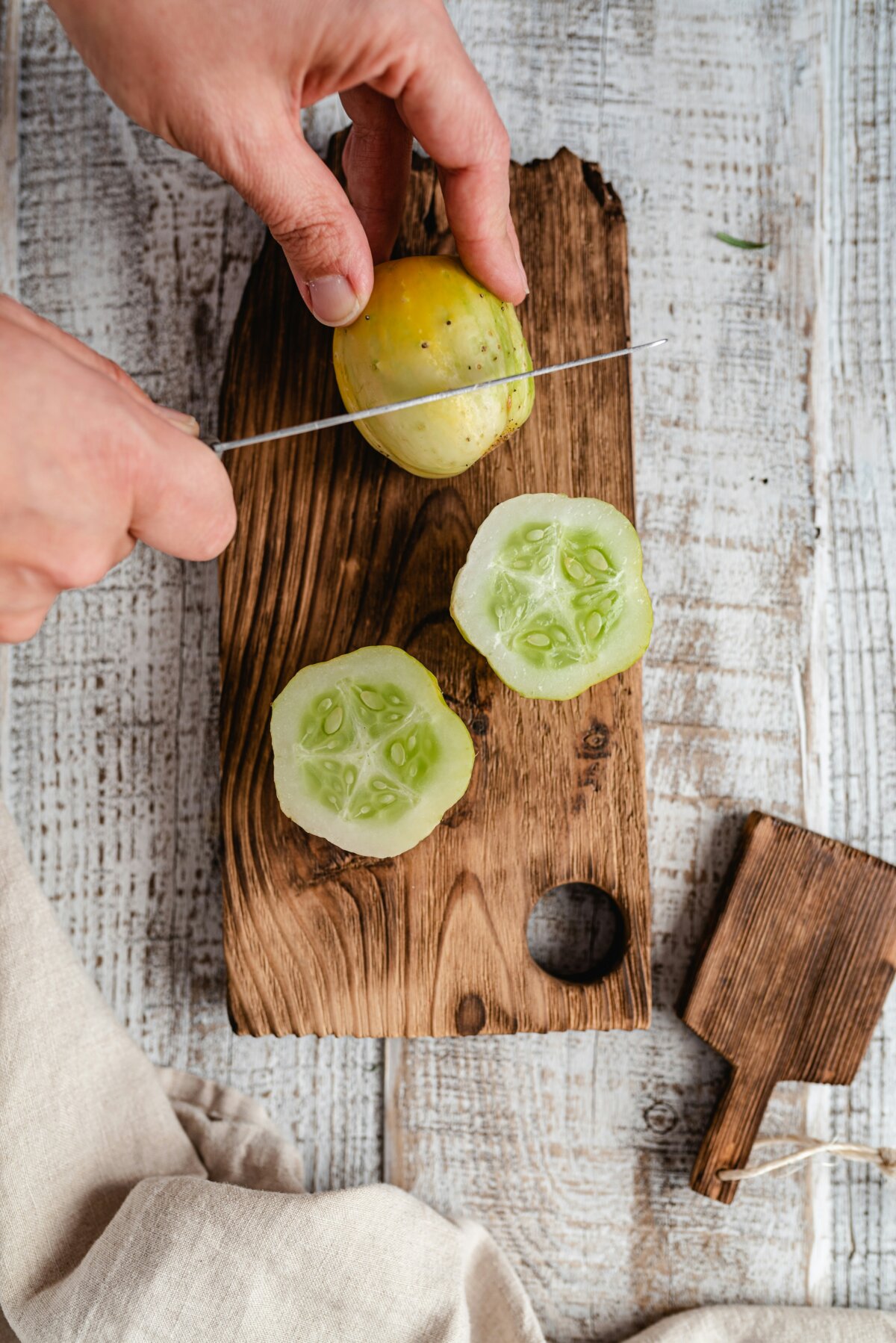
I wait all year every year for summer to be in full effect so that I can put the cucumbers from Butternut Sustainable Farm in St. Joseph County, Michigan, on the menu, specifically the lemon cucumbers. The skins are thin and crisp, the seeds have great texture, and they’re absolutely delicious. They stand up extremely well to dressing, pickling, grilling, etc.

My rendition:
I first saw them when I was working at Roister. Chef [Andrew] Brochu put a cucumber salad on the menu. The cucumbers were dressed with a pineapple and fish sauce vinaigrette, and the dish was topped with a ridiculous amount of herbs. The salad was deceivingly simple and completely and utterly delicious. I’ve been hooked on their cucumbers since taking that first bite. Every summer, I introduce them to the menu in some kind of salad or pickle preparation.
Shoutout to:
Other than Butternut Sustainable Farms, we love working with the following farmers and producers. They’re all really passionate about what they do, and they’re producing incredible products:
Nichols Farm and Orchard
Mick Klug Farms
Seedling Farms
Heaven’s Honey
Four Star Mushrooms
Small-Farm Peaches and Honeycrisp Apples
Hugh Mangum, Rise Doughnuts
Wilton, Conn.
Gold standard ingredients and what makes them shine:
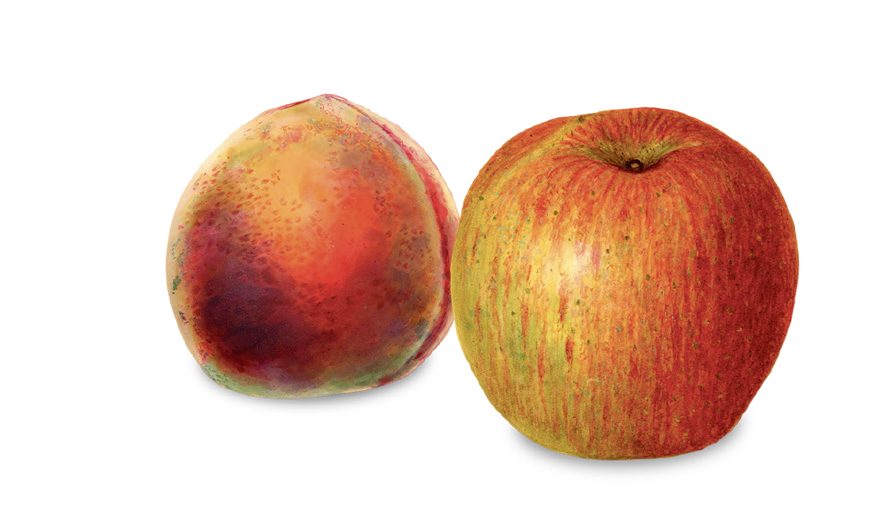
Peaches from Manoff Farms in Bucks County, Pennsylvania, and honeycrisp apples and cider from Solebury Orchards in Bucks County. There is nostalgia to both farms. My wife Laura and I raised our kids in the Bucks County/Hunterdon County area for 12 years prior to moving to Connecticut, and every single year, we looked forward to those two ingredients like kids in a candy store. Nothing spoke more to the wonder of fall than a glass of Solebury Orchards apple cider, and their honeycrisp apples were, without a doubt, the best I have ever tasted. That being said, nothing spoke to perfect sunny summer days like peaches from Manoff’s. These peaches—so juicy that when bitten, the juices would run down your arm—and fresh, sweet jersey corn were the epitome of summer. I miss that place and summer and fall there.

Local Salad Greens, Oysters, and Milled Flour
Avery Adams, Matia Kitchen
Orcas Island, Wash.
The work of the Washington State University agriculture program, Cairnspring Mills, and many skilled and determined farmers and scientists has yielded incredible access to endemic, freshly milled, powerfully nutritious, and deeply flavorful bread flour. It is so special to bake with this product every day. It yields a beautiful bread that thrives as a naturally leavened bread, but is incredibly versatile as a baking medium in all aspects of pastry. If it’s good enough for Tartine [Bakery in San Francisco], it’s good enough for me!
Hailey Averna’s salad greens, grown at West Beach Farm on Orcas Island, are some of my all-time favorite lettuces. Her mix is excellent; they’re dynamic throughout the growing season, and all winter, I fiend for their spicy goodness, and eagerly await their return in spring. You’ll have to drive to her farm stand to get them, but if you’re lucky, our local tavern will have them in the summer, and of course at Matia Kitchen. Our business has grown in tandem with them, and I have been very grateful to patronize her for many years. Support local farms!
Geddis Martin’s oysters grown at the Judd Cove estuary on Crescent Beach, Orcas Island, are some of the finest around: mineral depth, gentile sweetness, and briny joy all in one bite. We serve them on the half-shell and as our starter on our tasting menu with hot sauce butter, but they find a role in every menu—from oyster sauce, to xo sauce, to a smoked oyster aioli. They are versatile, but best enjoyed for their simple perfection.
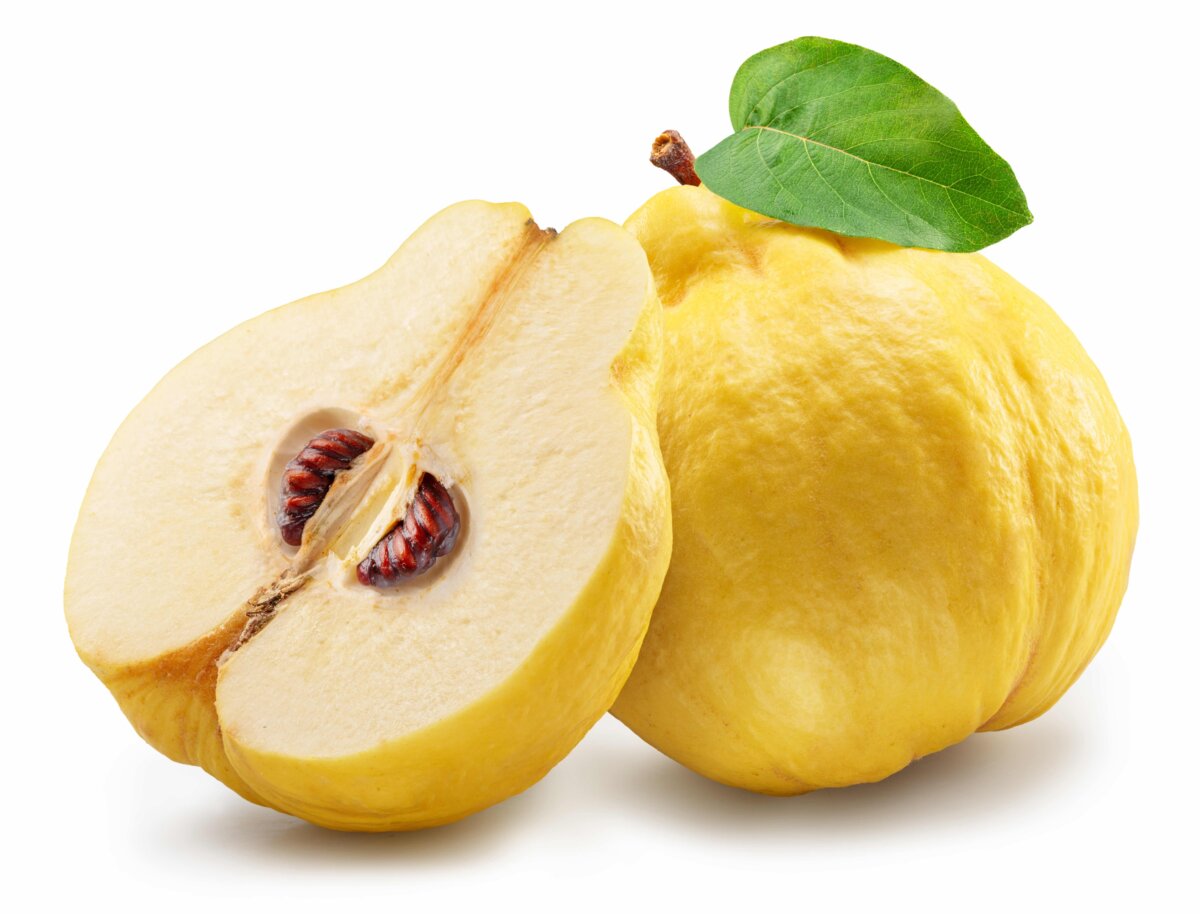
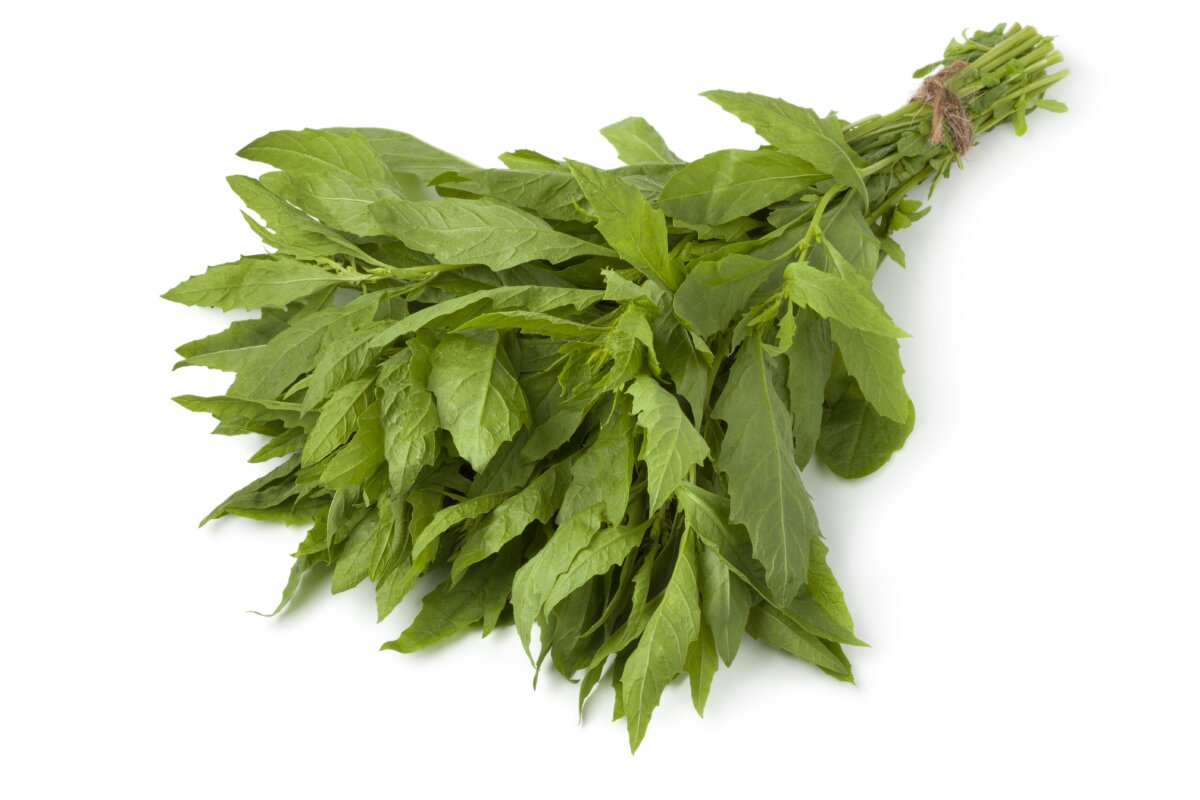
Lamb’s Quarters, Epazote, Local Potatoes, Quince
Jonathan Perno, Forty Nine Forty
Corrales, N.M.
Gold standard ingredients and what makes them shine:
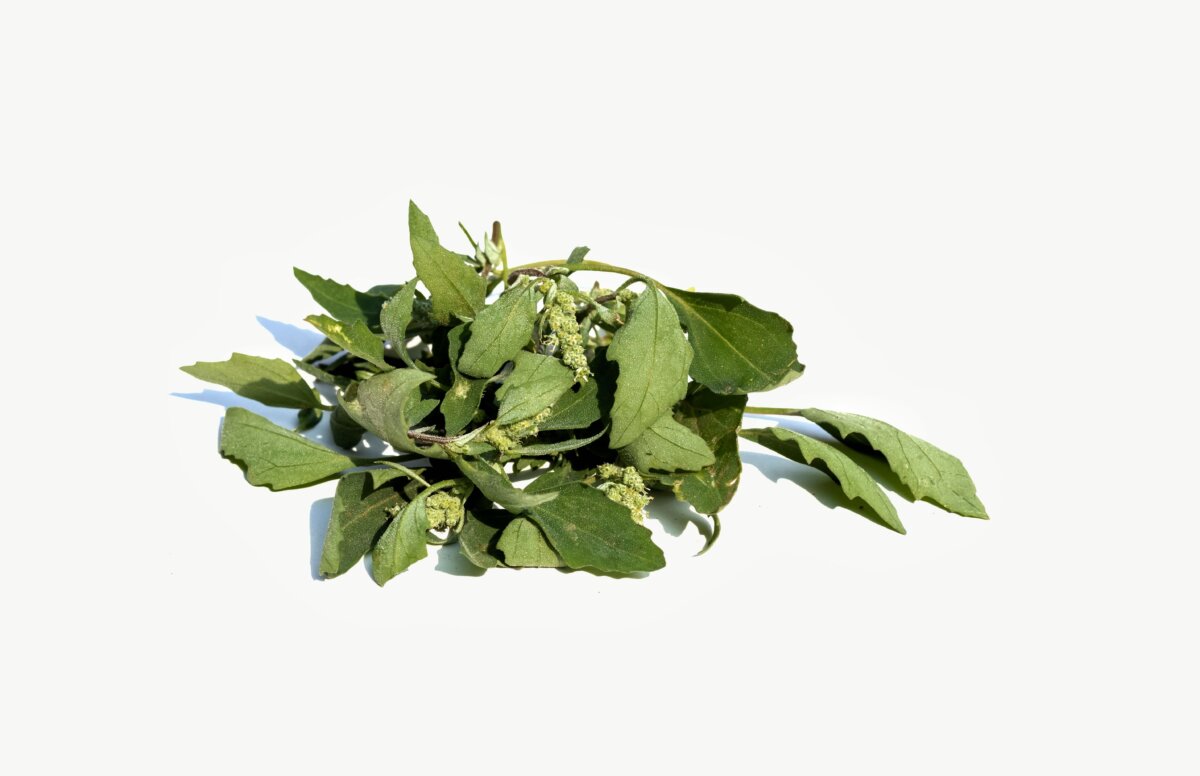
I’ve always been most drawn to the ingredients that feel like they belong here—the ones that grow freely and quietly as part of the landscape. For me, that’s lamb’s quarters, often called quelites, epazote, potatoes, and quince. These aren’t ingredients you have to force into the cuisine; they’ve been part of it for generations. They’re reliable, deeply rooted, and they show up when the land says it’s time.
Lamb’s quarters has this tender, almost mineral quality—similar to spinach, but with more depth. You can taste the soil in it. Epazote is completely its own thing—bold, aromatic, unmistakable. I use it carefully, because a little goes a long way, but when it’s used right, it brings balance to rich or slow-cooked dishes, especially beans. Potatoes do incredibly well here thanks to the warm days and cool nights—they develop real structure and flavor, not just starch. And quince, which often gets overlooked, is one of my favorites. It’s fragrant, slightly tart, and once it’s cooked, it transforms into something really elegant, whether you’re using it in a savory context or leaning sweet.
What really makes these ingredients special, though, is their history. They’ve fed people here for a very long time—across indigenous, Hispanic, and regional traditions—and they still shape how we cook today. Working with them doesn’t feel like reinvention. It feels more like stewardship—paying attention, listening, and honoring what the land has always provided.
Epazote, especially, is tied to memory for me. I still remember being in elementary school, chewing on a wooden pencil, and being really drawn to that aroma. I didn’t know what it was at the time, but it stuck with me. There was something comforting and familiar about it. That herbal, slightly resinous scent stayed in my head long before I ever stepped into a professional kitchen.Years later, when I started cooking with epazote intentionally, it immediately brought me back to that feeling. That’s often how I cook—letting memory lead.
Ingredient backstory:
The high desert is all about contrast, and that’s what gives the food its character. We have real seasons here—cold winters, warm summers, big temperature swings between day and night—and that forces plants to work a little harder. The result is ingredients with concentration, resilience, and a really clear sense of identity.
The Rio Grande runs straight through the heart of the state, and it shapes everything. It nourishes farms, orchards, and wild growth, and it sustains the farmers and producers who are deeply connected to this land. There’s a real relationship here between water, climate, and tradition. Nothing exists in isolation. Ingredients aren’t just grown—they’re understood, respected, and worked with over time.
Shoutout to:
There are so many incredible farmers and producers throughout the region and across the state that it’s hard to single anyone out. I feel lucky to work with people who genuinely care about the land and what it produces. Those relationships are really the foundation of everything we do.
Outside of our immediate community, I’ve also worked for years with Veritable Vegetable in San Francisco. They’ve been an incredible partner—consistent, transparent, and deeply committed to organic agriculture. They support farms that share our values, and that level of care shows up in the quality of the product.
At the end of the day, it all comes down to trust—trust in the people growing the food, and trust that if you treat those ingredients with respect, they’ll do most of the work for you.
This article was originally published in American Essence magazine.
A previous version of this article misreported the restaurant where chef Jonathan Perno is based. American Essence regrets the error.
