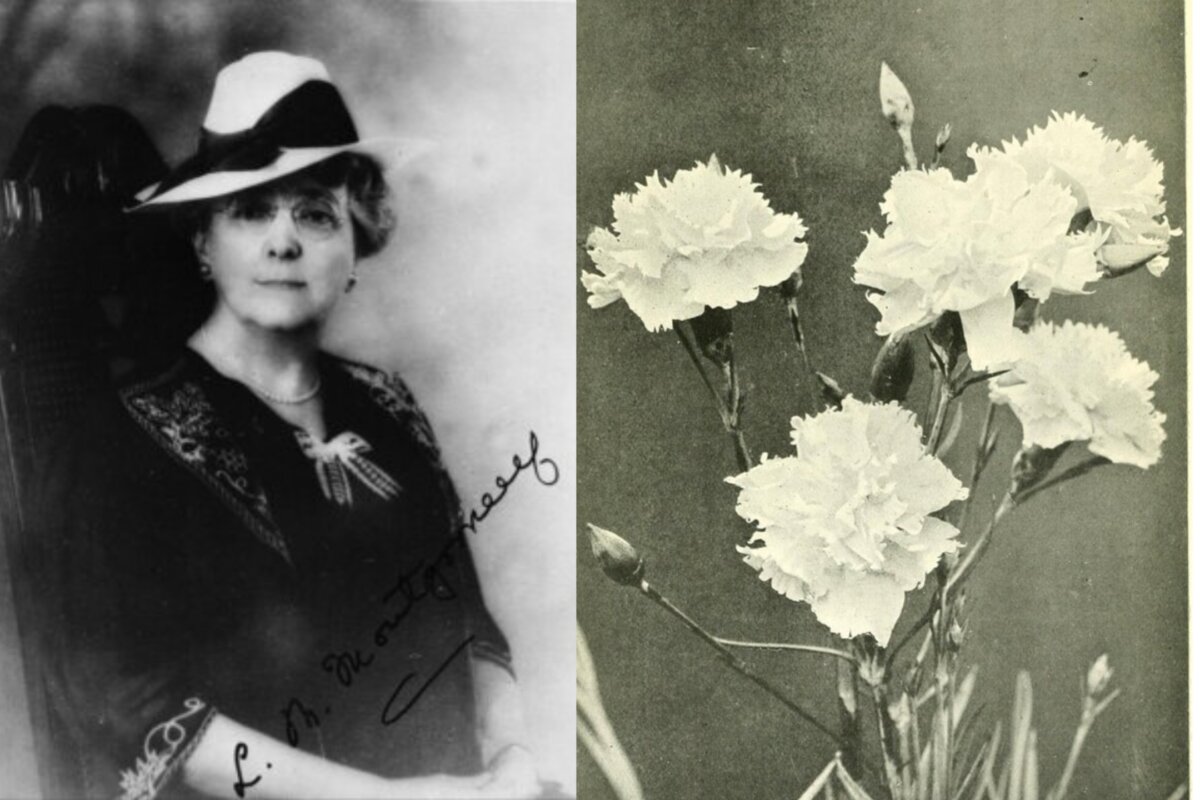
In a world that encourages people to look exactly alike and follow specific beauty standards, originality of character and mind is a beautiful thing. In her short story “The Jest That Failed,” L.M. Montgomery shows that a proud, ingenuine character, which arises from artificiality, cannot compare to the beauty and effervescence of a truly genuine soul.
Jest Proud
Agnes Walters and Edna Hayden (two freshmen at Payzant College) spitefully discuss their fellow freshman, Grace Seeley. To them, Grace disgraces their class, since she is poor, dresses “dowdily,” and must pay for her room herself. They sincerely believe that “if it wasn’t for her being in it, [their] class would be the smartest and dressiest in the college.”
What’s worse is the fact that Grace doesn’t get the hint that many of the freshmen girls dislike her. Frustrated, Edna says, “If we could only manage to inflict some decided snub on her, she might take the hint and give up trying to poke herself in where she doesn’t belong.”
Agnes agrees, and they plan to prank Grace by sending her an invitation to senior prom, signed “Sidney Hill.” Sidney Hill is the “handsomest and richest” fellow at the college, so the girls revel in Grace’s anticipated disappointment when she discovers that the invitation is fake and Sidney never invited her at all.
Jest a Letter
Grace receives the letter and, though shocked that Sidney Hill should be inviting her to the senior prom, has no reason to doubt its authenticity. Aglow with excitement, she sends Sidney a letter accepting his invitation.
However, Sidney is absolutely perplexed when he receives Grace’s letter the next day. He never invited her, but he thinks: “I suppose it is some cad who has a spite at me that has done it. … But if so I’ll spoil his game. I’ll take Miss Seeley to the prom. … She shan’t be humiliated just because there is someone at Payzant who would stoop to that sort of thing.”
Sidney finds Grace and tells her that he is pleased she accepted his invitation. Then, on the night of the prom, he sends her a bouquet of white carnations, which go perfectly with her white evening dress.
At the prom, Grace has the most wonderful time, and “the seniors [are] quick to discover her unaffected originality and charm, and everywhere she [goes] she [is] the centre of a merry group.”
She is a “social success” and meets many people whom she comes to like. She even meets Sidney’s mother, sister, and younger brother, who all think that she is “so jolly and friendly and she [doesn’t] put on learned airs at all.”
Thus, through this short story, Montgomery illustrates how stifling artificial and proud natures are to those who possess them. In an attempt to preserve their pride and appearances, Agnes and Edna seek to humiliate Grace but instead secure her place at the college as a sweet, jolly, genuine character.
Grace subsequently exemplifies Louisa May Alcott’s words in “Little Men”: “Simple, generous goodness is the best capital to found the business of this life upon. It lasts when fame and money fail, and is the only riches we can take out of this world with us.”
Thus, as looks, fame, and money pass away, a good, genuine, jolly character should be cultivated and celebrated. A beautiful character breaks through the dullness of transitory things and spreads joy, light, and love to the world around them.
What arts and culture topics would you like us to cover? Please email ideas or feedback to features@epochtimes.nyc