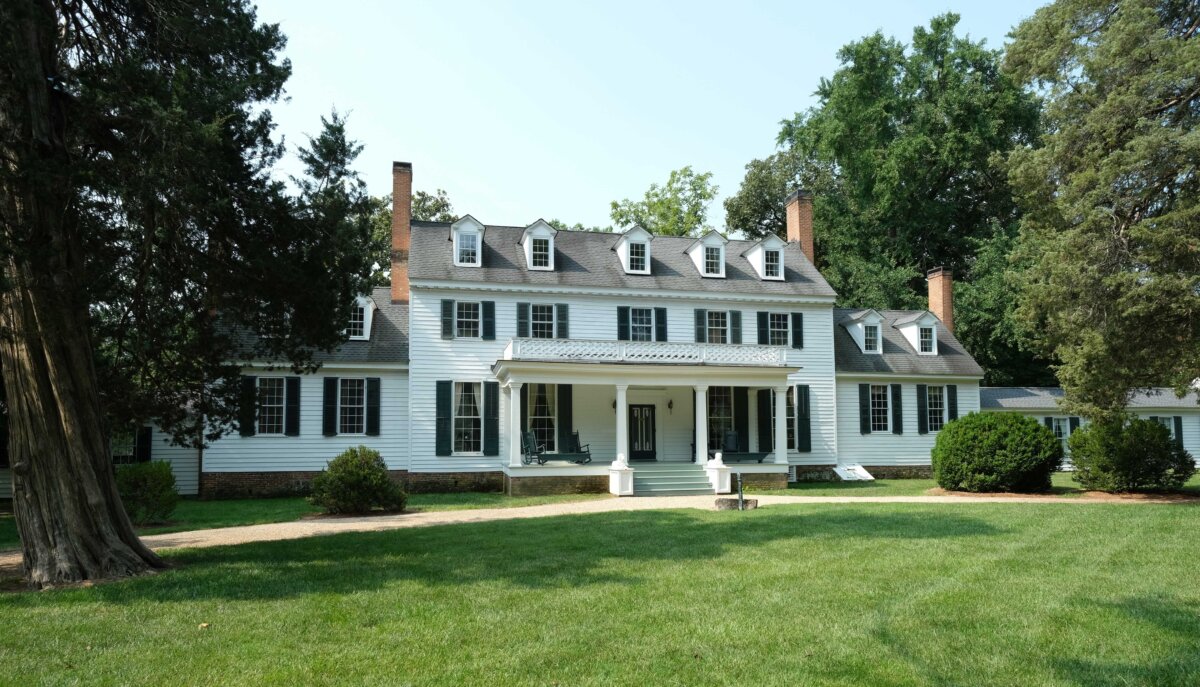
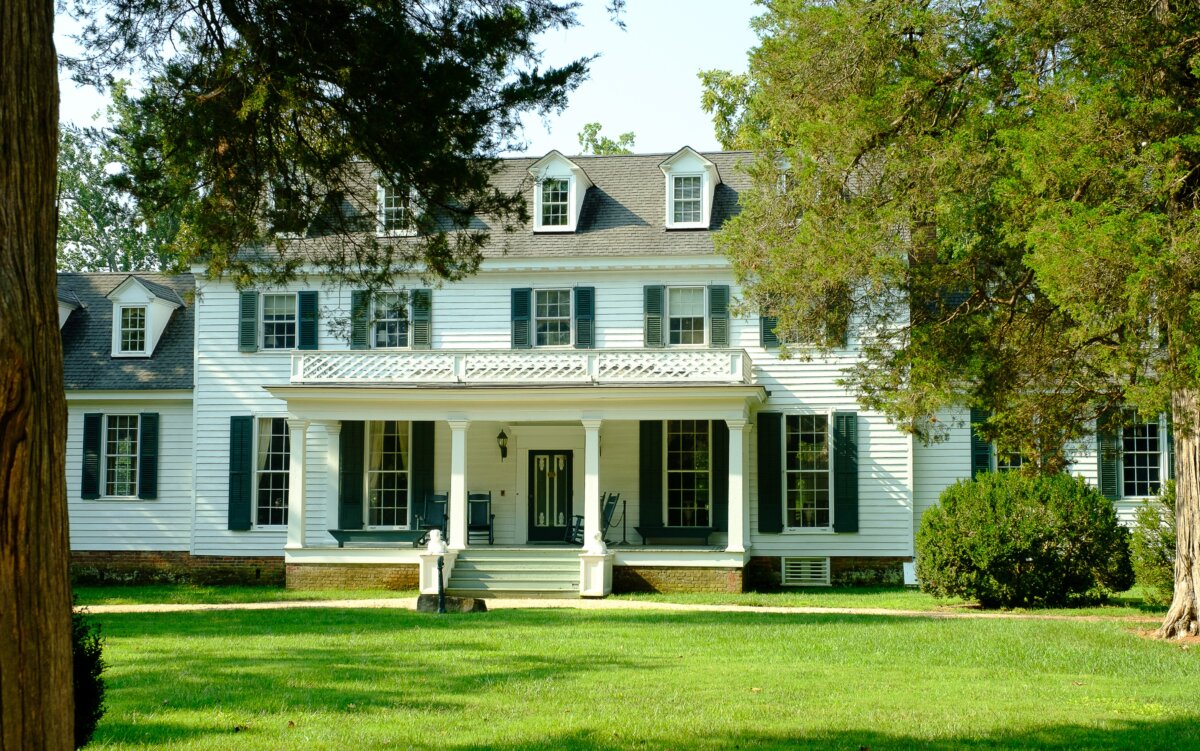
The 25 publicly accessible acres of Sherwood Forest are surrounded by mature trees, manicured boxwoods, and maintained lawns. The home’s entryway is part of a circular approach. Although the roof dormers and second-floor windows are not symmetrical at the front of the house, due to various additions and renovations, the Greek Revival-style portico over the front door draws the eye away from the misalignment. (Sherwood Forest Plantation Foundation)
At more than 300 feet long, the family home of the 10th president, John Tyler, is considered the longest historic frame house in the United States. Partially Virginia Tidewater in architectural design, the house displays elements indicative of the regional style with clapboard (horizontal wood) construction, a gabled roof with dormers, small-pane double-hung windows, and both centrally located and exterior-end brick chimneys.
Located off the John Tyler Memorial Highway in Charles City, Virginia, the house was not always as expansive as it is currently. In the 1820s, the former owner of the property and a distant cousin of John Tyler first added on to an existing simple farmhouse, which became the core of the present house. In 1842, John Tyler purchased from his relative the 900 acres where the home sat as well as an additional 700 acres. He then added onto the house through the mid-19th century. The widespread house has 26 rooms and 15 fireplaces, according to Sherwood Forest’s executive director Annique Dunning.
Painted white with black shutters, the Sherwood Forest house also architecturally showcases Greek Revival-style features in its entryway, which was undertaken by the president and his second wife, Julia Gardiner. The couple also oversaw the addition of a 68-foot long ballroom as well as “hyphens,” which connected the outbuildings, such as the kitchen on the east end, to the main house.
It was in the two-story Sherwood Forest home that Tyler retired after his presidency; he named it Sherwood Forest in reference to Robin Hood because he was considered an “outlaw” from the Whig party. It is a home that has been inhabited at one time or another by Tyler descendants, most notably grandson Harrison Ruffin Tyler, who died May 2025, and his wife, Frances Payne Bouknight Tyler, also deceased.
Presently, Sherwood Forest Plantation Foundation, established by the Harrison Ruffin Tyler family, owns, maintains, and preserves the house and grounds. Even though descendants may sometimes occupy the house, the grounds are open daily to visitors and tours of the historic landmark residence are available by appointment.
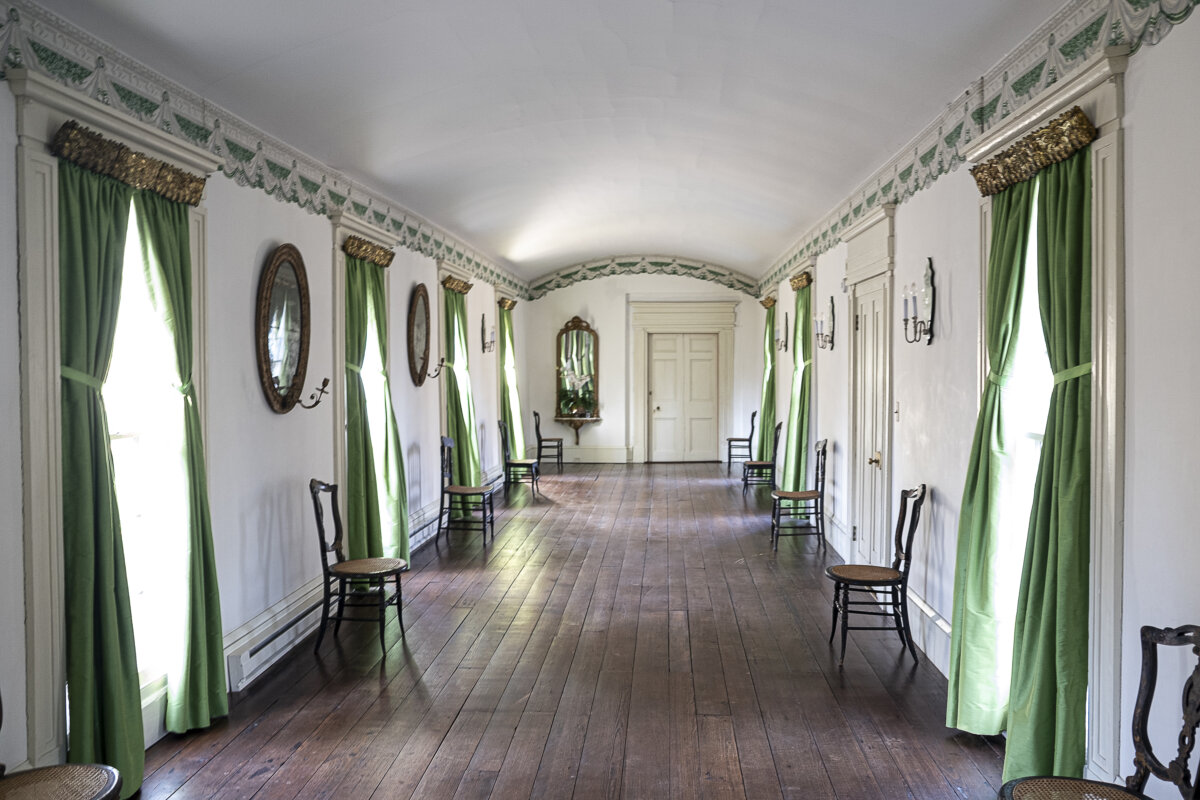
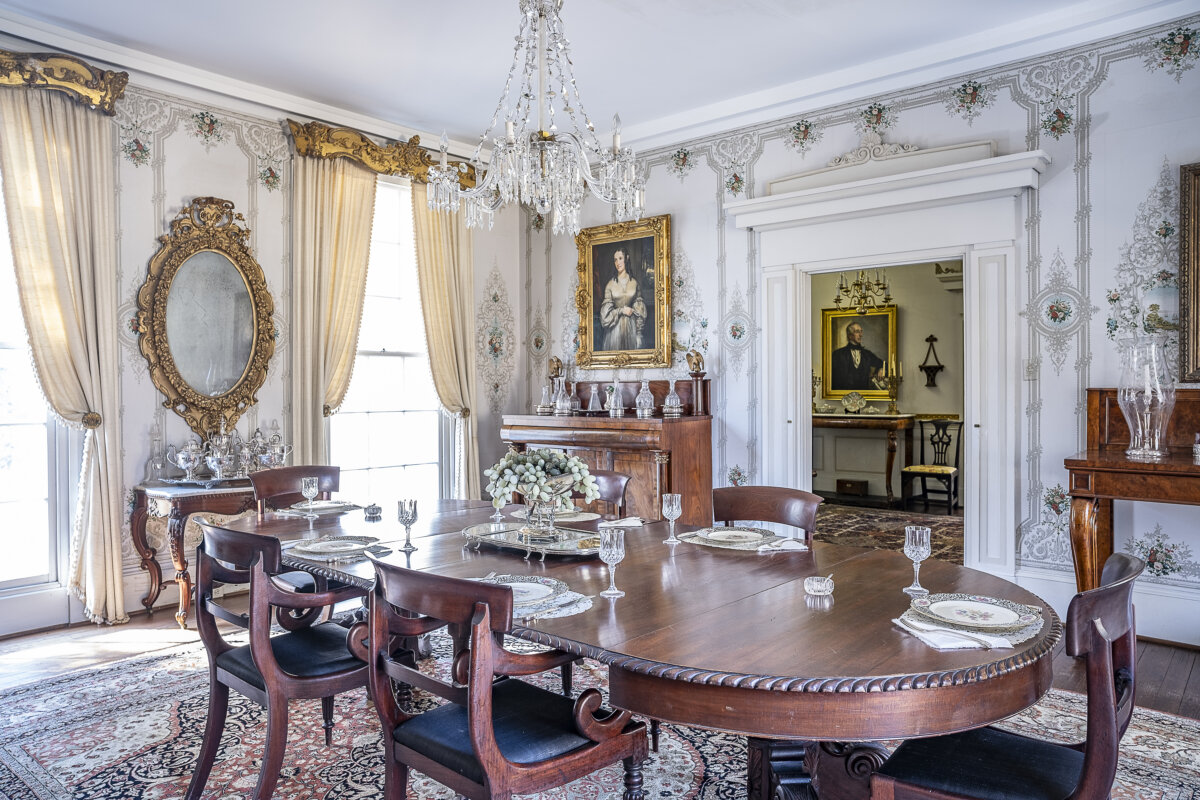
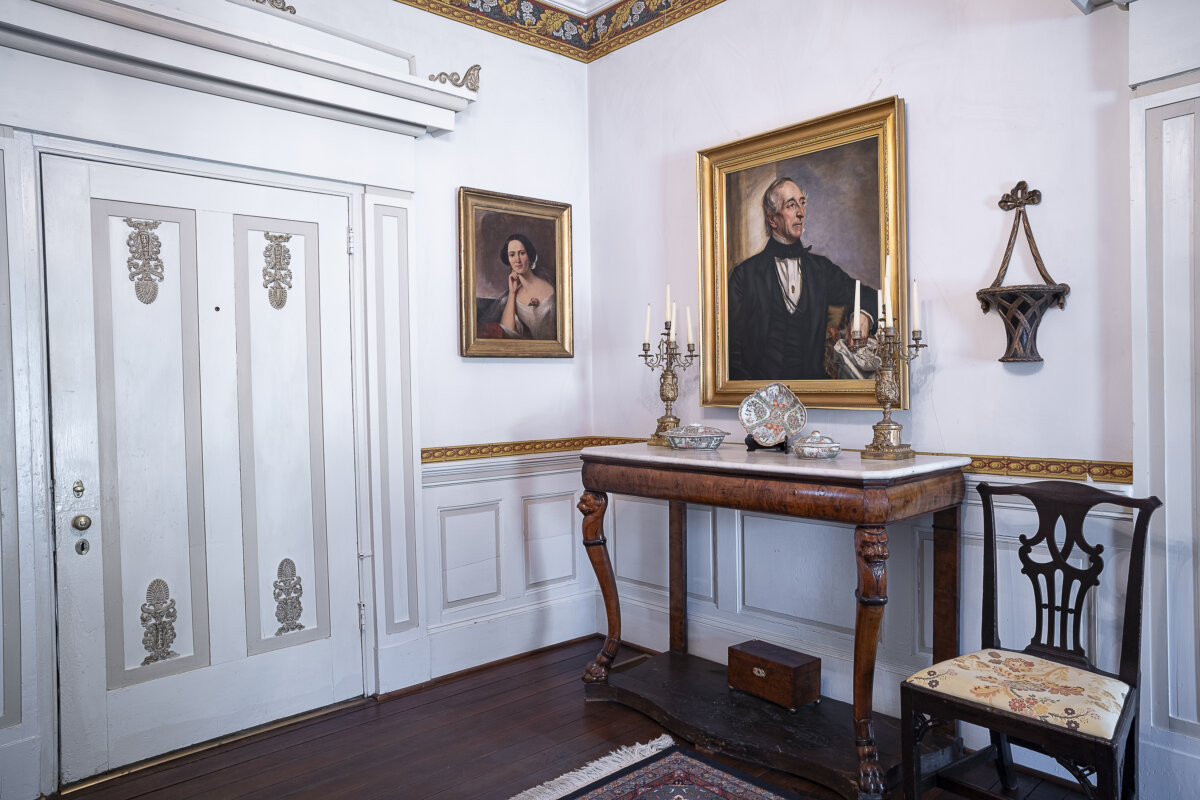
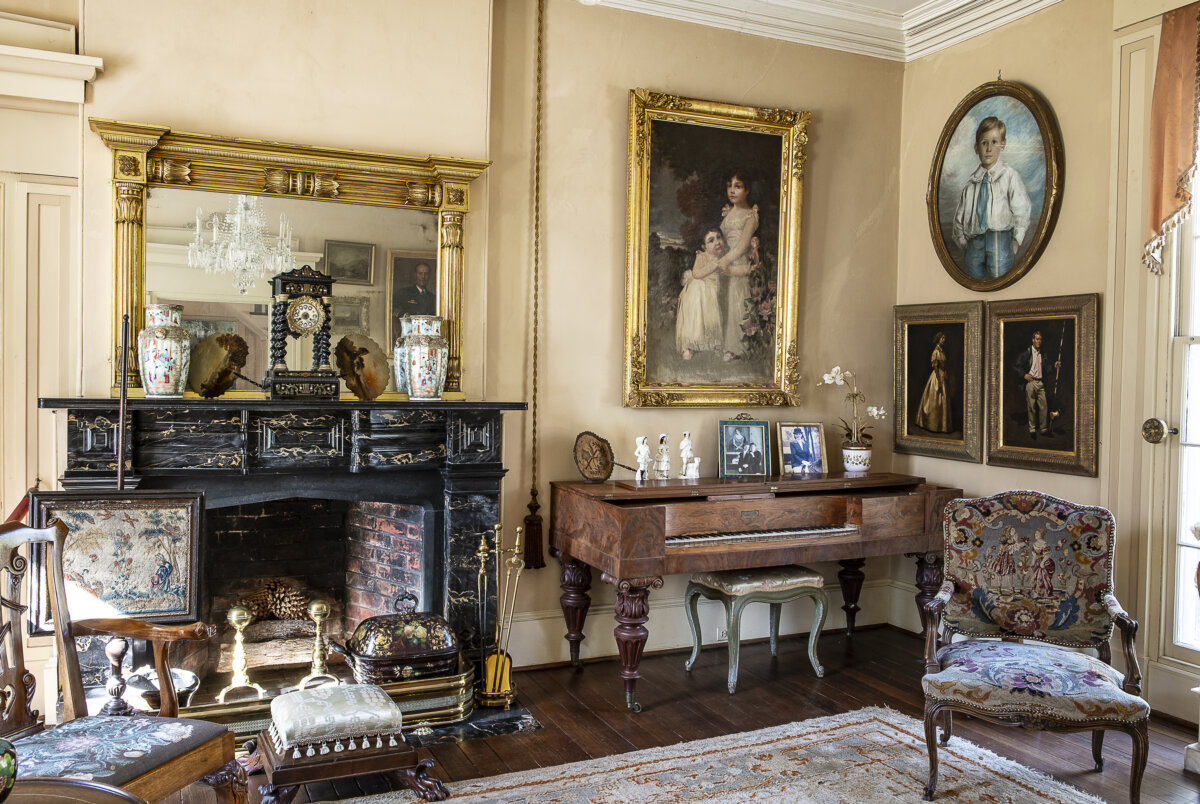
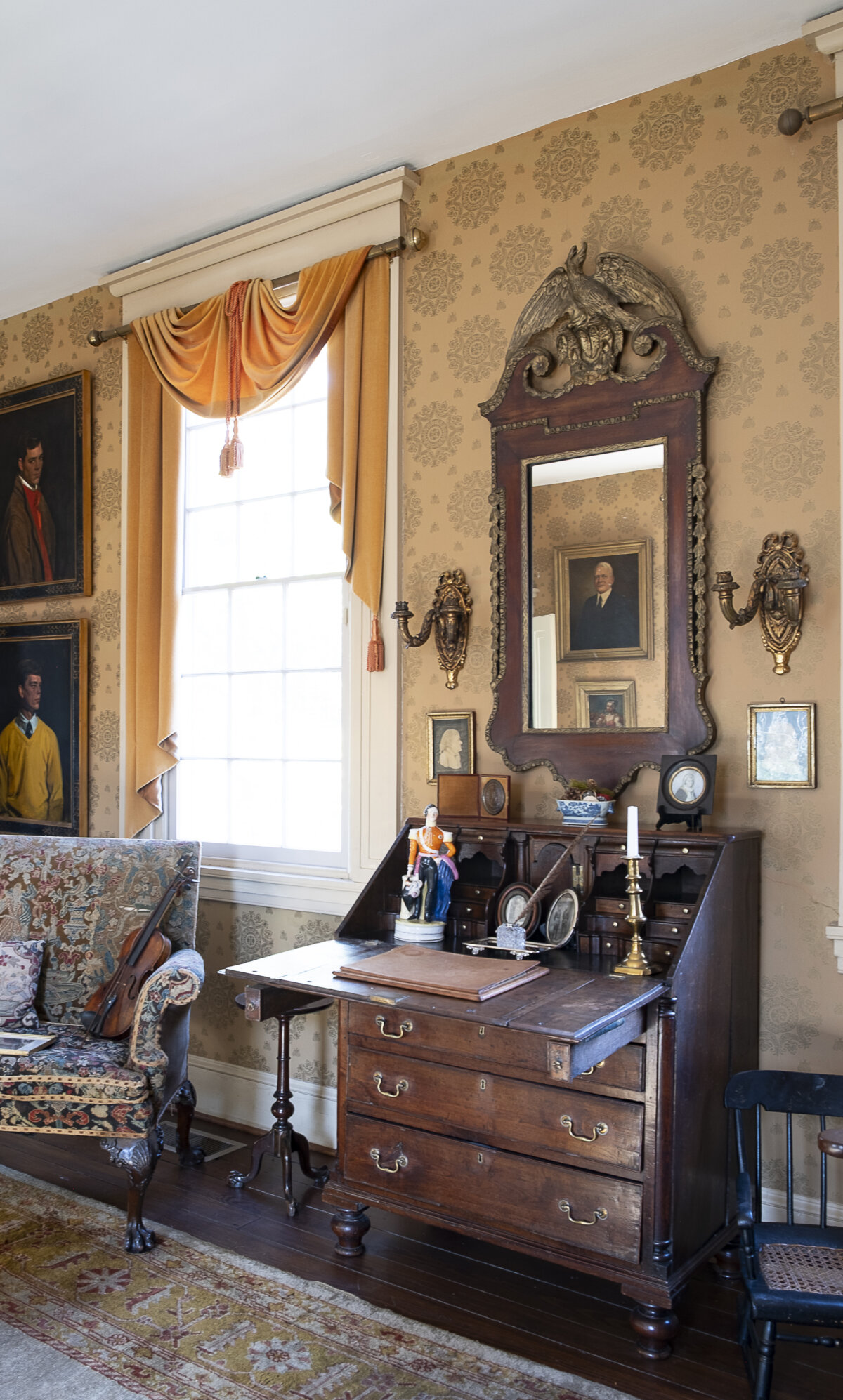
Decorating the otherwise plain exterior of the Sherwood Forest home is a Greek Revival-style portico that features square columns topped with Doric capitals. The portico’s entablature is decorated with lattice, an adornment featured in one of designer Andrew Jackson Downing’s (1815–1852) widely influential books on Hudson River Valley houses. Flanking the stairs on wooden pedestals are 19th-century cast-iron and painted sculptures of Chesapeake setter dogs. (Sherwood Forest Plantation Foundation) Sherwood Forest’s lengthy 68-foot ballroom features pine floors, on which dances were held. A repeating wallpaper border, representing a valance attached to ornate crown molding, trims the room. Coordinating with the trim are vivid green silk drapes, similar to ones original to the room, that hang from gilt-metal cornices. Some of the antique mirrors are equipped with a candle holder; light from a candle would reflect in the mirror to better illuminate the room. (Sherwood Forest Plantation Foundation) According to Sherwood Forest docent Tim Coin during a December 2025 tour, “The dining room most closely represents the original house when President Tyler lived here.” A rococo revival-style, floral wallpaper is the backdrop for this extravagant room. Coordinating with the intricately carved gilt-wood and gesso (a type of paint coating) cornices over the windows is the equally ornate rococo revival-style mirror and the frame surrounding Julia Gardiner Tyler’s portrait. The mirror is above a rosewood silver-service table original to the house. The mostly mahogany wood furnishings are primarily rococo revival, empire, and American classical style. Many of the antique furnishings are from the ancestral, South Carolina home of Frances Payne Bouknight Tyler. (Sherwood Forest Plantation Foundation) A copy of John Tyler’s 1859 portrait by artist George Peter Alexander Healy (1813–1894) hangs in the house’s entryway; the original painting is housed at the National Portrait Gallery in Washington. The smaller painting is of a relative of John Tyler: Jane Cary Harrison Ruffin. The wide, painted front door is dressed with a Greek Revival-style applique inspired by a 19th-century design book by architect Minard Lefever (1798–1854). “Those are Julia Gardiner Tyler’s touches she added to the house,” said executive director Annique Dunning. Along the paneled chair railing is a hexagon-patterned wallpaper trim. (Sherwood Forest Plantation Foundation) The Sherwood Forest home is filled with several generations of Tyler descendants’ and their spouses’ furnishings, heirlooms, artifacts, and paintings. The drawing room features a treasure trove of historical pieces such as the tapestry-covered chair with cabriole legs, tasseled stool with claw feet, the mahogany piano on turned Ionic capital-adorned legs, and the tapestry-covered fireplace screen. Over the Egyptian black marble fireplace mantel is an American classical gilt-wood mirror with a fluted column design. (Sherwood Forest Plantation Foundation) Hanging over the Tyler family’s Georgian desk, in what is referred to as the Gray Room, is a carved and gilded wood mirror featuring a Georgian, heraldic eagle crest. The mirror is flanked by ornamental gilt-metal candelabra sconces. (Sherwood Forest Plantation Foundation)
What arts and culture topics would you like us to cover? Please email ideas or feedback to features@epochtimes.nyc
A 30-plus-year writer-journalist, Deena C. Bouknight works from her Western North Carolina mountain cottage and has contributed articles on food culture, travel, people, and more to local, regional, national, and international publications. She has written three novels, including the only historical fiction about the East Coast’s worst earthquake. Her website is DeenaBouknightWriting.com