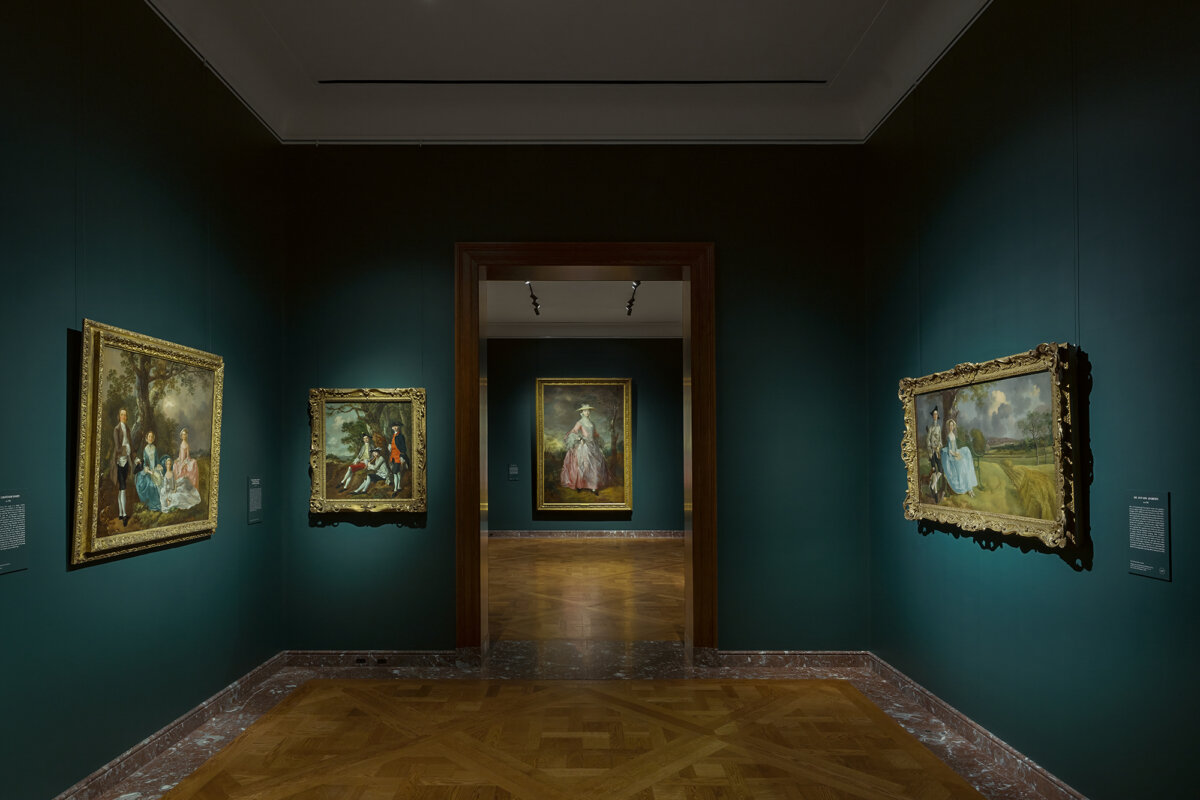
The Frick Collection’s stylish new exhibition “Gainsborough: The Fashion of Portraiture” presents a detailed look at the fashions featured in Thomas Gainsborough’s 18th-century portraits along with how he fashioned, as in made, these oil on canvas likenesses.
On view through May 25, 2026, the show features 25 elegant paintings gathered from museums, private collections, and The Frick itself, so that each stage of Gainsborough’s four-decade career is represented. Going beyond the finery, threads are woven about the sitters’ lives, revealing human tales of love, loss, social class, race, power, and business.
It is the museum’s first special exhibition dedicated to Gainsborough, which is surprising given that its founder, Henry Clay Frick, collected the artist in-depth. Gainsborough’s art was greatly popular with Gilded Age art collectors, and Frick purchased eight works during his lifetime. The initial plans for this exhibition started back in 2015.
Georgian-Era Portraitists
The son of a wool manufacturer, Gainsborough (1727–1788) came from a modest background in rural Suffolk. After working in his home county and then Bath, Somerset, he settled in London in 1774, where he was one of Georgian Britain’s most sought-after portraitists. His only main rival was Sir Joshua Reynolds; both were co-founders of the Royal Academy.
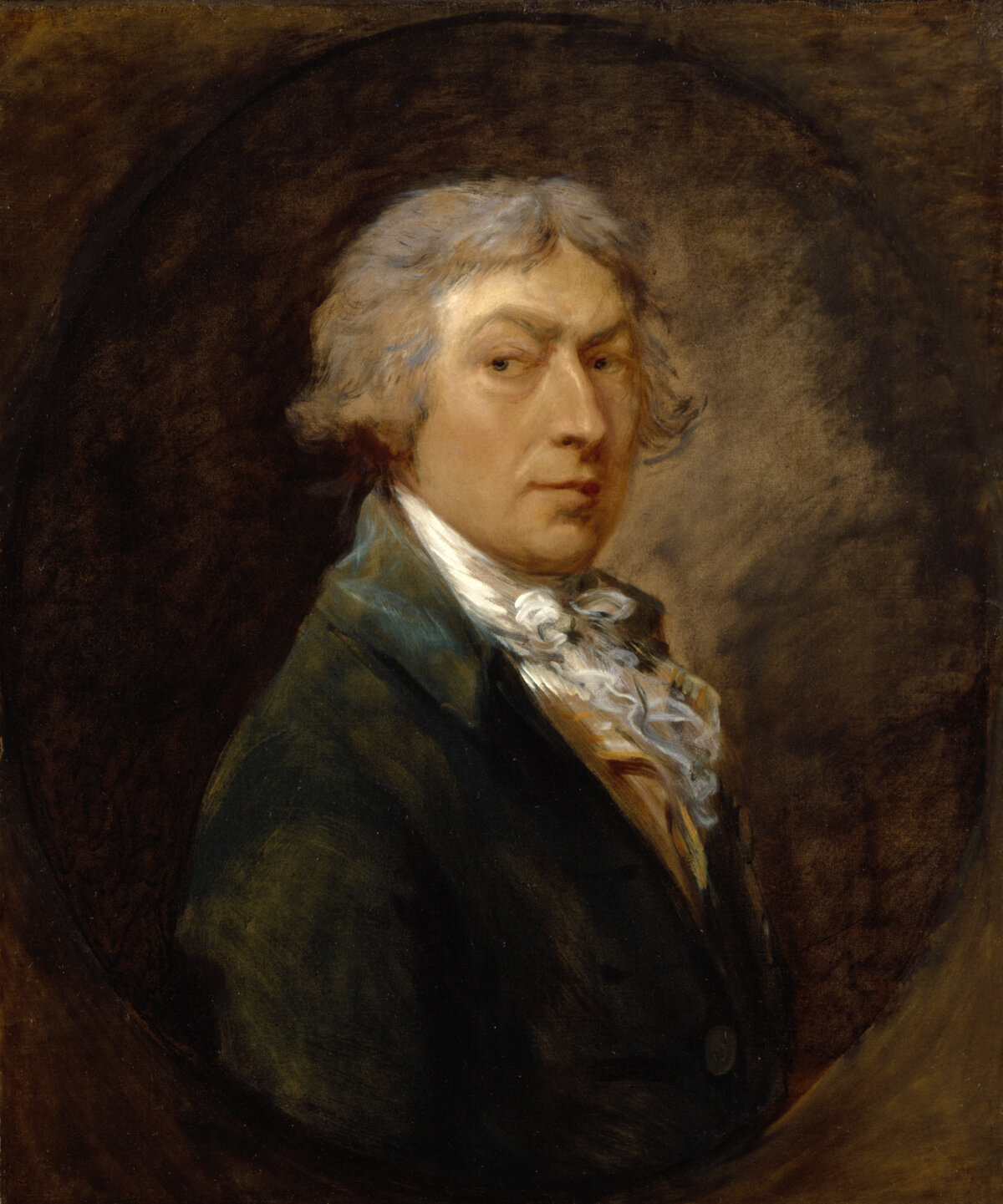
During Gainsborough’s career, he painted family, friends, performers, composers, local gentry, aristocrats, and even members of the royal family, including King George III and Queen Charlotte. Portraiture was the most popular category of painting in 18th-century Britain, and Gainsborough created some 700 examples, in addition to working in his preferred genre of landscapes.
In this era, The Frick writes, “What one wore in a portrait mattered as much as who painted it and how. The form, mood, and maker of a portrait could go in and out of style just as clothing did.” A person’s position in society could be identifiable based on how they were depicted in a portrait, though an artist could also construct an image that was more flattering aesthetically, socially, and financially.
Conversation Pieces
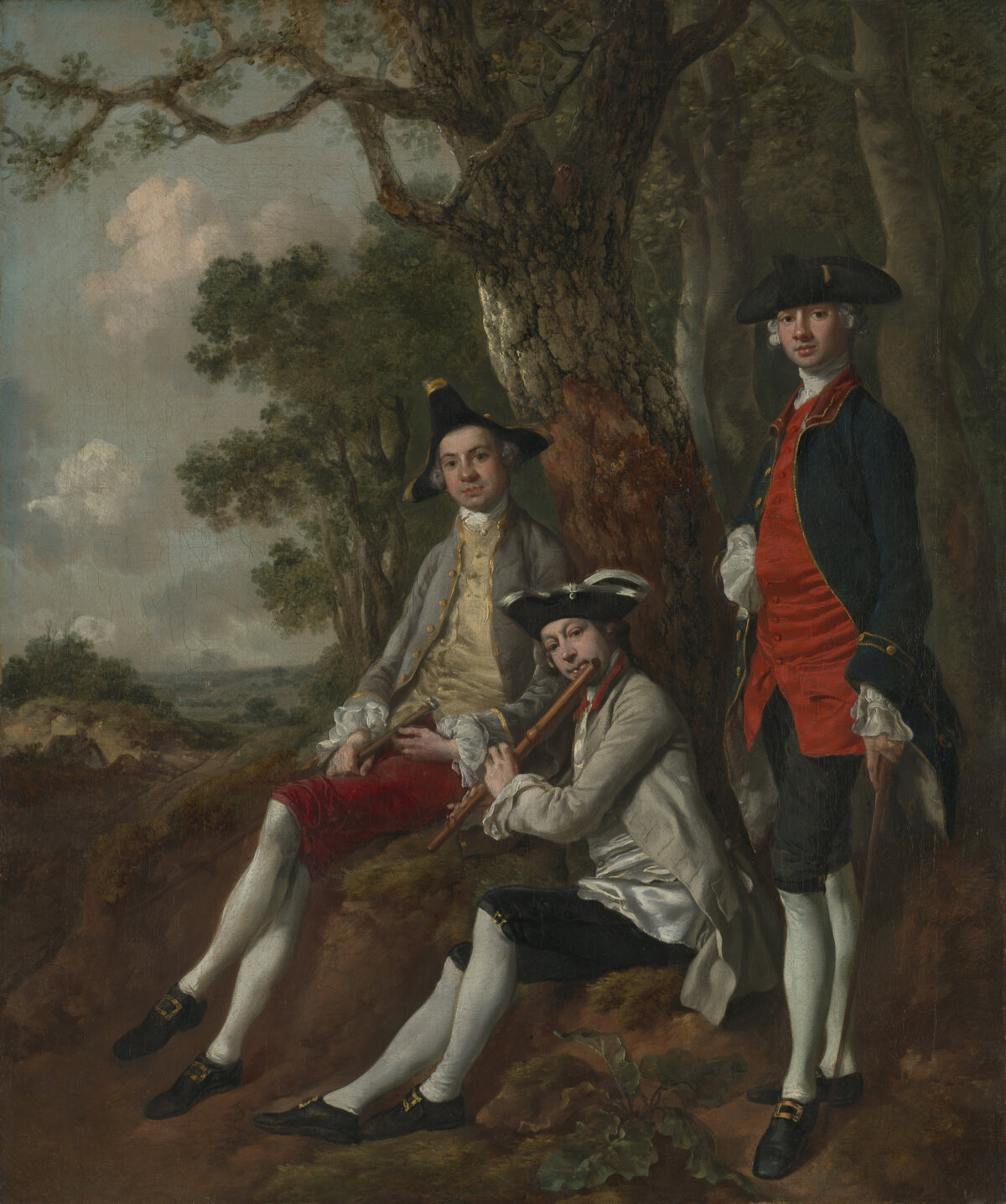
The exhibition opens with three early Gainsborough works made while he was living in the Suffolk countryside. His portrait of Peter Darnell Muilman, Charles Crokatt, and William Keable from circa 1750 is lent by Gainsborough’s House, Sudbury, Suffolk, and Tate, London. This is an example of a conversation piece, a term assigned to small-scale group portraits and which were popular in Britain from the 1720s to the 1750s. Muilman and Crokatt came from wealthy families. Keable was a local painter and musician who may have instructed them in the arts.
Curators identify Keable as the man in the middle based on his attire. Unlike the gentlemen on either side of him, he does not wear a fashionable powdered wig, and his coat and tricorn do not have gold trim. Furthermore, his mouth is slightly distorted as his blows into his flute. It would have been inappropriate to paint a refined person of the landed gentry with such an expression.
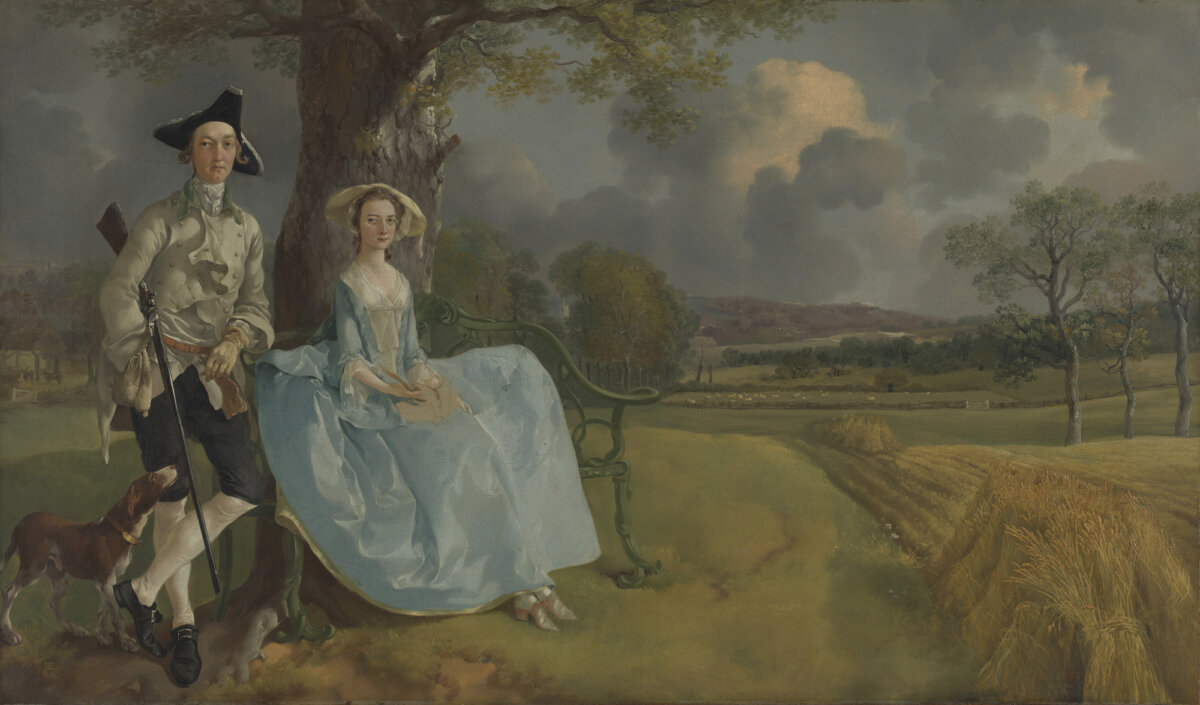
In the same room, one of Gainsborough’s most famous pictures is hung. Usually housed in London’s National Gallery, it is his “triple portrait” “Mr. and Mrs. Andrews.” Painted circa 1750, the third presence in this conversation piece is the lush landscape of Andrews’s estate. Depicted with such precision, it is claimed that the oak tree that shelters the painted couple can be identified today near Sudbury. Robert Andrews wears hunting attire that emphasizes his prestige as a sizeable landowner, while his wife Frances wears the height of fashion: hooped dress, straw hat, and pretty pink satin mules highly impractical for traipsing through fields.
Van Dyck Influences
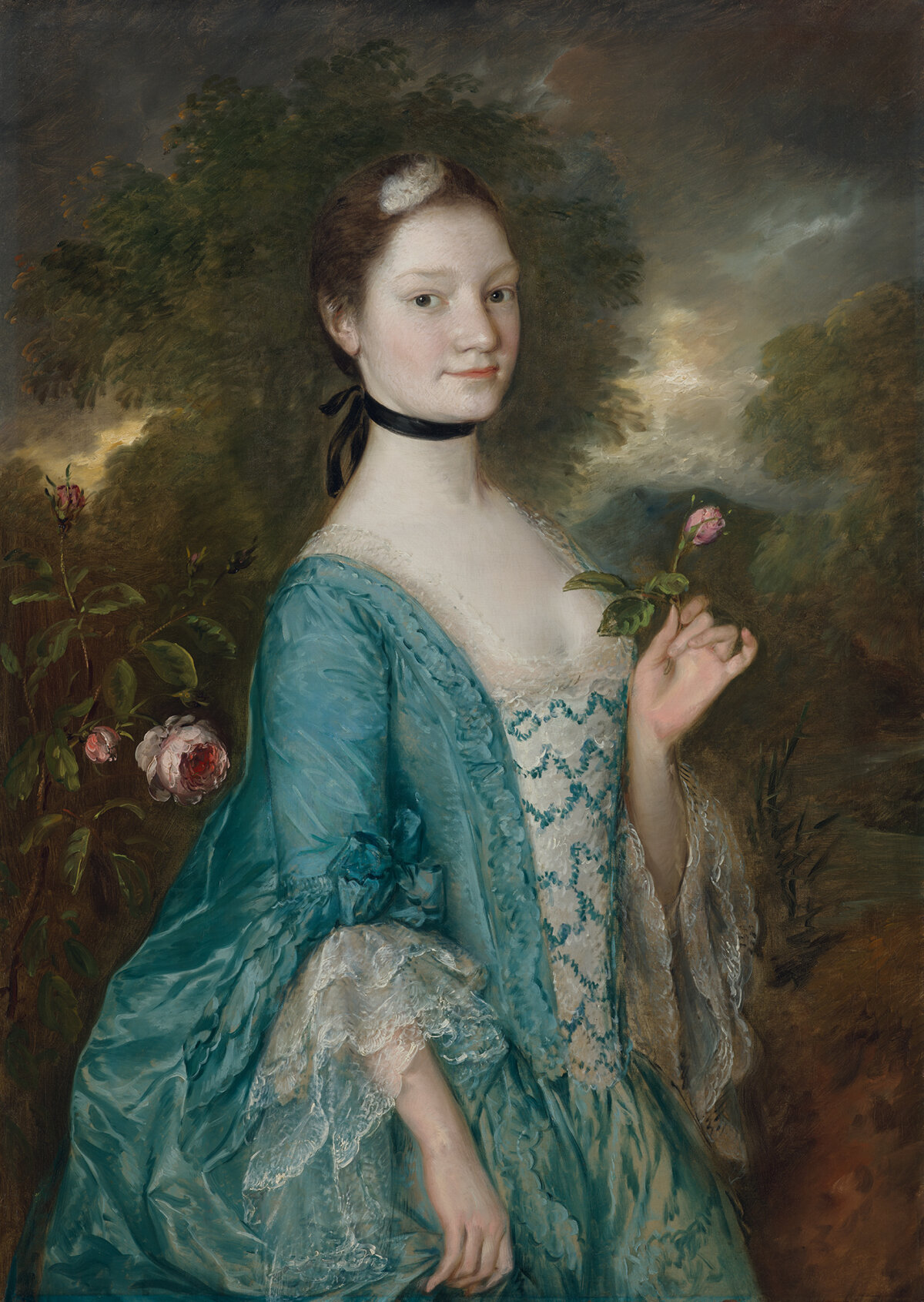
The exhibit’s second gallery begins with a transitional work from The Frick Collection. Painted also in Suffolk, it lies between Gainsborough’s early conversation pieces and the full-sized fashionable portraits he would produce in the spa town of Bath, where he moved in late 1759. This painting from earlier that year shows Sarah Hodges, later Lady Innes.
The portraits of Anthony van Dyck, a Flemish-born, 17th-century British court painter, were pivotal in Gainsborough’s development of his style. The likeness of Sarah Hodges, with its van Dyck floral motif, is one of several works in the exhibition that reflect his influence. The young Sarah wears a blue watered-silk dress “à la française,” a black choker, and a white feather pompom in her hair. The painting showcases a range of paint handling, from loose to tightly painted marks. Gainsborough was known for fluid, feathery brushstrokes.
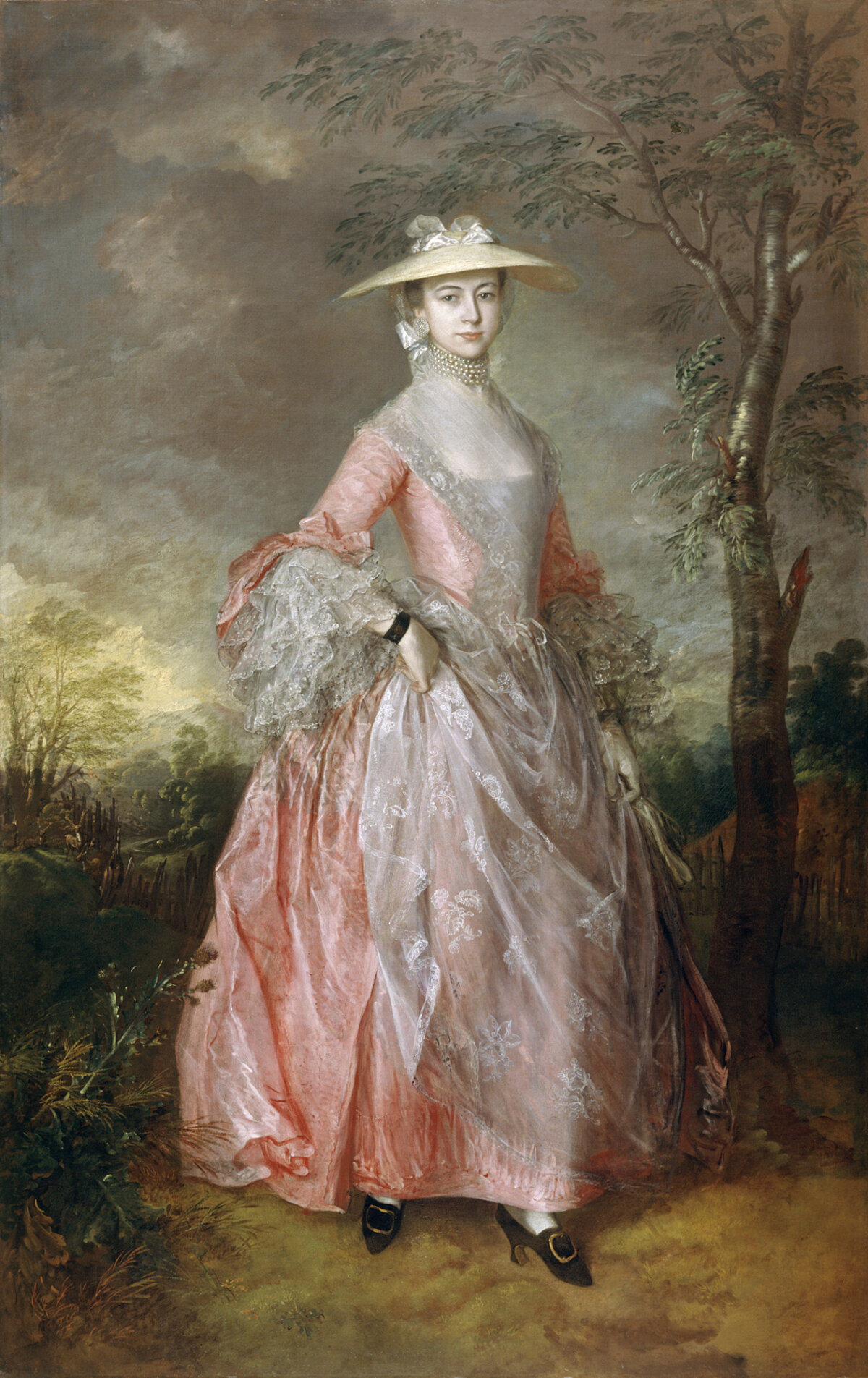
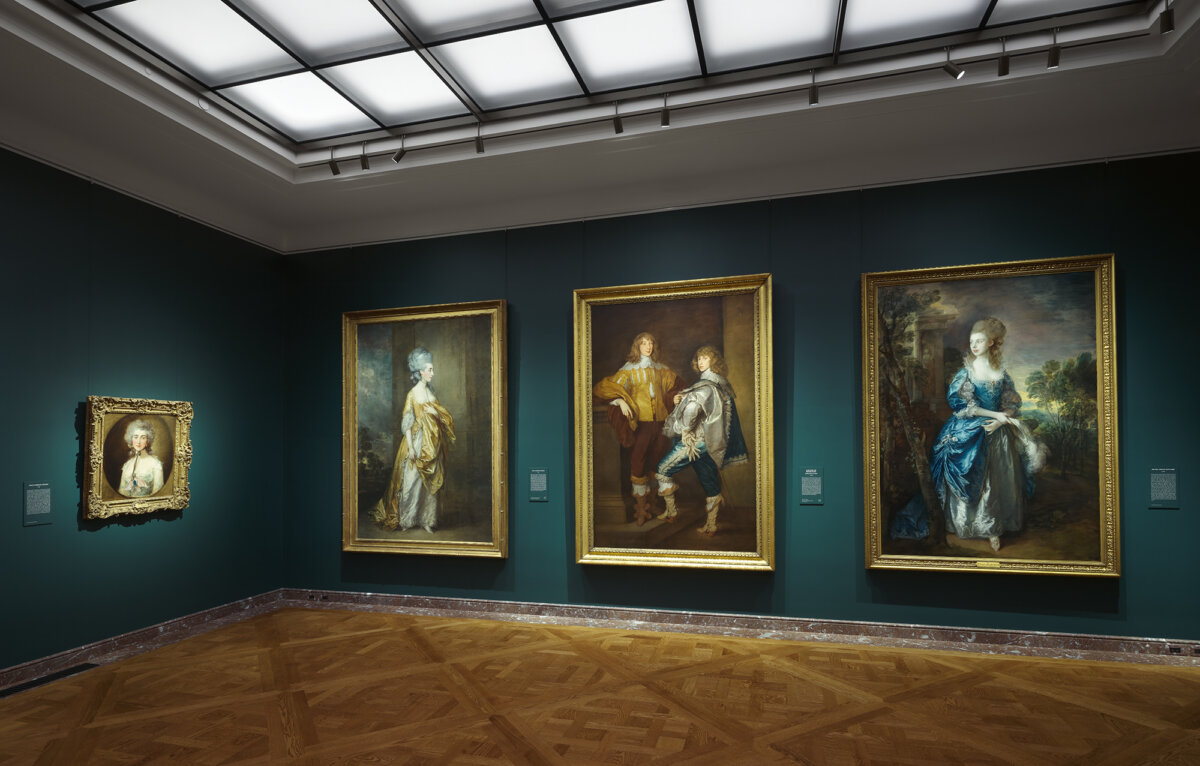
A spectacular showstopper in the exhibit is one of Gainsborough’s first full-length female portraits. Depicting the wealthy Mary, Countess Howe and dated to 1763 to 1764, the museum writes that the work “exemplifies the new monumentality and sophistication the artist achieved in Bath, where society figures came from throughout Britain.”
Lady Mary Howe embodies the pinnacle of fashion, from her woven straw Leghorn hat, buckled and heeled shoes, pink silk dress with a purely decorative lace apron, and sparkling accessories of shield-shaped earrings and five-strand pearl choker. Gainsborough demonstrates his deft touch at texture, color, and movement.
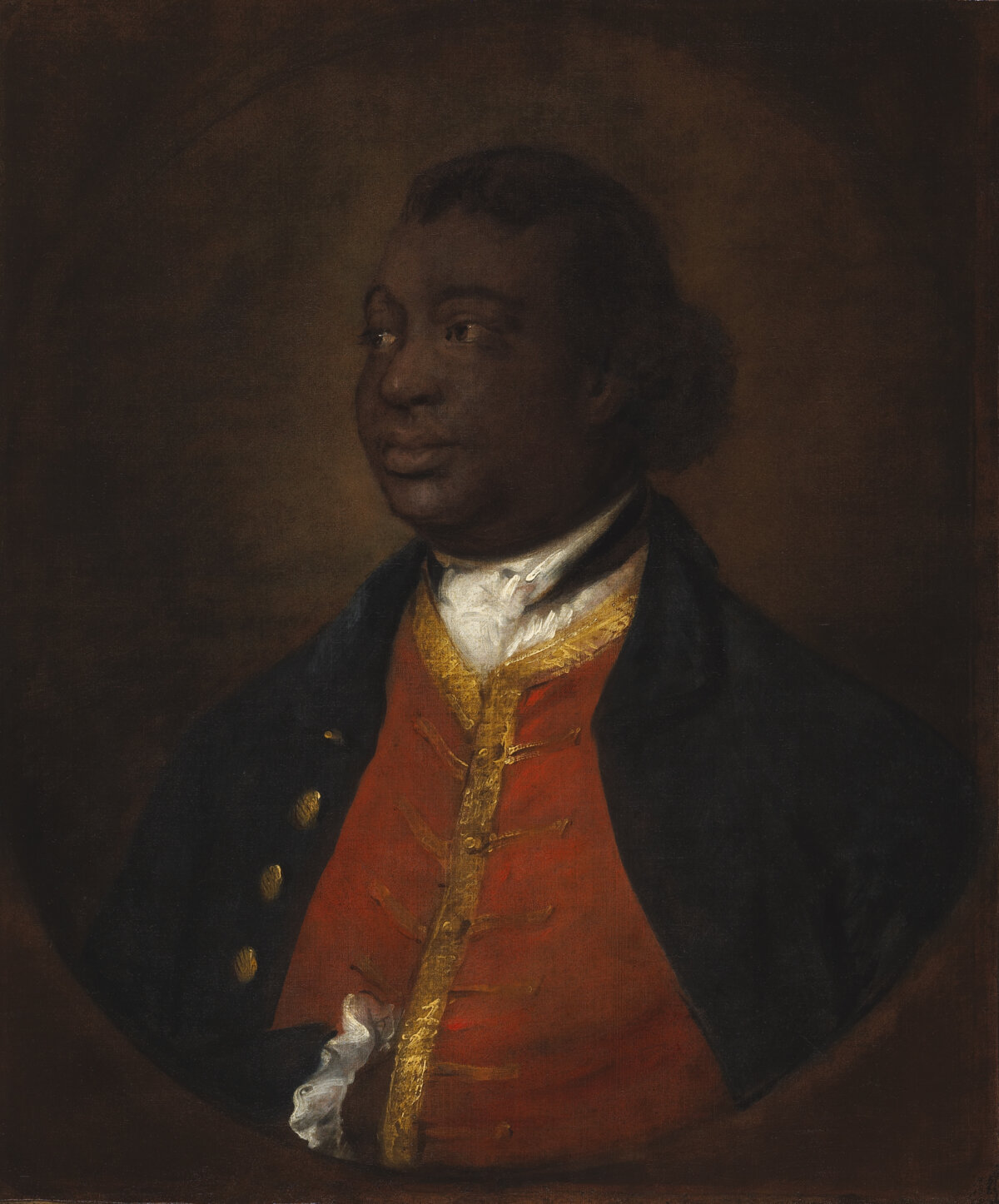
In the same gallery is Gainsborough’s only portrait of a black sitter, Ignatius Sancho, lent from the National Gallery of Canada, Ottawa. Sancho, born on a slaving ship, was a valet to the Duke of Montagu (a Gainsborough portrait of the Duchess is displayed next to this painting). Furthermore, Sancho was a musician, writer, voted in a parliamentary election, and later received an obituary in the British press.
It is unknown how Gainsborough came to paint Sancho’s portrait in 1768, as the cost would have been beyond his means. Additionally, it is intriguing that the artist presented him as a gentleman in both dress and pose, with one hand tucked into his gold-trimmed waistcoat. In his day-to-day working life, he would have worn the Montagu livery. One theory is that Gainsborough gifted Sancho this portrait as the two men had mutual musical friends, and the artist, as The Frick notes, “was known to exchange paintings for music lessons, instruments, and musical compositions.”
The Queen’s Composer
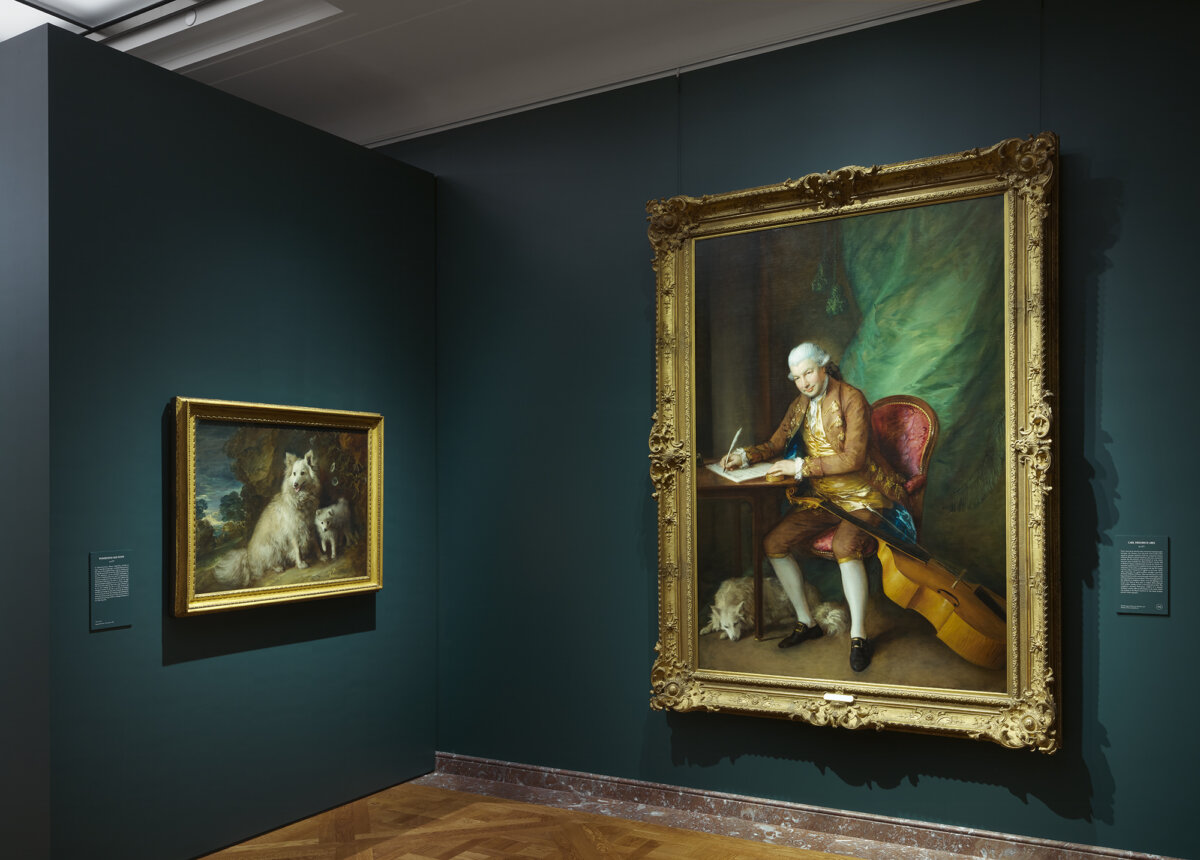
The third and final gallery highlights another Gainsborough music connection with a circa 1777 portrait of the German Carl Friedrich Abel on loan from The Huntington Library, Art Museum, and Botanical Gardens, San Marino. Abel, who is said to have covered his walls with drawings by his friend Gainsborough, was a chamber musician to Queen Charlotte. Indeed, the queen was one of the previous owners of this portrait, which shows Abel as a refined gentleman, without a hint of his actual portly figure or financial troubles.
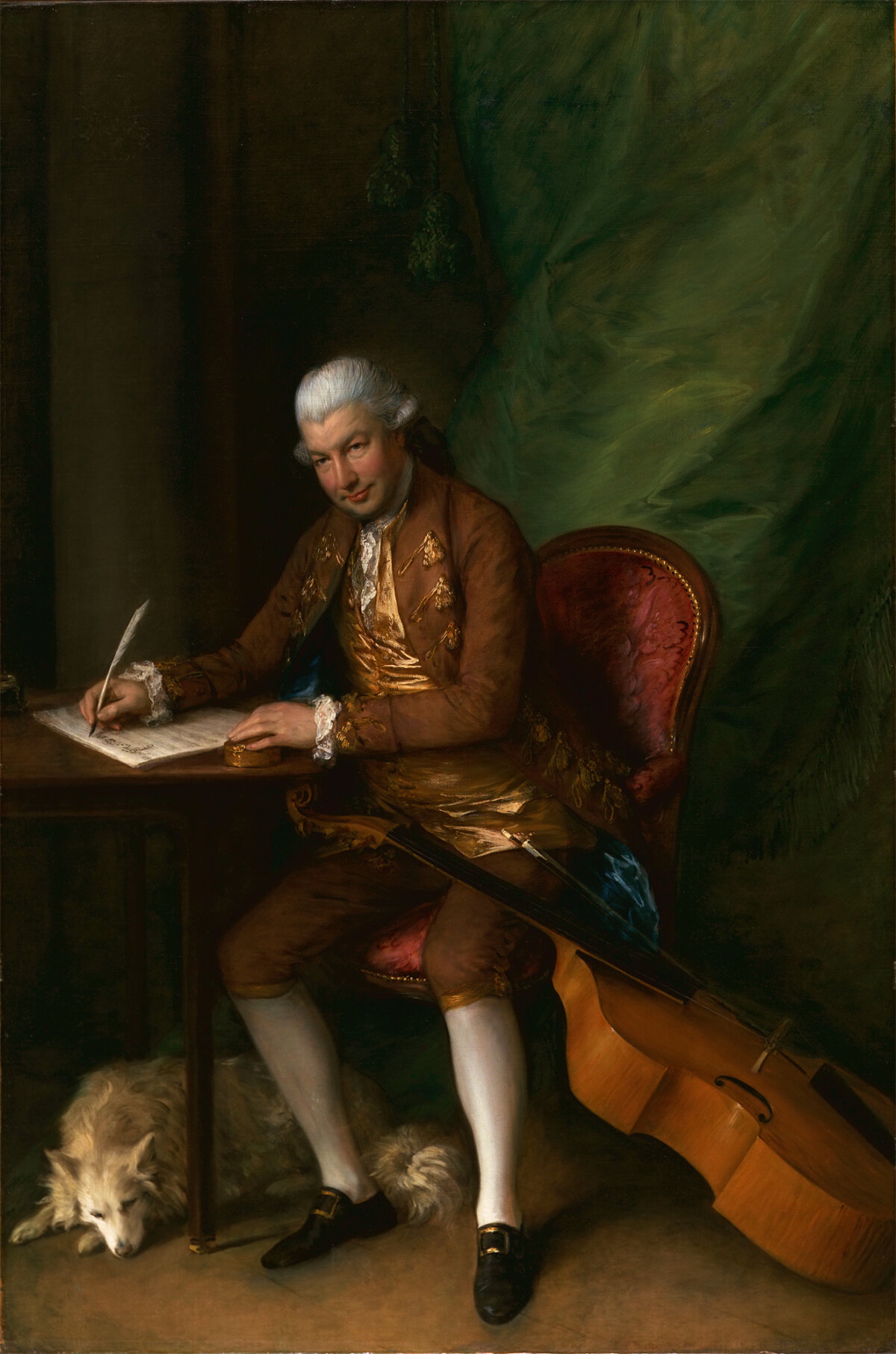
Abel is portrayed in the midst of composing for the viola da gamba. This instrument, a precursor to the cello, rests against his leg. His left hand lies on a gold snuffbox, which may have been a gift from Frederick William of Prussia, and he wears sumptuous clothes.
A delightful note of informality is found underneath the table in the form of a snoozing Pomeranian, which was then a rare breed in England. Gainsborough made characterful, individualized canine portraits throughout his career, and his “Pomeranian and Puppy” painting in the show lent by Tate, London is thought to portray Abel’s dog, too. It is said that this painting was given to Abel in exchange for lessons on the viola da gamba.
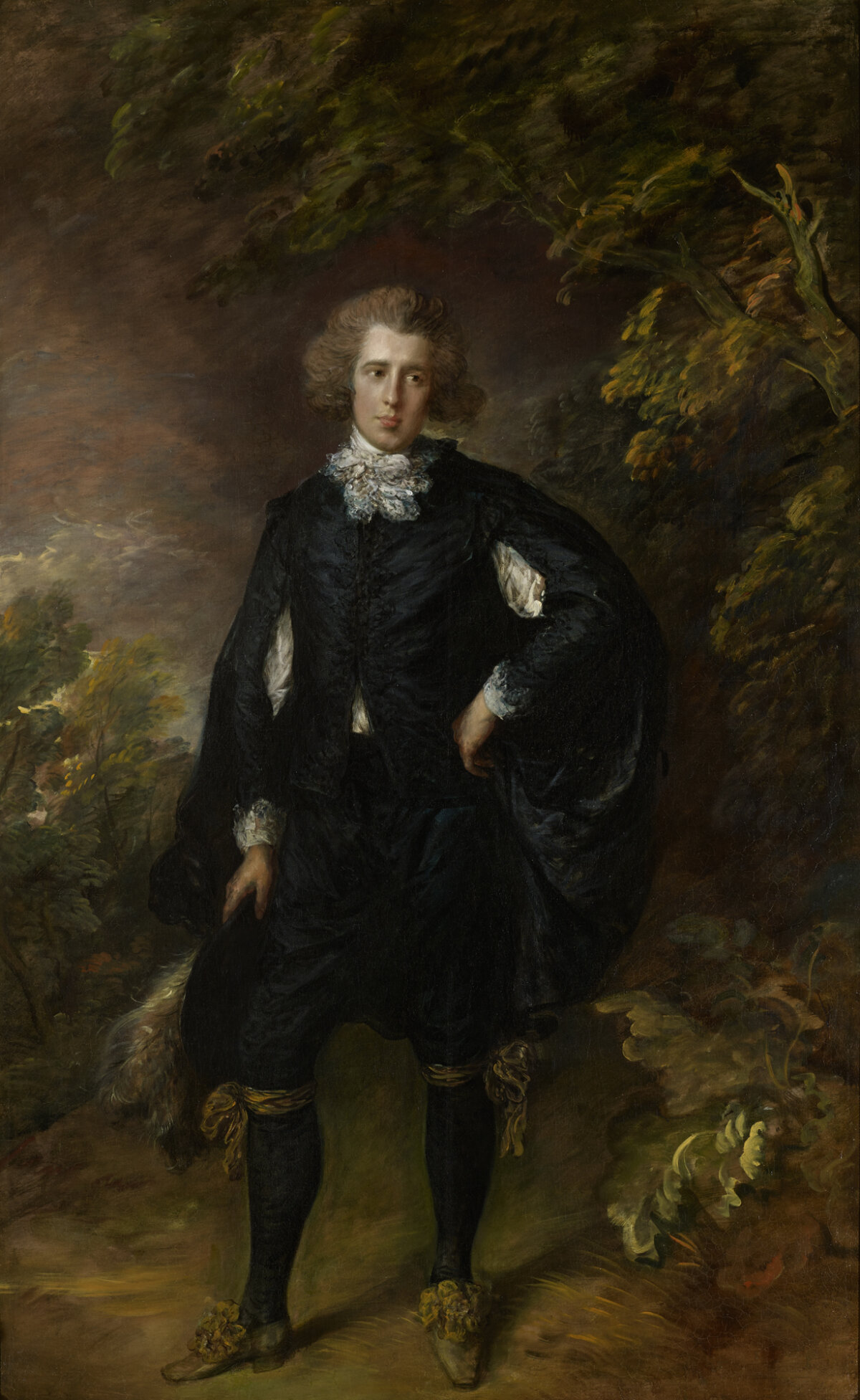
The exhibit concludes movingly with one of Gainsborough’s last, if not final, portraits. It shows Bernard Howard, later 12th duke of Norfolk, in 1788, and remains in his descendants’ possession at their ancestral home Arundel Castle, Sussex. In this work, as in other pictures, the artist clothes his sitter in van Dyck dress, the 17th-century fashions immortalized by the artist in his court portraiture. By harkening to this quintessential historical mode, Gainsborough assures that his subject will always be in style. Likewise, The Frick makes the case for why Gainsborough was so popular in his lifetime and remains relevant and fashionable.
“Gainsborough: The Fashion of Portraiture” exhibition at The Frick Collection in New York City is on view through May 25, 2026. To learn more, visit frick.org.
What arts and culture topics would you like us to cover? Please email ideas or feedback to features@epochtimes.nyc