This week, people throughout the world celebrate the Lunar New Year, with 2026 marking the Year of the Fire Horse. In Chinese astrology, the horse symbolizes freedom, motion, liveliness, and enthusiasm, and the fire horse specifically ignites passion and courage.
Family and friends may exchange New Year blessings honoring the fire horse, such as “Swift horse galloping ahead with purpose and determination.”
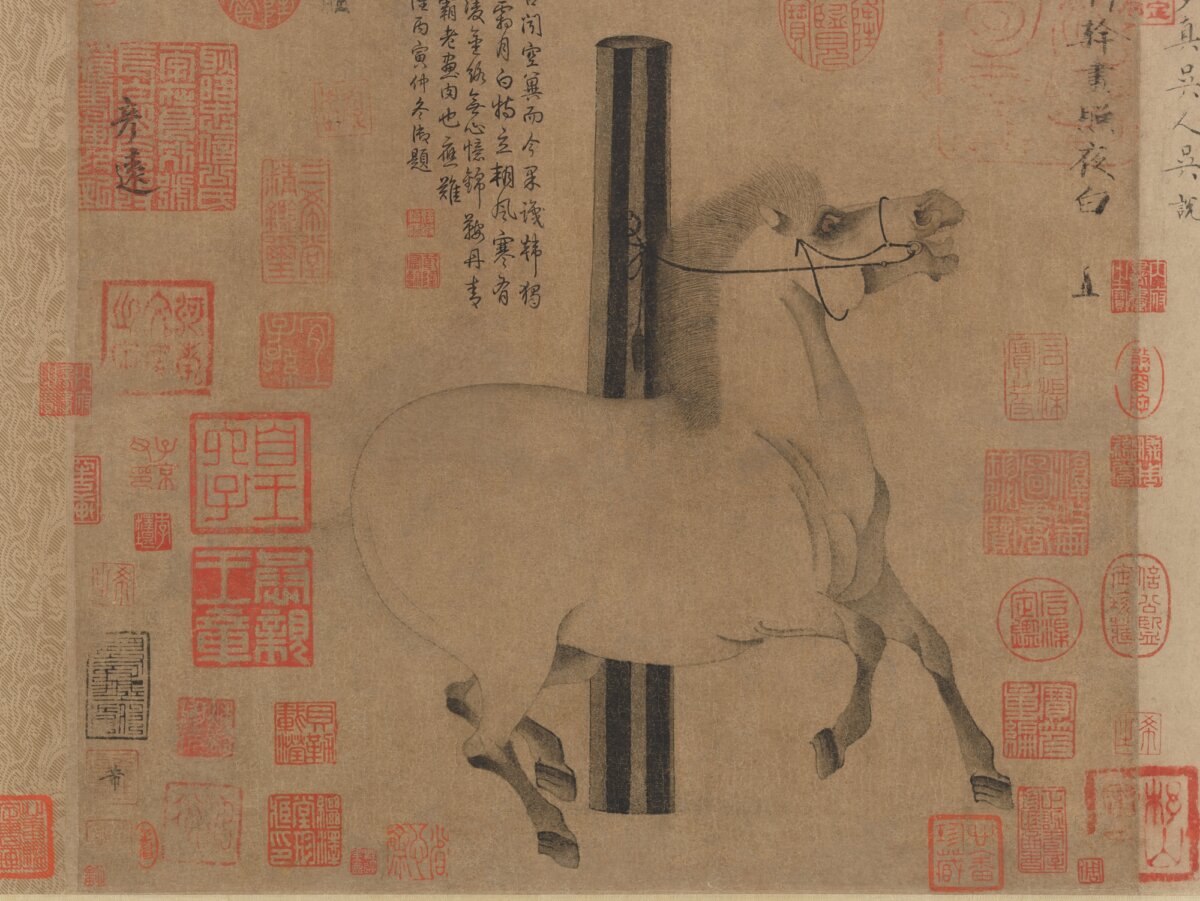
China’s greatest horse painter, Han Gan (around 706–783), depicted many qualities of the fire horse in “Night-Shining White”—considered the country’s finest horse portrait. Han’s soft yet strong brush-and-ink painting epitomizes traditional Chinese art, which lauds the line and spirit over anatomical accuracy.
New York’s Metropolitan Museum of Art acquired the painting in 1977, although currently not displayed, likely due to its fragility.
The Spirited Horse
In “Night-Shining White,” the Tang dynasty artist captured the fighting spirit of Emperor Xuanzong’s favorite charger. He also hid a moral warning. Rather than depicting the warhorse engaged in battle, Han tethered him to a post, fighting for his freedom.
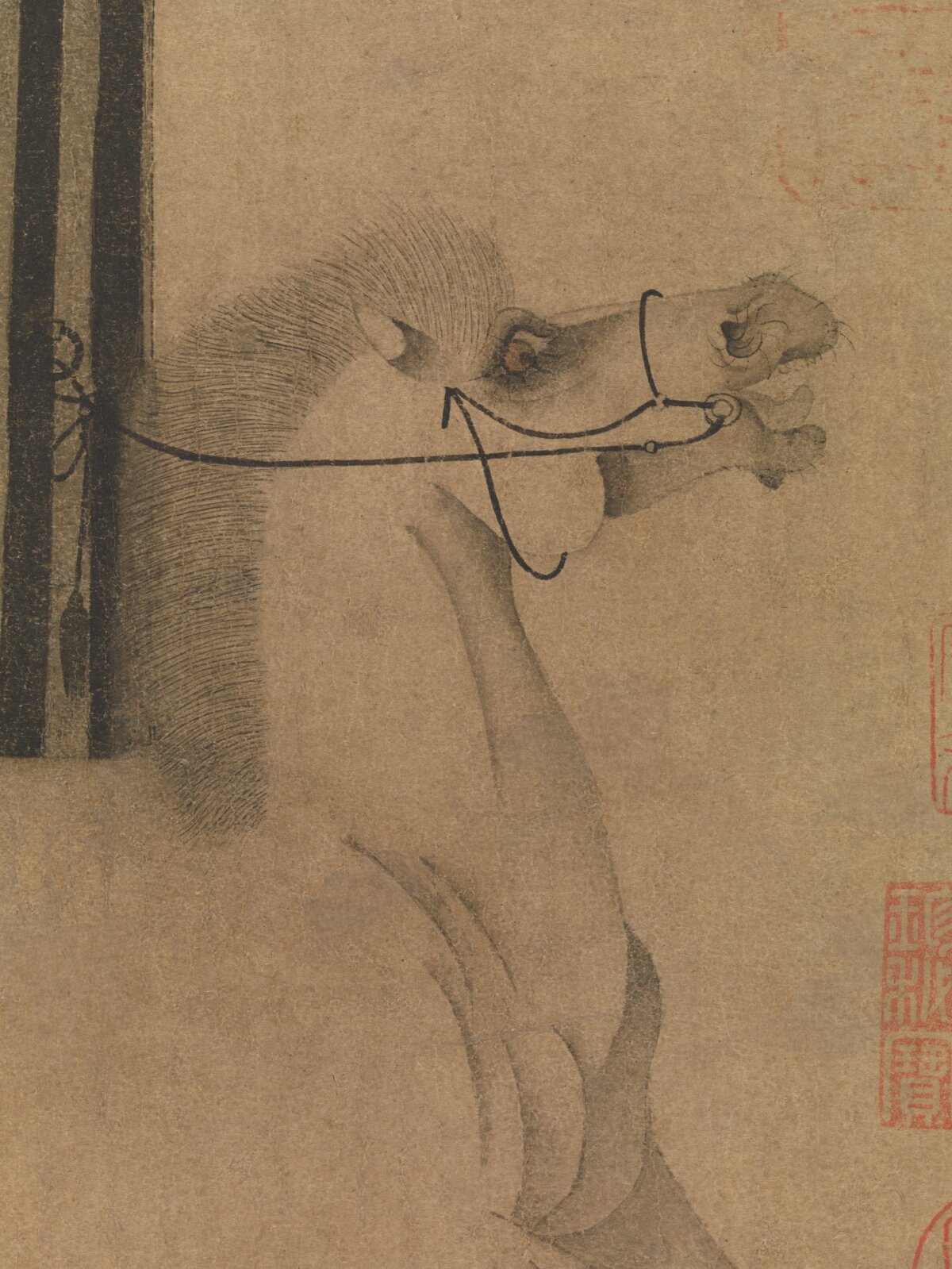
Seen in profile, the charger’s fiery eyes bulge and his nostrils flare as he tries to yank himself free. He’s so enraged his mane stands on end, as if electrified.
Yet this wild moment also contains harmony. The charger’s strong, plump body and his dancing hooves make the spirited horse graceful—and almost otherworldly.
According to The Met: “[This] fiery-tempered horse epitomizes Chinese myths about Central Asian ‘celestial steeds’ that ‘sweated blood’ and were actually dragons in disguise.”
A Hidden Warning
For centuries, Han’s painting carried a message many today cannot see. Originally, the horse painting was about a foot square, but over the centuries, many admirers added their seals and inscriptions in a show of appreciation, causing the handscroll to grow to over 37 feet wide. These admirers saw the charger as a patriotic symbol of China’s military strength, according to Maxwell K. Hearn, an art scholar at The Met. He wrote:
“And they understood the poignancy of the image. ‘Night-Shining White’ was the favorite steed of an emperor who led his dynasty to the height of its glory but who, tethered by his infatuation with a concubine, neglected his charge and eventually lost his throne.”
What arts and culture topics would you like us to cover? Please email ideas or feedback to features@epochtimes.nyc.