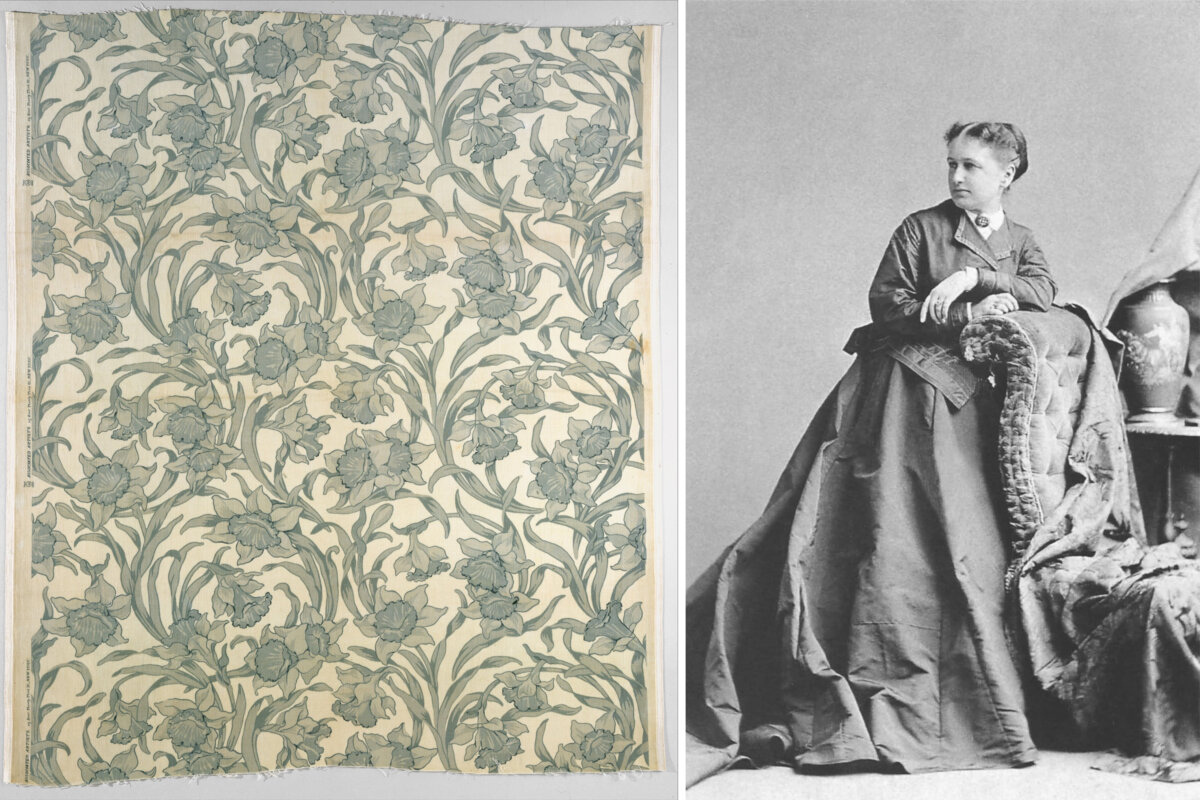
Run your hand across a sofa cushion. Feel the coolness of linen, the softness of velvet, the weight of leather. That instinct to reach out and touch is reshaping the world of interior design. From plush chenille to crisp cotton, consumers are reaching for fabrics that feel personal and grounding. Materials that don’t just fill a room but anchor it with warmth.
Fabric is the foundation of any well-designed space: It carries color across upholstery, filters light through drapery, and cushions feet with thick carpets. And, in a nod to the past, even the age-old art of tapestry is finding its place in today’s home. This desire for comforting textiles feels entirely modern, yet America’s relationship with fabric has been carefully woven over centuries.
Beauty With Purpose
The thread leads back to 19th-century America and to one remarkable woman who changed the way a nation thought about its homes. In the decades following the Civil War, the United States was not only rebuilding but redefining itself: industry expanded, cities grew, and wealth accumulated. Yet culturally, the nation still looked to Europe for artistic authority. Into this moment stepped Candace Wheeler, a designer whose work helped Americans imagine domestic environments that were refined, expressive, and distinctly their own.
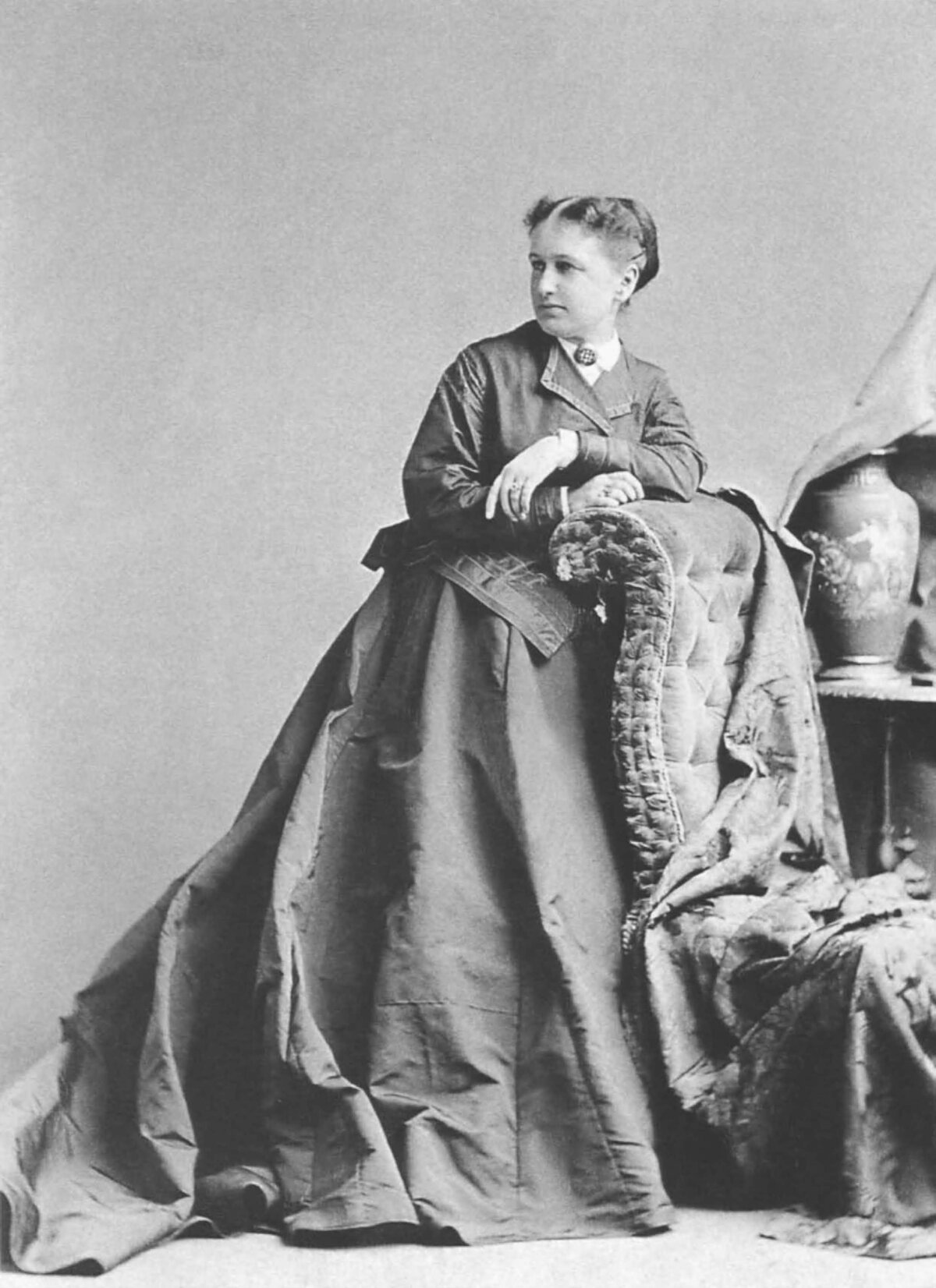
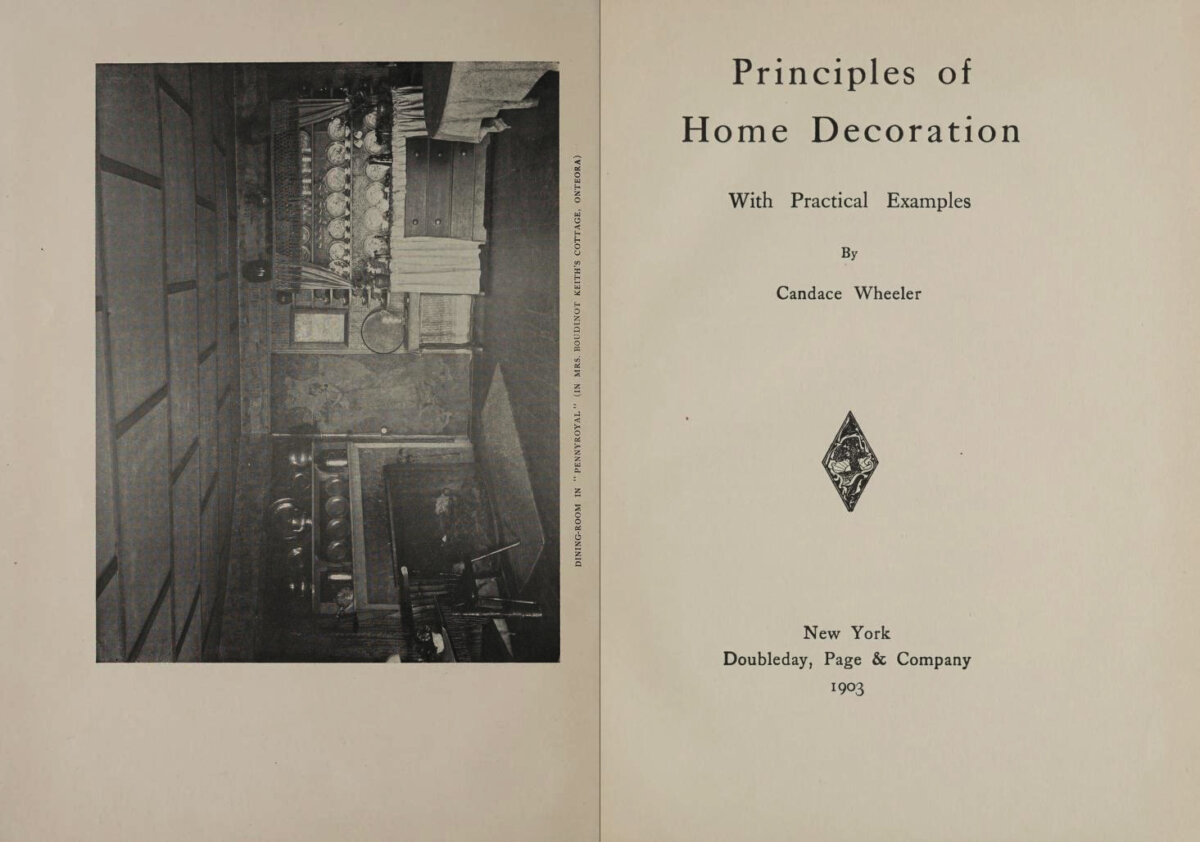
Wheeler helped establish interior decoration as both an art form and a profession, guided by her conviction that “it is by no means an unimportant thing to create a beautiful and picturesque interior.” Her textiles, entrepreneurial leadership, and book (“Principles of Home Decoration”) made the case that the home deserved the same thoughtful consideration as any painting or building.
Roots in the Catskills
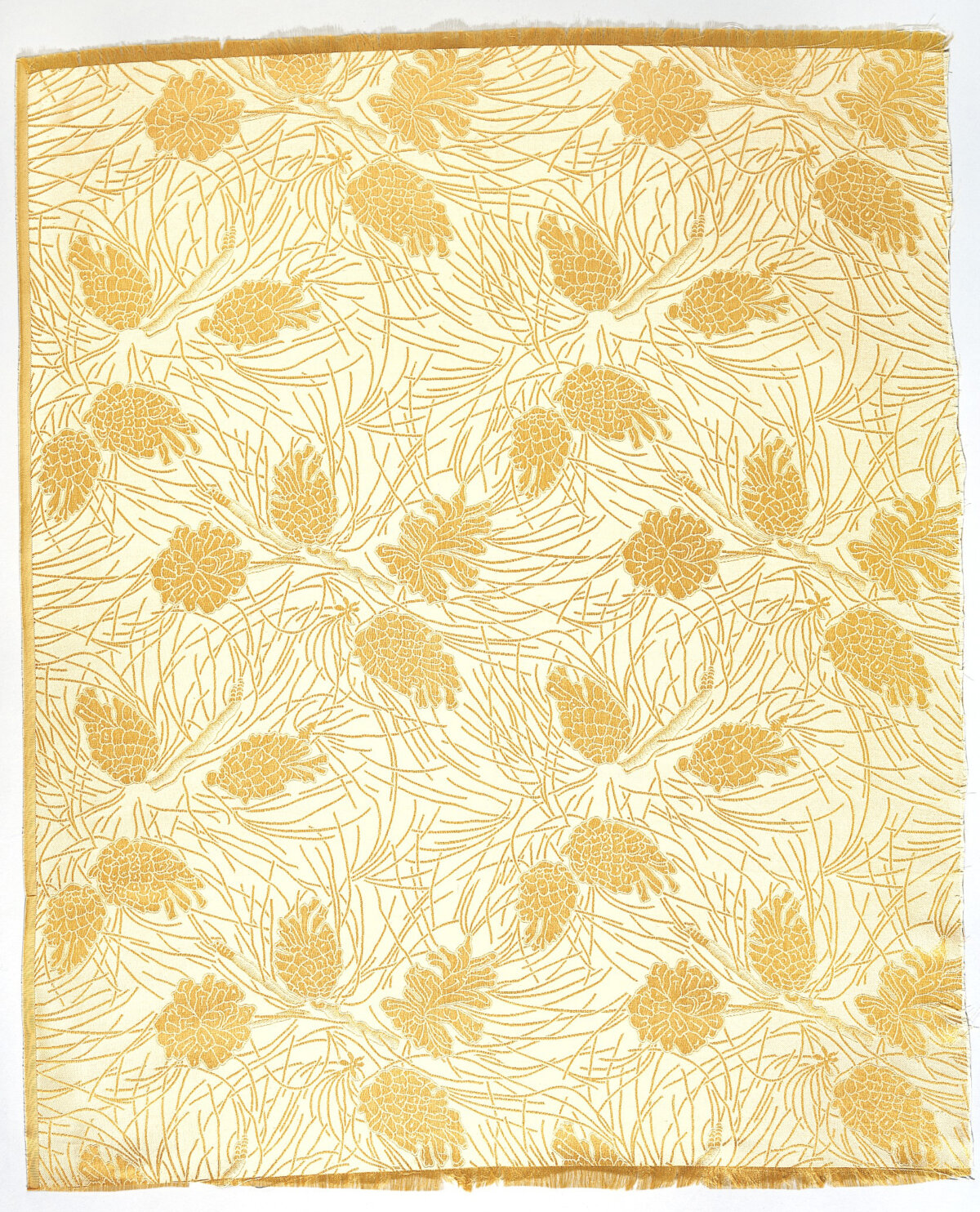
Born Candace Thurber on March 24, 1827, in Delhi, New York, Wheeler spent her childhood amid the wooded slopes and open skies of the Catskills. Nature left a permanent imprint on her imagination. Years later, vines, wildflowers and pinecones appeared in her patterns, rendered with both delicacy and structure.
Wheeler raised a family and cultivated intellectual interests, but her defining direction emerged only after a pivotal experience. At the 1876 Centennial Exposition in Philadelphia, she encountered embroideries created by the British Royal School of Art Needlework. Inspired by the idea that textiles could be fine art, she returned to New York with resolve.
In 1877, Wheeler helped found the New York Society of Decorative Art, an organization dedicated to training women in design skills that could support them financially. A year later, she assisted in establishing the New York Exchange for Women’s Work, which provided a marketplace for handmade goods. These efforts combined financial independence with artistic ambition. Wheeler believed beauty should be made, sold and lived with, not admired from a distance.
Opportunity soon followed recognition. In 1879, she partnered with renowned glass artisan Louis Comfort Tiffany to form the decorating firm Tiffany & Wheeler. While Tiffany oversaw glass and ornamental elements, Wheeler directed textile production, an area in which she quickly distinguished herself.
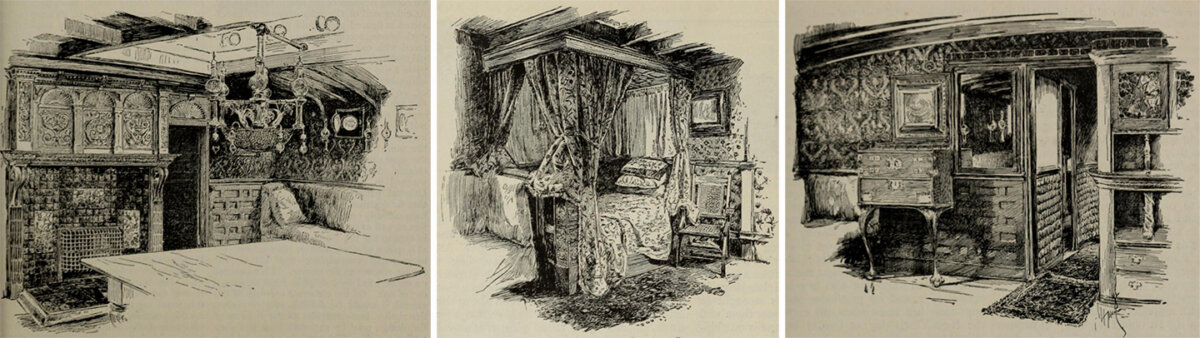
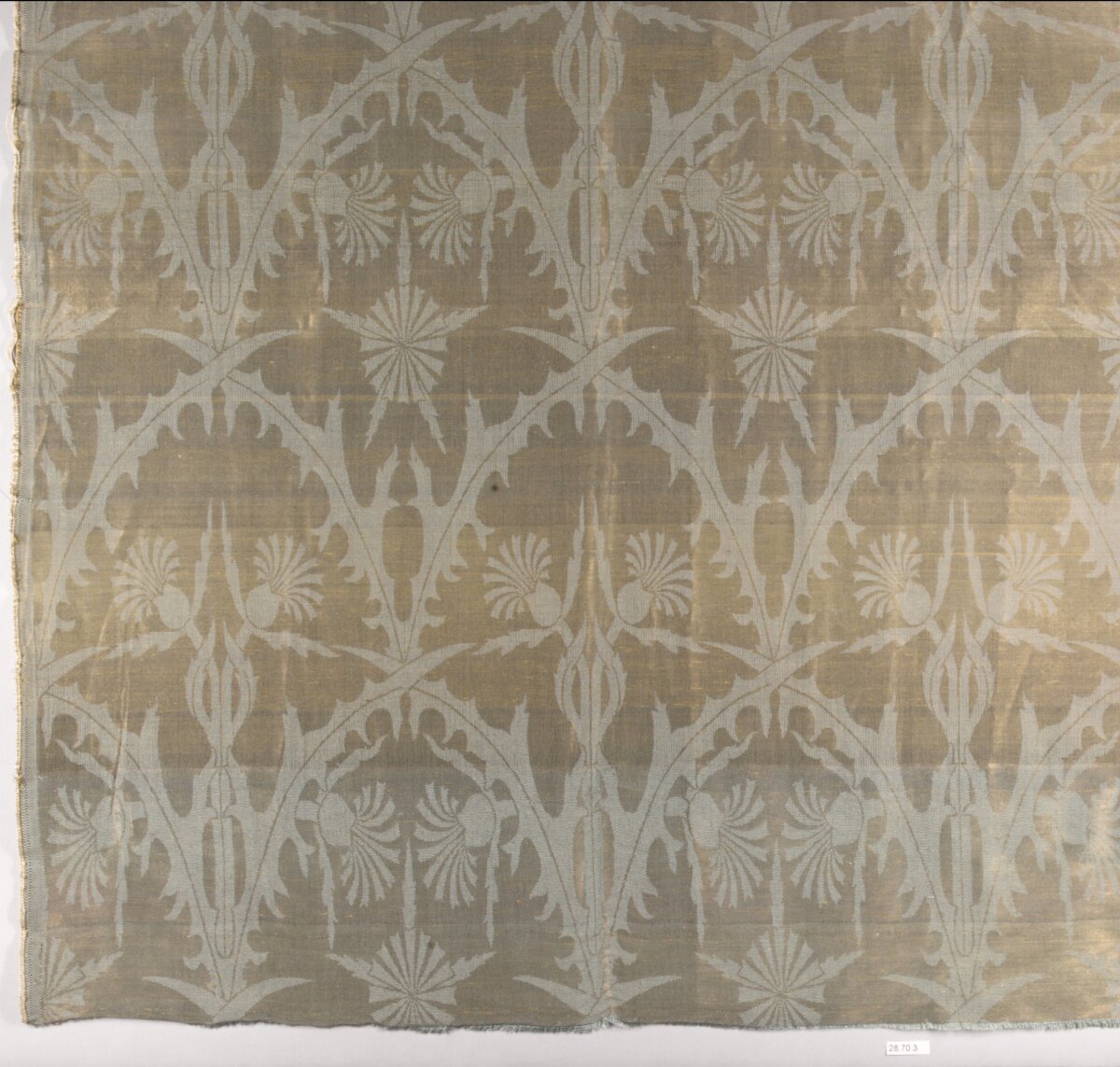
In 1880, Tiffany & Wheeler designed interiors for newspaper publisher James Gordon Bennett Jr.’s yacht Namouna, including the main drawing room. Contemporary sources described the interior’s porthole coverings as “exquisite hangings, in which the interwoven thistle is wrought in silk and gold.” The pattern echoes Tiffany’s thistle-decorated plaster paneling, while the gold thread and gray-blue silk suggest Wheeler’s expertise in color blending and light effects in textiles.
Associated Artists and Industrial Innovation
Wheeler ambitiously separated from Tiffany in 1883 and founded Associated Artists, which was staffed by women. Associated Artists sought to reconcile the virtues of fine craftsmanship with the demands of modern manufacturing. The firm produced a broad array of woven and printed textiles, at various price points.
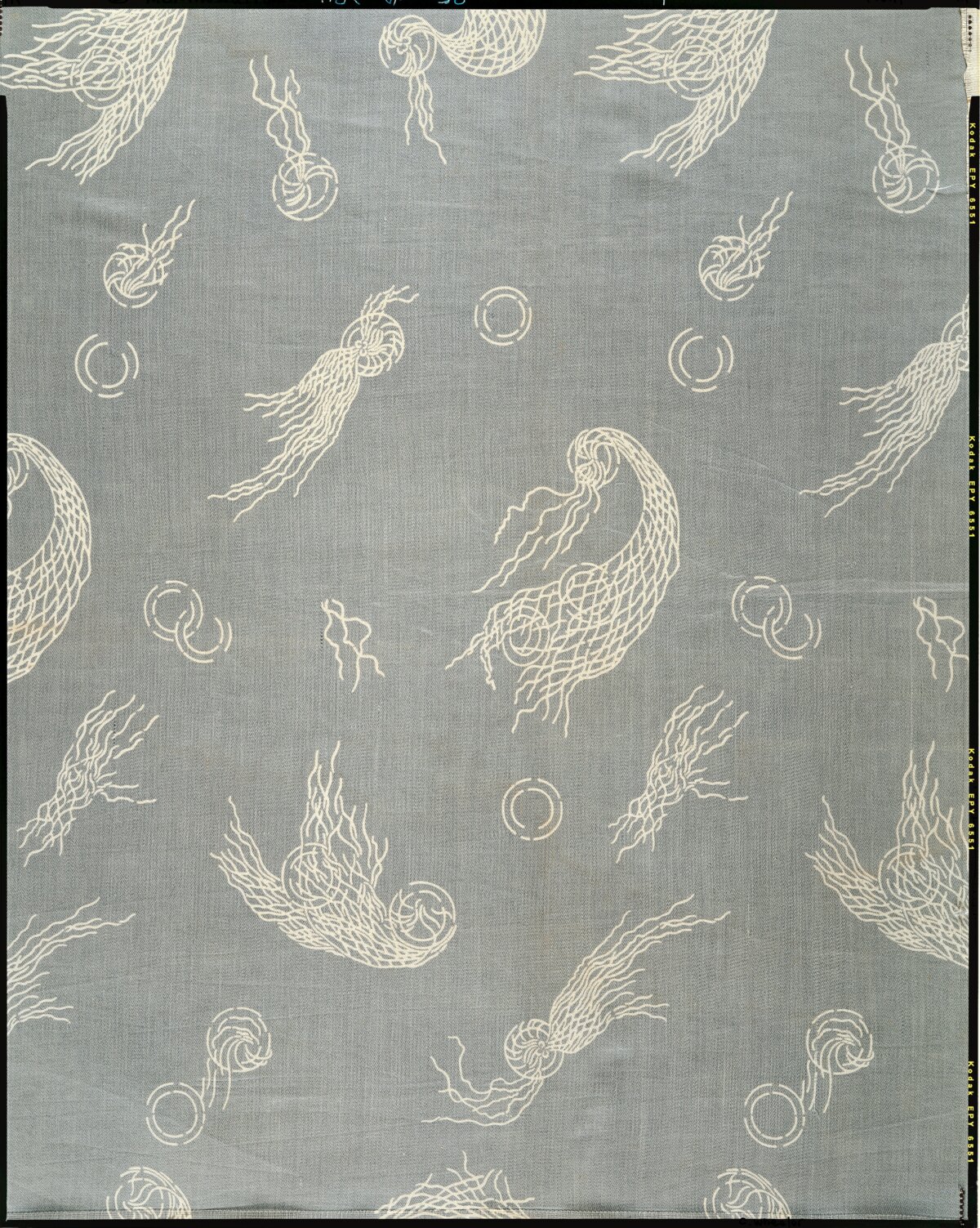
The firm’s collaboration with the Cheney Brothers silk mills proved especially consequential. It became known for its iridescent silks, creating a surface both smooth and richly dimensional. The “Nets-and-Bubbles” textile offers a fitting example: Though it mimics the casual appearance of a light blue cotton denim, it is in reality a refined satin woven vertically with a cotton warp and horizontally with a silk weft. More than 500 fabric designs entered American homes through this partnership, demonstrating that artistry need not be confined to elite commissions. Industry, when guided by taste, could disseminate beauty widely.
If her interiors demonstrated her philosophy, “Principles of Home Decoration” articulated it. The book is measured in tone yet quietly persuasive. Wheeler wrote that decoration was not about superficial prettiness. Rather, it demanded knowledge, and an awareness of how materials affected mood.
She urged readers to consider how rooms support daily rituals, from conversation to rest. She argued that even modest dwellings could achieve dignity through proportion and restraint. Good design was less about expense than about thoughtfulness.
Alongside “Principles of Home Decoration,” she published books and essays that encouraged Americans to approach their homes with confidence, urging them to pick what they like, saying: “The colour one likes is better for tranquillity and enjoyment — more conducive to health; and exercises an actual living influence upon moods.”
Defining a New Profession
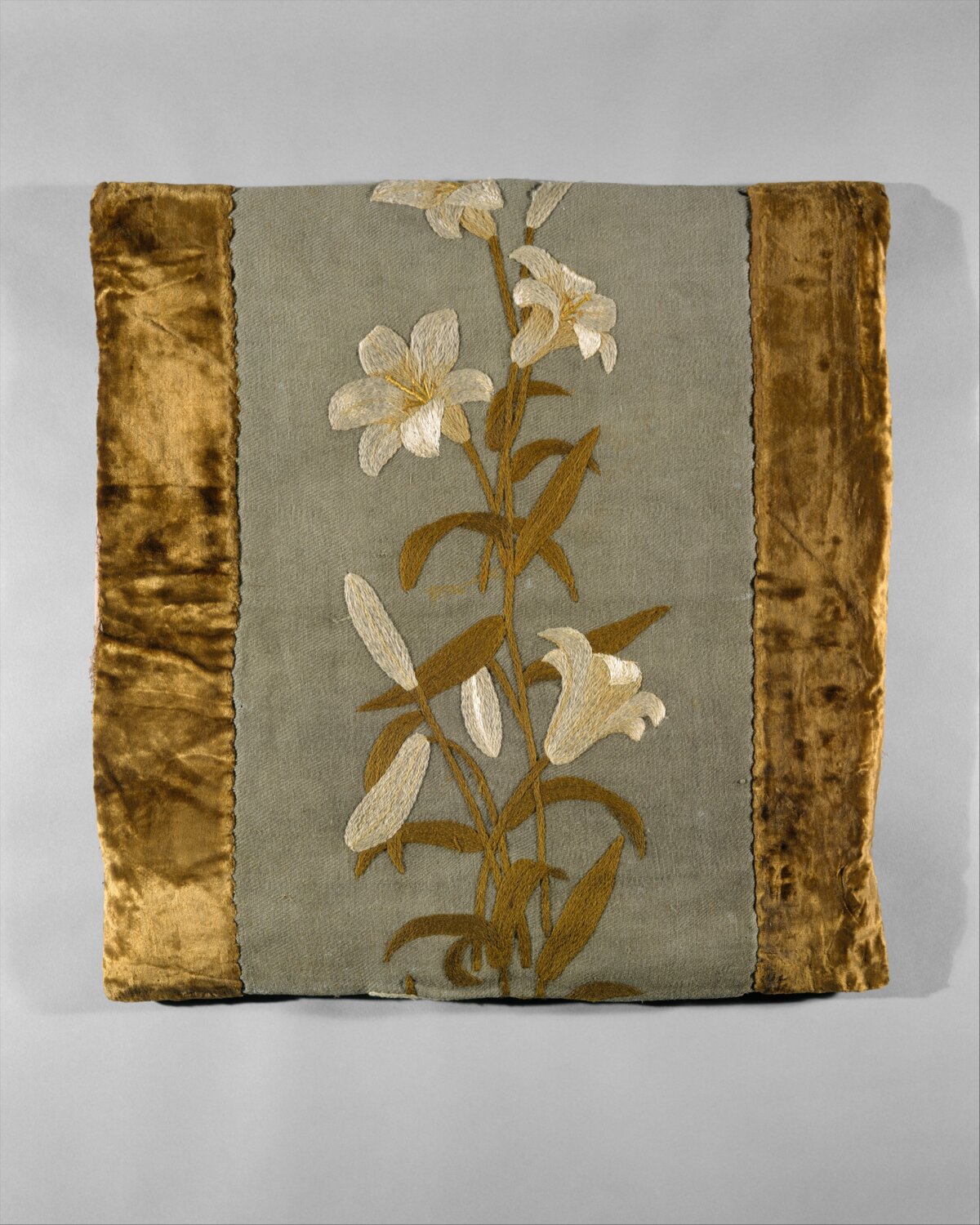
By the late 19th century, she had begun shaping entire environments rather than individual elements. This holistic approach now seems intuitive. At the time, it was groundbreaking. Wheeler treated the room as a composition in which architecture, color, texture, and light must cooperate.
Her national stature was confirmed at the 1893 World’s Columbian Exposition in Chicago, where she served as the interior decorator for the Woman’s Building. Visitors encountered spaces that were orderly and decorative. Also, the building affirmed women as serious contributors to American artistic life.
By the early 20th century, interior decoration had begun to emerge as a recognized profession. Others would refine and popularize it, but Wheeler had already laid much of the groundwork. She trained women and collaborated successfully with industry. She insisted that domestic space deserved intellectual seriousness.
When she died in 1923 at age 96, the American interior had changed profoundly. Rooms were no longer furnished solely for utility. They were composed.
Rooms Composed, Lives Enriched
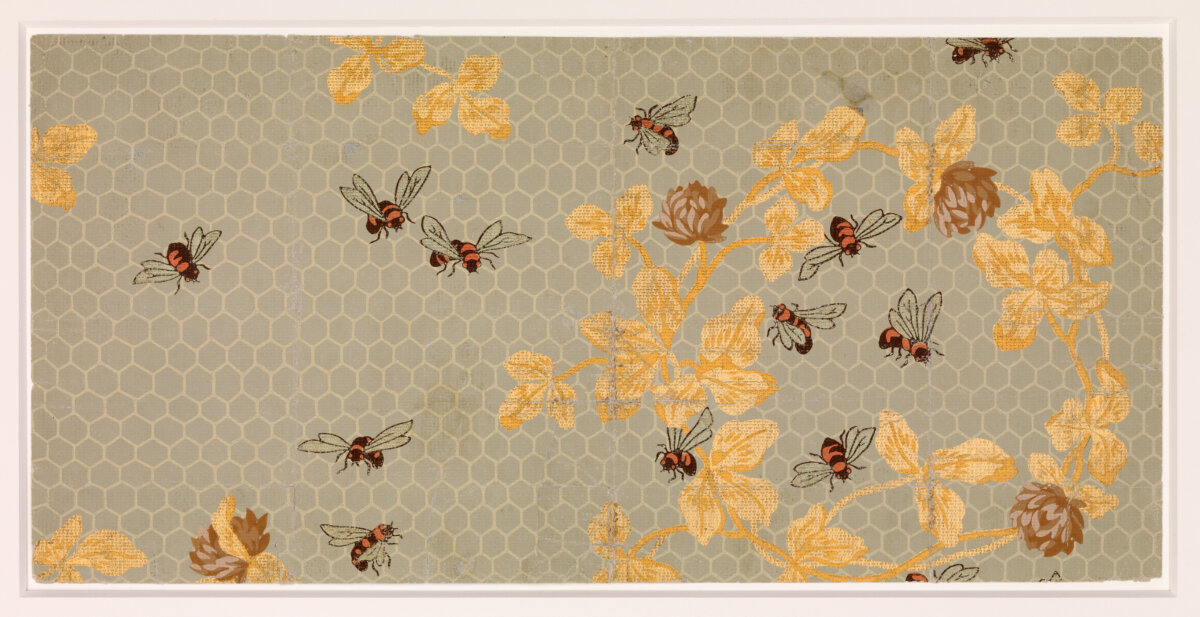
Today, Wheeler is often remembered as one of the first professional interior designers in the United States, but that description captures only part of her achievement. She helped Americans understand that their surroundings shape their inner lives. Beauty, when thoughtfully applied, is not indulgence but enrichment.
The quiet authority of her work still resonates. Step into any carefully considered room and her influence is present in the harmony of elements and the assumption that design is both art and discipline.
Wheeler saw the home as a place where culture begins. She taught a nation how to live with art.
What arts and culture topics would you like us to cover? Please email ideas or feedback to features@epochtimes.nyc