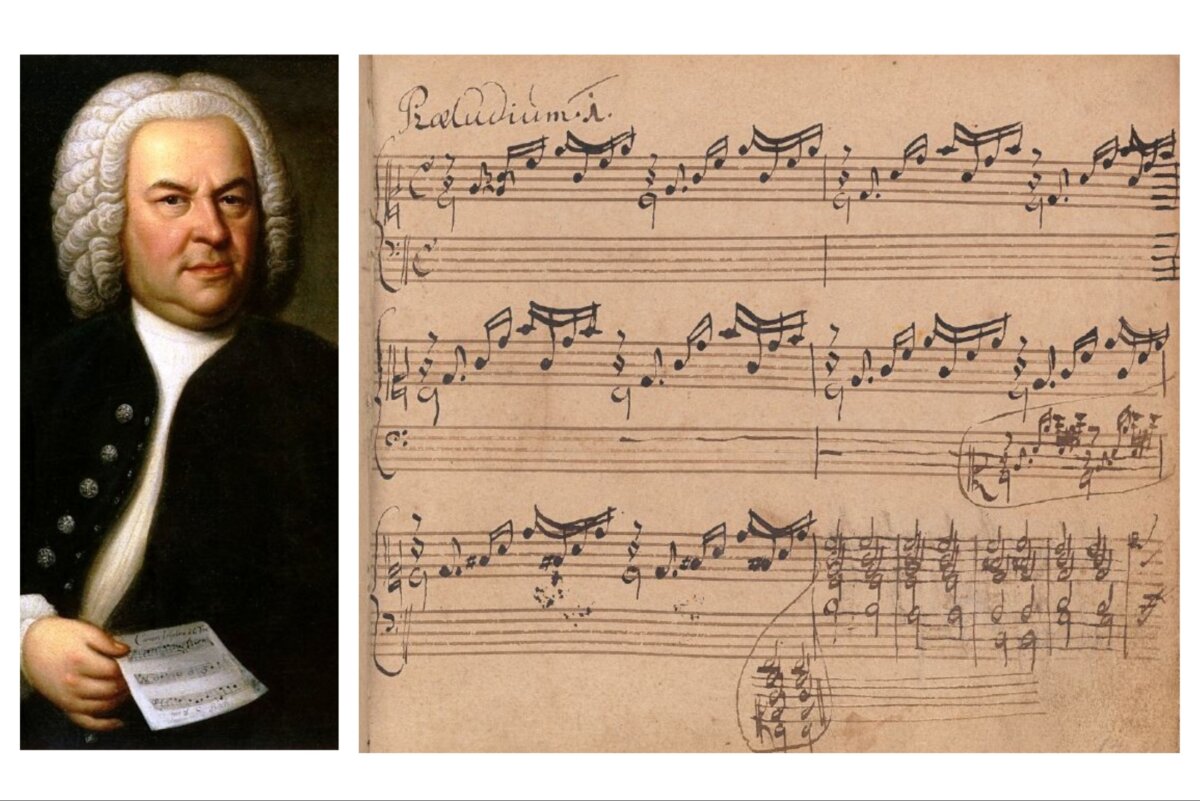
It’s the simplest piano piece, ever. The entire piece, until the last three measures, exhibits the same repeating rhythm, bar by bar. Furthermore, the second half of each measure is identical to the first half, so the player is free to look ahead to the next measure and prepare it. Yes, the notes change from measure to measure even though the rhythm does not. But the changes are subtle and easily controlled.
This is the first item in “Bach 48” by Johann Sebastian Bach (1685–1750), a two-volume collection of preludes and fugues in all 24 major and minor keys, twice over. The set is a monument to Bach’s limitless musical ingenuity, with idea after idea tumbling across page upon page.
The pieces arrive in matched pairs. First comes a prelude, a free-form essay that might be a dance piece, a meditation, an etude, or anything else the composer wishes. Then comes a fugue in the same key. A fugue is a piece that features from two to five voices in imitation of each other. Like a round (think, “Row, Row, Row Your Boat”) but much more complex, a fugue explores the possibilities inherent in a given musical subject.
Our focus here is the first prelude in Book I (1722) of the set, a Prelude in C Major that often marks the graduation of a piano student from beginning to intermediate status.(Listen) The first sentence of this article is hyperbole but not by much. Rhythmic repetition and the mirrored halves of each measure anchor the player in a way no other score in the keyboard repertoire does. It is the constantly shifting pitches of each measure that give the piece its interest and its importance.
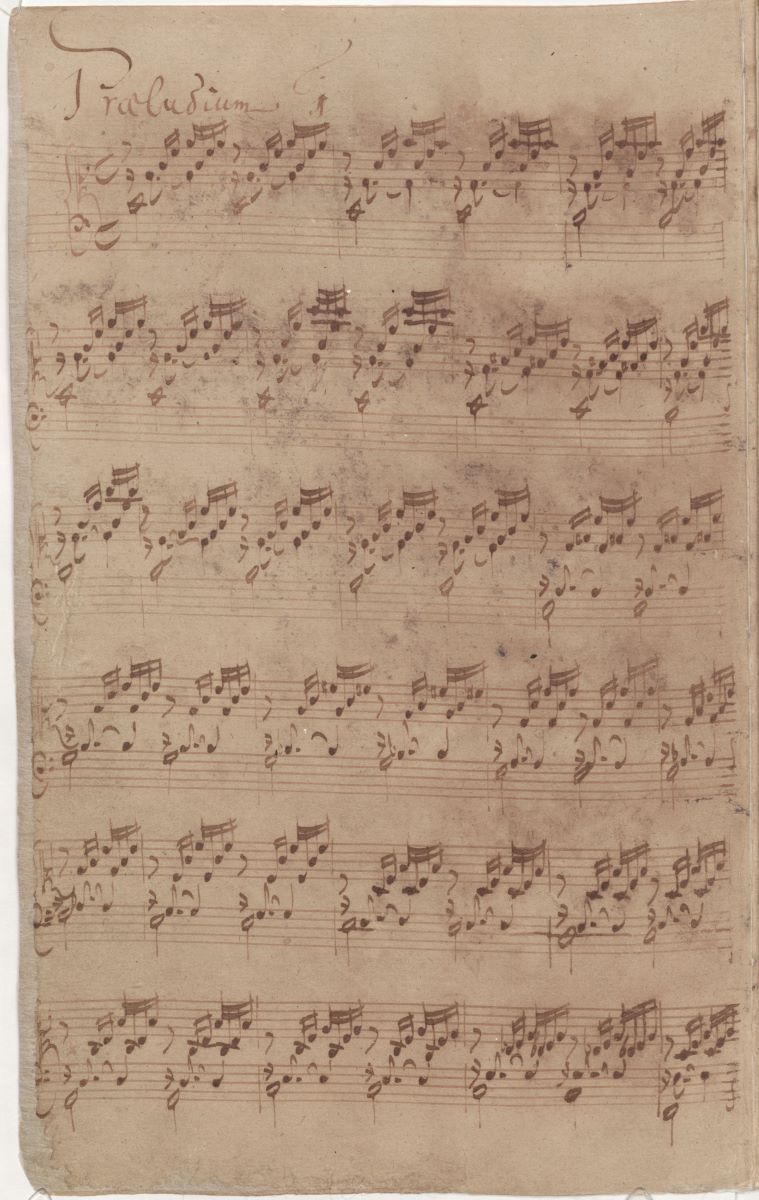
The umbrella name for Bach’s two volumes of 48 preludes and fugues is “The Well-Tempered Clavier.” “Clavier” here refers to some kind of keyboard, usually a harpsichord in Bach’s time, as the modern piano had not yet made the scene.
“Well-tempered” does not mean that the keyboard needs to be in a good mood. The reference is to the tuning that had been recently established making possible, for the first time, easy movement among all the keys without going out of tune. All 12 pitches of the Western tonal vocabulary appear in our Prelude in C without any of them sounding as if they belong somewhere else. This was not possible before “well-tempered” tuning that placed every note the same distance in frequency from its adjacent notes.
Our Prelude in C starts by establishing the home key of C Major via a progression known to every kind of musician who has ever played an instrument: I, ii7, V7, I; in chord names: C, Dm7, G7, C. Baby simple. But then, the gates swing open and we visit the keys of A minor, G Major and F Major, with suggestions of C minor and F minor. It’s a brief journey that sets us up for the major expedition to come.
Western art music and most Western folk and popular music depend for their effects on harmony. Melody and rhythm, of course, play roles, but it’s the unique place held by all those major and minor and other chords that give Western music its character. By the 20th century, most of the world had adopted these kinds of harmonies.
After the Prelude comes a C-Major fugue, both heard here. (Listen)
This sets the standard for what’s to come: The deep exploration of musical ideas by their imitation in different keys and ranges of the keyboard. There has never been anything to match it.
What arts and culture topics would you like us to cover? Please email ideas or feedback to features@epochtimes.nyc