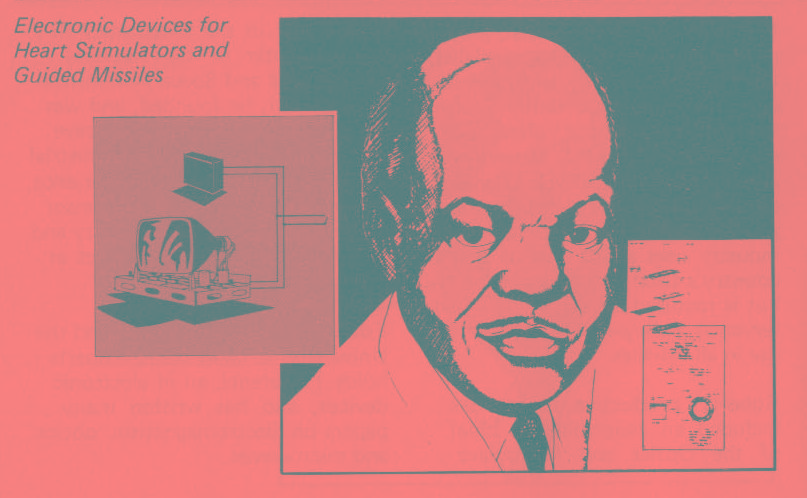
When Otis Boykin invented an electrical resistor that provided a more stable and precise flow of electricity, it changed how electronics were made. His invention was soon used to produce radios, televisions, computers, and even guided missiles. He became nationally famous after President Dwight D. Eisenhower suffered a heart attack in 1968. Boykin’s resistors helped pave the way for the implantable pacemaker that was credited for saving the president’s life.
Boykin was born on Aug. 29, 1920, in Dallas, Texas. His mother was a maid and his father was a carpenter who later became a pastor. Some sources say Boykin’s mother died from heart failure when he was just a year old while other sources say he was 12 when his mother passed away. Whatever the exact date, many say that his mother’s untimely death motivated him to help invent the pacemaker.
Boykin graduated with honors from Booker T. Washington High School in Dallas in 1938 as the class valedictorian. He then earned a scholarship to attend Fisk University in Nashville, where he studied physics and chemistry. However, Boykin dropped out of college in spring of his junior year and moved to Chicago to work at a research lab. However other sources say he graduated in 1941.
While in Chicago, Boykin found work handling accounting for the president of the Electro Manufacturing Company. Then one day, Boykin met Hal Fruth, who was an engineer and consultant for the company. After learning about Boykin’s education and passion for science, Fruth recruited him to work as a lab assistant.
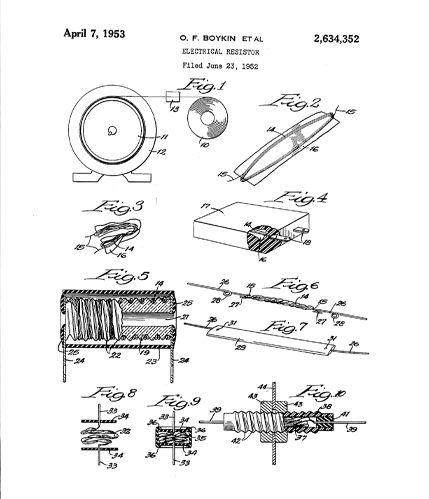 The diagram of Otis Boykin’s resistor patent. (Public Domain)
Professional Life
While working together, the two tested automatic pilot control units that were used in airplanes during World War II. Boykin later became a research engineer for P.J. Nilson Research Labs before he chose to continue his education.
Boykin then enrolled in the Illinois Institute of Technology in 1946. But after two terms, Boykin dropped out of school. Some say that his family ran out of tuition money. But in an interview with the Dallas Morning News, Boykin said he quit school to focus on his career.
Boykin reunited with Fruth and formed their own company called Boykin-Fruth Inc. shortly after World War II ended. Boykin focused his research on electronics, specifically on the resistors inside them. In 1959, Boykin’s hard work paid off when he received a patent for his first resistor. This new resistor made it possible to use an exact amount of resistance safely. The resistors could then be customized to meet a specific purpose.
Resistors
Two years later, Boykin was given another patent for an improved resistor. This second generation resistor could withstand extreme changes in temperature and pressure and was also cheaper and easier to mass produce.
Soon, variations of Boykin’s resistor were in high demand, but not just for radios and televisions. IBM sought the resistor and started using it to build computers, and the U.S. government purchased the resistors for guided missile systems.
Resistors were soon used in new electronic devices. In 1957, Medtronic founder Earl Bakken, developed the first battery-operated, wearable pacemaker using Boykin’s resistor technology. Pacemakers are electronic devices that use a steady electrical pulse to stimulate the hearts of patients who have an irregular heartbeat.
Before Bakken’s invention, pacemakers were large external devices that had to be hooked up to the patient. Boykin’s invention allowed them to be portable and implanted inside a patient’s body.
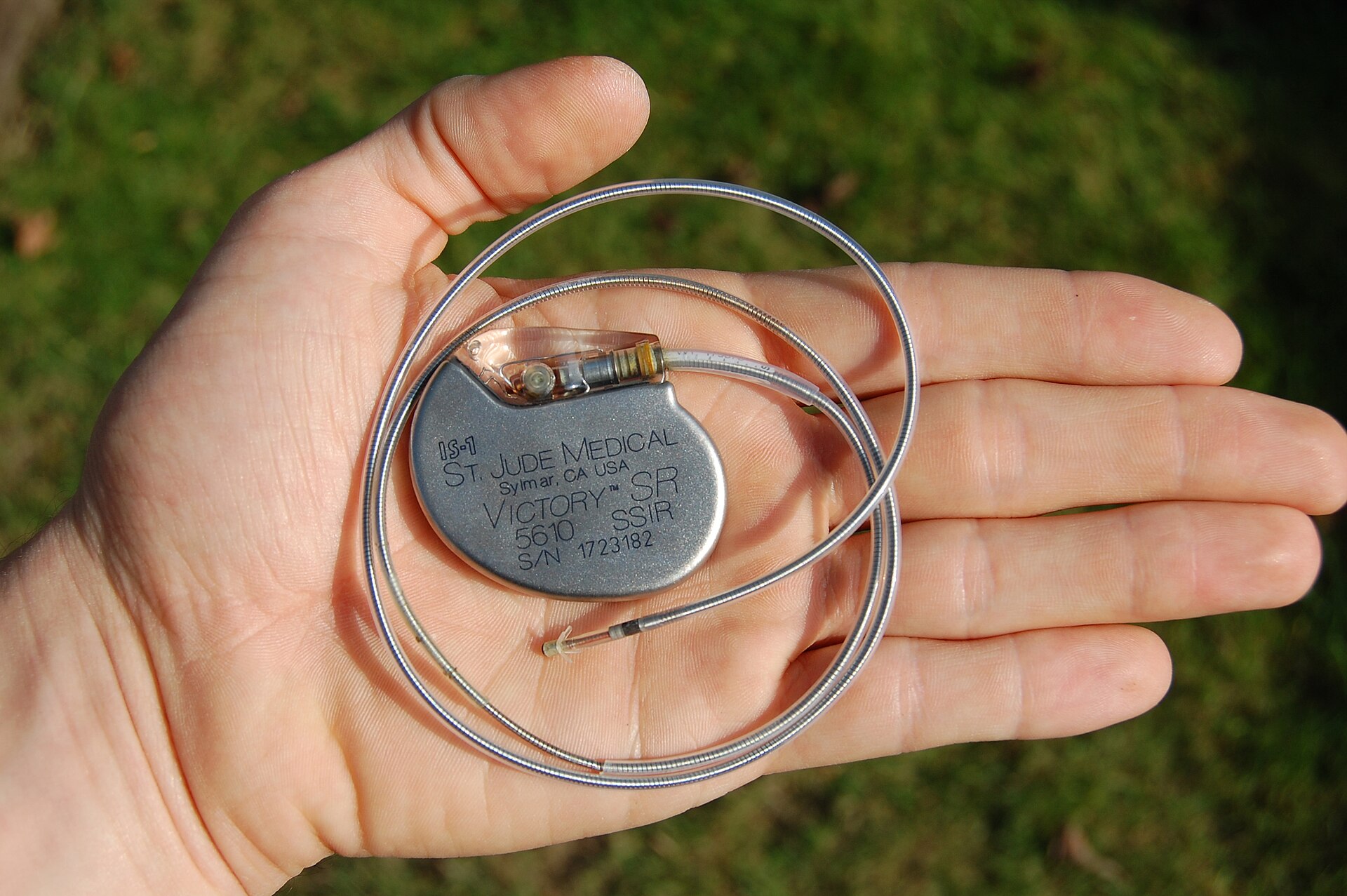 The artificial pacemaker was created using resistors that Boykin invented. (Stevenfruitsmaak/CC BY 3.0)
Boykin continued his career as a consultant for the United States and France from 1964 until his death in 1982. During this period, he invented an electrical capacitor in 1965 and an electrical resistance capacitor in 1967. He is also credited with inventing consumer products like the burglar-proof cash register and a chemical air filter.
Throughout his career, Boykin earned over 25 patents for his various inventions. Ironically, Boykin died of heart failure in 1982 at the age of 61 despite all of his efforts in inventing the first pacemaker. He was posthumously inducted into the National Inventors Hall of Fame in 2014.
What arts and culture topics would you like us to cover? Please email ideas or feedback to features@epochtimes.nyc