



In February 1986, theoretical physicist Richard Feynman stood before a presidential commission tasked with uncovering the root cause behind the Space Shuttle Challenger disaster, a midair explosion that took the lives of all seven crew members on board just over a minute after liftoff.
Feynman was an integral part of the commission, and the focus of his demonstration that day was the shuttle’s O-rings, a group of circular, rubber components acting as sealants in the shuttle’s rocket boosters. Feynman picked up an O-ring, clamped it, then submerged it in ice water. When he removed it from the water and clamp, the O-ring didn’t re-form to its original shape, showing how low temperatures prevent the gaskets from properly sealing off gasses.
His demonstration shortly after the tragedy marked a turning point for the investigation. The frigid early morning temperature during the shuttle launch hovered around 36 degrees Fahrenheit, causing the O-rings to lose elasticity and fail. Because the demonstration was nationally televised, many became acquainted with the enigmatic genius that day, though he had accrued many accolades already.
Over the course of Feynman’s career, he assisted with the development of the atomic bomb and taught at premier institutions such as California Institute of Technology and Cornell University. More than 20 years before his famous demonstration, he received a Nobel Prize for his contributions to the field of quantum electrodynamics in 1965.
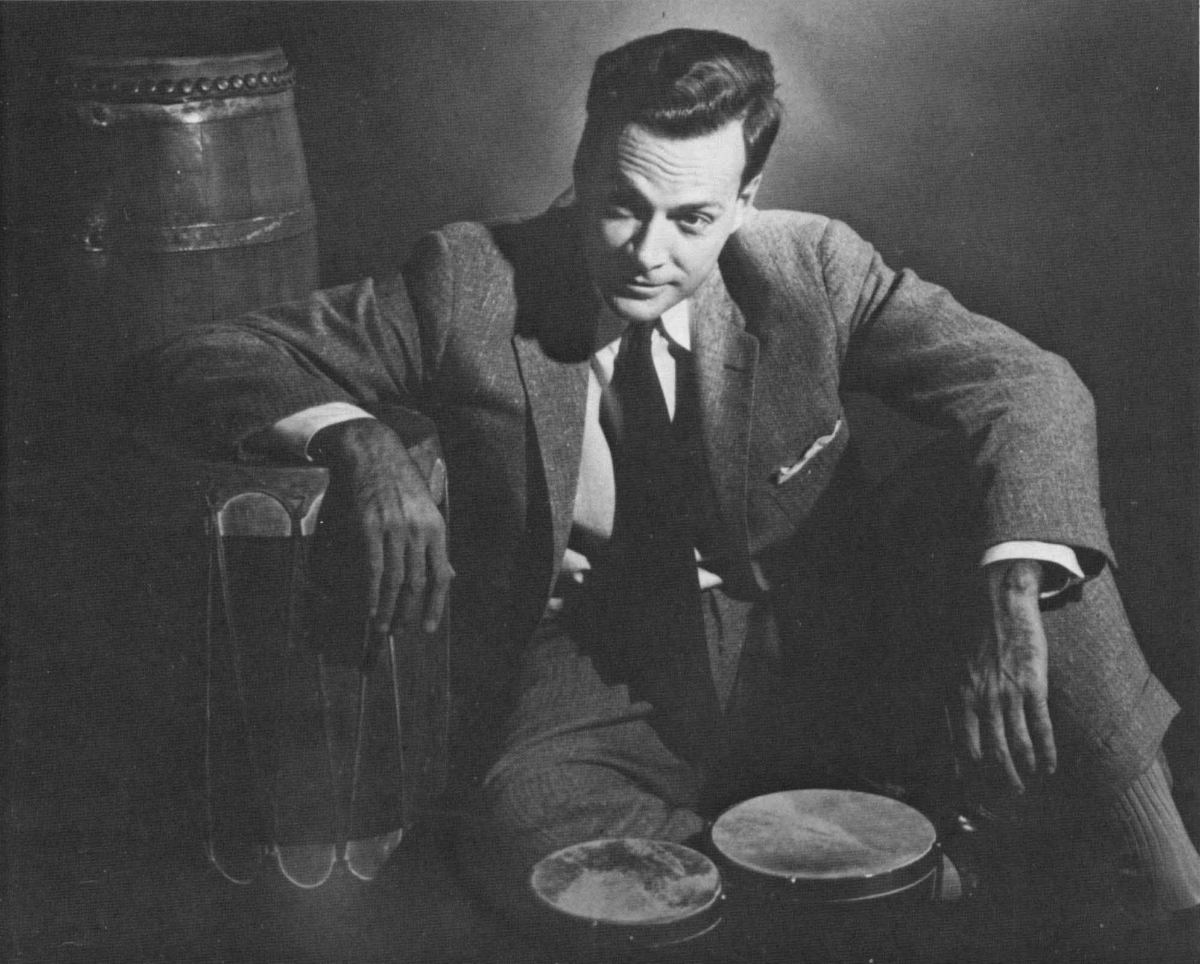
Much has been written about Feynman’s accomplishments in science. But a lesser-known fact is that he was a passionate amateur musician. And for the scientist, music was no rival to fields of mathematics. A pianist who once had a surprise opportunity to meet Feynman said the physicist found similarities between melody and the cosmos. He told the piano player, “Music is like space—expansive, to be discovered by performer and audience, filled with untold riches and imagination, beauties and romance.”
The Connection Between Music and Physics
Feynman fell in love with music the same way he fell in love with science, by looking up. When fellow musician Welz Kauffman, former managing director at classical music organization True Concord, met the physicist at an event, the two struck up a conversation about music. He found it interesting that Feynman approached music as a hobby with the same fervor in which he approached science professionally.
“He loved all types of music, especially pieces that allowed his visual imagination to run wild and was particularly fascinated by musical depictions of that which is above us,” Kauffman explained of the Nobel Prize winner.
Feynman isn’t the only scientist to be captivated by a world of melody. Tona Kunz, a science writer with Symmetry magazine, pointed out that the arts and sciences are more connected than people may realize.
“Music and physics go back a long way. The Greeks used musical constructions to explain the orbits of planets. Albert Einstein played the violin. Werner Heisenberg played piano. Richard Feynman played bongos. Even today, college courses and popular science books such as Brian Greene’s ‘The Elegant Universe’ use musical analogies to explain string theory,” Kunz wrote.
Samba Dances and Orchestra Pits
Feynman was an enthusiastic percussionist, playing the bongos and conga drums before trying his hand at other instruments. He used rhythm and repetition to unwind, spark creative thinking, and even assist him in the classroom. He was a dedicated and entertaining professor, bringing his bongos to class to use during some of his lectures.
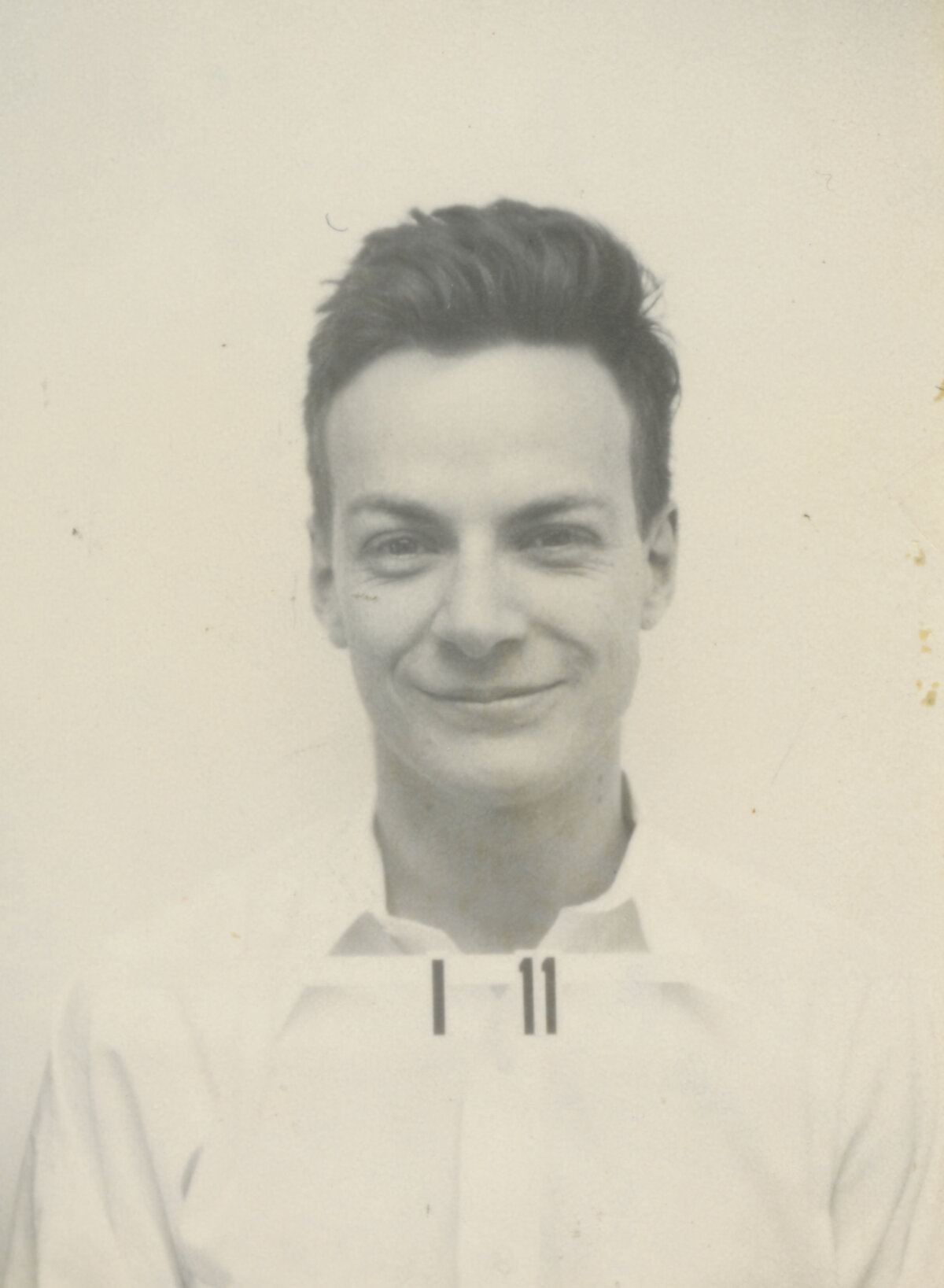
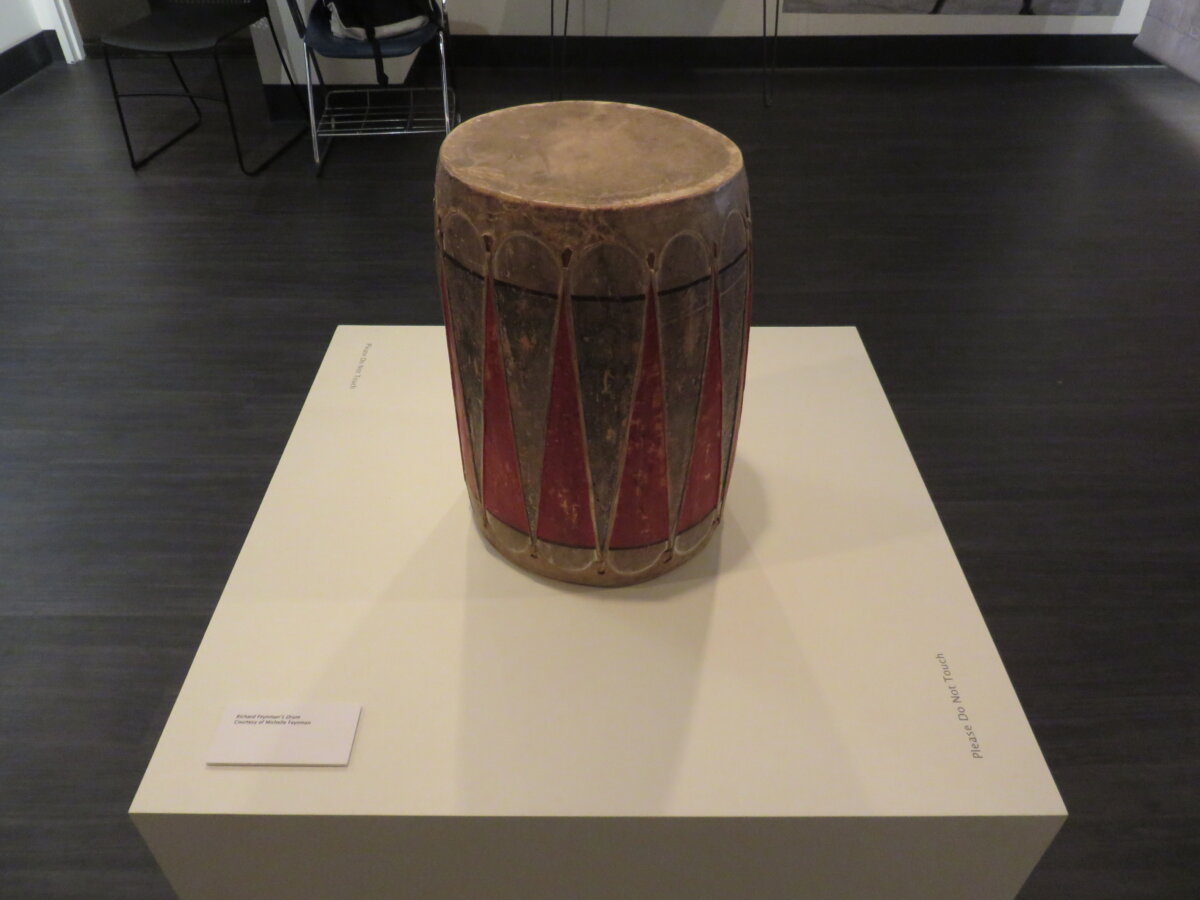
While working on the atom bomb in Los Alamos, New Mexico, he picked up tips and tricks from scientists and soldiers who held jam sessions in their downtime. He eventually experimented with other percussive instruments, like the Brazilian frigideira, Portuguese for “frying pan” and perfect for the samba dance.
He could also occasionally be found in orchestra pits, assisting the percussion section during musical performances at Caltech. He often played with his friend Ralph Leighton, who collaborated with Feynman for his biographical projects, and the two percussionists provided a rhythm section for a ballet production that received international attention. The physicist touched on his relationship with music in one of his books, “’Surely You’re Joking, Mr. Feynman!’: Adventures of a Curious Character,” key contributor Peggy Feltmate noted for Nexus Percussion.
“He shares some wonderfully crazy tales about drumming on Indian drums in Los Alamos, and about learning the frigideira in the samba bands of Brazil, and his collaboration on a ‘Caribbean ballet’ danced entirely to percussion that eventually made its way to Paris. He particularly enjoyed learning Watutsi and Nigerian rhythms from Africa and studied with anyone ‘who would have him as a student.’”
His performances could get eccentric, like his off-the-cuff, bongo-backed song-chant “Orange Juice” about his preferred beverage, written while battling cancer. But his approach to music was underscored by universal learning principles worth remembering no matter what one is studying.
Learning as a Way of Life
Feynman felt most alive when learning something new, then applying it to what he already knew.
“He learned Portuguese so he could understand more at a physics conference in Brazil, and he studied dance so he could move better while drumming. Everything in his life was based on the sheer joy of learning,” Bill Bois explained in an article for online community TNOCS.
Feynman viewed the act of learning as a journey, not simply a means to an end. “He watched, listened, experimented, and treated mistakes as part of the fun.”
For the author and educator, learning wasn’t just a part of his job description, it was a way of life. Bois stated: “He looked at drumming with the same curiosity he brought to physics, travel, and pranks—as a way to connect with people, to understand movement and rhythm from the inside, and to squeeze every possible drop of joy out of being alive,”
We may never reach the title of Nobel Prize winner or play drums in a Brazilian samba band, but we can tackle whatever subjects interest us with the same vigor and curiosity as Feynman. His learning philosophy was as effective as it was nuanced—and filled with an insatiable curiosity and a zest for life.
“Study hard what interests you the most,” Feynman once advised, “in the most undisciplined, irreverent and original manner possible.”
What arts and culture topics would you like us to cover? Please email ideas or feedback to features@epochtimes.nyc
