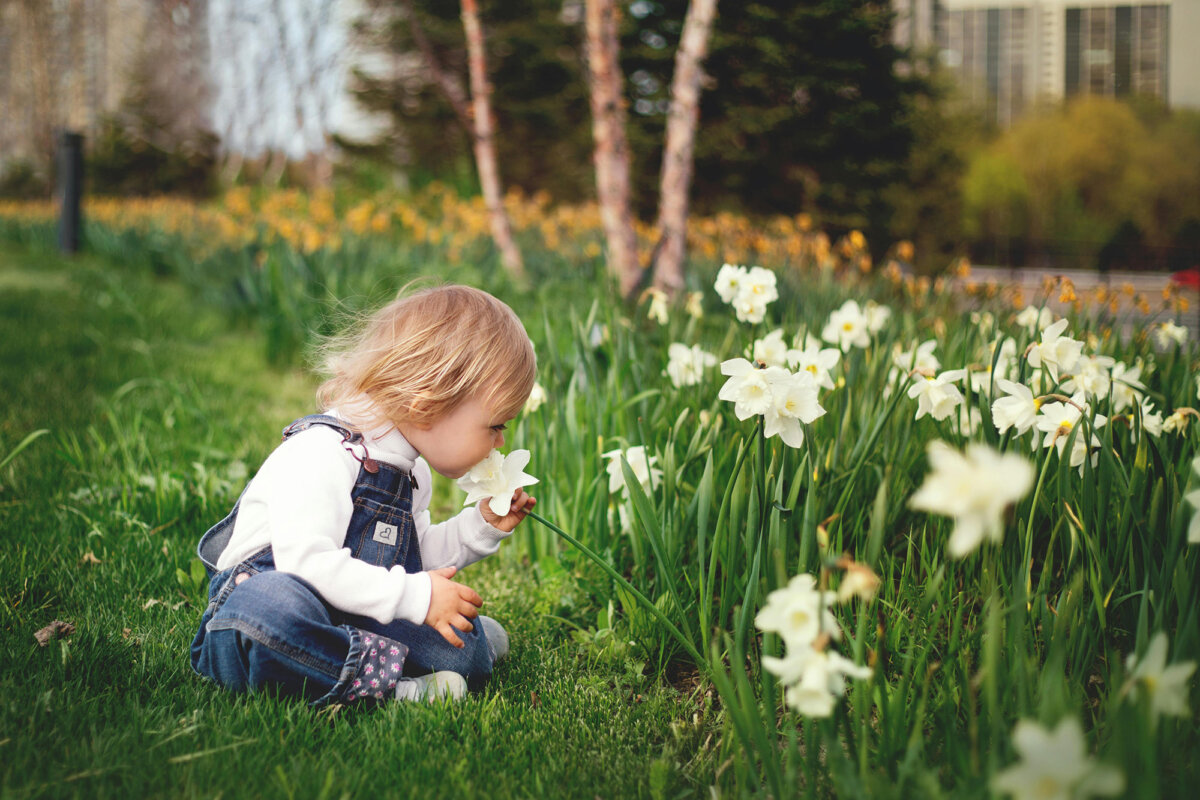
When does education begin? Is it when the child first enters a preschool classroom? Or first opens a book? Or first asks an important question? I would suggest it begins before all these incidents, important though they may be.
Education is an opening up of the whole person to the light of reality, so that body, mind, and soul may be suffused with the luminosity of being. And that light begins to shine—growing incrementally brighter, like early morning sunrays—in early infancy. Thus, the process of education begins long before the first schoolbook is ever opened.
Our specialized, mechanistic, assembly-line educational model has trained us to think of education solely as book learning, technical know-how, and career training, but it is so much more than that (even though it contains those elements). True education forms the whole person, from limbs to emotions to memory to imagination to intellect, and that formation begins in the home at the very dawn of life.
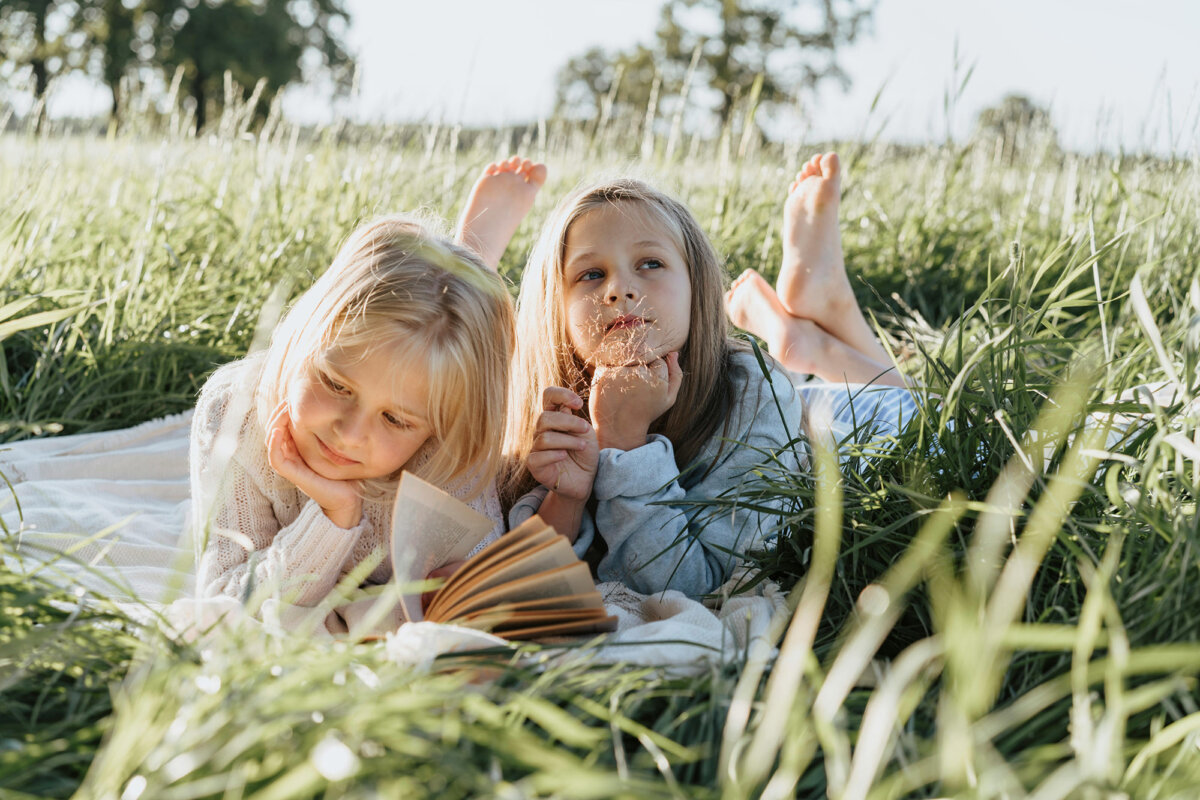
Aristotle taught that all knowledge begins in the senses, and for this reason the first level of education takes place at the level of the body and its raw contact with the world around it. Educator John Senior—drawing on Aristotle and other traditional thinkers—envisioned three main stages or dimensions of education, following one upon the other, although with plenty of overlap. The first stage is the gymnastic stage, in which students develop their physical and sensory abilities, attuning their bodies to the world, learning to hear, taste, and see the hum, rhythm, and rush of natural things. The second stage is the poetic, where the sensory experiences of the first stage ignite the imagination, which is developed through poetry, song, dance, art, myth, and the like, guiding the gaze upward toward the great deeds of the past and the mysteries of nature, such as the stars. The third stage is the philosophical, where students delve deepest into abstract concepts and the acquisition of wisdom, which can now be erected firmly on the healthy development of the body, emotions, imagination, and memory accomplished in the first two stages.
A student and scholar of Senior’s, Fr. Francis Bethel, put it this way in “John Senior and the Restoration of Realism”: “Gymnastic begins in experience and ends in delight; poetry or music begins in delight and ends in wonder; philosophy begins in wonder and ends in wisdom.” In Senior’s own words, quoted by Bethel, “the first two stages of education allow the mind to become awake” in order to truly benefit from the pursuit of wisdom at the highest level.
With this framework in mind, we can understand how the gymnastic and poetic stages of education begin long before formal education starts, and continue to occur inside and outside of classroom contexts throughout life. This is why the home environment we offer our children is so important—it’s already beginning to mold their bodies, senses, imaginations, and emotions. As Bethel writes, “It is here [in the home] that we receive the first good or bad impressions that form our soul.” For Senior, it’s profoundly important to feed children’s minds with healthy, beautiful, noble, and elevating sensory inputs—from the pictures they see to the music they hear to the objects they touch with their hands.
The question, then, is how to craft a home environment that supports and sustains a child’s healthy development in the gymnastic and poetic modes. Fortunately, the steps are simple and commonsense, though it’s unusual, maybe, for people to treat the home environment with this kind of intentionality.
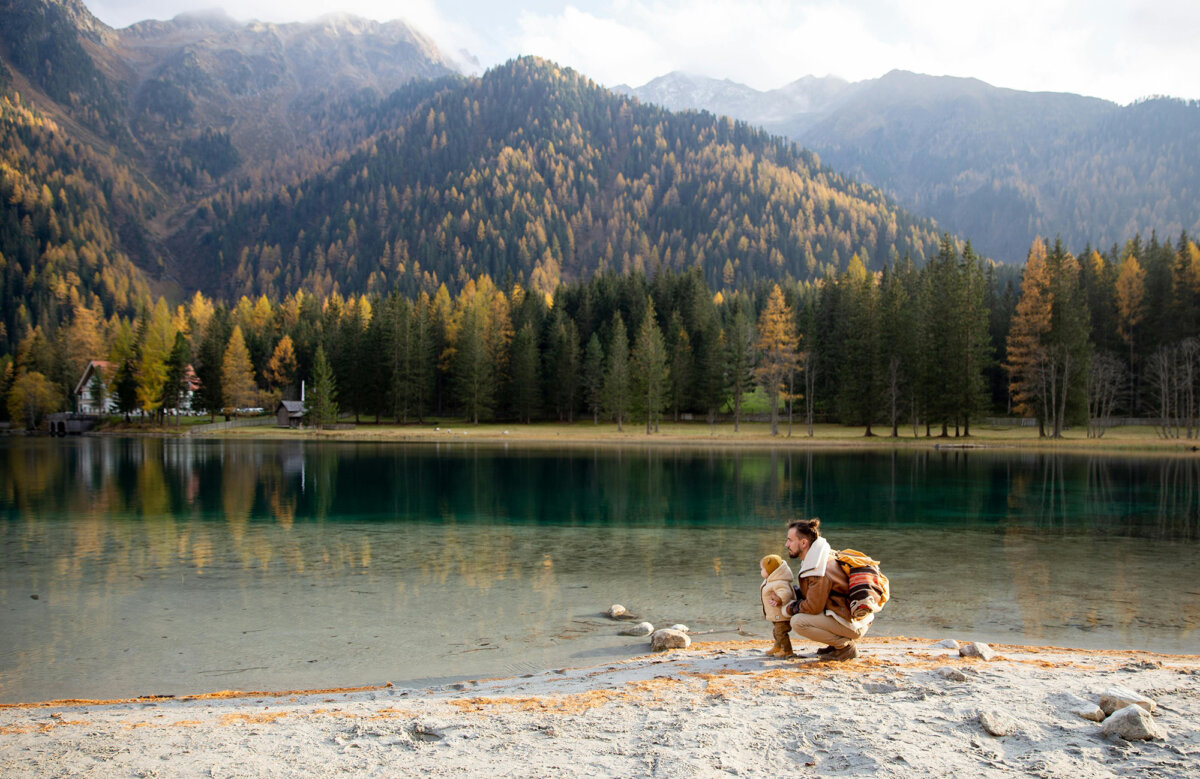
Fr. Bethel, drawing on Senior’s thought, provides some guidance. He begins by saying the home should be close to nature—if not in the country, at least with access to natural spaces nearby, such as a park. He adds, “The home itself should be of natural materials, simple and attractive, with harmonious wood furnishings and handmade objects.” Human beings are born with an innate affinity for nature and natural materials, and using them in the home begins to foster in the child this healthy connection to creation. Senior and Bethel also advise living among and caring for animals, both wild and domestic, because they begin to awaken in children wonder and responsibility and the joy of intercommunion between beings. Recreation should similarly take place close to nature and should have a more active than passive character—walking in the countryside, drawing, playing sports, climbing trees, building forts, and so on.
Similarly, young children’s imaginative worlds should be stimulated and populated with wholesome stories, characters, nursery rhymes, and poems—a “garden of verses” they can wander in, to adapt the title of a famous collection of poetry for children by Robert Louis Stevenson. Few things feed the imagination and shape children’s worldview more profoundly than story and the arts. Little children can be introduced to this world by having their parents read out loud to them. Senior wrote, “Twelve years of formal instruction in reading and composition given in modern schools are ineffective substitutes for the habit of poetry and prose which can be acquired only by reading the best aloud night after night … The best instruction in writing is good reading and good talk.” In other words, Senior advocates for a home environment steeped in arts, crafts, nature, stories, songs, and other traditional pastimes.
The task of early childhood education is not complicated, though it is sometimes difficult. It involves guiding a child’s gaze to the elemental things of life—trees, grass, birds, water, music, mothers, fathers, family, heroes, villains, courage, love, hope—and helping them to perceive the goodness of these things, showing them how to drink deeply of the sweet, nourishing nectar that flows out of creation, like the pure sap of maple trees in early spring or the sticky honey from the hives of drowsy bees in late summer.
It’s a quiet, patient task, one that involves both shielding the child from negative influences while inviting in positive ones. The good educator, especially at this early stage, is the adult who opens the windows to let the sunshine in, and keeps the glass clean so that the light isn’t distorted or dirtied.
But here’s where the education of even a very small child becomes most difficult. It requires a kind of inner conversion on the part of the parent or teacher, who, in order to create a physical and spiritual atmosphere of goodness and wholesomeness, must work to eradicate from his or her own life potential sources of contamination (chemicals, processed food, technology addiction, consumerism, crass entertainment, and so on.).
Despite the challenges, it’s a beautiful calling, and a gift to parents as much as to children. For in the child’s wondering eyes the tired eyes of the parent can see the world reflected, perhaps more clearly. And the call to educate a child is always a call to reeducate ourselves, in a continual process of turning back to what really matters.