Italian Renaissance great Raphael is popularly known as the painter of sweet Madonnas and “The School of Athens” at the Vatican.
Raphael painted some 34 Madonnas, even though he died at just 37. His Madonna paintings may hold the key to why his work is universally affecting.
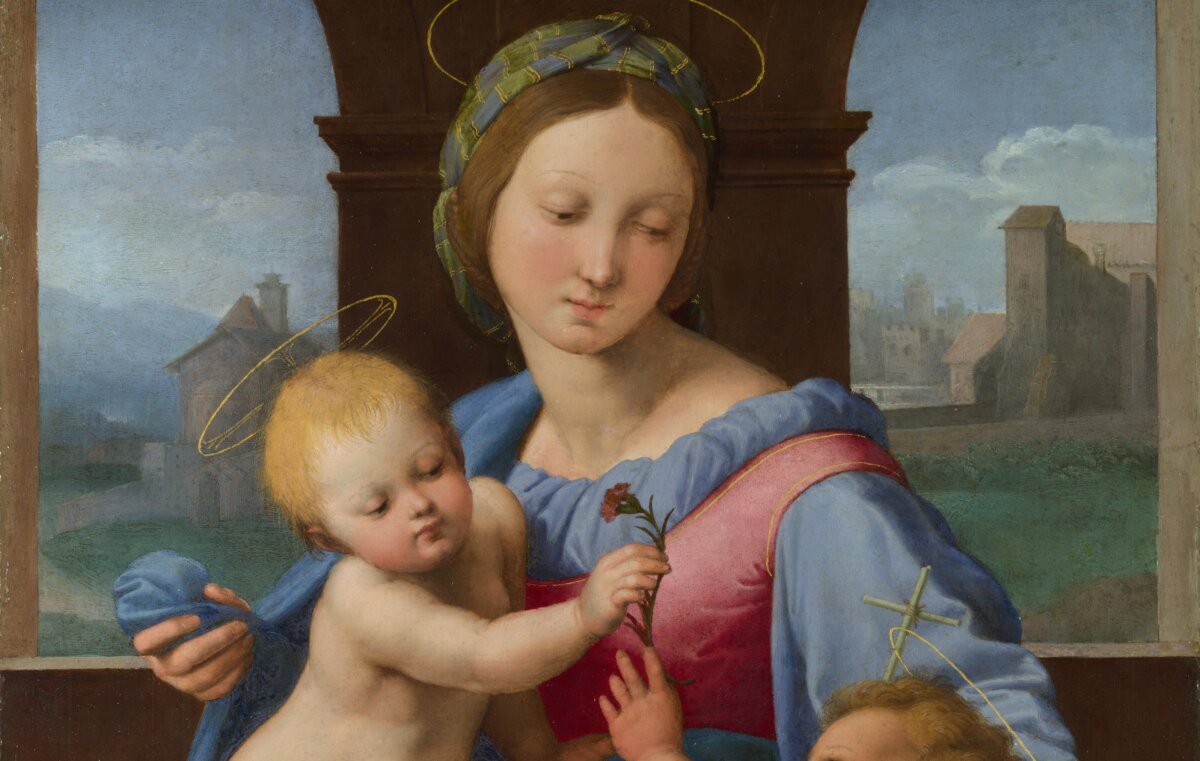
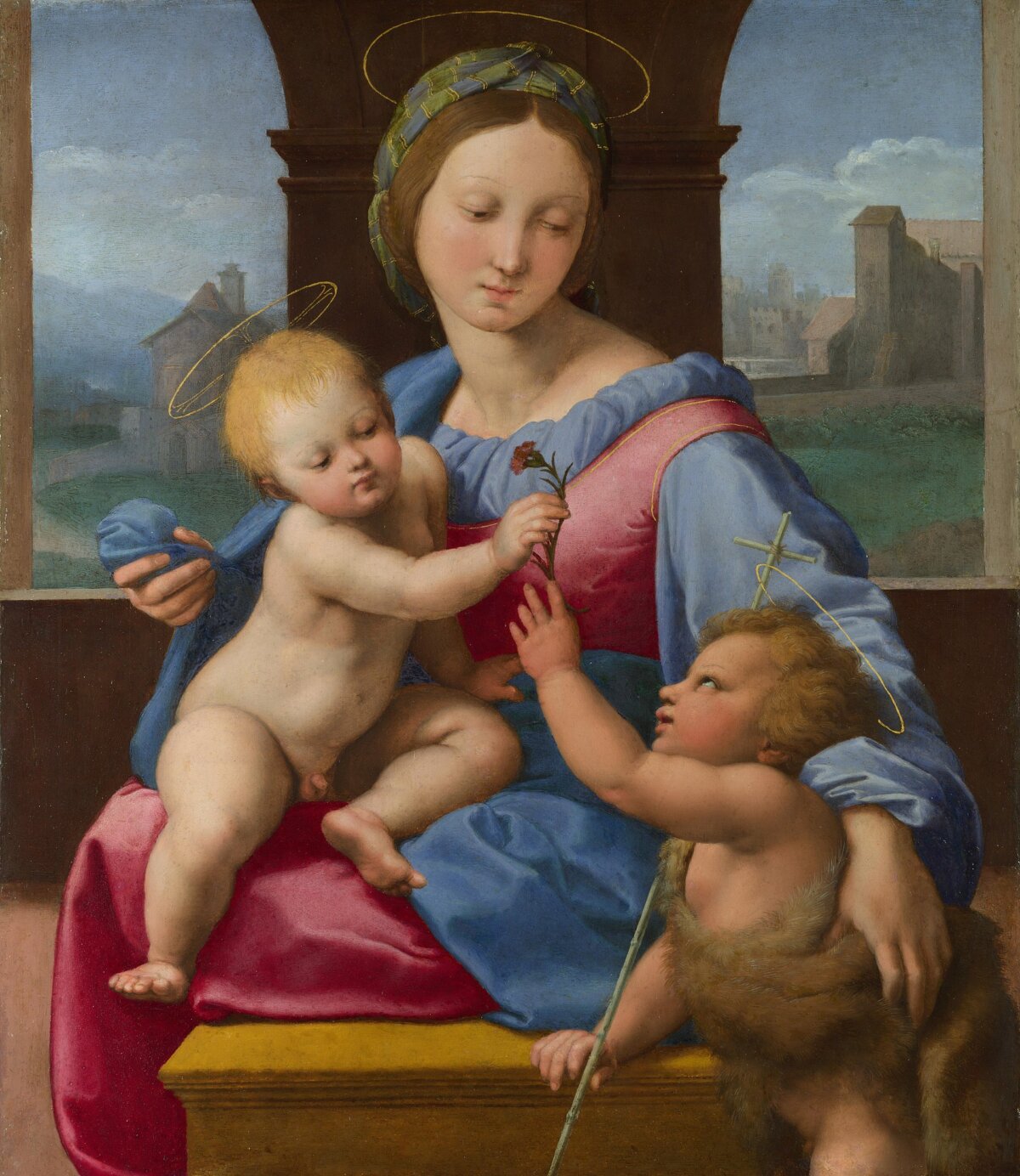
In “The Garvagh Madonna,” Raphael rendered a confident Christ child. The child’s mother, Mary, has just released him from her arms so that he can pass a carnation to the toddler who will later become St. John the Baptist. Mary pulls John close to her, encouraging him to take the flower. Take away the classical Roman costumes, and this could just be a loving family portrait of a mother and her charges.
Raphael made the scene relatable to us all by its emotional power, but the image means more. It crosses the divide between heaven and earth. There are tender moments between a mother and child that, at the same time, reinforce the Christian message. “It is a way of communicating the Christian message through a quasi-universal experience, which everybody recognizes and which engages people emotionally more than anything else,” Matthias Wivel, a curator at London’s National Gallery, told The Epoch Times.
The Christ child appears wise beyond his years. He knows that he’s on earth for something greater. He sits in his mother’s lap, but she doesn’t support him. While John wears fur for warmth, the Christ child is naked; he wants nothing of this world, except to teach others to follow God.
Clearly, Raphael’s “The Garvagh Madonna” is a religious scene, but what seems to come forth, as in many of his paintings, is grace and also the harmonic tension between the spiritual and the earthly—the divine and the human realms.
What arts and culture topics would you like us to cover? Please email ideas or feedback to features@epochtimes.nyc