On Feb. 4, 1938, Thornton Wilder’s play “Our Town” opened at Miller’s Theatre in New York City. Its first Broadway appearance attracted several luminaries, including movie mogul Samuel Goldwyn.
Goldwyn was a hard man, fierce and determined, and blunt when sharing his opinions. Some of his comments became known as Goldwynisms, like “When I want your opinion, I’ll give it to you” and “I never liked you, and I always will.” His son, Samuel Goldwyn Jr., said of his father: “He was a very tough guy to work for, very demanding, and he had great respect for talent, but he was difficult for people, even if they were very talented.”
So why was Goldwyn openly weeping after seeing “Our Town?”
In “A Note from a Nephew,” Wilder’s nephew Tappan Wilder mentions the snuffling and tears in audiences during performances of “Our Town,” and “an uncle who was a playwright laughingly instructing a crowd of family and friends rushing from the table to get to the theater in time: ‘Take your handkerchiefs, take your handkerchiefs.’”
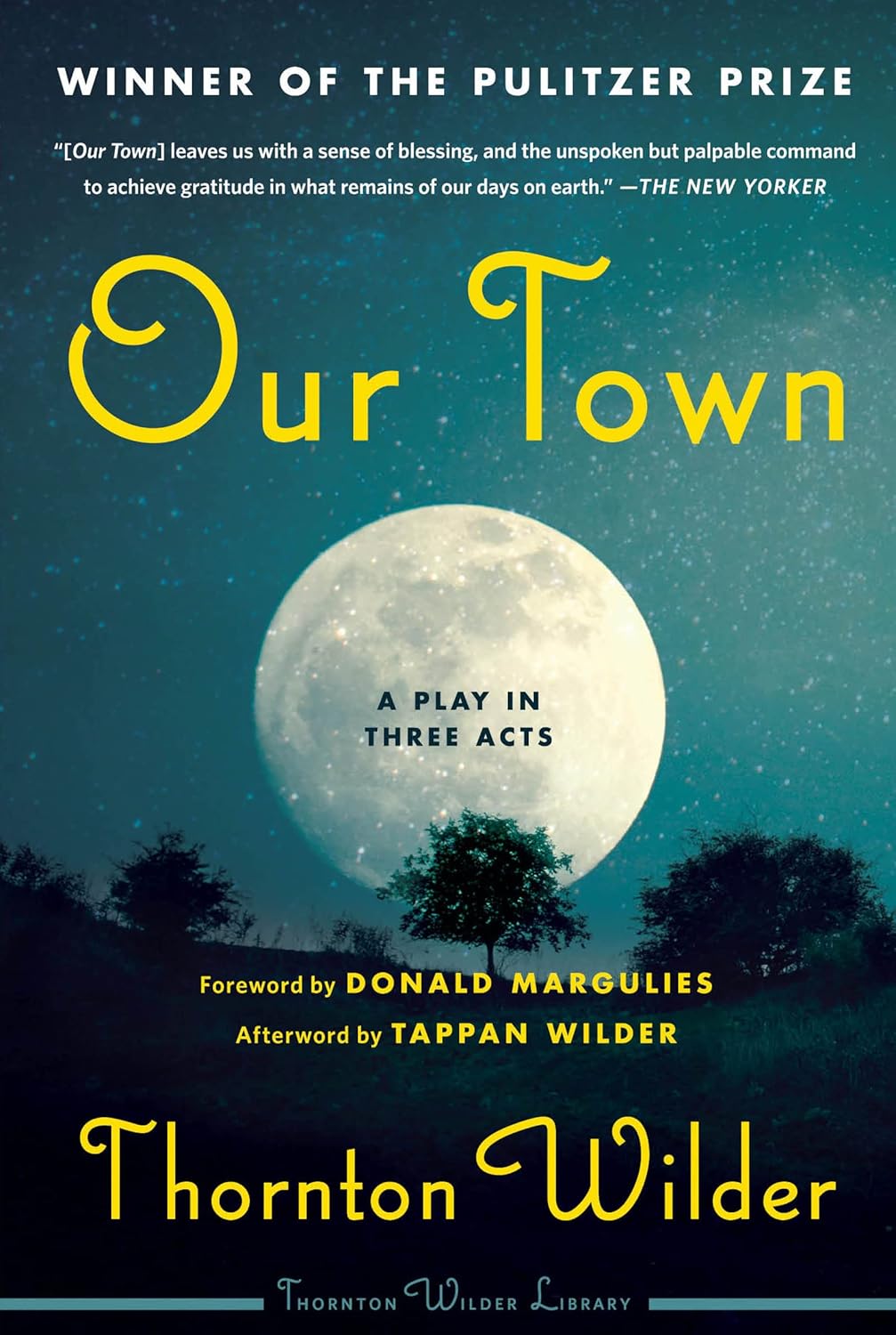
Again, why does the play elicit tears? As I know from several years of teaching “Our Town,” many people, including me, choke up just reading the play aloud, especially the final scenes. What does that reaction say about both the play and the audience?
A Play About the Commonplace
On its surface, “Our Town” seems the perfect candidate for a Broadway dumpster. Set in the fictitious New Hampshire village of Grover’s Corners between 1901 and 1913, the drama spotlights ordinary people and the stages of life: birth, work, marriage, and death.
Wilder directed that the stage be bare of all but minimum furniture and props: tables, a few chairs, a ladder, and so on. The focus is on the Webb and Gibbs families, particularly on George and Emily, who live next door to each other, go to school together, marry, and then confront tragedy and grief. Any such bare-bones synopsis makes “Our Town” sound trite and boring.
Early reviews were mixed. Variety, for instance, slammed it as “not only disappointing but hopelessly slow” and “the season’s most extravagant waste of fine talent.” Eleanor Roosevelt said that watching it “moved and depressed” her.
Yet positive reviews and word of mouth turned out multitudes of theatergoers, intrigued by Wilder’s artistry and the minimalist sets, the stories of everyday life, and the sometimes-omniscient Stage Manager, who broke theater’s fourth wall by speaking to the audience as if they were tourists newly arrived in Grover’s Corners.
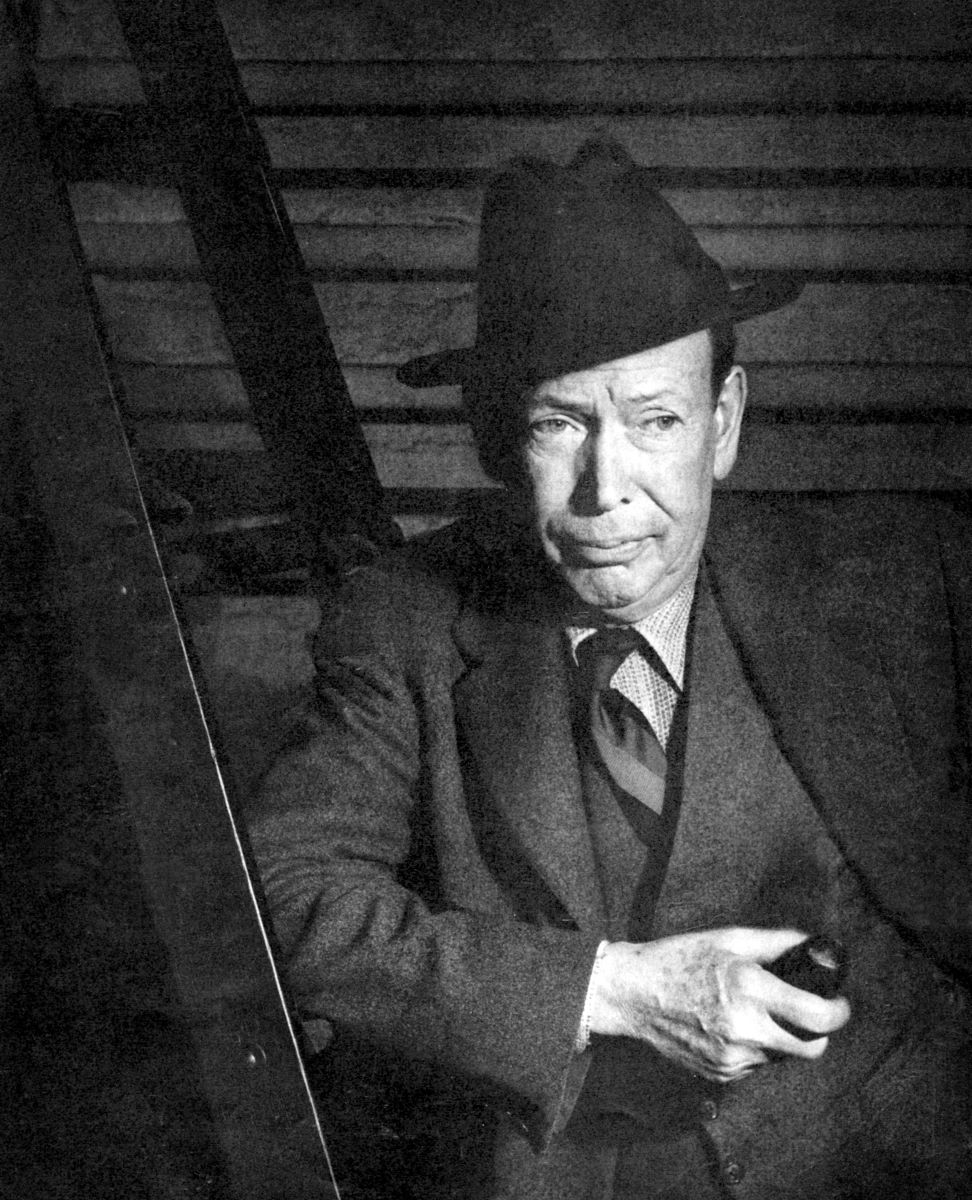
The production had a long run for the time on Broadway, and in the 20 months after being licensed for amateur production, it played “in at least 658 communities across the United States and in Hawaii and Canada.” On May 2, 1938, judges unanimously awarded “Our Town” the Pulitzer Prize for Drama.
Again, we might ask: Why was a play about a seemingly unremarkable town and its residents so popular?
Nostalgia
Nostalgia can be a cheap emotion, idealizing the past when confronted with dullness or difficulties in the present. A 7-year-old sees Dad going off to work in an office and dreams of becoming a cowboy. Poet Edward Arlington Robinson’s “Miniver Cheevy” considered himself cheated by time, “born too late,” a dreamer who “loved the days of old/ When swords were bright and steeds were prancing” and who, unlike Wilder, “cursed the commonplace” of his own era.
Yet a deeper and more profound desire also applies to nostalgia, a universal longing for community and home. Ulysses journeyed for 10 years to make his way home. Soldiers in wartime dream of home and the life they knew there. Even the popular television show “Cheers” with its bar “where everybody knows your name” echoed this yearning for a place to call home.
Some of the sophisticates who attended the Broadway premiere of “Our Town” had doubtless grown up in towns like Grover’s Corners. They would have recognized Wilder’s men and women, boys and girls, as types belonging to their own past as well. They would have related to the play as a lived emotional experience.
Today, Americans are more scattered across the country and less connected to place than the citizens of Grover’s Corners, yet Wilder’s play has retained its appeal. Somewhere within us there lingers the hunger for home.
But there are forces other than nostalgia tugging at our emotions.
Beauty and Tragedy Masked in the Ordinary

Near the beginning of the play, Dr. Gibbs, George’s father, is returning home in the wee hours of the morning after delivering twins. He runs into Joe Crowell Jr., a newspaper carrier for the Sentinel, published by Mr. Webb, Emily’s father. The boy and man exchange a few pleasant words of conversation, then go on their way.
Here, the Stage Manager interrupts, saying to the audience, “Want to tell you something about that boy Joe Crowell there.” He then describes Joe’s future, head of his high school class, a scholarship to the Massachusetts Institute of Technology, his ambition to be an engineer, and then ends with “But the war broke out and he died in France.—All that education for nothing.”
Some may be appalled by that harsh summing up, but it’s precisely what many folks in Grover’s Corners, and ten thousand other small towns, would say. The blithe ordinary words cover the young man’s accomplishments and the waste of a life but neglect the deeper tragedy of the death of a human being.
Throughout the play, such clichés abound, signaling the route we take through our days without pausing to look, really look, at the meaning in our encounters with the world and with loved ones. In Act I, for example, while commanding her son Wally to put his schoolbooks away and eat his breakfast, Mrs. Webb says, “I’d rather have my children healthy than bright,” to which Emily responds: “I’m both, Mama, you know I am. I’m the brightest girl in school for my age. I have a wonderful memory.” Mrs. Webb responds, “Eat your breakfast.”
It’s a casual surface conversation, the kind of small talk we engage in every day. Only in Act III does the playwright strip away our blinders and transform such ordinary moments into the extraordinary.
‘Just Look at Me’
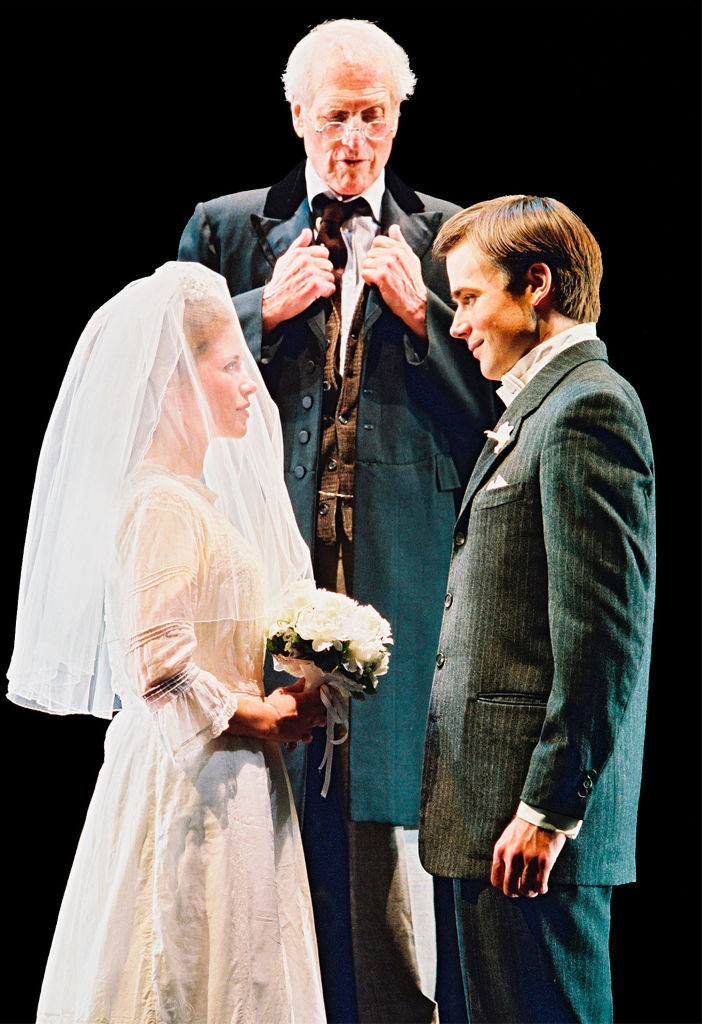
George and Emily marry at the end of Act II. They own and work a farm and have a child, but Emily dies following complications from the birth of a second baby. She then finds herself in the town’s cemetery among the other dead in a sort of purgatory.
When Emily discovers that she can go back and visit parts of her life, the dead caution against it, with Mrs. Gibbs warning: “Our life here is to forget all that, and think only of what’s ahead, and be ready for what’s ahead.” The Stage Manager also warns her against the visit: “You not only live it, but you watch yourself living it.”
Ignoring their advice, Emily crosses the border into the land of the living and her 12th birthday. Just as the Stage Manager warned, she is both the girl celebrating her birthday at breakfast and the woman from the graveyard. The latter quickly realizes the blithe disregard of the living for the world around them, blind to the swift passage of time and ignorant of the mysteries and miracles concealed beneath routine, troubles, and even love. She implores her mother to wake from this sleep: “Oh, Mama, just look at me one minute as though you really saw me. … Let’s look at one another.”
The birthday scene ends this way:
Emily (in a loud voice to the Stage Manager): “I can’t. I can’t go on. It goes so fast. We don’t have time to look at one another.”
She breaks down sobbing. The lights dim on the left half of the stage. Mrs. Webb disappears.
“I didn’t realize. So all that was going on and we never noticed. Take me back—up the hill—to my grave. But first: Wait! One more look.
“Good-by, Good-by, world. Good-by Grover’s Corners … Mama and Papa. Good-bye to clocks ticking … and Mama’s sunflowers. And food and coffee. And new-ironed dresses and hot baths … and sleeping and waking up. Oh, earth, you are too wonderful for anybody to realize you.”
She looks toward the Stage Manager and asks abruptly, through her tears: “Do any human beings ever realize life while they live it?—every, every minute?”
Stage Manager: “No.” (pause) “The saints and poets—maybe they do some.”
Emily: “I’m ready to go back.”
Here in this moment of poignant beauty and grief, we find the fundamental cause of those tears in the audience. For in that moment, Wilder takes us beyond the play on the stage into the real play—the drama in which we ourselves participate daily.
Few of us are poets, fewer still are saints, but in that brief slice of a scene, Wilder shows us that if we so choose, we can stop and really look at one another and apprehend with fleeting wonder the marvels surrounding us. Those tears are born as much from the beauty of this realization as from the sorrow and joy of being human.
See the play if you haven’t done so.
And don’t forget the handkerchiefs.
What arts and culture topics would you like us to cover? Please email ideas or feedback to features@epochtimes.nyc