



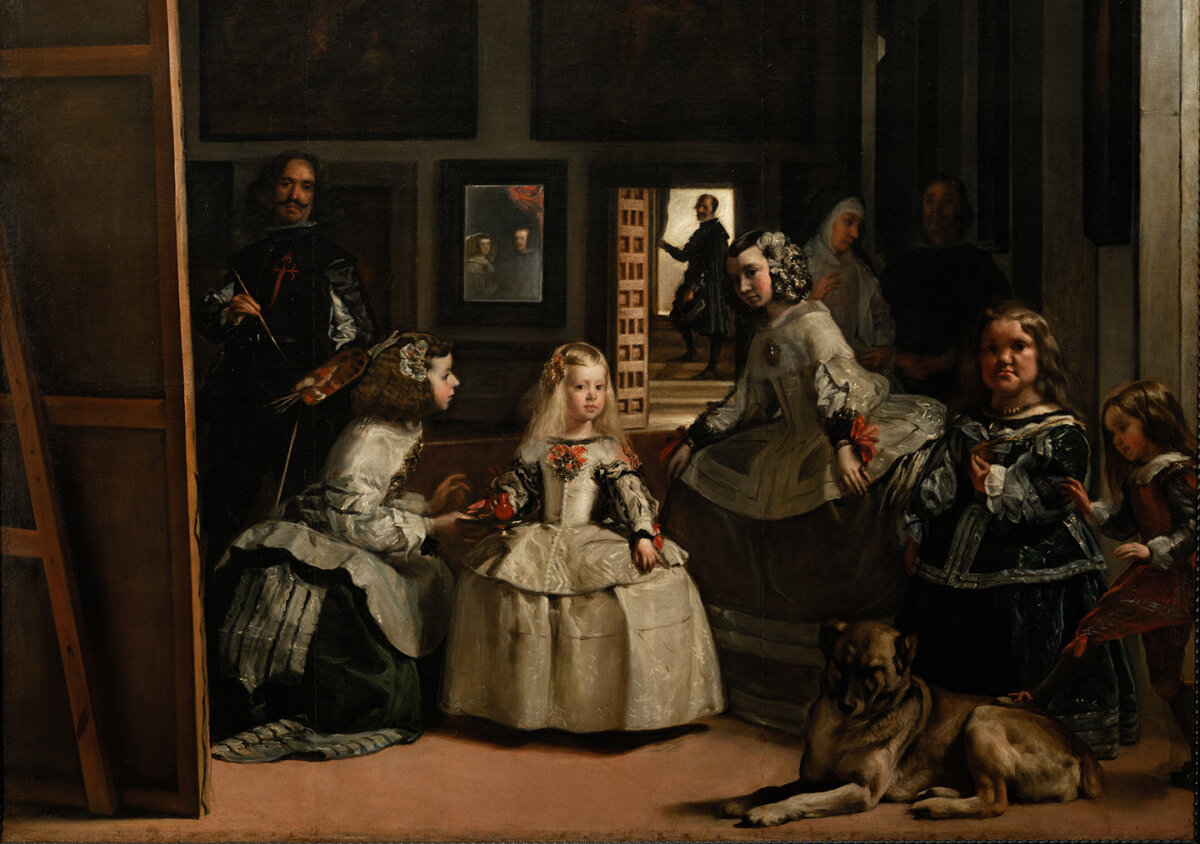
Few paintings manage to look back at their viewers more enigmatically than “Las Meninas” (1656). With each passing century, Diego Velázquez’s masterpiece has prompted new debate and interpretation concerning every level of its creation. Why did Velázquez (1599–1660), Spain’s greatest portraitist at that time, include his audience as a subject painted? Why did he paint himself with the Infanta Margarita and her entourage looking out at the viewer? And why, how, when, and by whom was the bright red emblem of the Order of Santiago painted onto Velázquez’s coat?
These mysteries remain largely unsolved, but a common element might align their explanations. Velázquez was driven in every aspect of his personal and professional life by a calling to elevate and dignify everything and everyone he painted. At a time when the Madrid court’s austerity inclined all painters to focus on religious subjects, Velázquez’s portraits ennobled common workers, court dwarves, and slaves with such sincere precision that they were adored by even the aristocracy.
His lifelong wish to be knighted and accepted into the Order of Santiago was finally granted in 1658, two years after the supposed completion of “Las Meninas.” How, then, did the emblem of the Order appear in a finished painting? The subtle yet blazing red emblem continues to confuse scholars and conservationists in dating the painting’s conception and completion.
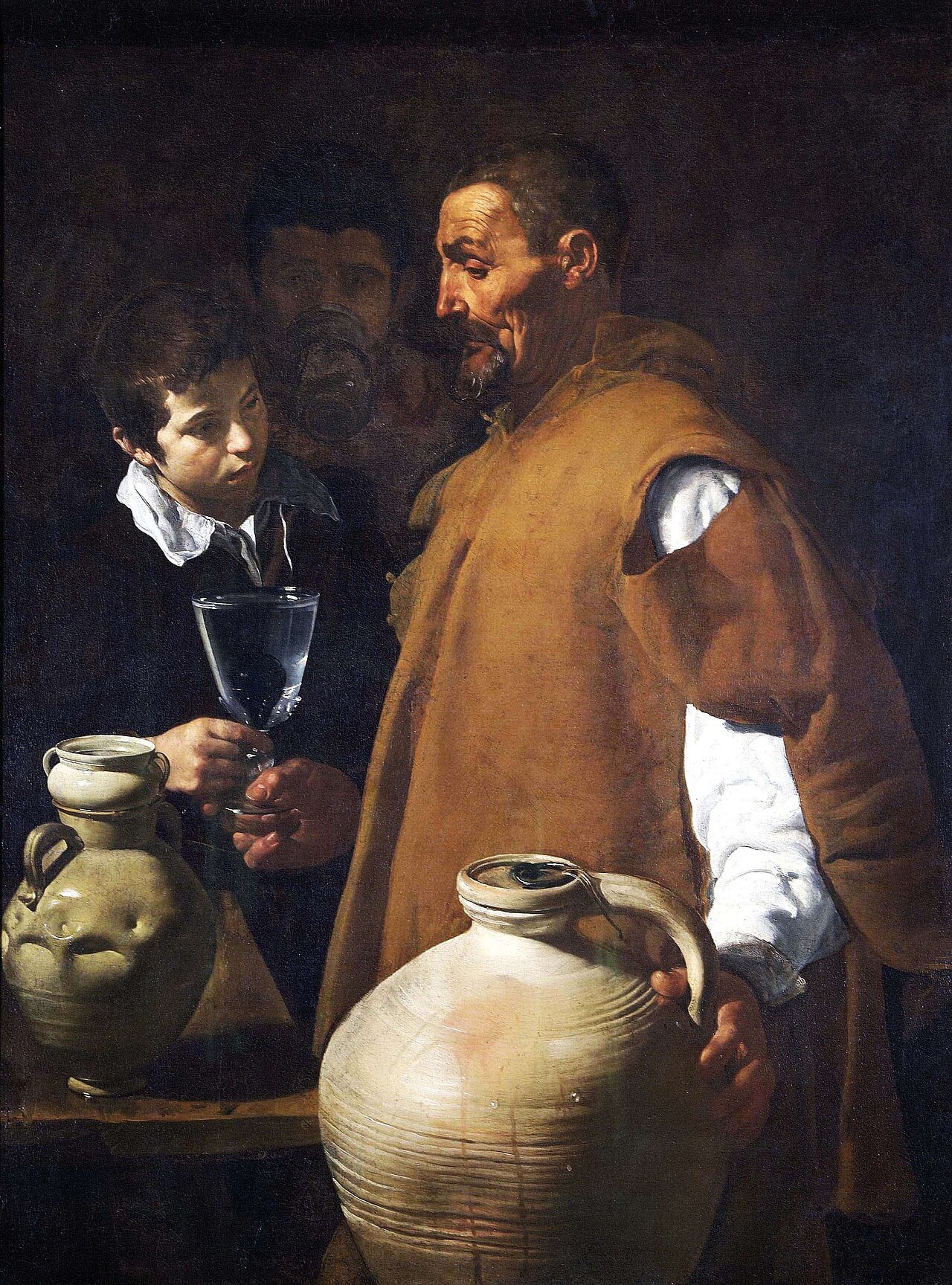 “Waterseller of Seville,” circa 1620, by Diego Velázquez. Oil on canvas, 42 inches by 31 4/5 inches. Apsley House, London. (Public Domain)
Escaping Family History
Velázquez’s family history remains unclear due to his father’s likely lineage as a “converso” or Jewish convert to Catholicism during the Inquisition. If Velázquez had Jewish ancestry, it would have disqualified him from being knighted by the Order of Santiago. To bypass this technicality, he would either have had to prove his purely Catholic lineage or receive endorsements from the king or pope.
 “An Old Woman Cooking Eggs,” 1618, by Diego Velázquez. Oil on canvas. 39 1/2 inches by 47 inches. Scottish National Gallery, Edinburgh. (Public Domain)
Fortunately, much more is known about Velázquez’s childhood in the Moorish quarter of Sevilla thanks to his primary teacher, Francisco Pacheco, who became his father-in-law and his first biographer. By Pacheco’s account, the young Velázquez was intensely disciplined and virtuous. He was also a perfectionist.
After six years as an apprentice, Velázquez began taking commissions. His early works explore the style known as “bodegón,” which typically depicts everyday scenes of food, kitchens, or pantries. Velázquez’s incredibly detailed rendering of eggs frying in a pan or water dripping down an urn’s side did more to popularize the genre than any artist before him. His potential was so undeniable that Pacheco arranged his travel to Madrid to paint for the young King Philip IV.
A Patron for the Ages
In 1621, at age 16, Philip IV assumed control of the largest empire in the world. While his reign suffered significant military losses to France, the Netherlands, and Portugal, it’s remembered as the high point of the Spanish Golden Age of art and literature. Before the 17th century, Spanish painters hadn’t been recognized or celebrated to the same degree as musicians or poets. They were instead viewed as craftsmen performing a less intellectual, more mechanical skill.
But Philip IV was so taken with Velázquez’s first portrait of him that he decreed all of his future portraits would be painted by Velázquez alone. The king admired Velázquez’s skill and character enough to make daily visits to his studio to watch him paint.
The many portraits of Philip IV provide a unique opportunity to observe the evolutions of both artist and patron. By accounts from multiple diplomats, Philip IV was known for his ice-cold, emotionless receptions. Comparing these portraits over the decades demonstrates both Velázquez’s evolving style and his extremely consistent, photorealistic precision in capturing his subjects’ expressions. The slow but undeniable slipping away of Philip IV’s pokerface in his final portraits reveals a king weighed down by military and personal losses, but nonetheless committed to commemorating his chapter of the Spanish Golden Age through Velázquez’s genius.
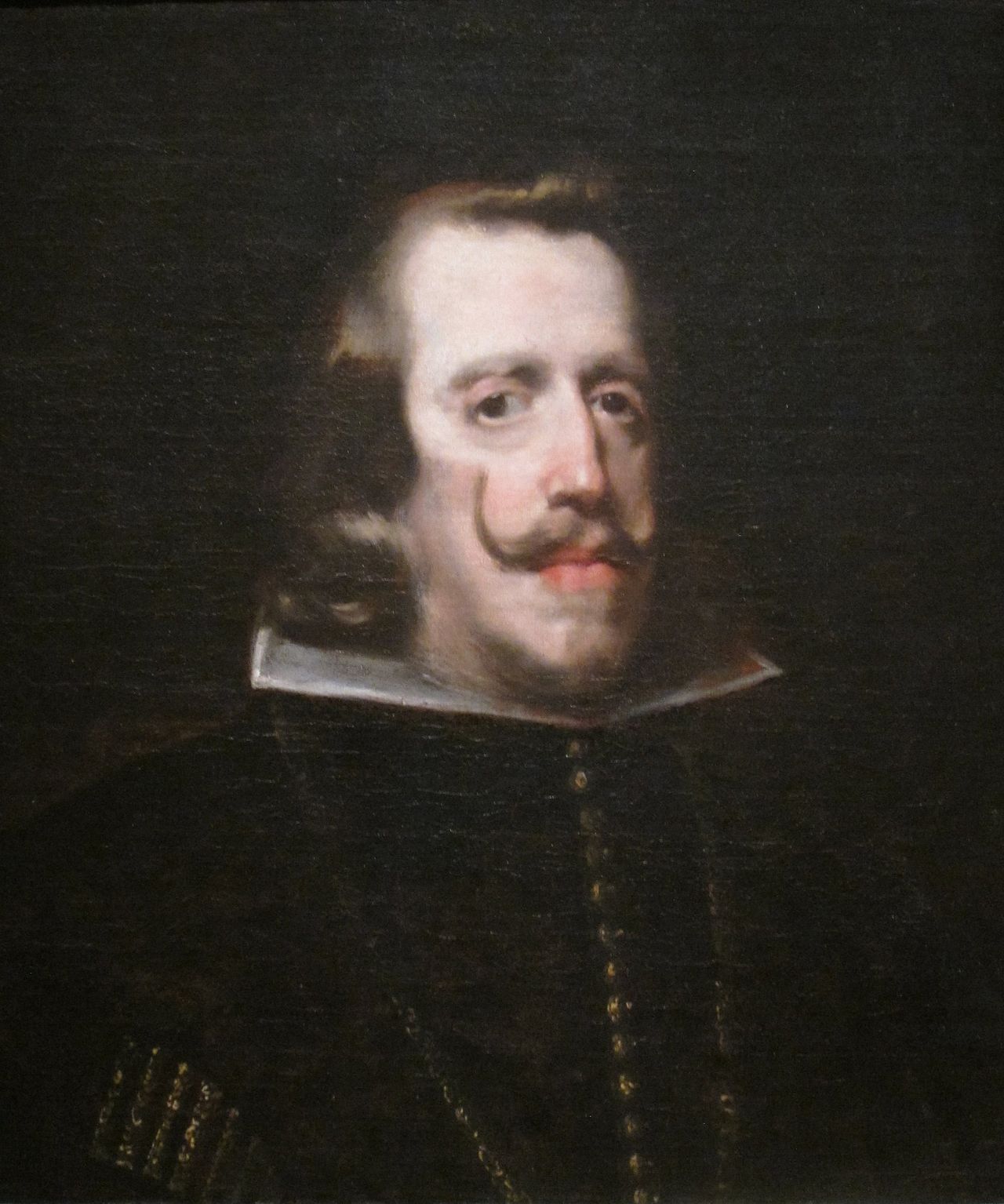 “Philip IV, King of Spain,” circa 1655, by Diego Velázquez. Oil on canvas, 22 1/5 inches by 19 3/4 inches. Cincinnati Art Museum, Cincinnati. (Public Domain)
A Reverent Rising Star
Whether because he grew up in the Moorish quarter of Sevilla or because of his inherent virtue, Velázquez’s prominence at the Madrid court never effected his devotion to painting his subjects with reverence and dignity. It was a custom in the Habsburg courts to employ people with dwarfism as servants, jesters, and companions for children. Velázquez painted several portraits of the court dwarves and never characterized or accentuated their features as other artists did. One of his most beloved masterpieces remains a portrait of his own slave, Juan de Pareja, whom he freed after the painting was presented at the Pantheon in Rome during an exhibition.
From his early bodegas to these later works, Velázquez used his paintings as a means to elevate subjects of lower social classes. His paintings revealed an inherent dignity and nobility in these people. When he proudly presented them to aristocratic audiences, they consistently marveled at the subjects’ beauty. He used his talent to make a statement about who and what in art were deserving of admiration.
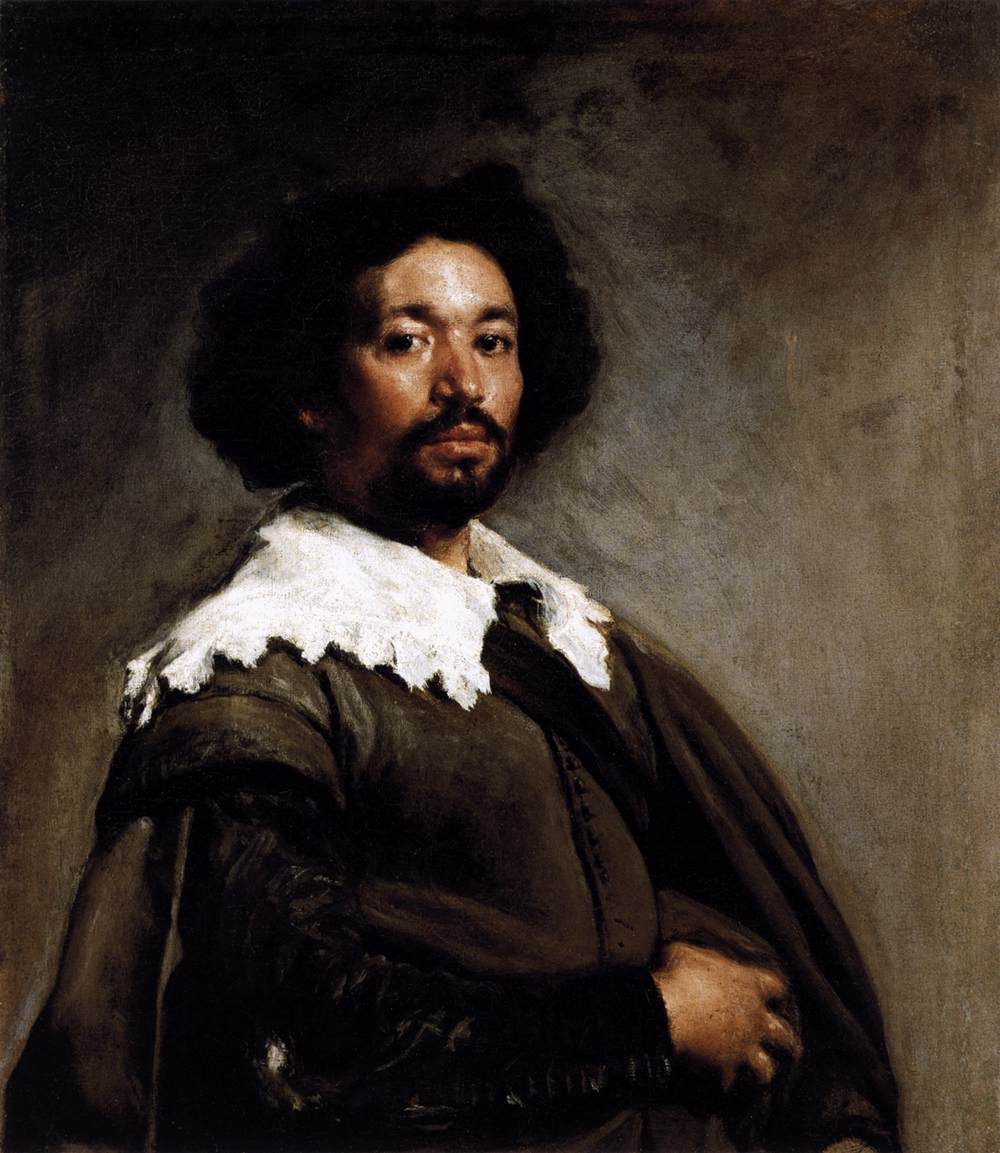 “Juan de Pareja,” 1650, by Diego Velázquez. Oil on canvas, 32 inches by 27 1/2 inches. Metropolitan Museum of Art, New York. (Public Domain)
Painting as Proposition
By 1656, Velázquez’s position as an artist and courtier was reaching its zenith. His two trips to Italy had procured hundreds of paintings and sculptures for the king’s galleries. And, at a time when Philip IV’s only heir was the 5-year-old Infanta Margarita, he commissioned a new painting from Velázquez which would become “Las Meninas”—arguably Spain’s most celebrated painting.
The scene is in Velázquez’s painting studio. The high walls are covered with paintings from Ovid’s “Metamorphosis,” depicting gods and mortals in artistic competition. At first glance, the Infanta Margarita seems to be the scene’s primary subject. Bathed in light from an unseen window, she is surrounded by her entourage, some of whom follow her gaze looking directly out to the viewer.
To the left of the frame, we see Velázquez himself holding a palette and brushes and also looking directly at the viewer from behind a massive canvas. The dimensions of his canvas and the colors of paint on his palette match those of the painting. At the very back of the room he places a clue for us to understand who he is painting and who they are all looking at.
A small but clearly illuminated mirror shows the faint reflections of King Philip IV and Queen Mariana of Austria. Next to the mirror, the queen’s chamberlain stands in a doorway of light. His hand resting on the doorway marks the vanishing point of the painting. The genius of Velázquez’s composition here stretches the feeling of space in the room forwards and backwards simultaneously.
The doorway carries the viewer’s eye further back into the interior of the castle, while the mirror reflects the perspective back towards the viewer. It’s possible that we are either standing next to the king and queen or that we are observing this scene through their very eyes. With so much structure, so many characters and details to take in, the viewer’s eye can’t help but circle the room, processing the entirety of the scene.
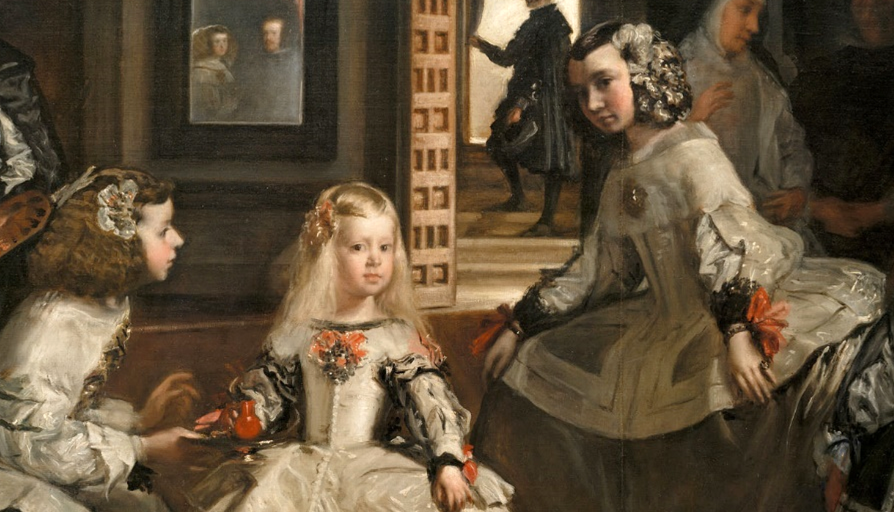 A detail from “Las Meninas” (“Maids of Honor”), 1656, by Diego Velázquez. Oil on canvas, 10 3/8 inches by 108 5/8 inches. Prado Museum, Madrid. (Public Domain)
Daring to Dream
For an artist even of Velázquez’s prominence, portraying himself painting the royal couple would have been considered inappropriate. Though this painting was intended only for Philip IV’s private chamber and not for a public audience, there is no written record of the artist’s intention for this reversal of perspective. Placing the viewer behind the eyes of the king and queen sitting for a portrait suggests Velázquez is now not only elevating himself and his subjects, but also his audience.
It’s a remarkable proposition for the capacity of a single painting to compel such contemplation. Moreover, it speaks to Velázquez’s addressing the need for Spanish society to afford painting the same recognition as music or poetry. “Las Meninas” is a clear challenge to this cultural hierarchy. It served as both Velázquez’s manifesto for elevating painting as an art form and as a petition for receiving the Order of Santiago.
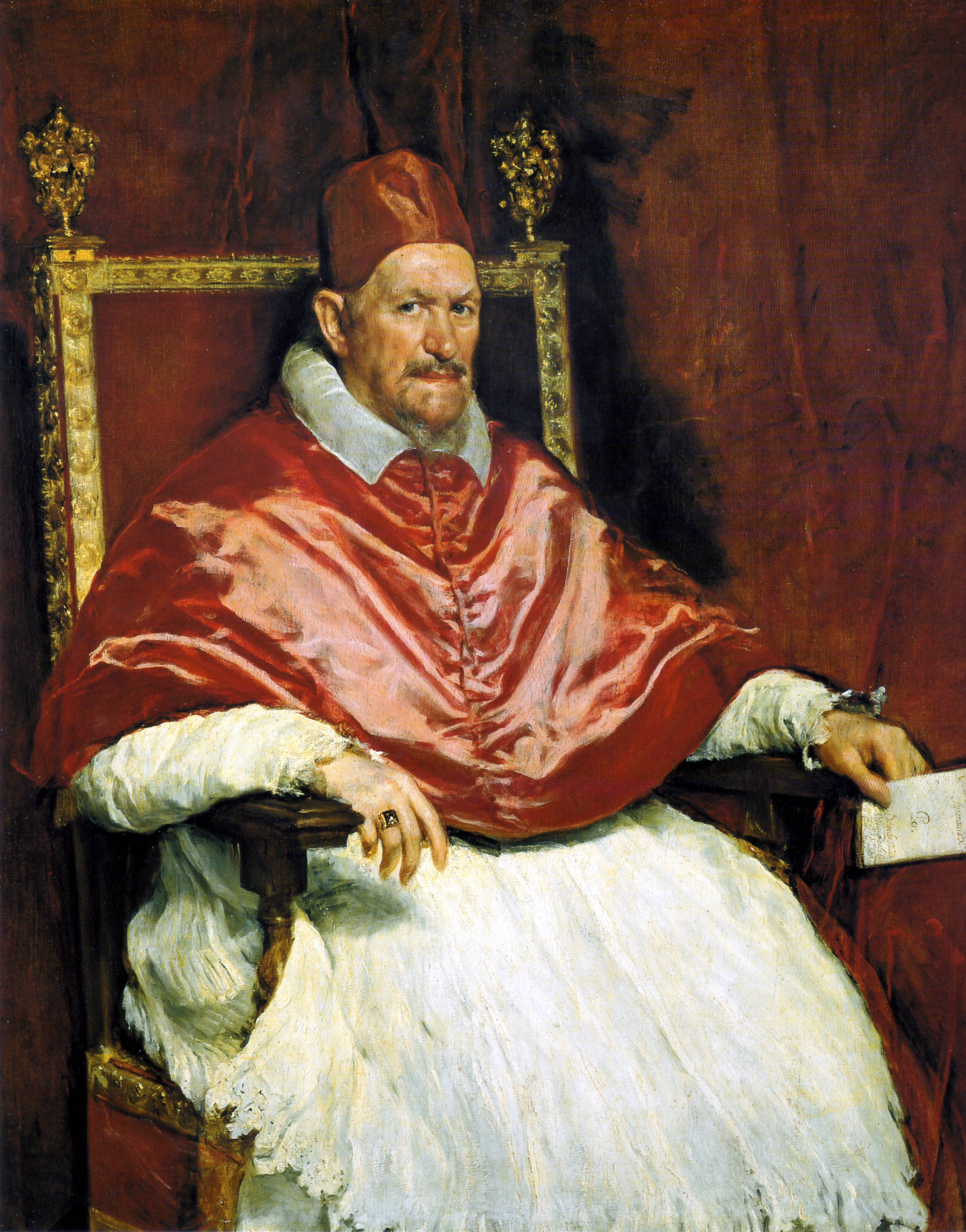 “Portrait of Innocent X,” circa 1649 to 1650, by Diego Velázquez. Oil on canvas, 55 1/2 inches by 46 4/5 inches. Galleria Doria Pamphilj, Rome. (Public Domain)
What cannot yet be confirmed is when and how the order’s mysterious red symbol was painted onto Velázquez’s tunic. If the painting was completed in 1656 when Margarita was as old as depicted, it would still be years before an extensive investigation into his family history would allow him to be knighted. Only after receiving endorsements from both Pope Innocent X and King Philip IV were suspicions about Velázquez’s Jewish ancestry finally shelved. Some have claimed either Velázquez or the king himself added the emblem onto the painting years later.
However, a restoration in 1984 revealed no extra layers of paint around the emblem, suggesting the brushstrokes were completely uniform. This mean it was unlikely that the emblem was added later. Others have claimed that either Velázquez or one of his pupils could have been skilled enough to work in the emblem without disturbing the brushstrokes.
Regardless of the emblem’s elusive origin, it remains a clear mark of victory that Velázquez prevailed in elevating not only his own social standing, but that of his subjects, his audience, and painting as an art form.
What arts and culture topics would you like us to cover? Please email ideas or feedback to features@epochtimes.nyc
