As humans, we often gather an excess of things around us, fretfully thinking, “What if we need it, but don’t have it?” This thought stems from our desire for control and, though control can be good, this particular thought and its subsequent gathering of excess goods can hinder enjoyment of life.
Lucretia P. Hale contemplates this particular tendency in her short story “The Peterkins’ Summer Journey,” using comedy to show that too many unnecessary things sabotage life’s journeys. Hale follows the Peterkins as they prepare for a journey and attempt pack almost everything and the kitchen sink.
Everything but the Kitchen Sink
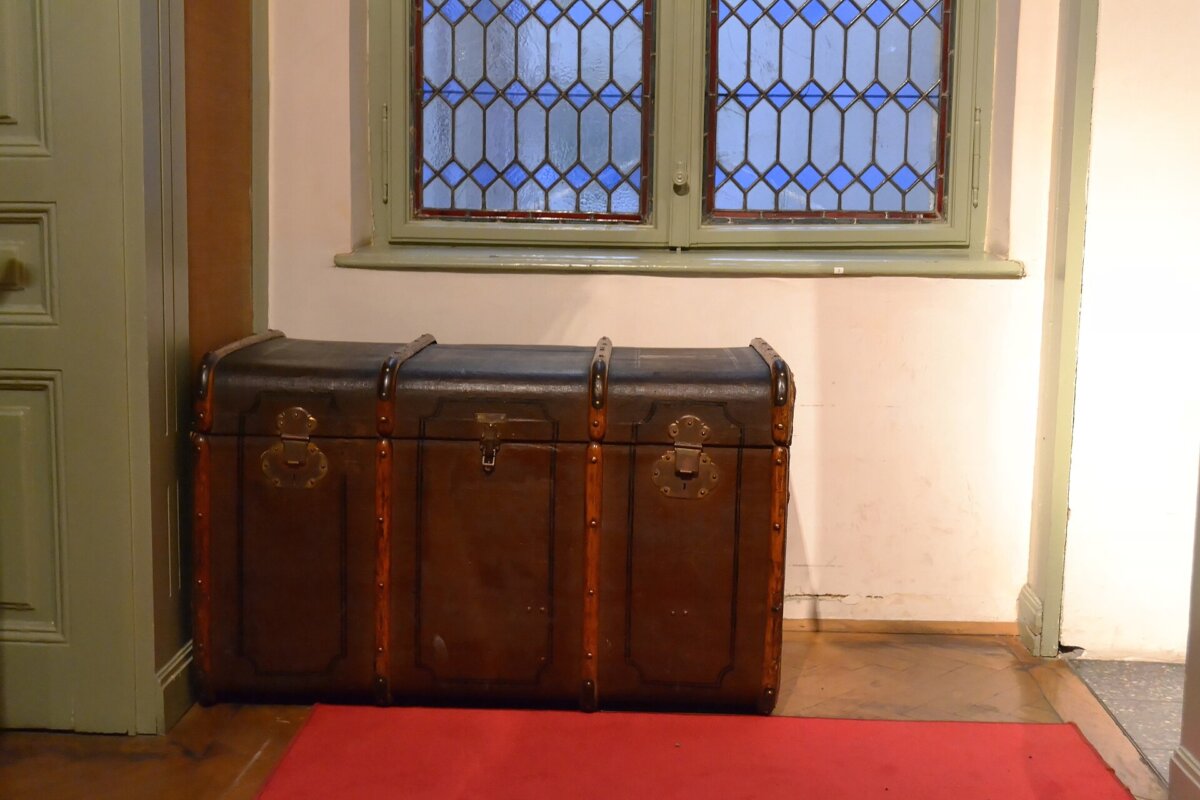
The Peterkins begin packing for the trip. Though family members have luggage, they don’t have any big enough for the whole family. Mrs. Peterkin decides to use her grandmother’s trunk, which “would hold everything they would want to carry.” She unpacks the trunk and prepares to repack it with their desired belongings.
The two youngest boys want to bring their kite, Mrs. Peterkin decides that they will need both summer and winter clothes (since weather is unpredictable), Agamemnon gathers books that he wants to bring, and Solomon John brings his spy-glass. Mrs. Peterkin’s and Elizabeth Eliza’s bonnets must also be packed, as well as Solomon John’s two hats.
To add to this list, Agamemnon brings an large dictionary and an atlas, claiming “I have never had a chance to look at them … but when one travels, then is the time to study geography.” Mr. Peterkin wishes to bring his turning-lathe, so Mrs. Peterkin packs his tool box. The little boys must take their hoops, as well as India-rubber boots. Moreover, Mrs. Peterkin puts in a hoe and shovel for everyone and some baskets.
Magnify the Necessary
After having to pack and repack all these items, Mrs. Peterkin finally fits everything into the trunk. Unfortunately, when Mr. Peterkin and the boys try to lift it, it doesn’t budge.
Solomon John reasons through their difficulty by saying: “Expressmen could lift it. Expressmen [are] used to such things.” Mr. Peterkin responds that they didn’t plan on expressing it. Moreover, they cannot take it by carriage, since the trunk wouldn’t fit in a carriage.
The family agree that the trunk is an impediment and attempt to solve how to move it. At one point, someone suggests that they could empty the trunk, take it to the station, and then pack all the items back in at the station. Elizabeth Eliza rejects this idea, since the station is such a public place. Having exhausted all of their ideas, the Peterkins cancel their trip, since they cannot move the trunk.
The tide turns a little while later when a friend gives Mrs. Peterkin a “good-sized family trunk.” However, it’s a smaller trunk and the Peterkins must figure out what to take.
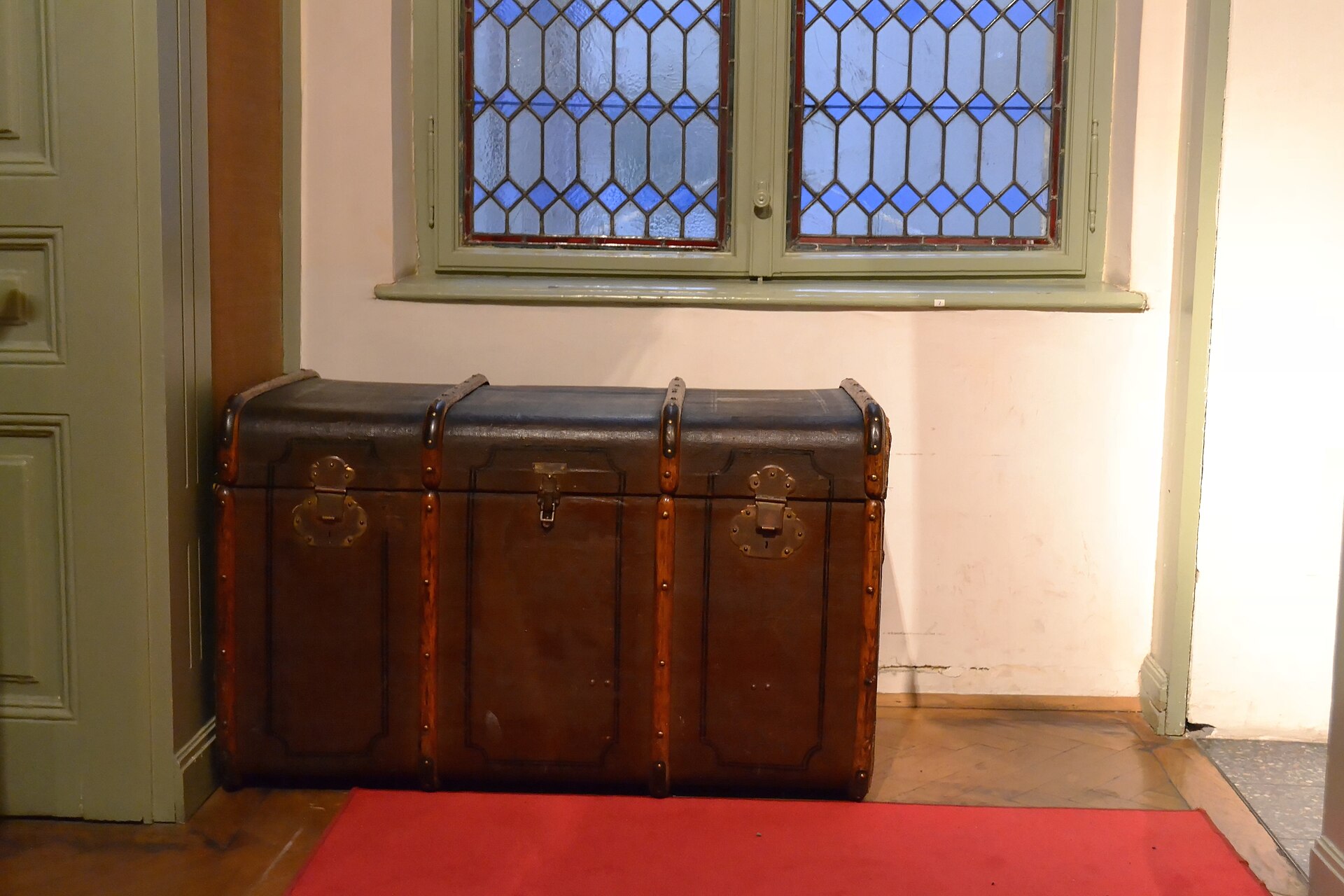 The trunk turns out to be a little too heavy, in this story by Lucretia P. Hale. (Slyronit/CC BY-SA 4.0)
Through this story, Hale demonstrates the need for separating what is truly needed from what is not, for taking only what is needed makes adventure exciting and successful. An excess of items only hinders an adventure.
As Hans Hofmann wrote in “Search for the Real,” “The ability to simplify means to eliminate the unnecessary so that the necessary may speak.” When we remove the unnecessary, we see more of the world around us and glean more from life, rather than being weighed down by paltry things. Thus, simplicity puts aside the unnecessary and magnifies the necessary, so that we see life as it should be seen—with free, open eyes.
What arts and culture topics would you like us to cover? Please email ideas or feedback to features@epochtimes.nyc