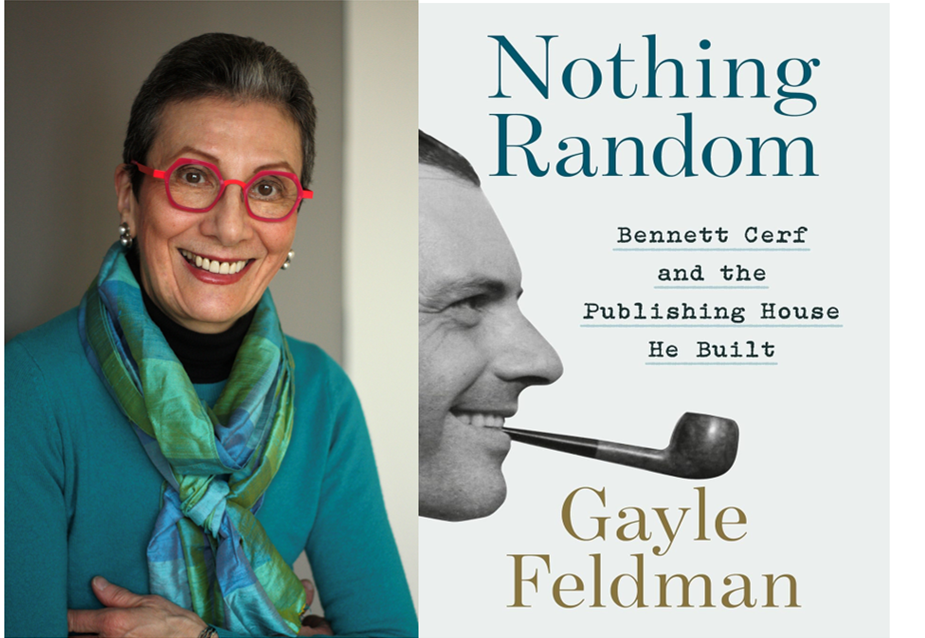
Few people have had a more profound impact on the book publishing industry than Bennett Cerf. As the co-founder and longtime president of Random House, he was responsible for presenting many of the seminal works that shaped 20th-century literature.
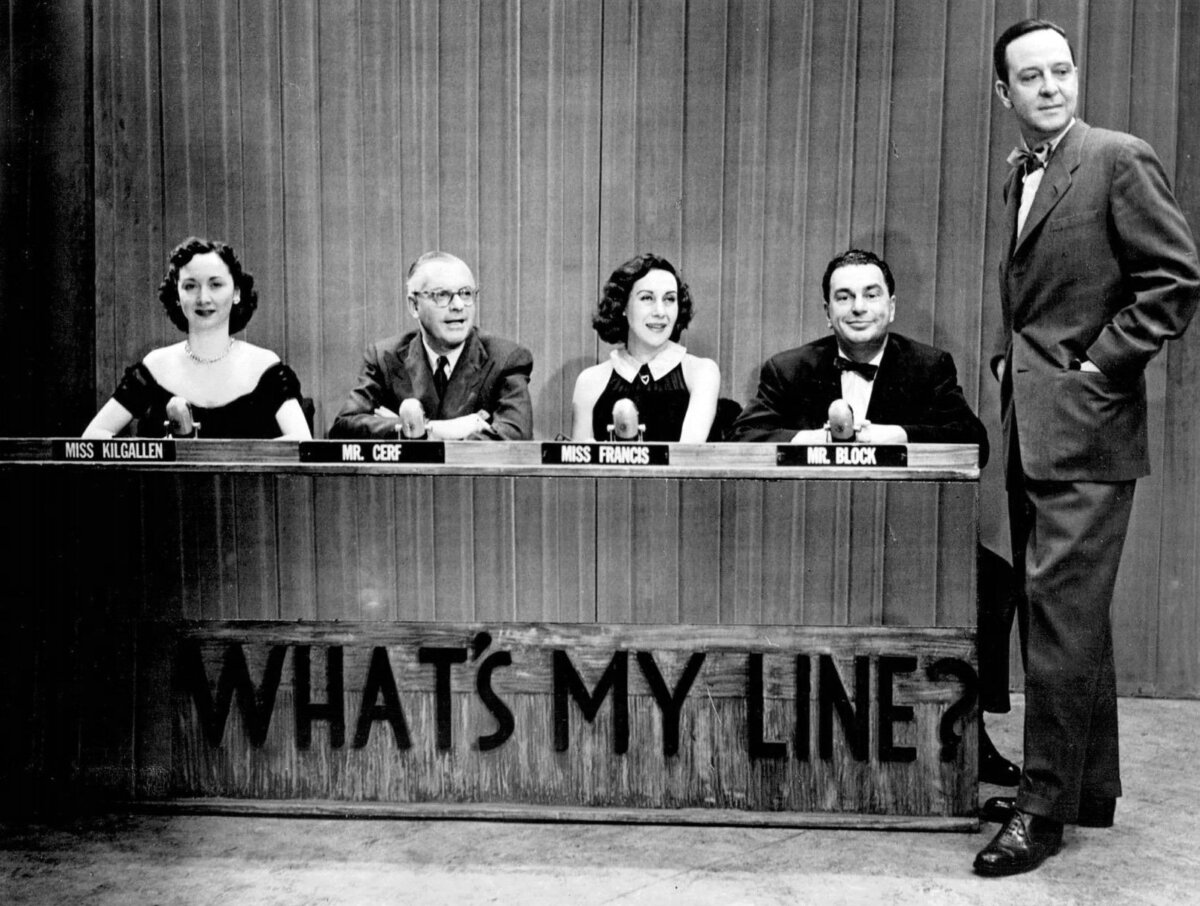
Unlike other book publishers, Cerf enjoyed public recognition as a media personality, most notably as a panelist on the prime-time television game show “What’s My Line?”
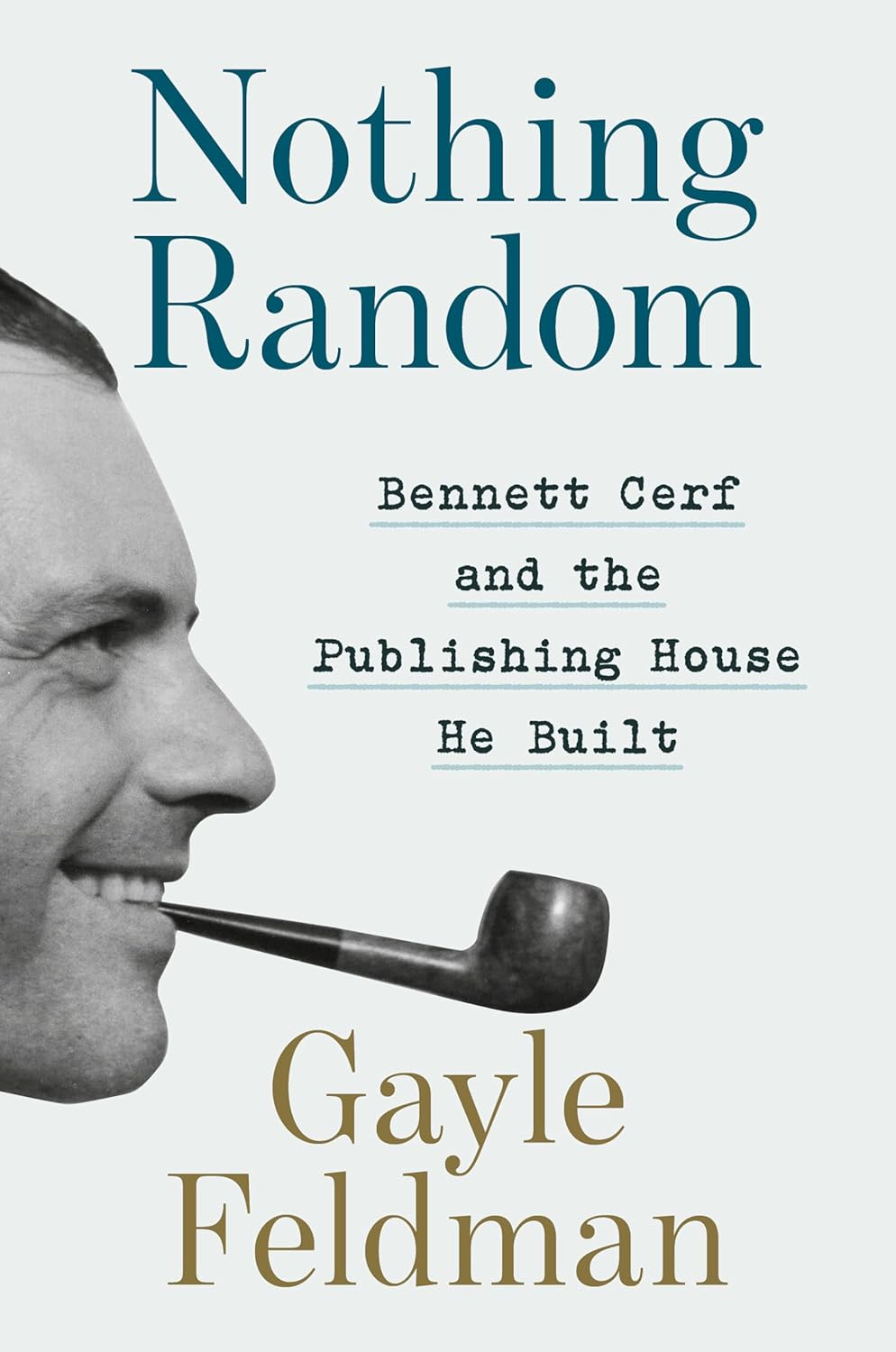
Nevertheless, Cerf was not a reliable memoirist. His posthumously published autobiography “At Random” was entertaining but ripe with inaccuracies. Gayle Feldman effectively straightens out Cerf’s fabrications in her massive, 1,072-page biography, “Nothing Random: Bennett Cerf and the Publishing House He Built.”
Identity and Reinvention
Cerf was born in 1898 in New York City into a well-to-do Jewish family. His father was Alsatian, and his mother was a first-generation American of German parentage. Cerf later falsely claimed that his family roots could be traced to New York back in the 1830s. He also anglicized his birth name of Benoît and added the “Waspish” Alfred” as his middle name to further distance himself from his heritage.
Except for the death of his mother when he was 16, there was little trauma or challenge during Cerf’s formative years. He graduated from Columbia University in 1920. After brief stints as a reporter, a stateside soldier during World War I, and a Wall Street broker, he joined the publishing company Boni & Liveright.
Eager to become his own boss, he partnered with Donald S. Klopfer and scrounged up the funds to acquire the Modern Library imprint of classic books from Boni & Liveright. Two years later, Cerf and Klopfer started Random House to focus on contemporary literature.
Cerf enjoyed an extraordinary run of good fortune in his 50 years as the head of Random House. Feldman frames his professional life as mostly one success after another.
Among the Random House authors that he supported were Eugene O’Neill, Gertrude Stein, Christopher Isherwood, William Faulker, W.H. Auden, James Michener, Truman Capote, Ralph Ellison, John O’Hara, Dr. Seuss, Ayn Rand, and Ira Levin.
In the Spotlight
Cerf would gain his first burst of public visibility in the early 1930s with the legal battle to import and publish “Ulysses.” The brilliantly profane novel by Irish writer James Joyce was banned in the United States as obscenity.
The story of the legal fight to publish “Ulysses” has been recounted countless times. Feldman offers a vigorous retelling, including an ironic postscript that Joyce bypassed Random House and placed his follow-up book, “Finnegans Wake,” with Cerf’s rivals at Viking Press.
Cerf enjoyed his celebrity status from the “Ulysses” case and craved more attention. He authored and edited a series of popular humor books, wrote a syndicated column, and did radio and speaking engagements.
In 1951, he became a pop culture fixture when he joined the panel of the CBS prime-time game show “What’s My Line?” Cerf and his fellow panelists were tasked with deducting the unlikely professions of seemingly ordinary people while donning blindfolds to guess the identity of celebrity guests.
“What’s My Line?” was a ratings hit that ran until 1967. When the show was revived in a syndicated version, Cerf made occasional panelist appearances until his death in 1971.
Feldman’s book features a multitude of anecdotes regarding Cerf’s interactions with his A-list authors. Some are tragic, such as Eugene O’Neill’s declining health and marital issues. Others are whimsical, such as Ayn Rand’s initial skepticism that he was a communist.
Perhaps the most dramatic tale involves an explosive temper tantrum by a drunk Frank Sinatra when he was a houseguest at Cerf’s estate. Sinatra became so unhappy that he chartered a helicopter to land at the property and spirit him away.
Beyond the Spotlight
As for the man himself, Feldman notes, “Bennett was an enormous egotist—but unlike many, he wanted to be loved.” However, he could be difficult with his loved ones and often seemed more attentive to his work and famous friends.
His first marriage, to actress Sylvia Sidney, lasted six months, with Cerf expressing discomfort with her career focus. His second marriage, to actress Phyllis Fraser, was more durable, although she was frequently displeased with being seen just as “Mrs. Cerf” rather than as her own person.
Cerf’s relationship with his two sons was odd. Feldman writes, “Young children generally bored Bennett. Once his sons grew older, they became more interesting.” Cerf sent his sons to Presbyterian schools and told them next-to-nothing about their Jewish heritage.
While there’s a lot to cover, Feldman’s book could have benefited from vigorous editing. Some segments dribble on for too long, most notably the author’s excessive focus on how Truman Capote created “In Cold Blood,” a process in which Cerf wasn’t directly involved.
Some intriguing aspects of Cerf’s life are barely acknowledged, such as his romance with Chinese American actress Anna May Wong. Feldman also neglects to describe how Cerf felt being in Nazi Berlin in 1936, when he traveled there in romantic pursuit of writer Martha Dodd.
Still, Feldman’s book provides distinctive insight regarding the personalities and issues that shaped 20th-century literature. “Nothing Random” might not be perfect, but when it scores, it’s a winner.
‘Nothing Random: Bennett Cerf and the Publishing House He Built’
By Gayle Feldman
Random House: Jan. 13, 2026
Hardcover, 1,072 pages
What arts and culture topics would you like us to cover? Please email ideas or feedback to features@epochtimes.nyc