



What to do when you’ve had the good fortune of visiting a favorite city multiple times? Create a new objective. This was my mission on my last trip to Rome. Trevi Fountain, the Forum, the Vatican, and the Sistine Chapel? Check, check, check, and check. But what if you go on an art treasure hunt?
One of my favorite Italian artists is Michelangelo Merisi da Caravaggio, or simply Caravaggio. Born in Milan in 1571, he later moved to the town of Caravaggio. He died in 1610 at age 38 but spent most of his painting life in Rome—when he wasn’t on the run from debts, lawsuits, or a death sentence for a murder he committed in a brawl.
But his paintings and his elite patrons frequently got him a pass. His signature chiaroscuro style, painting with strong contrasts between light and dark to bring emotional intensity to the painting, is something one can recognize from across the museum floor. Oh, and sometimes he used local prostitutes for his models.
“We like to think, don’t we, that the genius is the hero, that the good guy wins,” historian Simon Schama said in a documentary. “But this is Caravaggio. The genius is the villain.”
Only 40 to 80 of his paintings exist (depending on the experts you ask), and about 25 of them are in Rome. Your job is to go find them. But they are scattered across the Eternal City, which feels even more eternal when you are walking on a mission.
The Itinerary
Pace yourself. We were hell-bent on a mission and did most of this in a single day on foot. Honestly, a 10- or 15-minute walk is quicker than waiting for an Uber that has to weave through traffic-clogged narrow streets and take a long way around to get to you and then the next museum. Each place listed here shows the walking time from the previous stop. We mapped it all out on Google Maps with multiple stops, including a few non-Caravaggio stops along the way.
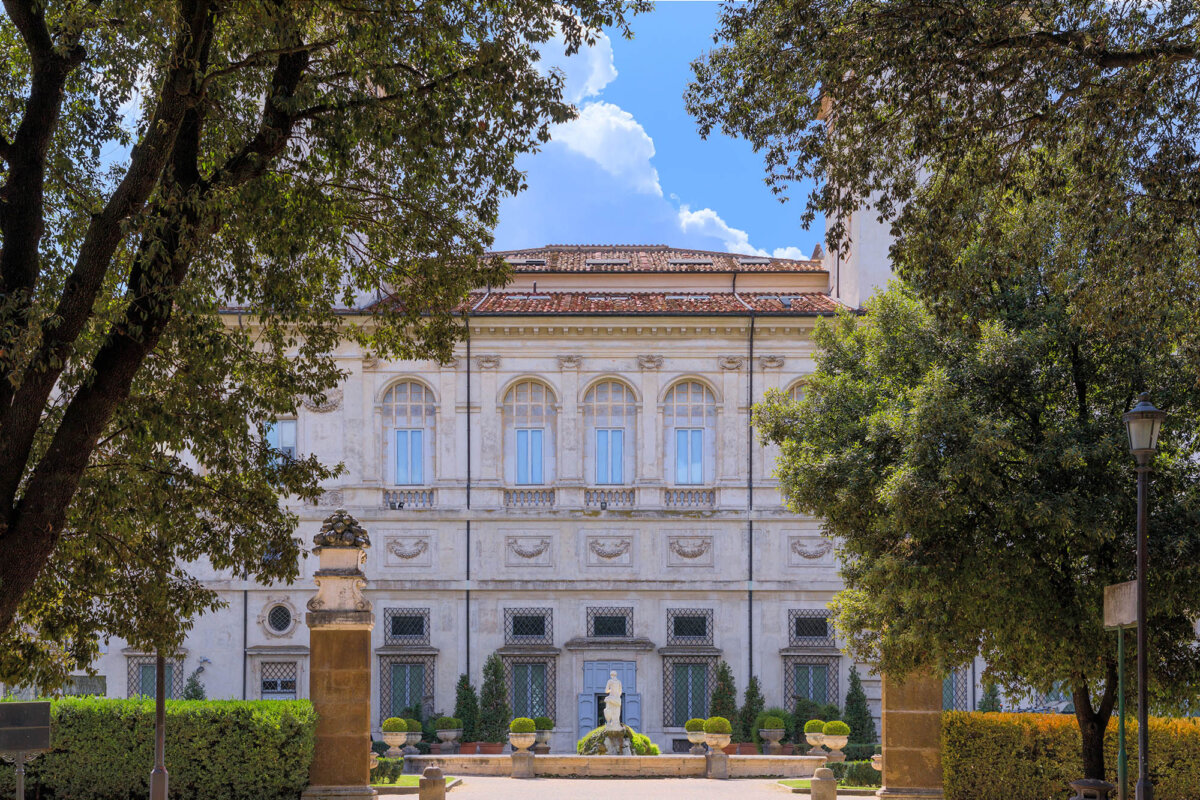
Galleria Borghese
Reserve in advance and be sure to use the official Borghese website or you will be cheated. The ticket is about 16 euros (about $19), plus a reservation fee of 2 euros ($2.34), but many very official-looking websites will ding you for 40 euros (about $47) or more. The collection is vast, so if you want to see everything, use the audio guide or hire a licensed human one. If you are not an early riser, consider becoming one for the day to beat the tour groups. Your visit is timed, but we stayed as long as we wanted. The walk through the surrounding Villa Borghese park to get here is a pleasant break from the city bustle. It rained on us, but we had umbrellas and it only added to the atmosphere, right?
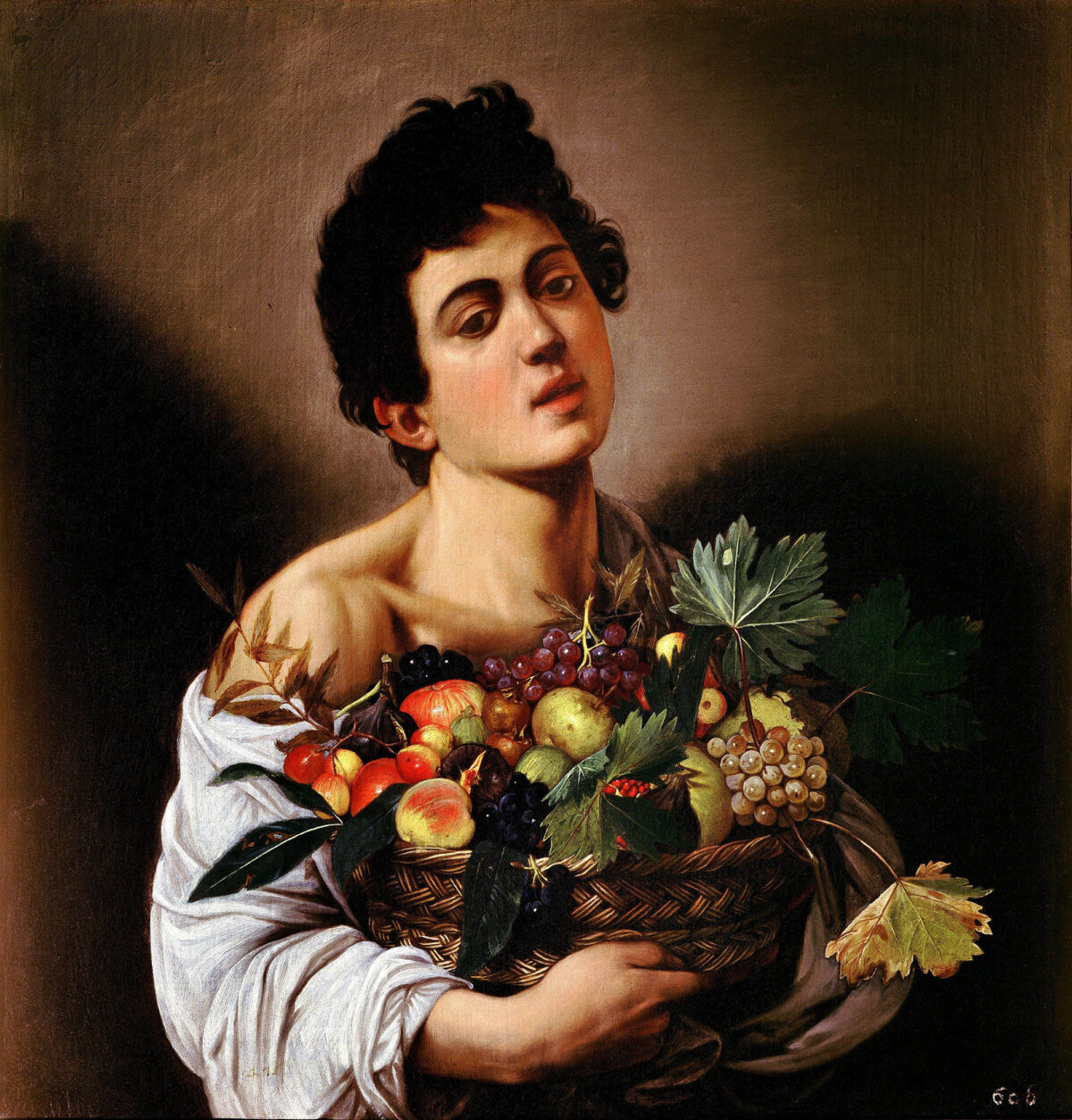
With six paintings spanning the artist’s career, this is the mother lode: “Saint Jerome Writing,” “Boy With a Basket of Fruit,” “David With the Head of Goliath,” “John the Baptist,” “Madonna and Child With Saint Anne,” and “Young Sick Bacchus.” This outstanding museum includes significant works by Gian Lorenzo Bernini and so much more, so linger here a bit.
Capuchin Crypt or Museo e Cripta dei Cappuccini (18-Minute Walk)
The Santa Maria della Concezione dei Cappuccini monastery was newly finished in 1631 when the monks moved in. And I mean all the monks—including the dearly departed. Within the crypt, which is also the exit from the museum into the gift shop, are the bones of 3,700 retired and expired monks, bizarrely arranged into various designs.
The museum displays “St. Francis in Prayer,” with a skull and cross in a dark forest. The Capuchins were a reform movement of the Order of Friars Minor, with a commitment to humility and poverty. You’re not supposed to take photos of the painting or the bones in the crypt, but they’ll sell you coffee mugs and such with those images.
For a quick counter-service bite, turn the corner behind the crypt museum on Via di San Basilio for Gino’s Bar, which serves great paninis and coffee.
Gallerie Nazionali di Arte Antica—Palazzo Barberini (5-Minute Walk)
See the rather gruesome “Judith Beheading Holofernes” and “Narcissus” demonstrating his narcissism. This is one of two locations (see Corsini below), so keep your ticket; it’s single-entry but good for 20 days and gets you into both. Buy in advance if possible.
Galleria Doria Pamphilj (14-Minute Walk)
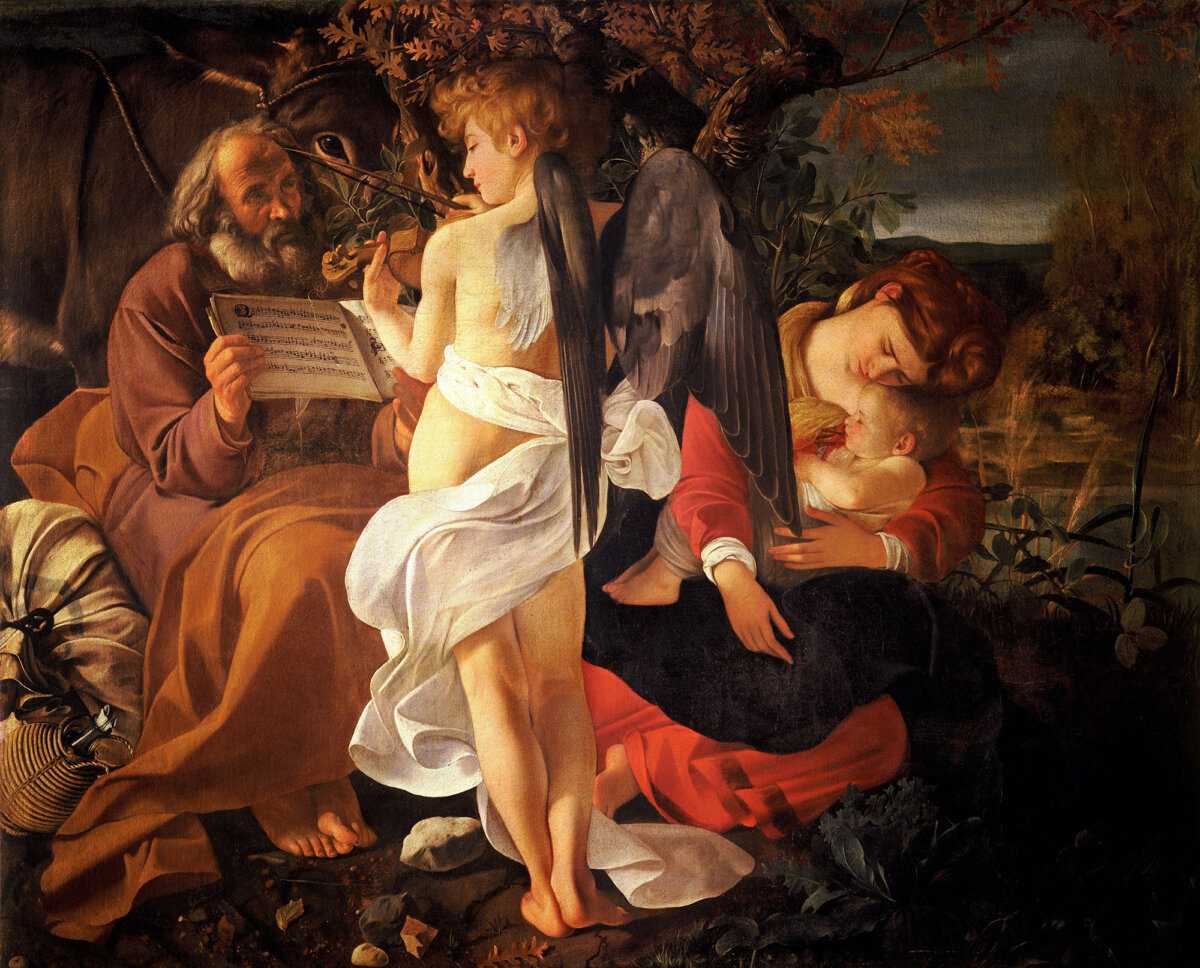
Housed in an ornate palazzo, the largest private art collection in Rome includes Caravaggio’s “Penitent Magdalene” and “Rest on the Flight Into Egypt.” You must book online, and must be on time; the hours run to 7 p.m. or 8 p.m. depending on the day (closed Wednesday).
Free Church Views
Several churches feature Caravaggio paintings and charge no admission fees. They often open as early as 7:30 a.m., close from noon to about 4 p.m., and reopen at 6:30 p.m. or later. If there is a service going on, don’t come in to shoot photos. Wait.
Keep that siesta gap in mind if you are following this itinerary in a single day, and for heaven’s sake (and the sake of the guards), dress appropriately—these are active churches.
From the Palazzo Barberini, it is a 19-minute walk to the first of these three churches, and you can break that up at the eight-minute mark with a stop at Trevi Fountain. This is both a must-see and a madhouse, and be aware that as of February 2026 there is a 2-euro fee to enter the lower area closest to the fountain.
San Luigi dei Francesi (10-Minute Walk)
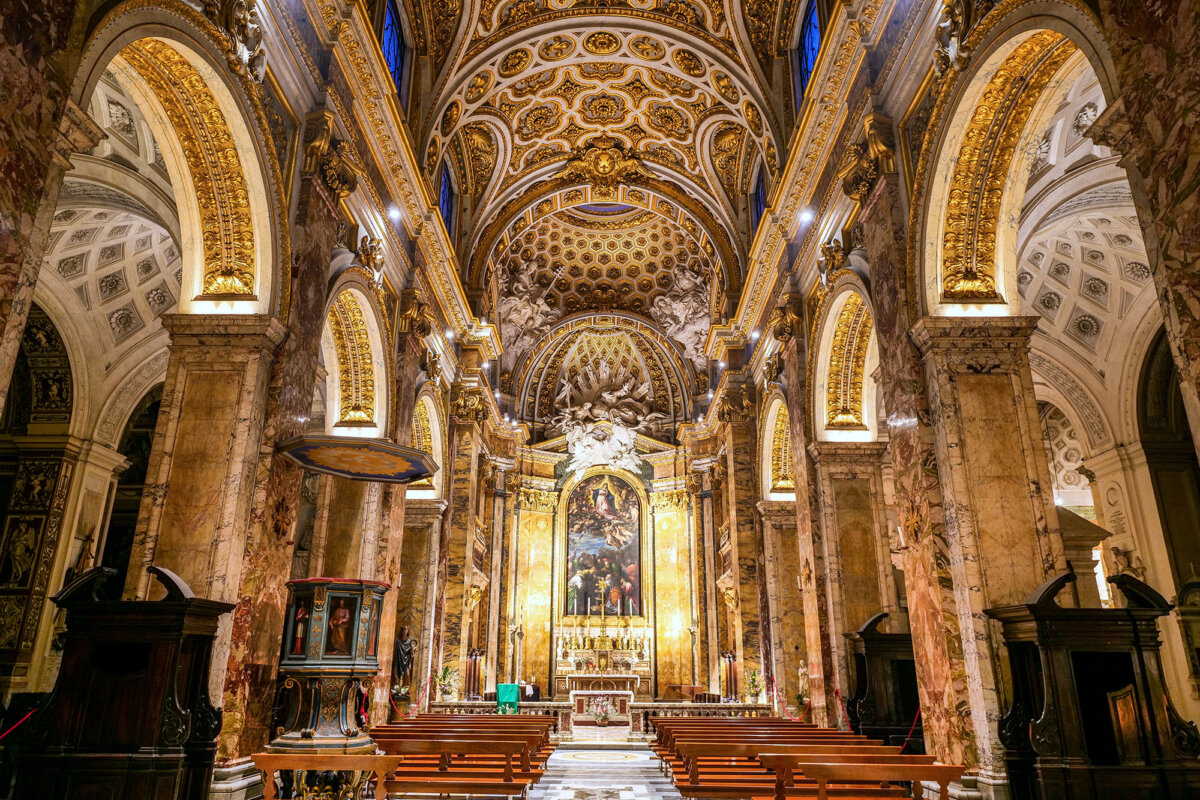
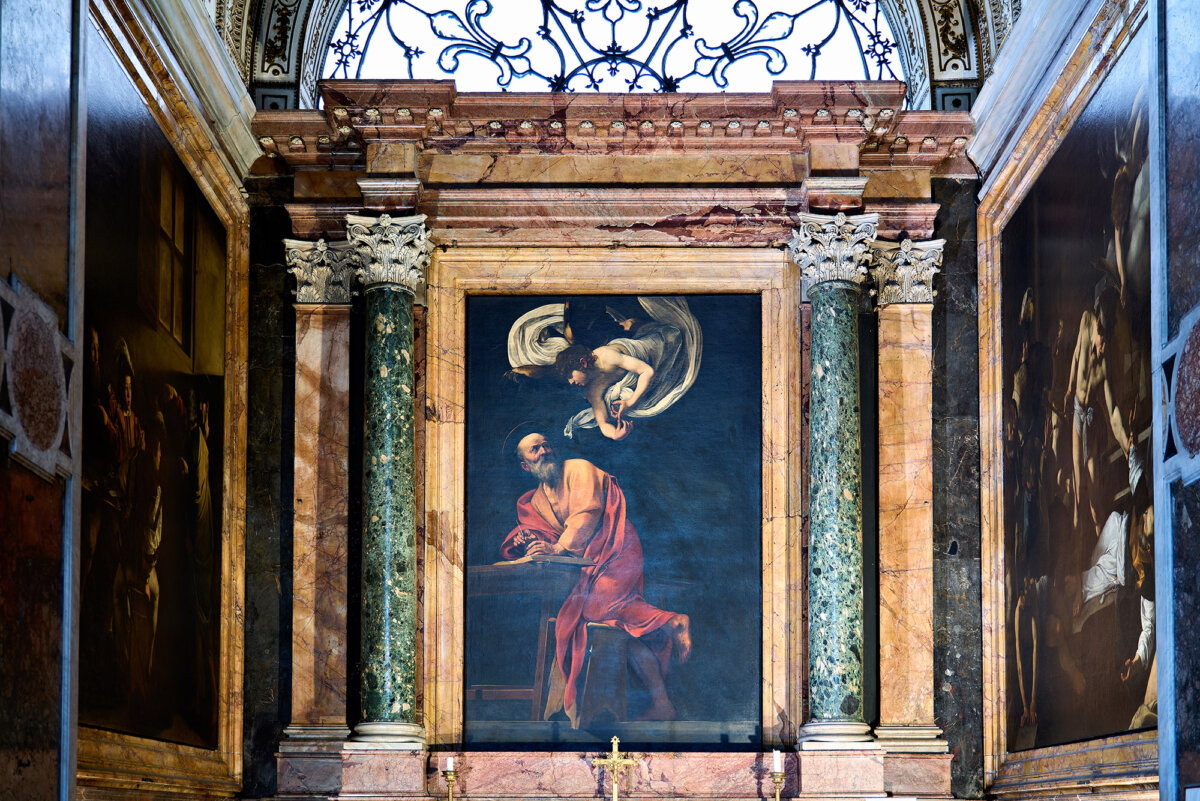
This 1589 Baroque church is right between—and about a block or two from—Piazza Navona and the Pantheon; the latter is on the way here. In a chapel in the front left corner, behind a short marble barrier to keep viewers back, you’ll find three very large paintings: “The Calling of St. Matthew,” “The Inspiration of St. Matthew,” and “The Martyrdom of St. Matthew.”
Basilica di Sant’Agostino (2-Minute Walk)
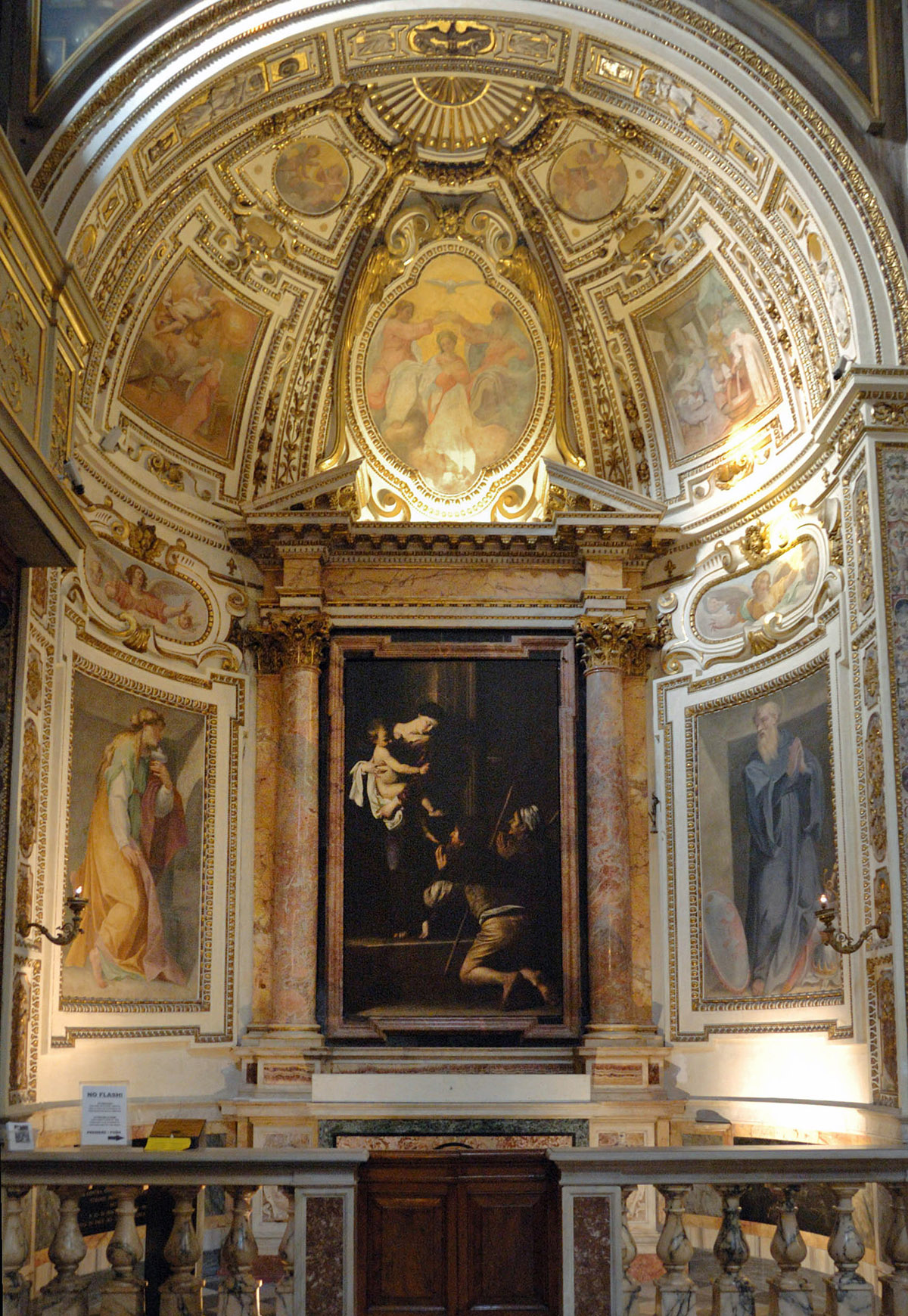
This Renaissance church from 1483 is the motherhouse of St. Augustine, and home to the “Madonna di Loreto” (or “Madonna dei Pelligrini”)—the Virgin Mary with child and a couple pilgrims. See the first chapel on the left inside the door. Linger and see the Bernini-designed altar, a fresco by Raphael, and more. I admit that we blew past and came back at the end of the day, as it was open until 7:30 p.m.
Basilica di Santa Maria del Popolo (18-Minute Walk)
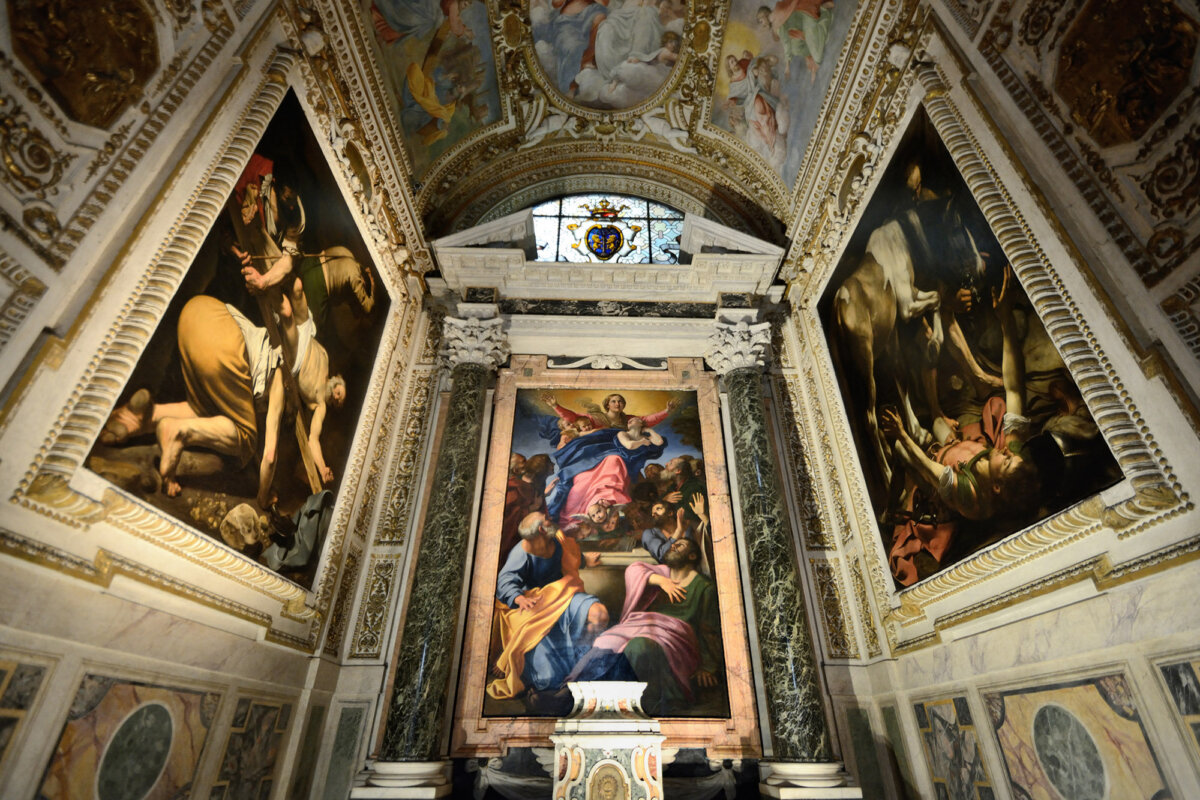
The site was said to be haunted by Roman Emperor Nero, so in 1099 Pope Paschal II had a chapel built on it to bury the myth, so to speak. Much construction and reconstruction later, the chapel became a minor basilica. Inside is Cerasi Chapel, which displays two Caravaggios: “Crucifixion of St. Peter” and “Conversion of St. Paul.” But other works by Raphael and other notable artists are also worth the visit.
Maybe Day 2?
These remaining destinations are outliers from the cluster above, and they may be best saved for a second day.
Galleria Corsini (40-Minute Walk)
The route from Piazza del Popolo is primarily along the banks of the River Tiber, either at street level or along the Scalo de Pinedo, the lovely riverside promenade. This 18th-century palace is across the river. Use your Galleria Barberini ticket to get in to see another version of a young St. John the Baptist in the wilderness.
We squeezed it in at the end of this itinerary. But really, go have a nice dinner and come back tomorrow.
Capitoline Museums (10-Minute Walk South From Galleria Doria Pamphilj; 25 Minutes From Palazzo Barberini)
At the northern end of the sprawling ruins of the Roman Forum, at the opposite end from the Colosseum, this gallery features “The Fortune Teller” (or “Buona Ventura”) and “St. John the Baptist in the Wilderness” (“Youth with a Ram”).
It makes sense to do all these sites together. Taverna Romana (15-minute walk east at Via della Madonna dei Monti, 79) serves, among other things, the four classic Roman pastas: cacio e pepe, amatriciana, gricia, and carbonara. Be there waiting right when they open for lunch to beat tour groups.
Vatican Museums
These museums, home of the Sistine Chapel, can easily fill an entire day, especially with a St. Peter’s Basilica visit. Go to the Vatican Pinacoteca, which is included in a Vatican Museums ticket, where you can see “The Entombment of Christ” (also known as “The Deposition”). Again, beware of scam websites.
Tips for Your Trip
Be aware of opening days and hours. Many galleries have a day off, and some may have special evening hours, staying open late on a Thursday or a special day each month when entry is free or reduced. Always check the museum’s website to get the latest information. It’s Italy, so you might want to phone as well while you are there.
The churches can be dim, but extra lighting for famous artwork is available. Bring coins to feed the meter that turns on the lights (although it’s safe to bet someone in the crowd will be doing it).
The high quality of smartphone cameras has perhaps made this caveat obsolete, but remember: No flash! If you forget, someone will surely shout a reminder. I’ve seen people harassed by guards over it, and honestly, it doesn’t just cumulatively damage the paintings, it also makes some pretty lousy photos.
If you enjoy art, are art-curious, or enjoy gritty life stories, I can’t recommend highly enough the BBC documentary series “Power of Art,” hosted by Schama. Each of the eight hour-long episodes focuses on a world-famous artist’s most important works, and the life that led to them. Caravaggio’s is the most dramatic in the series, and you will appreciate the paintings much more.
Finally, this is a repeatable strategy. The works of Bernini or Michelangelo are just more reasons to return to Rome—as if you needed any.
