



Not Rated | 1h 55m | Drama, Mystery, Music | 2026
For the first 10 minutes of writer-director Arnaud Desplechin’s “Two Pianos,” I hadn’t a clue what was happening. By the time the movie ended, I knew exactly what he was doing with the opening salvo.
“Two Pianos” is the type of mystery drama that takes the entirety of its running time to fully lay out its narrative. “Lay out” here shouldn’t be confused with “explaining” the meaning behind the story. Desplechin never explains anything. He leaves it to the audience to come to their own conclusions.
It’s akin to the “glass half empty, glass half full” mindset or a Rorschach test. It’s open to interpretation. Personally, I love movies like this. Those wanting a tidy, clear-cut ending might want to steer clear. It will only frustrate and possibly anger you.
How It Starts
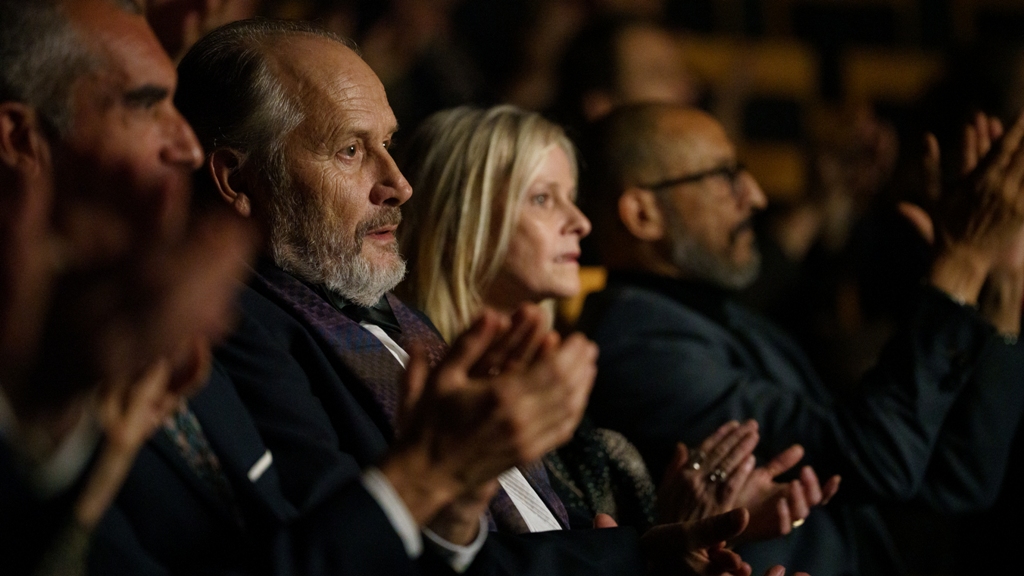
Painter (artist not house) Pierre (Jeremy Lewin) and his wife, Claude (Nadia Tereszkiewicz), are deciding whether to appear at a reception in Lyon, France, attended by many people who commission his work. Despite heavy rain, they decide to go.
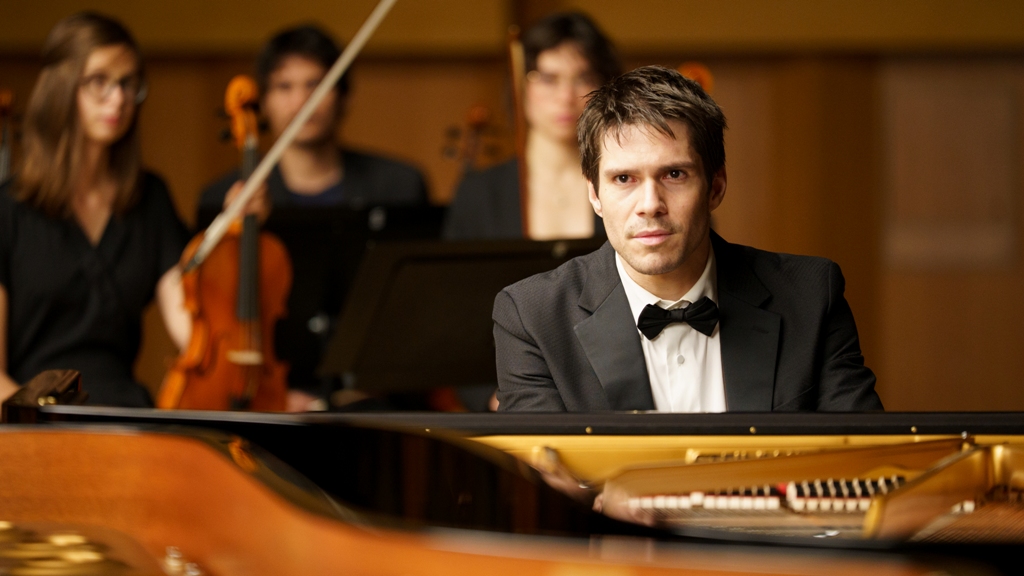
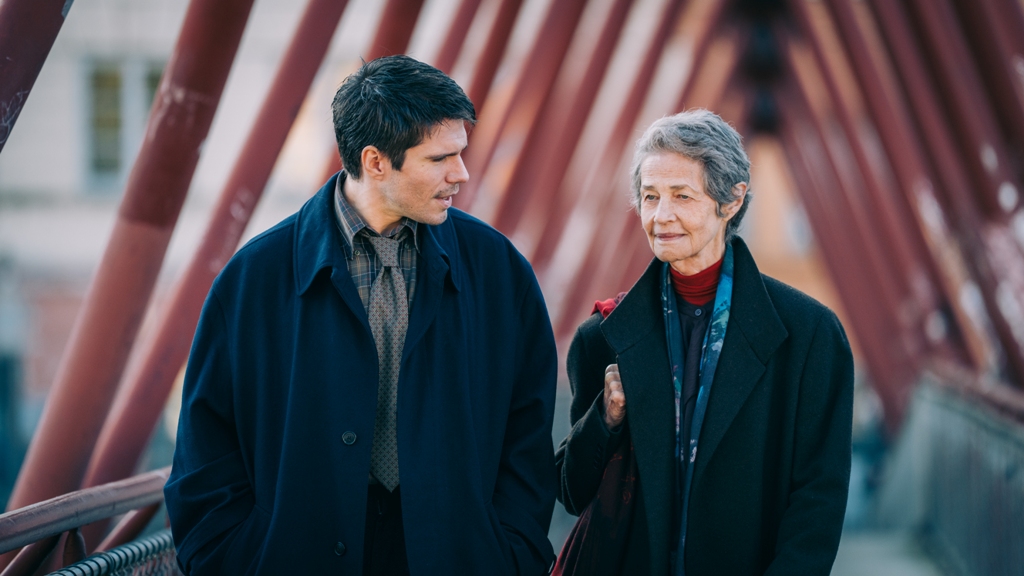
While this back and forth is going down, piano virtuoso Mathias (François Civil) is already at the reception. There he is greeted by Elena (Charlotte Rampling), his mentor since he was a child prodigy.
Mathias is returning home after spending eight years in Japan, where he became a classical music rock star. He’s at the reception solely at Elena’s request. She wants him to perform alongside her during a series of farewell duet concerts.
Hanging It Up
Citing age-diminished capacity, Elena wants to quit while she’s not too far gone. Despite this request, Mathias remains noncommittal. This is not because he doesn’t want to. He left Lyon so many years ago for deeply personal reasons that still linger.
Mathias eventually acquiesces. Yet, during rehearsals with a full orchestra, it becomes clear to Elena (who is also the conductor) and the other musicians that he’s merely going through the motions.
To my pedestrian ears, what Mathias was playing sounded great, but once performers like this reach the pinnacle of their craft, even the slightest off-note becomes amplified.
Something else I never knew about classical musicians: The majority of them, even seasoned professionals, cannot perform without sheet music. At least twice, both Elena and Mathias choose to perform without it, which is considered a major flex akin to showboating.
Musical Deep Dives
These are just a few examples of Desplechin’s eye for fine detail. Most civilians won’t notice, but professional musicians will and they’ll be impressed. They’re also likely to feel the same way about Desplechin’s deep-dive choices of source music.
I recognized just two of the pieces, one by George Gershwin and the other by J.S. Bach. The remainder—composed by Robert Schumann, Isaac Albéniz, Max Bruch, Aleksandr Scriabin, Bela Bartok, Claude Debussy, Jules Massenet, and Frederic Chopin—were unfamiliar to me.
Adding distinct flavor and contrast to the mostly obscure source compositions is an eclectic and minimalist score by Grégoire Hetzel, featuring solo saxophone performances by Jean-Philippe Scali.
A jarring event halfway through the film thoroughly changes everything for all of the principal characters. This is especially the case for Max (Hippolyte Girardot), Mathias’s longtime agent and manager.
Behaving more like a Dutch uncle than a task master, Max knows his client well and can figure out when tough love is needed or when ego stroking might deliver a better result.
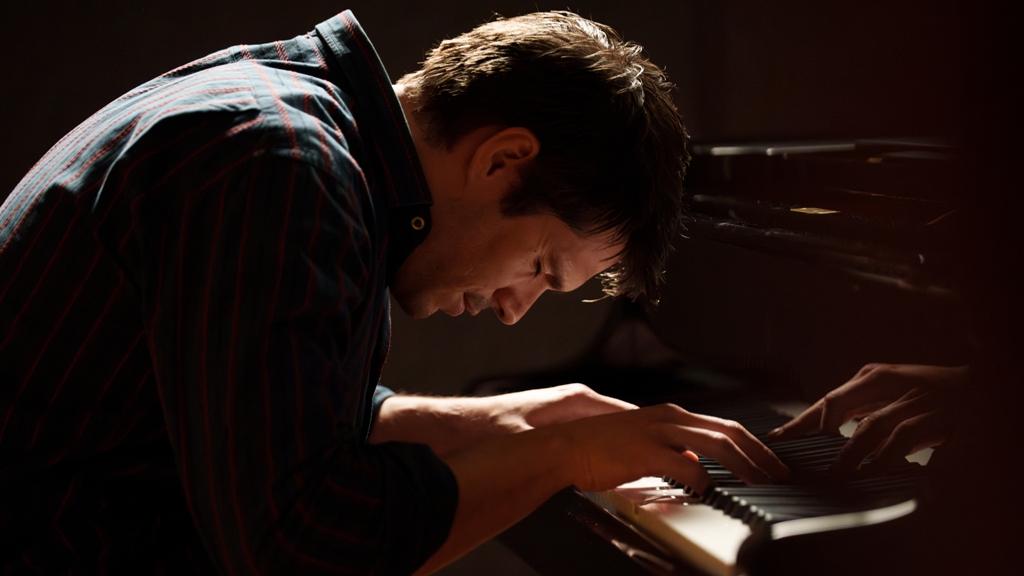
To touch again on the opening of this review, it takes the entirety of the narrative to play out before we learn all the facts and nuances. Where everyone lands at the end is secondary to how they got there; this is sometimes by choice, sometimes not.
Lost Youth
When it ended, I had multiple takeaways. The first: Being a child prodigy has many drawbacks. Once someone’s “genius” is identified, a lifetime of perhaps impossible achievements is made. Thinking about having a normal childhood? Forget it. What happens when the artistic drive doesn’t so much go away but certainly wanes?
What professional pluses or minuses take place when an artist’s private, romantic lives enjoy a marked upswing? Do professional goals spike, or do they become even less of a priority?
Desplechin’s endgame, as I understand it, is to point out that the success or failure of artistic creativity is contingent on mood as much as on raw talent. Being happy or sad works great; complacency, apathy, and disinterest will sound the death knell.
The journey that Mathias takes forces him to take stock of his life whether he wants to or not. He realizes that getting what he wants might not work and vice versa. Life never stops surprising us.
The film is subtitled French and is currently streaming.
‘Two Pianos’
Director: Arnaud Desplechin
Starring: François Civil, Charlotte Rampling, Nadia Tereszkiewicz, Hippolyte Girardot
Running Time: 1 hour, 55 minutes
MPAA Rating: Not Rated
Release Date: March 6, 2026 (in theaters May 8)
Rating: 4 stars out of 5
What arts and culture topics would you like us to cover? Please email ideas or feedback to features@epochtimes.nyc
