In 1948, two men squared off against each other in a hearing, and later, a trial that would have vast ramifications for America and the Cold War with the Soviet Union. The men couldn’t have been more different.
Beginning at the End
A descendant of an old Baltimore family, Alger Hiss (1904–1996) was suave, handsome, well-spoken, and arrogant. After earning his degree from Harvard Law, he eventually entered government service as an attorney during the Roosevelt administration, rose rapidly through the ranks, and was soon working in the State Department in international affairs. He attended the Yalta Conference as part of Roosevelt’s team and was instrumental in helping found the United Nations following World War II. Now in 1948, he stood accused not just of being a member of the communist party, but of being a Soviet spy as well.
His accuser was Whittaker Chambers (1901–1961), a pudgy man who always looked a bit unkept and spoke in a low voice. The product of a dysfunctional home, he had dropped out of Columbia University to join the communist party, where he wrote for the Daily Worker before becoming a spy for the Soviet Union. He carried out his duties as an intermediary between U.S. government personnel and Soviet agents, but then experienced a conversion of faith. That led to his charges of Hiss’s espionage, accusations that shook the foundations of the federal government.
Chambers had kept copies of the State Department documents he had photographed for Hiss, papers then passed to the Soviets. By producing hard evidence of Hiss’s treachery, the court found Hiss guilty of two counts of perjury and sentenced him to five years in prison.
Meanwhile, Chambers resigned his position as senior editor at Time Magazine and worked off and on for other publications, including William F. Buckley’s National Review. Published in 1952, his autobiography “Witness” became a best-seller that some critics consider an American classic in the genre.
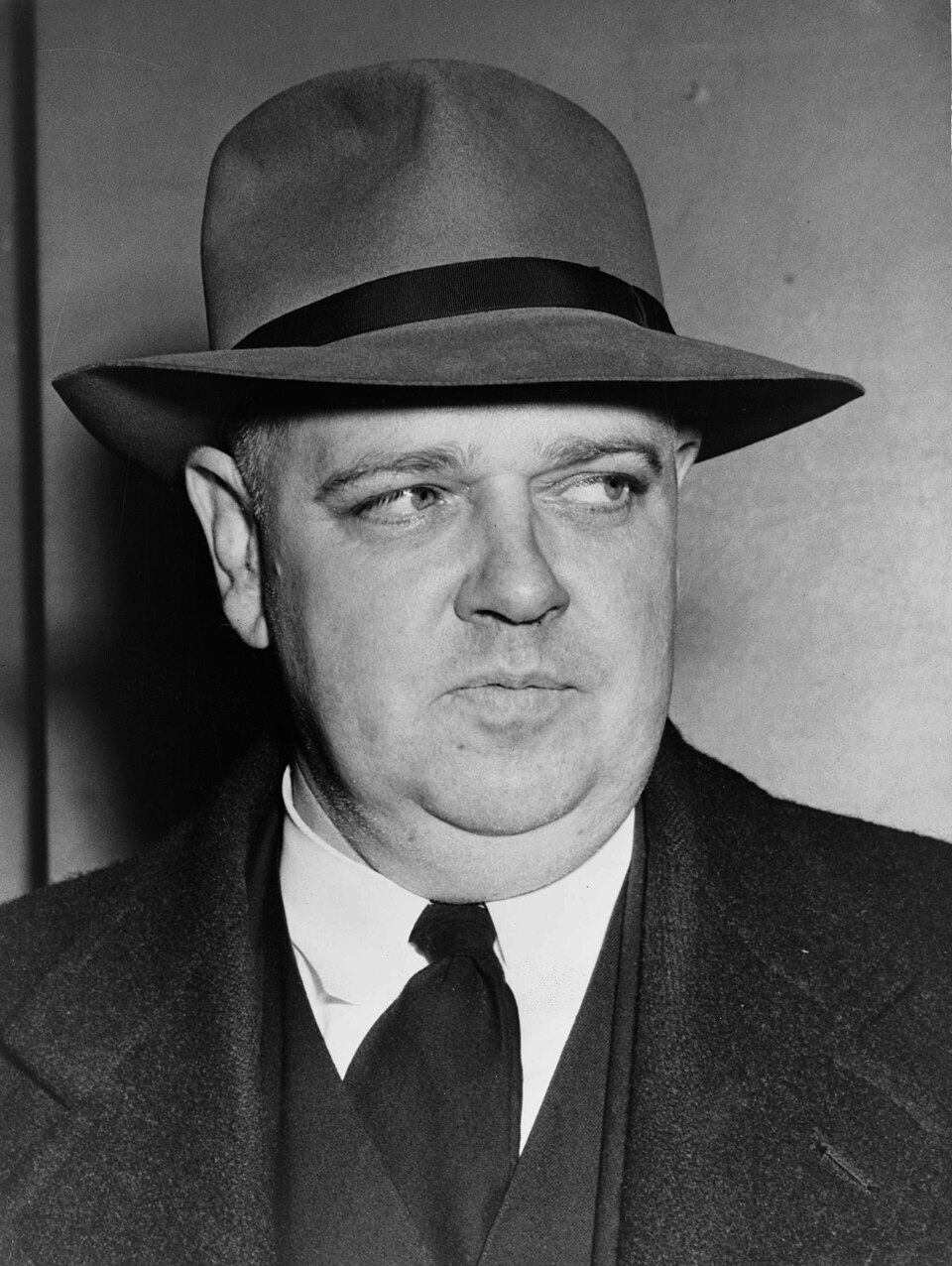 Whittaker Chambers in 1948. Library of Congress (Public Domain)
Screams in the Night
Events in the mid-1930s led Chambers out of the communist party and into that courtroom.
The Soviet Great Purges of that decade killed off men and women as traitors to the Party whom Chambers considered heroes of the Revolution. Though he didn’t realize the full extent of this terror—hundreds of thousands were murdered—he was increasingly aware that something in Russia had gone horribly wrong, that Stalin was eradicating anyone he deemed a threat.
The turning point for Chambers was 1938. In “Witness,” he records one of three incidents that acted as his guiding lights for leaving Soviet communism. From the daughter of a former German diplomat to Russia, he heard the story of why her father had abandoned the party. “‘He was immensely pro-Soviet,’ she said, ‘and then—you will laugh at me—but you must not laugh at my father—and then one night in Moscow he heard screams. That’s all. Simply one night he heard screams.’”
From then on, Chamberlain’s imagination echoed with those screams.
When the Ear Speaks to the Heart
Just before turning his back on the Party—fearing for their safety, he took his family into hiding in Florida for a year—Chambers experienced an epiphany that forever destroyed his belief in the materialistic faith espoused by Marxism. He wrote:
“It was shortly before we moved to Alger Hiss’s apartment in Washington. My daughter was in her high chair. I was watching her eat. She was the most miraculous thing that had ever happened in my life. I liked to watch her even when she smeared porridge on her face or dropped it meditatively on the floor. My eye came to rest on the delicate convolutions of her ear – those intricate, perfect ears.
“The thought passed through my mind: ‘No, those ears were not created by any chance coming together of atoms in nature (the Communist view). They could have been created only by immense design.”
In Thornton Wilder’s “Our Town,” Emily cries out near the end of the play, “Oh, earth, you’re too wonderful for anybody to realize you. Do any human beings ever realize life while they live it — every, every minute?”
This was one moment when Chambers realized the complexity of life and understood that a supreme being had created it.
 Whittaker Chambers retired to a Maryland farm. (KLOTZPLATE/CC BY-SA 4.0)
The 12 Words
The third incident occurred afterwards. Chambers was depressed to the point of contemplating suicide. He felt that he had wasted so much of his life and saw only emptiness ahead. Then, in his Baltimore apartment home came another moment of revelation, which he also recorded in “Witness”:
“As I stepped down into the dark hall, I found myself stopped, not by a constraint, but by a hush of my whole being. In this organic hush, a voice said with perfect distinctness, “If you will fight for freedom all will be well with you.’”
“It was the strength that carried me out of the communist party, that carried me back into the life of men. It was the strength that carried me at last through the ordeal of the Hiss case. It never left me because I no longer groped for God; I felt God. The experience was absolute.”
That moment was the final breaking point between Chambers and the gulag that the Soviet Union had become.
As Americans and peoples from around the globe continue the never-ending battle for liberty, we must never forget those 12 words of Whittaker Chambers: “If you will fight for freedom all will be well with you.”
What arts and culture topics would you like us to cover? Please email ideas or feedback to features@epochtimes.nyc