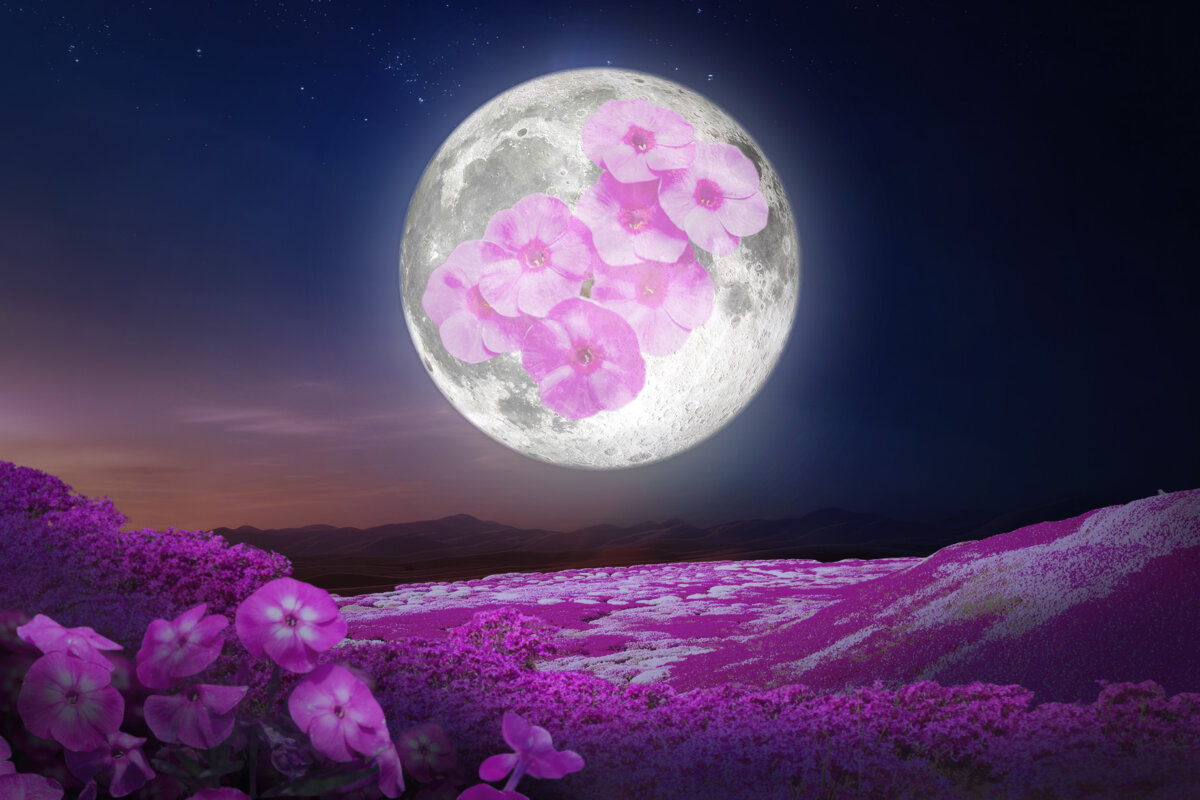
What’s pink, appears in the Native American lunar calendar, and shows up every April? If you guessed a “pink moon” as the headline hints at, you’re close, but not quite right.
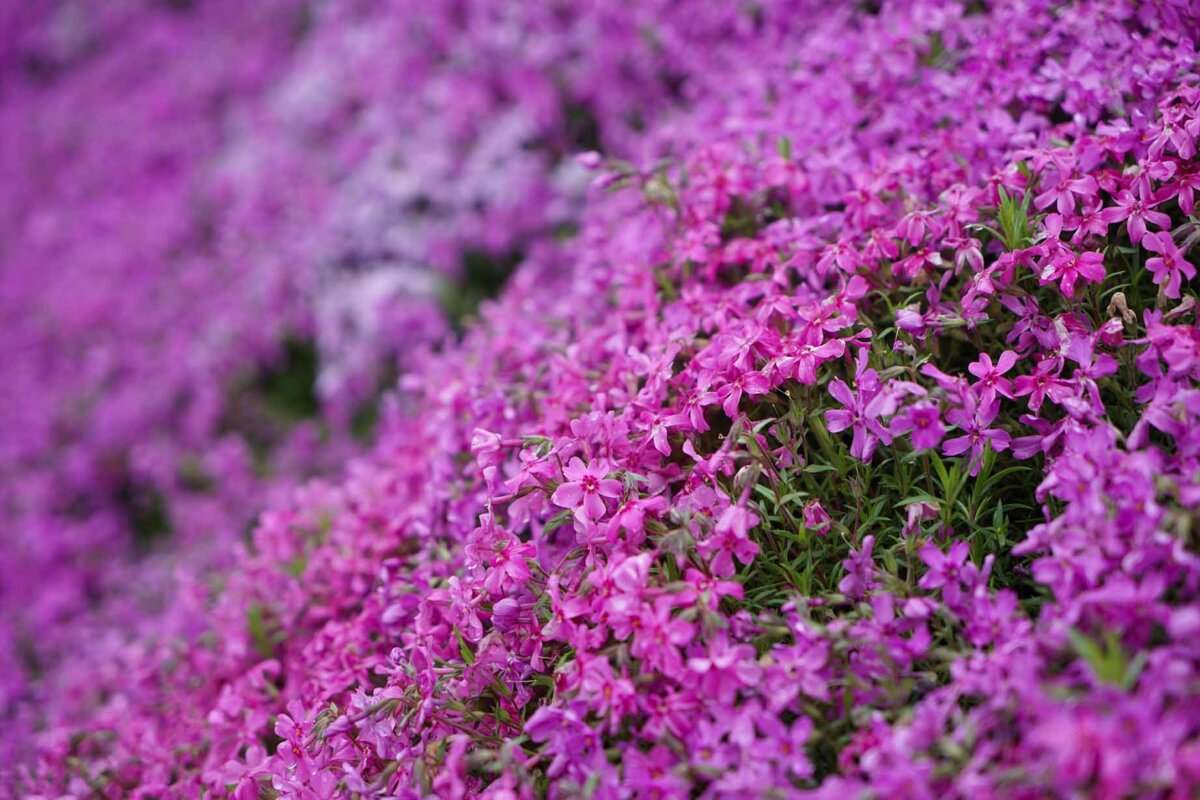
When pre-colonial tribespeople welcomed the arrival of spring, they observed unmistakable shots of pink creeping across sunny slopes and open prairie fields of North America. The colour didn’t come from the moon, but rather the vibrant blooming phlox blossoms growing in abundance.
April’s full moon was named after these blossoms. Today, we still use the name “Pink Moon” for the April full moon.
Viewing the Full Pink Moon
The full Pink Moon will reach peak illumination on April 1 at 10:12 p.m. Eastern Time. Despite its name, it won’t appear pink. Like any full moon, however, it may take on a rust-coloured hue when it is low on the horizon. The moon will rise in the east around sunset and will appear in the constellation Virgo.
And that bluish dot right beside it? That’ll be bright star Spica, the 16th brightest star in the night sky, though it might be hard to see with all the moonlight.
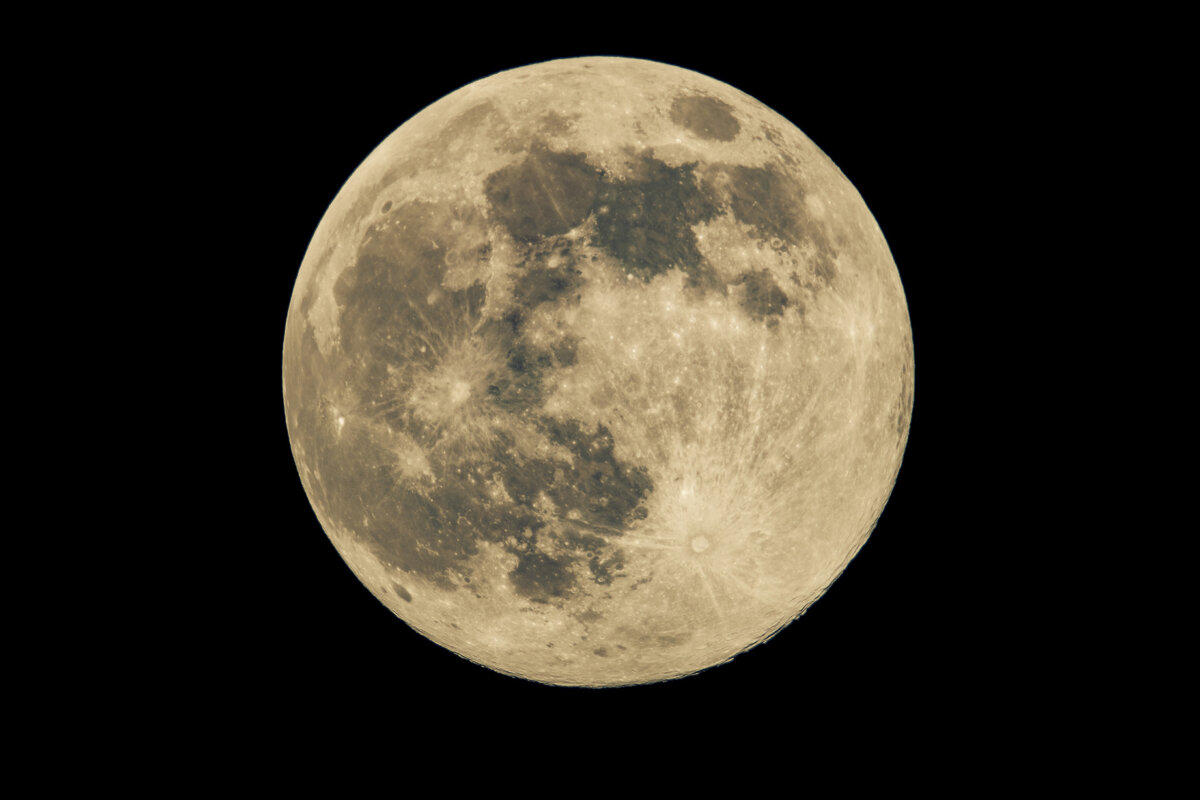
Technically, full moons only occur for an instant when they are precisely opposite the sun from Earth, which is the moment of syzygy, or 100 percent illumination. They end the very next instant. This definition allows astronomers to make precise calculations, but it isn’t very fun. Realistically, though, full moons look full for about a day before and after the event, as the moon orbits relatively slowly, allowing moon viewers some leeway.
Though it won’t appear pink, the full Pink Moon might take on a warm hue (you can pretend it’s pink). Since the seasonal equinox is almost here, the moon’s orbital path will conspire with Earth’s axial tilt to make the lunar disk seem to hang low near the horizon. This effect will be more pronounced at higher latitudes. Moonlight will filter through more atmospheric pollution and smoke, tinting it gold-orange.
It also might seem bigger than usual. Hanging so low, and lining up alongside Earthly objects like trees or houses, might make the moon seem larger than it really is. The effect is entirely psychological; it’s called the “moon illusion.”
Consider the full Pink Moon an April Fool’s joke with multiple punch lines.
Spring Moon Lore
But April Fools isn’t the only special day linked to this full moon; this April’s full Pink Moon will also determine Easter, which isn’t a fixed date but falls on the first Sunday after the “Paschal Moon.” That’s the full moon closest to the ecclesiastical spring equinox (March 21), and this year’s Full Pink Moon qualifies. Easter falls on the following Sunday, April 5.
There’s a rich history of folklore and celebrations involving spring in practically every culture. That’s probably why there are hundreds of names for the first full moon of spring, symbolizing renewal and rebirth. The moon was often given names derived from creatures stirring from their winter slumbers and Mother Nature springing back to life.
Native tribes in the eastern United States saw the blooming of pink phlox, one of the earliest spring flowers, and dubbed it the Pink Moon. The Tlingit tribespeople called it Budding Moon of Plants and Shrubs while the Dakota coined Moon When the Geese Lay Eggs. Across the pond it was the Egg Moon, Seed Moon, or Sprouting Grass Moon, according to Europeans. It was the Peony Moon for the Chinese.
So pick whatever spring sign suits you. This April’s full Pink Moon will only enhance the view.