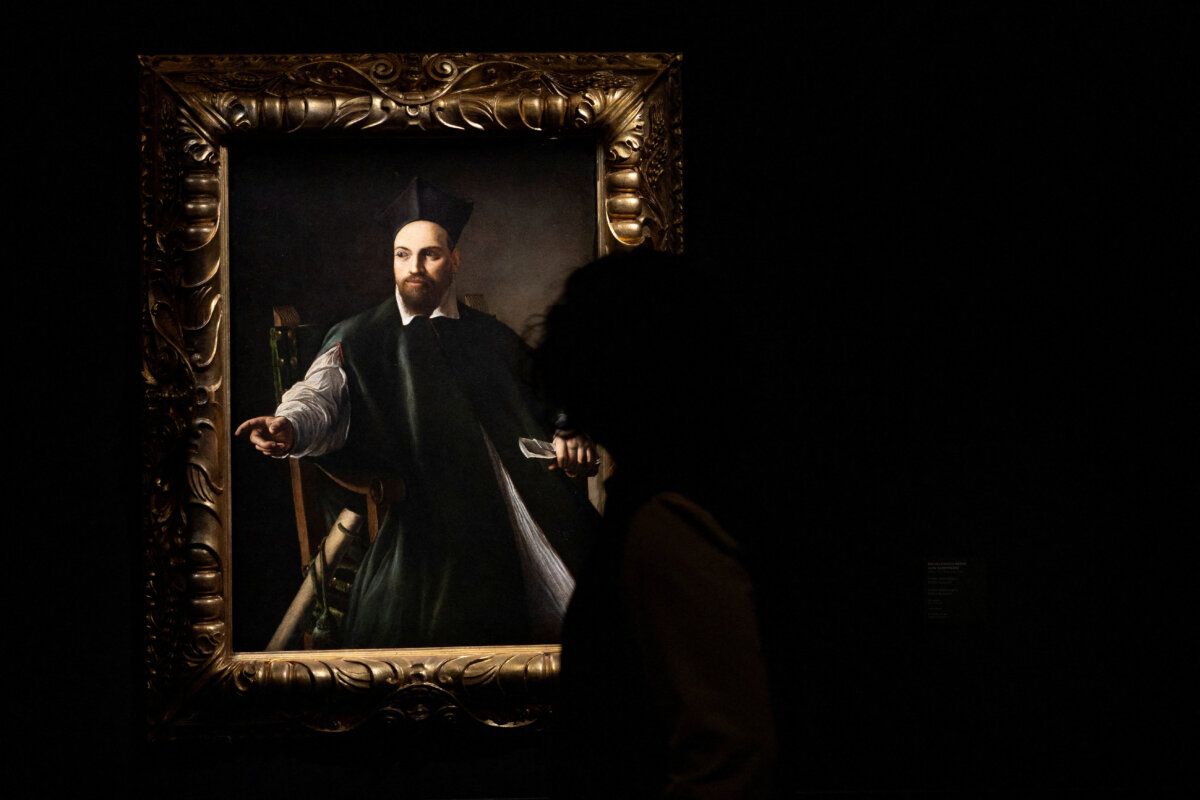
On March 10, Italy’s Ministry of Culture acquired a rare and rarely seen Caravaggio portrait for 30 million euros, about $32.7 million.
Italian Minister of Culture Alessandro Giuli praised the team of art officials, technicians, and institutions who negotiated for more than a year before securing the “exceptionally important work.”
The portrait of Monsignor Maffeo Barberini is one of just three Caravaggio portraits known to exist, even though historic documents note the high output and demand for the Italian old master’s portraiture.
The Barberini family owned the portrait for centuries until a private collector acquired it in the 1930s, when the Barberini art collection was dispersed.
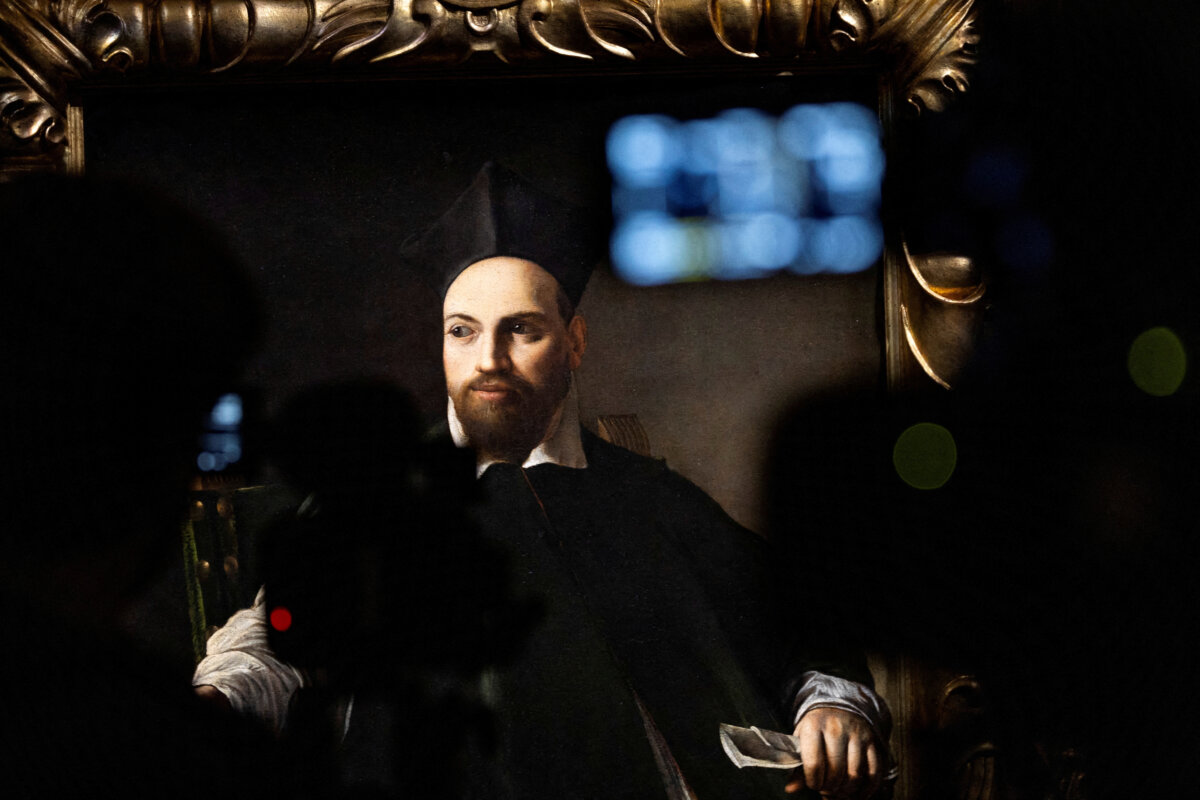
Italian art scholar Roberto Longhi attributed the portrait to Caravaggio in 1963.
Remarkably, the portrait’s first public appearance as a Caravaggio was in the exhibition “Caravaggio: The Portrait Unveiled,” from Nov. 23, 2024 to Feb. 23, 2025, at Rome’s Palazzo Barberini, the very palace that Maffeo Barberini purchased in 1625.
In a full-circle moment, the nation’s newly acquired painting permanently entered the Palazzo Barberini collection of National Gallery of Ancient Art, Rome.
An Enduring, Modern Portrait
Maffeo Barberini was influential as a prominent patron of the arts and future Pope Urban VIII (1624–1644).
Caravaggio’s portrait candidly captures Barberini in his 30s, as a cleric seated in the Apostolic Chamber. His powerful presence fills the canvas. He holds a letter in one hand while making a grand gesture with his other toward the edge of the picture frame. His deep green robe seems to sway, adding weight to the dynamic portrait.
According to the Italian Ministry of Culture, Longhi lauded the naturalistic portrait “as one of the founding moments of modern portraiture, noting how Caravaggio introduced a new psychological intensity and an extraordinary ability to convey the living presence of the sitter.”
Caravaggio’s fame today can be attributed to Longhi’s avid appreciation of the master’s works and to later artists such as Rembrandt who emulated the essence of Caravaggio’s naturalistic flair.
Italy’s acquisition of Caravaggio’s portrait reflects the country’s reverence for its cultural heritage; it also ensures the painting will remain in the public realm and firmly on Italian soil for generations to come.
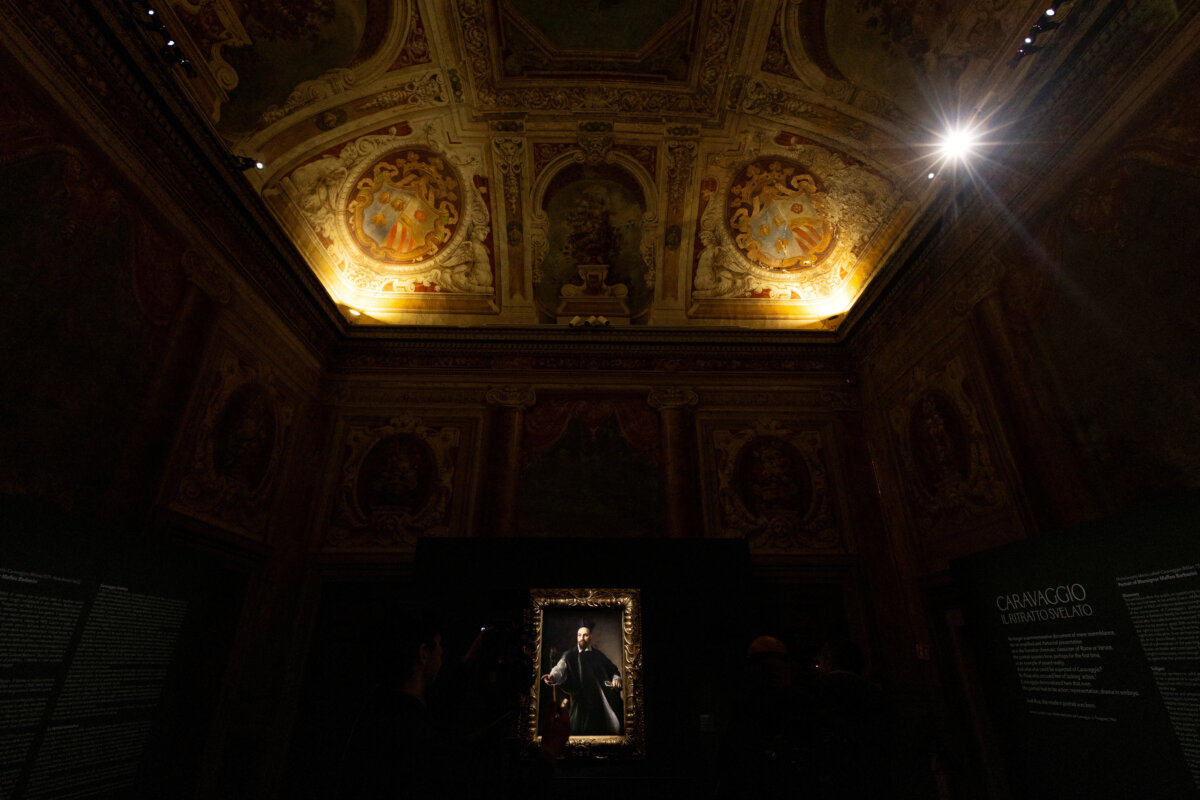
To find out more about Caravaggio’s portrait, visit BarberiniCorsini.org
What arts and culture topics would you like us to cover? Please email ideas or feedback to features@epochtimes.nyc