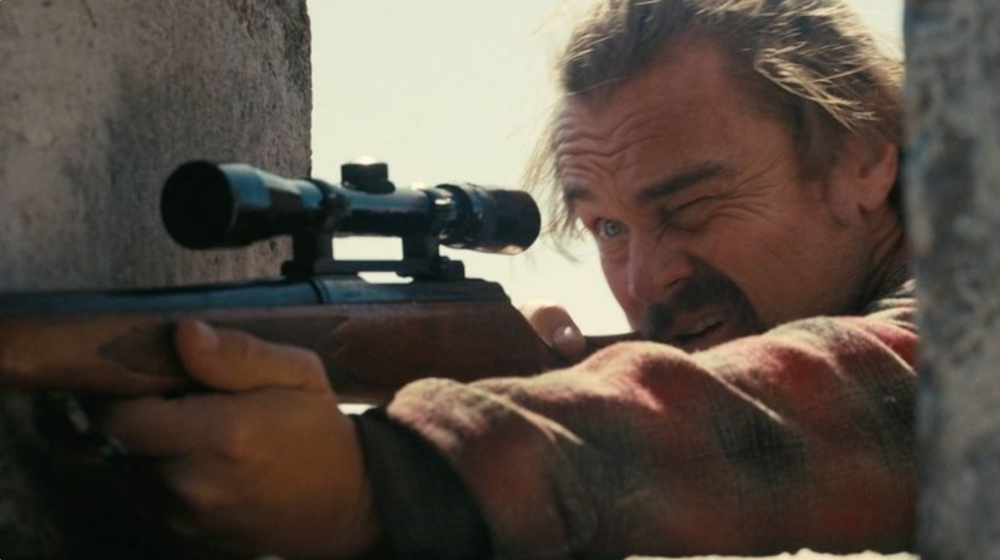
R | 2h 41m | Action, Drama, Comedy | 2025
Director Paul Thomas Anderson’s “One Battle After Another” just won six Academy Awards at the 98th Oscars yesterday (March 15, 2026). The Oscar categories are as follows:
1) Best Picture: “One Battle After Another”
2) Best Director: Paul Thomas Anderson
3) Best Adapted Screenplay: Paul Thomas Anderson
4) Best Supporting Actor: Sean Penn
5) Best Film Editing: Andy Jurgensen
6) Best Casting (the first-ever award in this new category): Cassandra Kulukundis
The six-time winner beat several highly-regarded nominees, including “Sinners,” which garnered a record-breaking 16 nominations. Other Best Picture nominees included “Bugonia,” “F1,” “Frankenstein,” “Hamnet,” “Marty Supreme,” “The Secret Agent,” “Sentimental Value,” and Train Dreams.
‘One Battle After Another’
Soon after “One Battle” (starring Leonardo DiCaprio, Sean Penn, and Benicio del Toro) released on Sept. 26, 2025, it immediately stood at 96-percent for critics, 85-percent for the audience on Rotten Tomatoes. It had big numbers, big movie stars, a big director, and was shown on IMAX. It was a big movie.
I generally find a high degree of critic-love to be a red flag. An interesting coincidence is that the centrist Epoch Times was promised a seat at the press screening, but got booted out last minute. The one positive to be said is that “One Battle After Another” keeps your attention from start to finish, and with a run-time of two hours and 41 minutes, that’s a neat trick. Part of it has to do with the soundtrack sounding like someone trapped a Jack Russell terrier (along with a few pots and pans) inside a piano. It’s relentless.
However, “One Battle After Another,” with its communist revolutionary underpinnings, appears to glorify political violence. When the credits rolled and the regular (non-press) IMAX audience stood up and cheered, I was struck by this movie’s societal irresponsibility.
Story
Leonardo DiCaprio plays Ghetto Pat (later named Bob Ferguson) the resident explosives expert for a California anti-fascist revolutionary group called The French 75, the leader of which is his black radical consort, Perfidia Beverly Hills (Teyana Taylor).
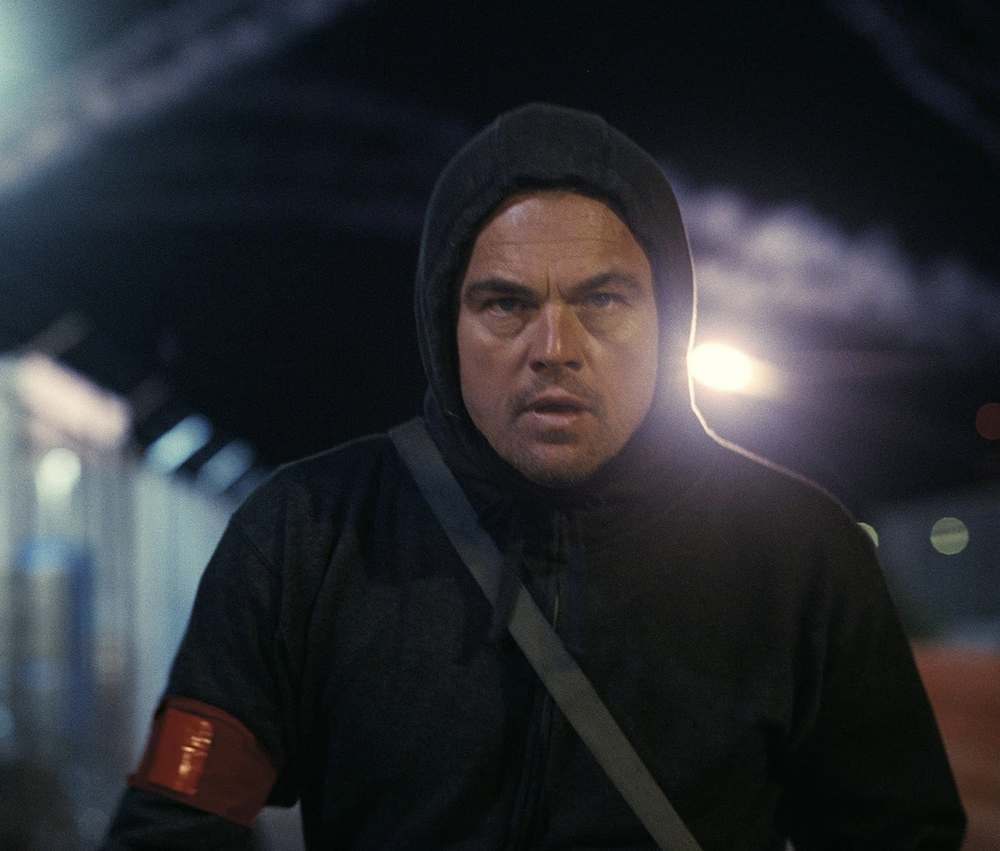
Perfidia is the charismatic albeit cartoonish embodiment of prototypical angry black feminism, as well as being a likewise cartoonishly insatiable sex addict. She and Bob run around doing antifa things, blowing stuff up, with Perfidia desiring sex while not yet clear of their various IED (improvised explosive devices) blast-zones.
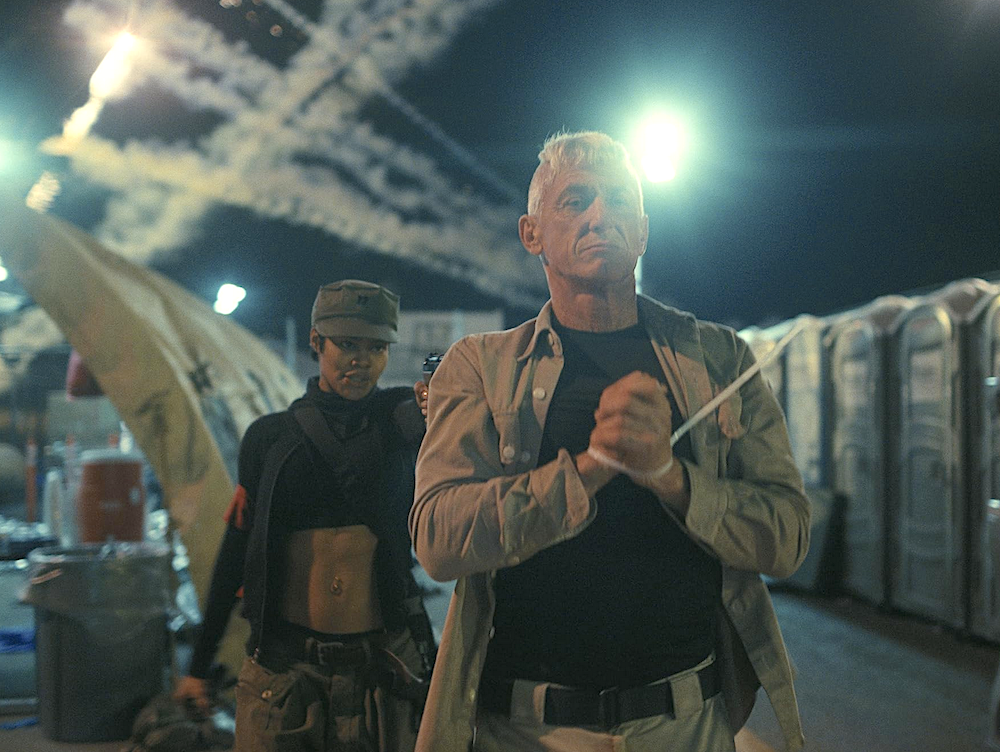
It all kicks off when the two attack an immigrant detention center, combating the government, personified by one Col. Steven J. Lockjaw (Sean Penn). Lockjaw is the cartoonishly steroidal, hyper-masculine, right-wing military leader of a platoon of ICE operators. The intended running gag throughout is that he’s a repressed homosexual. When a young woman snarkily queries, “Why’s your t-shirt so tight?” he shouts “I’m not gay!” And the audience howls.
Lockjaw hunts Perfidia down, but she sexually assaults him. And then, instead of bringing her to justice, the two of them begin a torrid, dominatrix-type affair.
Eventually Perfidia gets pregnant, and this leads to one of the movie’s vilest visuals—Perfidia ecstatically firing a bandolier of machine gun rounds over her pregnant belly. I’m guessing that probably could radicalize a fetus.
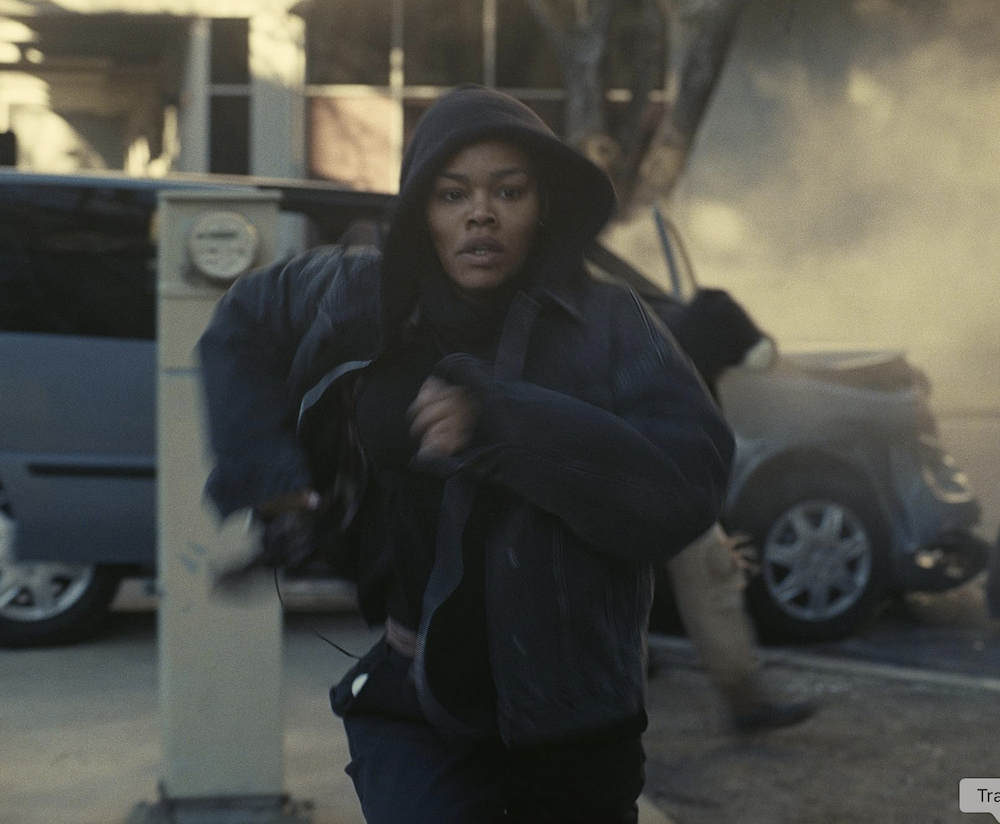
But who’s kid is it? Bob’s or Lockjaw’s? We don’t know for sure yet. Perfidia, true to her name, finally crosses the line and rats out her revolutionary compadres and enters the witness protection program, while Bob runs off with Willa (Chase Infiniti), the daughter who may or may not be his, and goes into hiding for years.
Secret White Supremacist Cabal!
Now, Lockjaw is slavering to be accepted into a farcical Bohemian Grove-Illuminati-KKK-type organization named the Christmas Adventure Club. He knows they’ll have him erased if they discover that he might have a half-black daughter and helps himself to all the powers at ICE’s disposal to track her down.
Soon, Willa is fleeing for her life from possible-dad Lockjaw. Other possible-dad Bob is also in hot pursuit of Willa, but he’s spent over a decade shrinking his brain via pot and booze. He can’t remember where The French 75’s safe house is, or any of the old verbal passwords, so he’s now running around like a chicken with no head trying to find her, often wearing a bathrobe. Bob’s like a very agitated and significantly more weed-addled version of Jeff Bridges’s “The Dude.”

Lastly, there’s the subplot of Benicio del Toro’s character. His Sensei Sergio St. Carlos is a sort of Latino Harriet Tubman, presiding over an extensive Underground Railroad-type network that harbors illegal aliens.
Reckless Paean to Radical Terrorism
“One Battle After Another” is Paul Thomas Anderson’s loose adaptation of author Thomas Pynchon’s novel “Vineland.” Anderson uses it to romanticize 1960’s Vietnam and civil rights political violence, drawing parallels to the real anti-establishment skirmishes perpetrated by radical groups such as the Black Panthers (pervaded by Marxist-Leninist ideology) and the Weather Underground (which received assistance from communist Cuba).
Anderson appears to laud the American left’s recent escalating attacks on conservatives (three failed assassination attempts of the president). While it’s all presented as entertainment, the macabre coincidence of this film opening in the literal and metaphorical wake of the assassination of peaceable conservative debater Charlie Kirk makes the whole thing feel morally reprehensible.
And while this fiction may coincide with America’s current political turmoil, its comic bloodshed and political absurdity exploits young political confusion using trendy chic, slick progressivism to grease the rails.

It all culminates in the presentation—a coming-out party, or maybe coronation—of biracial daughter Willa, who’s genetically downloaded both her parents’ murderous tendencies. “Maybe you will save the world,” intones her mother from the Great Beyond. It’s a moment clearly intended to invoke Sarah Connor’s last message to her future, savior-like son, John, in 1984’s “The Terminator,” who will liberate us all from the cosmos’s evil terminators for all eternity.
Voila—Willa becomes the film’s American Girl violent revolutionary heroine—the face and savior of future America from conservative values. All, unsurprisingly, is underscored by Anderson’s use of Tom Petty’s “American Girl.”
The problem with “One Battle After Another” is that the characters are so over the top, it’s difficult to tell if Anderson is being serious or not. The whole thing seems to be giving a hall pass to political assassination—as Perfidia says to Lockjaw, “Revolutionary violence is the only way!” Anderson appears to be intentionally kicking the hornet’s nest of the left, and inciting Gen-Z, Gen-Alpha, and Gen-Beta audience members—who are by and large clueless regarding the 1960s counterculture references—to blood-lust.
If, underneath all the nuttiness, Anderson is deadly serious about the message, and using comedy as a Trojan Horse to deliver it, then the civil war-stoking “One Battle After Another” was hands-down 2025’s most reckless and irresponsible film. As I mentioned at the outset, it is a wild ride, with some laughs and a fun car chase, but you will exit the theater not wanting to hear a piano for a long time.
Oscar, Schmoscar
As I said in my review of 2018’s Oscar-winner “The Shape of Water”:
“Bestiality wins the Oscar. Metaphor, schmetaphor: Can we get literal for a minute? Basically, boiled down to its essence, what you’ve got here is a woman having, er, relations—with a fish. What? Yes. “But it looks humanoid!” So does a silverback gorilla.”
“One Battle After Another” incites revolutionary violence and they throw six awards at it. Clearly the Academy is encouraging an ever-darkening moral dye-vat in American cinema.
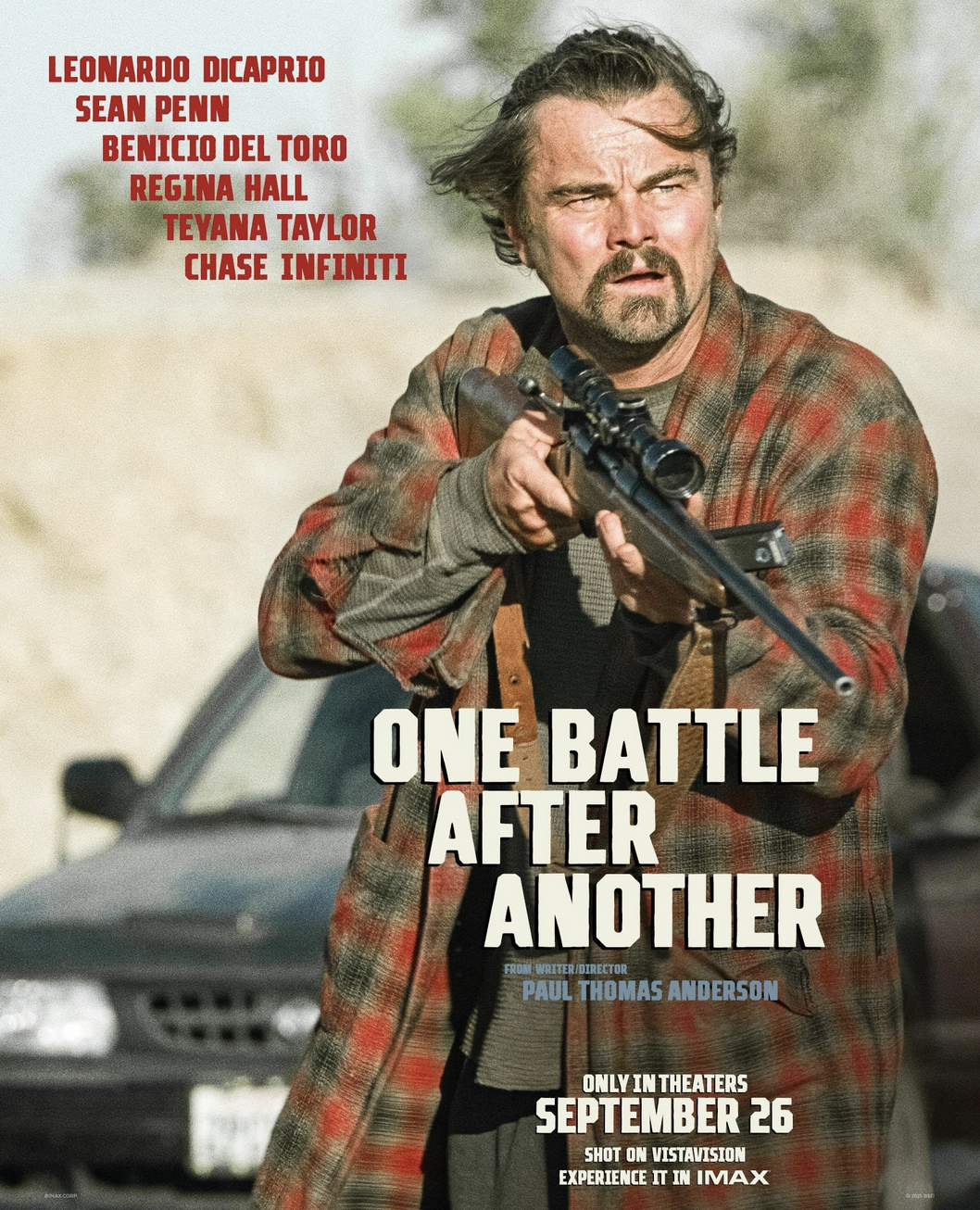
‘One Battle After Another’
Director: Paul Thomas Anderson
Starring: Leonardo DiCaprio, Sean Penn, Benicio del Toro, Teyana Taylor, Chase Infiniti
MPAA Rating: R
Running Time: 2 hour, 41 minutes
Release Date: Sept. 26, 2025
Rating: 3 stars out of 5 for entertainment, zero stars for goading revolution, irrespective of intention
Would you like to see other kinds of arts and culture articles? Please email us your story ideas or feedback at features@epochtimes.nyc