Eagles have a tender spot in their hearts that few humans will ever know. Even the huge raptor that bit Canadian veterinarian Clifford Redford had the heart to say “thank you”—in its own bald eagle way—after he saved its life.
The female eagle had been shot and crashed to the ground before arriving in his clinic one fateful winter in Ontario.
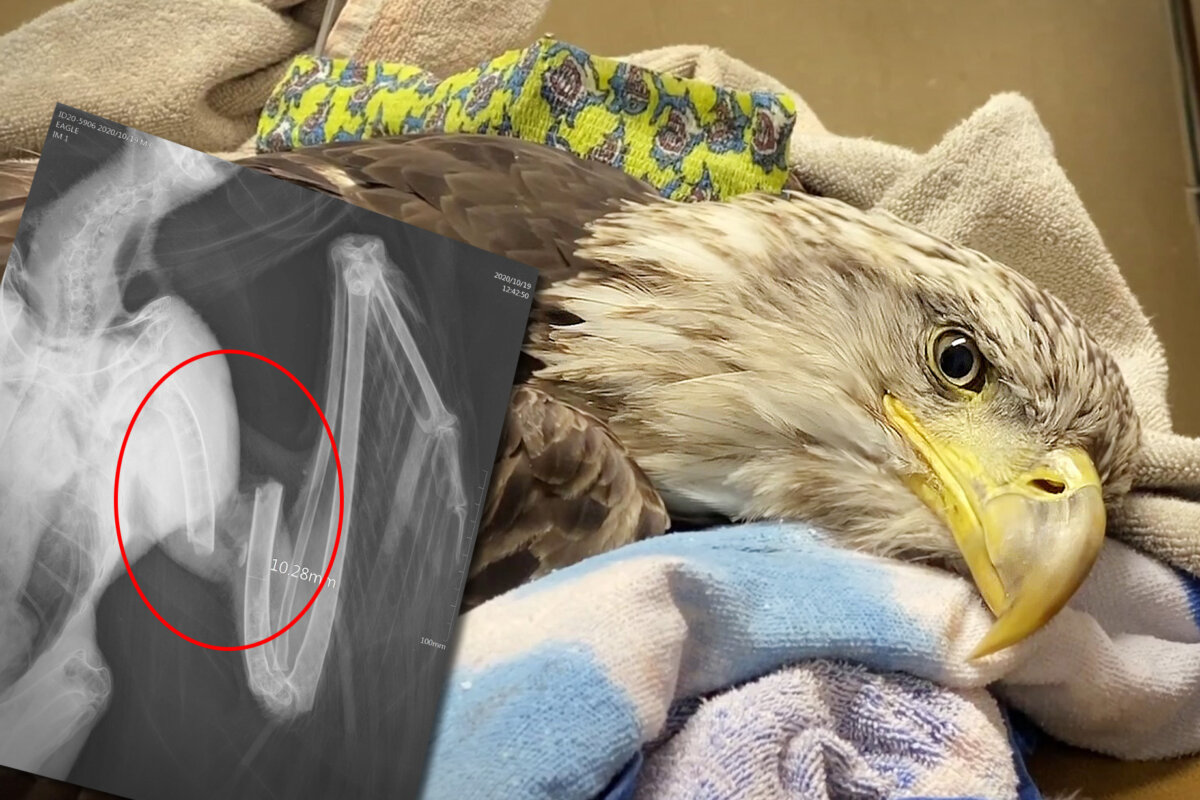
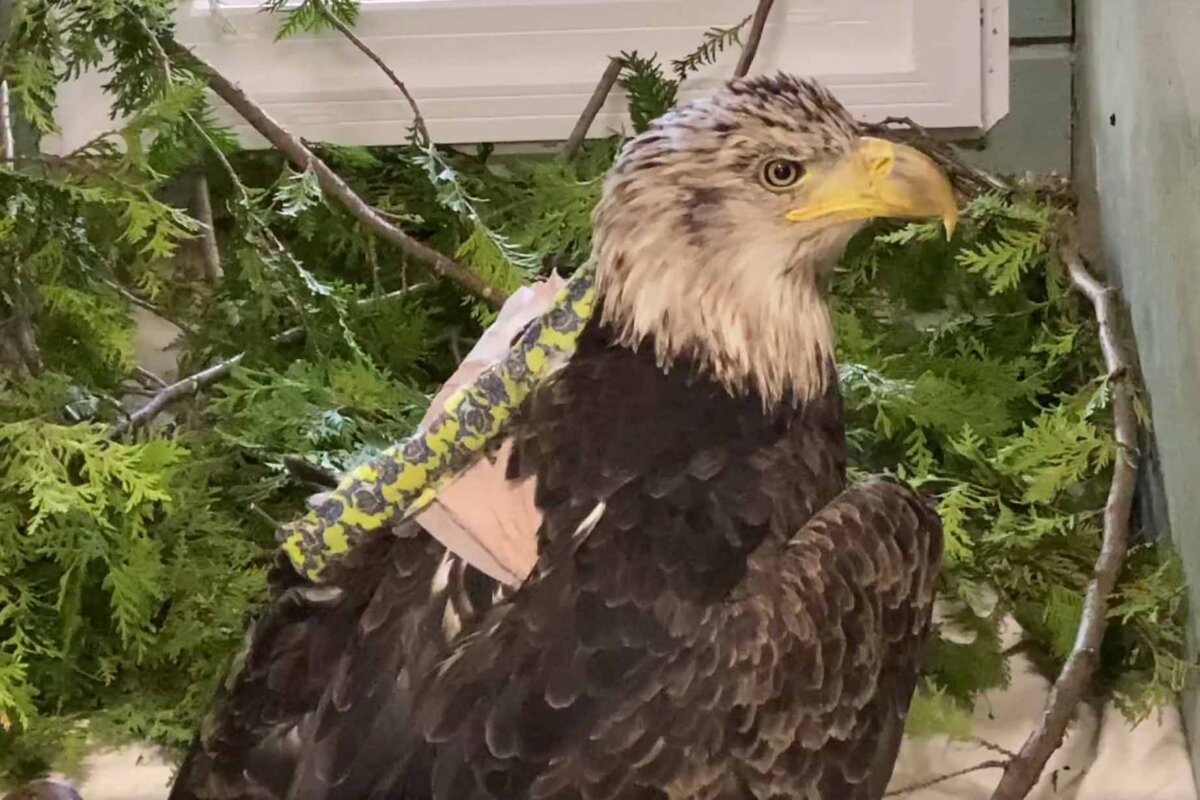
Wolf, as the eagle came to be named, was injured in a hunting incident near the frozen Niagara River. Buckshot had passed clean through its wing, leaving no visible wound, but when the bird fell it suffered a major fracture. The hunters, who were aiming at ducks and shot Wolf by mistake, felt sorry and carried her to Shades of Hope Wildlife Refuge, Redford’s clinic in Markham.
Her humerus fully severed, puncturing through her wing, Wolf was flightless. Redford and his assistants knew they had to hurry if she was to regain air mobility.
“The biggest problem was she was so strong and so muscled that already the muscles were contracting on the wing,” Redford told The Epoch Times. “We were pulling the bone—the two pieces of bone, they were overlapping. It’s just what’s called a muscle contraction that can happen.”
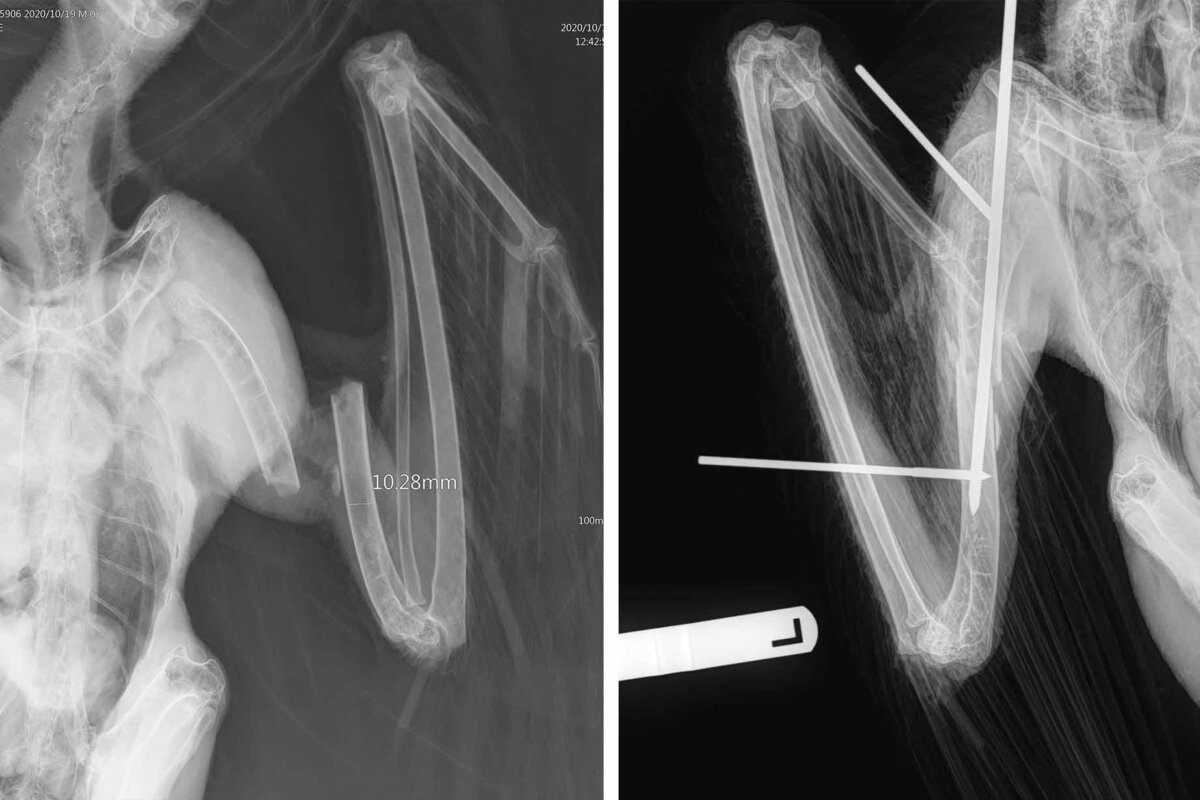
To save the wing they needed to surgically insert a titanium rod lengthwise in the bone’s hollow center with several smaller pins running crosswise.
But that procedure was the easy part.
“The biggest difficulty we had wasn’t actually pinning the bone or stabilizing it or keeping her under anesthetic,” Redford said. “It was being strong enough to stretch out those muscles that had been contracted.”
He describe it as doing “yoga” on Wolf’s wing while operating.
Fortunately, everything went well. It was “humbling” to operate on a majestic bird with a six-foot-long wingspan, Redford said. Afterwards, Wolf spent the better part of four weeks in Redford’s clinic, needing regular physio from day one after surgery.
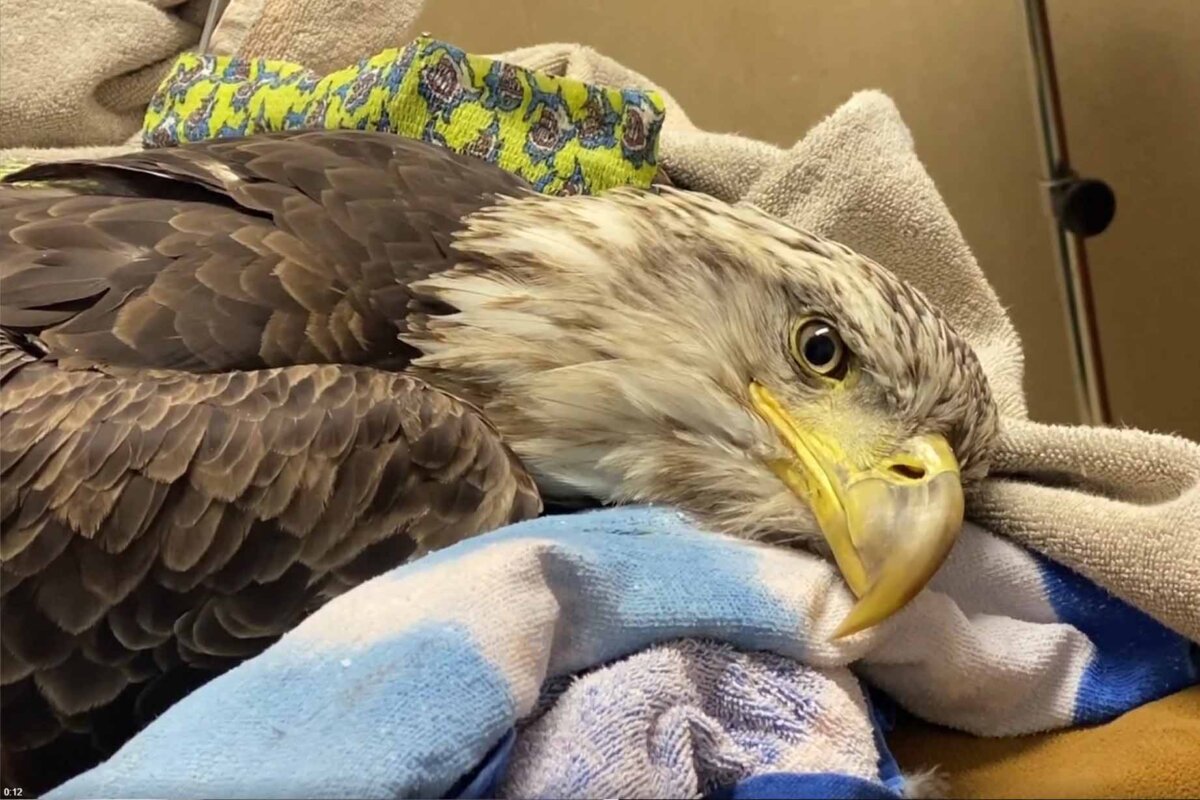
Powerful birds like bald eagles often must fly carrying animals or fish they’ve hunted, so the bandages had to come off just 48 hours later, otherwise her life-sustaining muscles might atrophy. Staff faced danger each time they contacted the “fearsome” bird, Redford said. She would snap her sharp beak and thrash her talons.
“We would don sort of simple armor,” he said, “thick leather gowns and these thick leather gloves.” Though the bird lunged, they stayed safe by tossing a blanket over her head. Mostly they avoided Wolf as much as possible, innocuously leaving fish in her enclosure, knowing she must keep fear of humans in her heart.
But it was hard not form some kind of bond.
“They decided to name her Wolf because she was becoming aggressive like a wolf, which is what we want,” Redford said.
Claims that Redford helped a bald eagle “fly again” might be slightly exaggerated, if taken too literally. It was the Owl Foundation in Niagara Falls, where Redford handed Wolf, that gave her ample enclosed airspace for her to learn to fly again.
“They were able to get her a little chubby and strengthen up her wing,” Redford said. “Once they saw that she could fly back and forth in the baby area, that’s when they called me and said, ‘Hey, we’re going to release Wolf. Do you want to come and do it?’ And I said, ‘yes!’”
It was the animal lover in him, he said, that prompted him to give Wolf one last exam on the frozen Niagara River before setting her free.
But Redford got more than he bargained for.
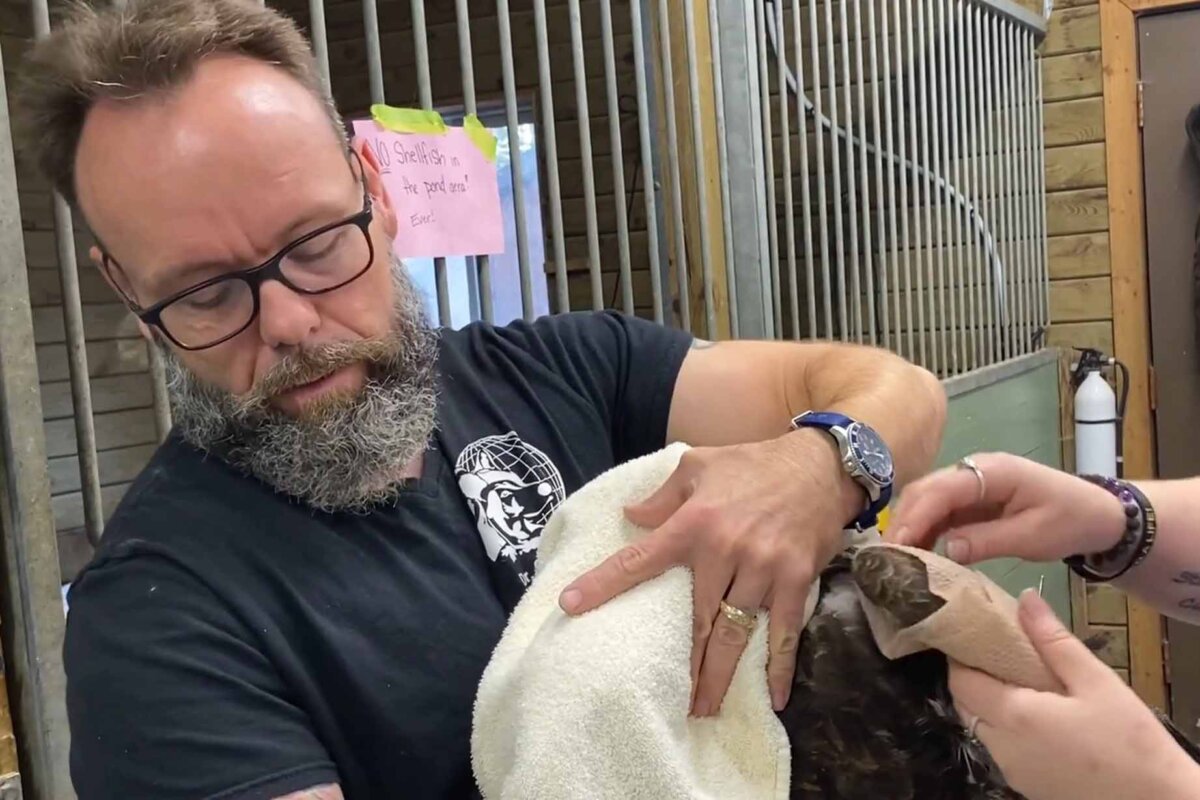
Half covered in a blanket, her wing was stretched out as he flexed it. Then, bantering with his colleague, he carelessly slipped his hand under and brushed Wolf’s voracious beak. There was pain and a clacking sound. Wolf had bitten him.
“She could have taken my finger off, and all she did was gave me a little love bite,” he said. “She was graciously giving me a lesson without hurting me.”
“I truly believe that although she was angry at us at times, she understood that we were helping her get better,” he added.
Redford says leaving Wolf in the snow didn’t feel “bittersweet,” as that’s where she belongs. After basking in the sun for half an hour, she took flight, never to be seen by them again.
Did she say “thank you” with that last turn of her head toward her rescuers before flying away? “I think so,” he said. It was, at least, a form of acknowledgement.
“It was wonderful,” Redford said. “This is exactly why we take care of animals.”