One thousand dollars is a mighty sum (not too big, but still bigger) and one that should be used wisely. Yet in his short story “One Thousand Dollars,” O. Henry follows young Bobby Gillian as he debates what he should do with the $1,000 (over $33,000 today) he’s just inherited. He’s unsure how he should use this money, so he seeks advice from others.
An Inherited Sum
After his uncle dies, young Bobby Gillian receives $1,000, as stipulated by his uncle’s will. Though his uncle was a millionaire, he bestowed $1,000 on Bobby and gave his butler, his housekeeper, and his ward $10 and a ring. The rest of his millions were given to scientific research and the development of a hospital.
The lawyer gives inheritance to Bobby and announces that there is a stipulation: After he spends the money, Bobby must return to the lawyers with an account of “the manner of expenditure.” Bobby promises that he will do so and heads out the door, wondering what he can do with such an odd amount of money. He felt the amount neither enough to secure his future, nor small enough to fitter away.
The first stop Bobby makes is to his club, but, rather than buying a drink or partaking in any type of club recreation, he finds his acquaintance, Old Bryson. He tells the uninterested Old Bryson his funny predicament: His uncle was a millionaire, but he only gave Bobby only $1,000. What is he to do with such an odd sum?
Old Bryson sarcastically answers that $1,000 could be used for many different things. Bobby reiterates his question in all earnestness. Old Bryson suggests that Bobby buy the actress, Miss Lotta Lauriere, a present, then use the rest of the money to “take [himself] off to Idaho and inflict [his] presence upon a [sheep] ranch.”
Bobby then proceeds to travel all around town seeking advice. He visits Miss Lotta Lauriere, then he asks the cabby and a blind man what they would do, if they had $1,000. Unfortunately, since he receives no good advice, he returns to the lawyers’ office to know more about the details of his uncle’s will.
A Codicil
When the lawyer reveals to Bobby that his uncle’s ward will receive only $10 and a ring, Bobby takes the cab to his uncle’s old home, where Miss Hayden, his uncle’s ward still lives. He finds her and presents her with his $1,000, saying, “It seemed that [my uncle] loosened up a little on second thoughts and willed you a thousand dollars. … Here it is.”
-

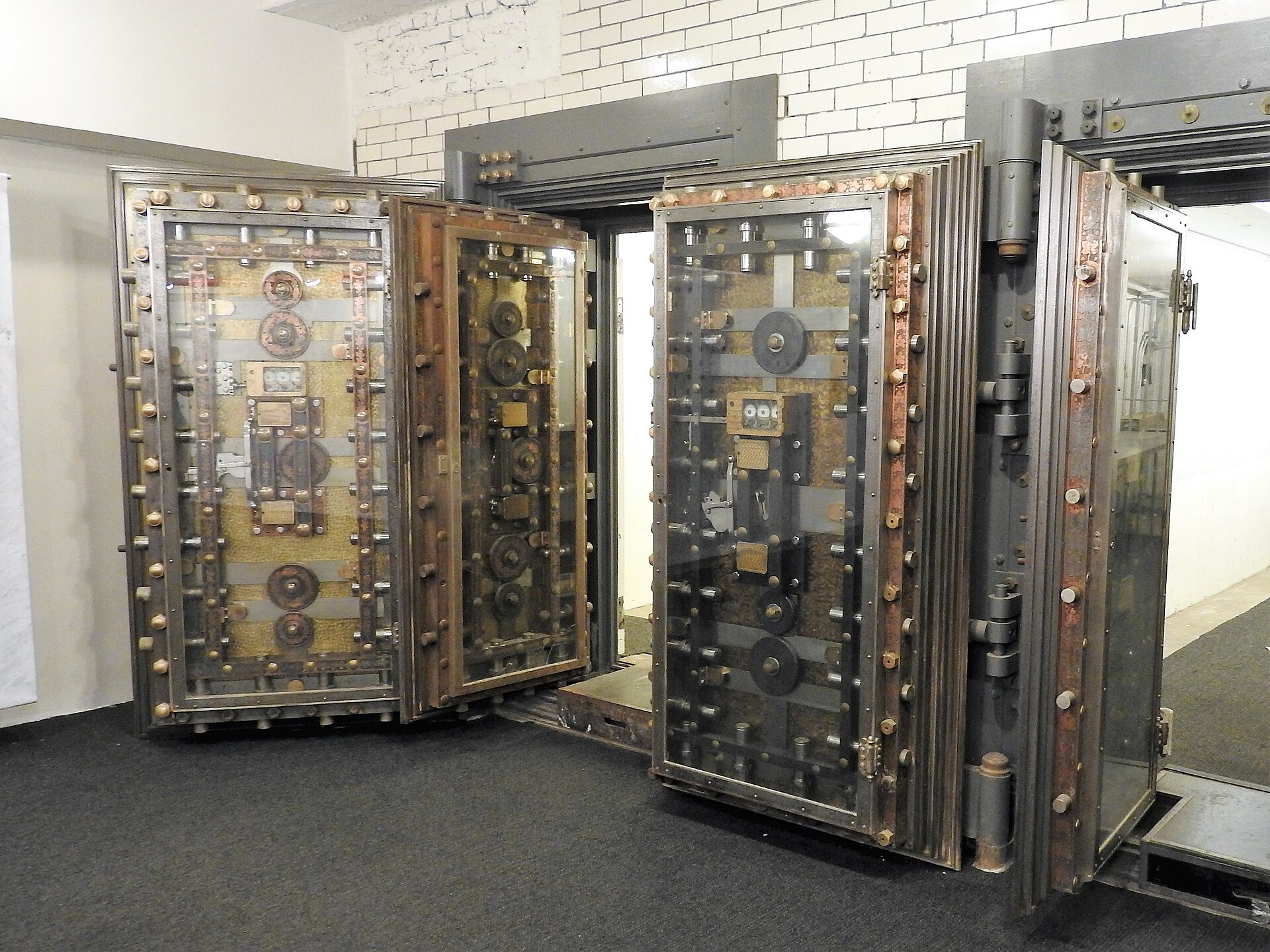 The door of the bank vault at Porecelanosa, New York City. (Jim.henderson/CC BY-SA 4.0)
With Miss Hayden’s joy secured, Bobby returns to the lawyers with a full account of “the manner of expenditure.” But before the lawyers read his account, they reveal a codicil, which his uncle attached to Bobby’s use of the money.
Through this story, Henry shows the beauty and joy found in acts of selflessness. He demonstrates, as Anne Morrow Lindbergh says in “Gift From the Sea,” that “purposeful giving is not as apt to deplete one’s resources; it belongs to that natural order of giving that seems to renew itself even in the act of depletion. The more one gives, the more one has to give.”
Selflessness, Henry points out, possesses that magical quality wherein purposeful, selfless giving is reimbursed and blessed with further abundance and graces. In fact, selflessness is the beautiful act by which nature and life themselves continue and thrive, producing hearts full of joy and wonder.
What arts and culture topics would you like us to cover? Please email ideas or feedback to features@epochtimes.nyc