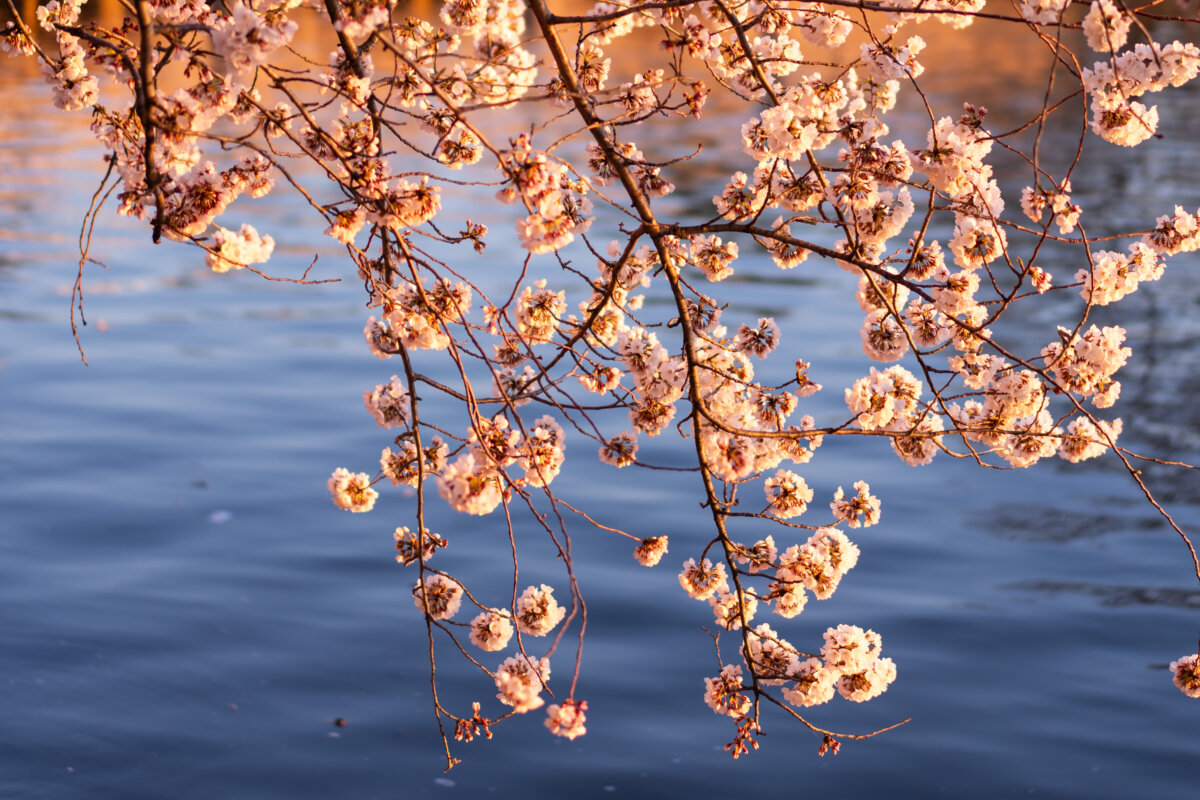
In 1909, Yukio Ozaki, the mayor of Tokyo, had coordinated with his city council to gift America 2,000 cherry blossom trees. The trees arrived in the nation’s capital on Jan. 6, 1910, ready to be planted. Upon inspection, the trees were summarily set ablaze.
The arrival of the trees had been a 25-year labor of love for Eliza Scidmore, the renowned travel journalist. To learn that the cherry trees, which had traveled thousands of miles, ultimately became firewood, may have been disheartening, but it was not defeating. Indeed, there was good reason for destroying the gift. After the trees underwent an inspection by the United States Department of Agriculture (USDA), they were found to be diseased and infested with insects. In fact, Tokyo’s gift resulted in America’s Plant Quarantine Act of 1912.
Scidmore and Fairchild
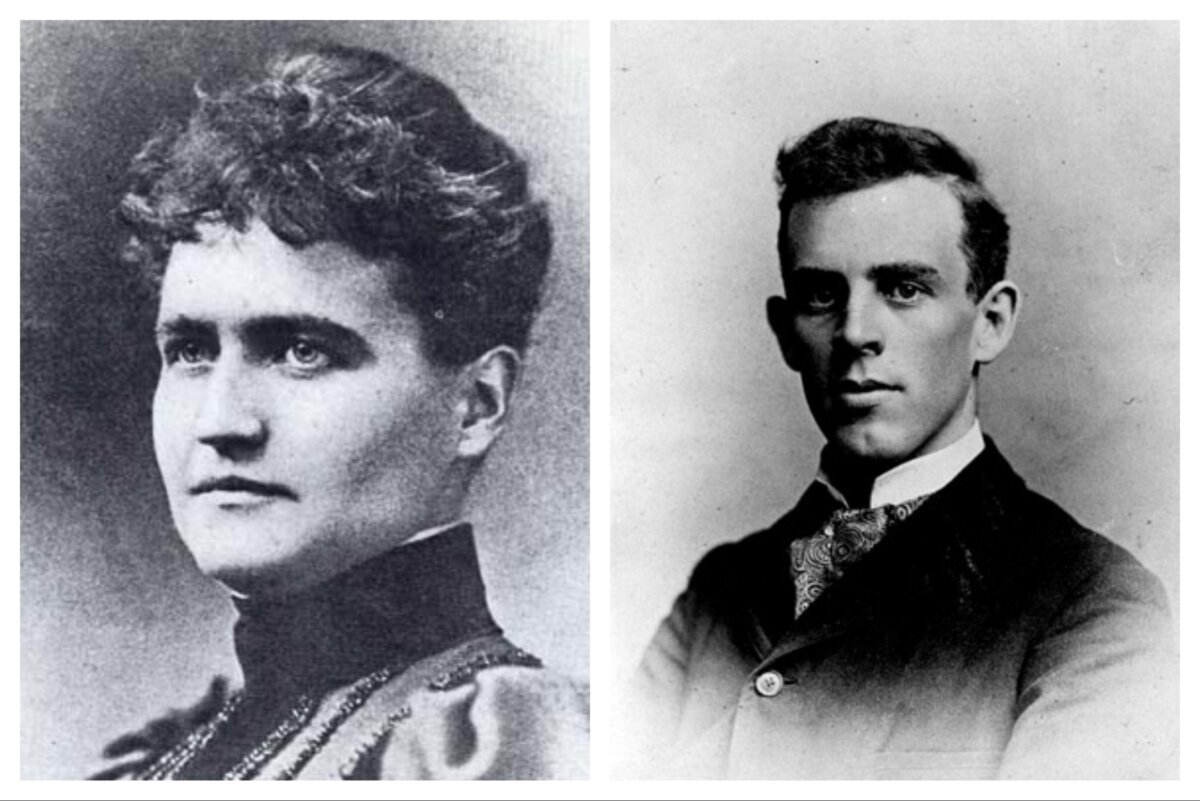
Counterintuitively, the destruction of the trees was actually a step in the right direction for Scidmore’s vision of Washington. She had earned a reputation as a dauntless, adventurous, and gifted travel writer. In 1883, she made a name for herself after detailing her experiences in Alaska, which she published in 1885—the same year she first traveled to Japan. In 1888, the National Geographic Society was formed, and, by 1890, Scidmore was a contributing writer for the Society’s magazine. By 1892, she was on its board of managers.
It was her many travels to Japan, which were often published by National Geographic, that led her to begin a long, and, more often than not, frustrating campaign to beautify the National Mall. She was tireless in her efforts to bring the cherry blossom tree to Washington, consistently presenting the idea to each superintendent of the Office of Public Buildings and Grounds of the national capital. At best, there would be little interest shown; at worst, she would be completely ignored. It was not until early in the 20th century that the path to planting these beautiful and exotic trees would start to present itself.
At the turn of the century, David Fairchild had been working for the USDA about a decade. At 22, he created the USDA’s Section of Foreign Seed and Plant Introduction. He had been to many parts of the world seeking out plant life that would enhance the produce of American farmers. By the end of his long and illustrious career, he had introduced cotton from Egypt, mangoes from India, hops from Bavaria, peaches from China; avocados from Chile, and hundreds of other crops from around the world. After his visit to Japan, he brought home 100 cherry trees and planted them at his home in Chevy Chase, Maryland.
He had fallen in love with the Japanese tree and wanted to test the plant’s hardiness in America. The plant thrived in the Maryland soil. The following year, on Sept. 26, 1907, the Chevy Chase Land Company ordered 300 cherry trees to be planted in the area. On Arbor Day 1908, Fairchild gave out cherry trees to local Washington students to plant in the local schoolyards. That same Arbor Day, Fairchild gave a presentation, with Scidmore in the audience. The two immediately connected and discussed the cherry tree in America. The popularity of the tree was slowly but surely growing.
The Great Cherry Tree Patron
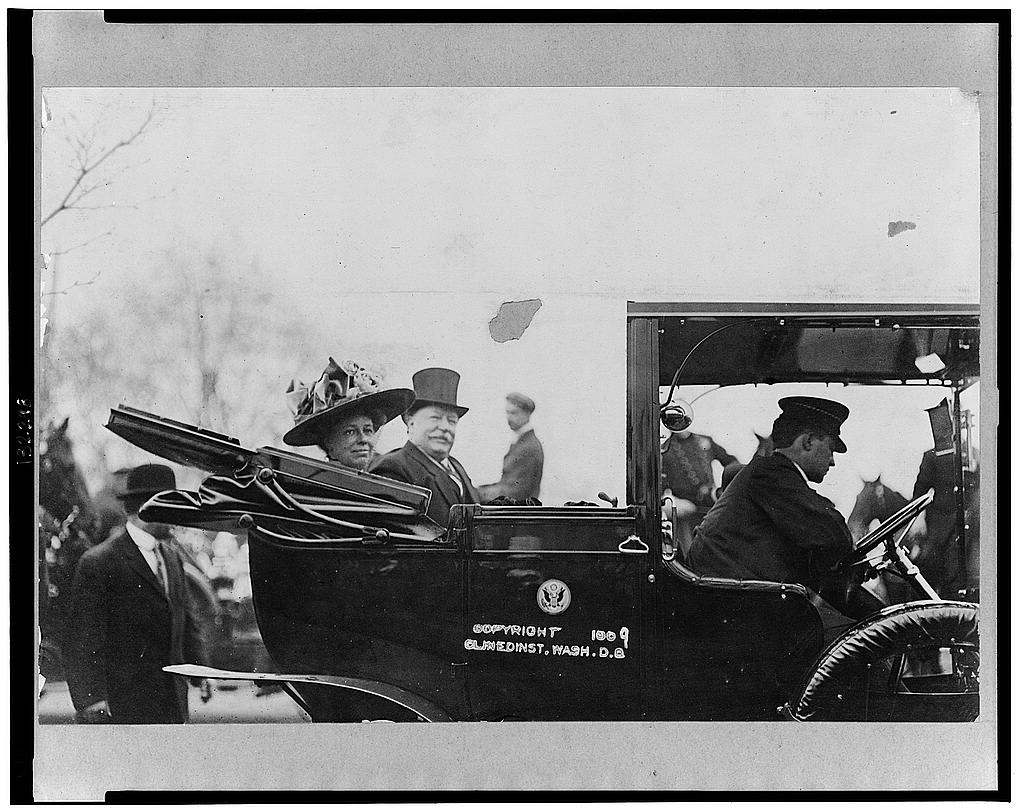
Later that same year, the cherry tree received another major boost: the election of William Howard Taft. William and his wife, Helen, had lived in the Philippines and Japan for several years when the new president had been civil governor of the Philippines. She had been inspired by the beauty of the Japanese tree and the carriage rides she would take along the streets of Manila, specifically a fashionable park near the bay called the Luneta. She and Mr. Taft were also automobile enthusiasts. When Taft was elected, he turned the White House horse stables into a large garage where he stored four vehicles: a Baker electric, two Pierce-Arrow limousines, and a seven-seat White Steamer.
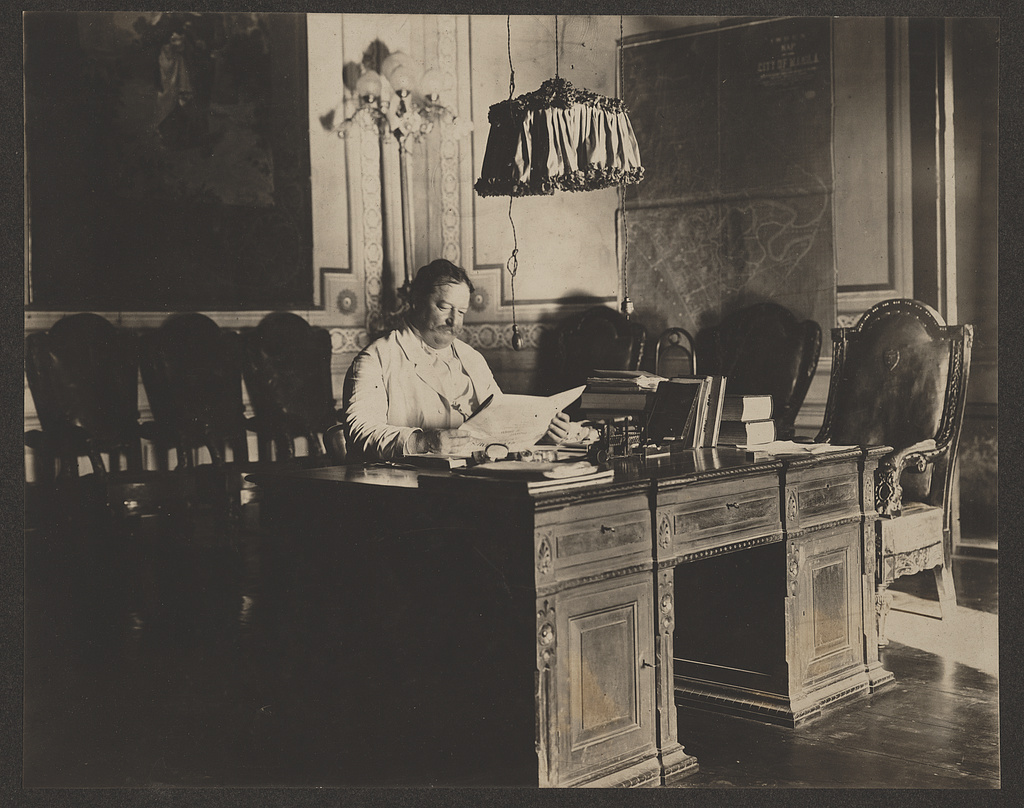
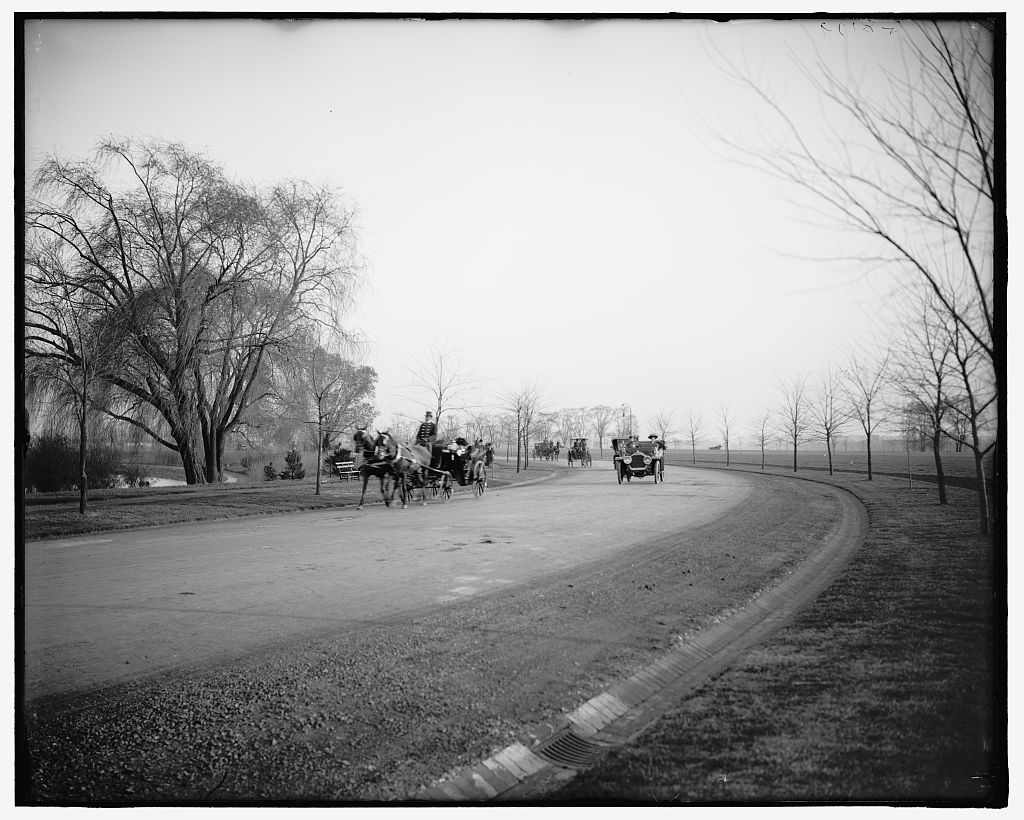
William Howard Taft had been chosen as President Theodore Roosevelt’s heir apparent to continue Roosevelt’s policies, but First Lady Taft had arrived with the primary objective of beautifying the National Mall. During rides in the White Steamer along the paved path of the northern section of Potomac Park, near an area now known as Tidal Basin, she began to visualize her plans. Her work on the Mall would be the first public project led by a First Lady.
“For a long time before Mr. Taft became president I had looked with ambitious designs upon the similar possibilities presented in the drives, the river-cooled air and the green swards of Potomac Park,” Helen Taft recalled.
The Cherry Tree Connection
The inauguration of Taft took place on March 4, 1909. It appeared that Scidmore finally had a kindred spirit in power. She wrote a letter to the First Lady a month later discussing the possibility of obtaining cherry trees for the Potomac Park.
“Thank you very much for your suggestion about the cherry trees,” First Lady Taft wrote on April 7, 1909, just two days after receiving Scidmore’s letter. “I have taken the matter up and am promised the trees, but I thought perhaps it would be best to make an avenue of them, extending down to the turn in the road, as the other part is still too rough to do any planting. Of course, they could not reflect in the water, but the effect would be very lovely of the long avenue. Let me know what you think about this.”
The “promised trees” included 90 that were purchased on April 14 by Col. Spencer F. Cosby, the superintendent of the Office of Public Buildings and Grounds. First Lady Taft had put the word out that all American nurseries should send their flowering cherry blossom trees to Washington. The trees would be used to line the park’s paved path known as the “Speedway.” Three days after Cosby’s purchase, Taft hosted the grand opening for what would become a renovated Potomac Park.
An Embarrassing Episode
During this time, Jokichi Takamine, Japan’s famed chemist, happened to be in Washington. He mentioned to First Lady Taft that he could have 2,000 cherry trees sent from Japan. She readily accepted, and Takamine immediately coordinated with Kokichi Mizuno, the Japanese consul general in New York. Mizuno then contacted Mayor Ozaki to have the trees shipped.
The trees arrived by ship in Seattle on Dec. 10, arrived by train in Washington on Jan. 6, but, as aforementioned, were diseased and infested. The moment nearly turned into an international political disaster, as the USDA entomologists, irate about what could have become an ecological disaster, invited a photographer to capture the moment they torched the trees. The photo made its way to the front page of The New York Times.
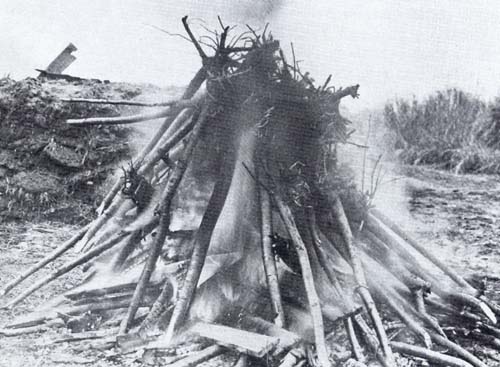
President Taft’s administration worked to quash the possible political fallout. Cosby informed Mayor Ozaki, who was in Washington at the time, of the status of the shipped trees and that they had to be destroyed. Secretary of State Philander C. Knox contacted Count Yasuya Uchida, the Japanese ambassador to the United States explaining that keeping the trees posed an “enormous detriment to fruit growers and agriculturists of the country. From this point of view, the Department of Agriculture seems to have no choice but the painful duty of ordering the destruction of the trees.”
It was an embarrassing episode for the Japanese, but they dealt with the situation stoically. Ozaki subsequently informed Tokyo that a new, and certainly healthier, shipment of cherry trees be secured. Over the next two years, a variety of cherry blossom trees were collected. By the end of January 1912, approximately 6,000 trees, which had undergone extreme inspections and treatments, were placed aboard the Japanese freighter Awa Maru, which made its way to Seattle. Half of the trees were sent to Washington and the other half went to New York City.
The Cherry Tree Tradition
In Seattle, the trees were placed aboard specially heated and insulated train cars to the nation’s capital. Of the approximate 6,000 trees, 3,020 were designated for the National Mall. It was during this week in history, on March 27, 1912, that First Lady Helen Taft, along with Iwa Chinda, the wife of the new Japanese ambassador, planted two cherry blossom trees along the northern bank of the Tidal Basin. While Taft and Chinda performed the official role of planting the two trees, Scidmore and Fairchild also played a part, as each held the shovels used during the ceremony.
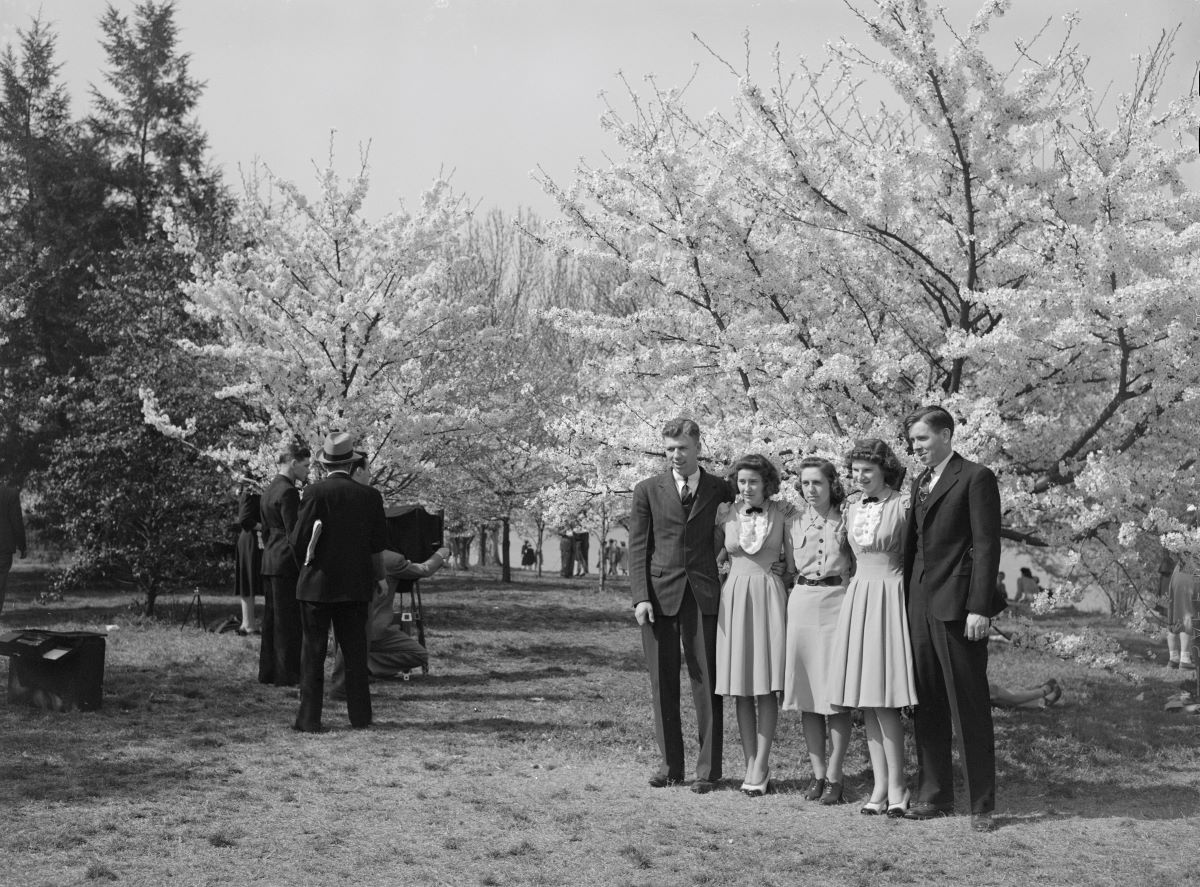
Between 1913 and 1920, the remaining cherry trees were planted. Ever since, the cherry blossom tree in the National Mall has been a “memorial of national friendship between the U.S. and Japan.” Since 1935, the National Mall has hosted the annual Cherry Blossom Festival, with the First Lady typically in attendance.
Never miss a This Week in History story! Sign up for the American History newsletter here.
What arts and culture topics would you like us to cover? Please email ideas or feedback to features@epochtimes.nyc