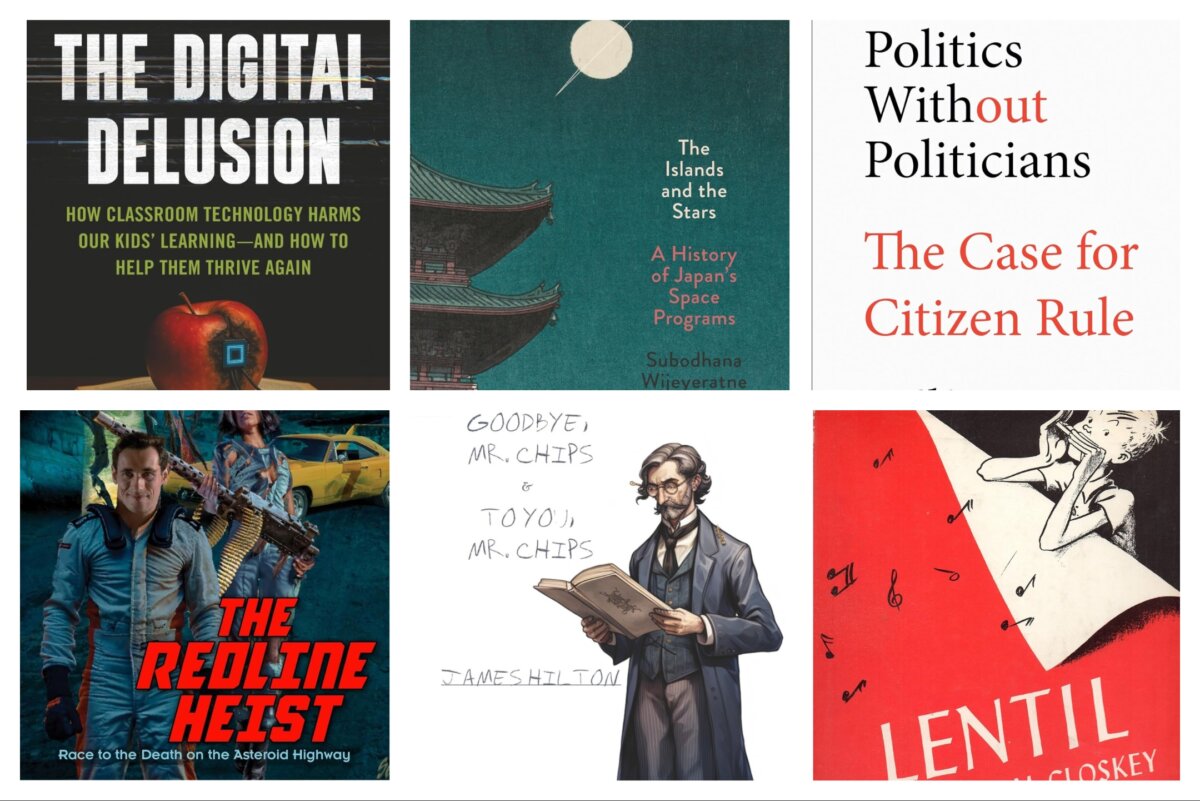
This week we feature a common-sense call to return to old-school learning methodologies and a sentimental story of one man’s calling to nurture young minds.
Education
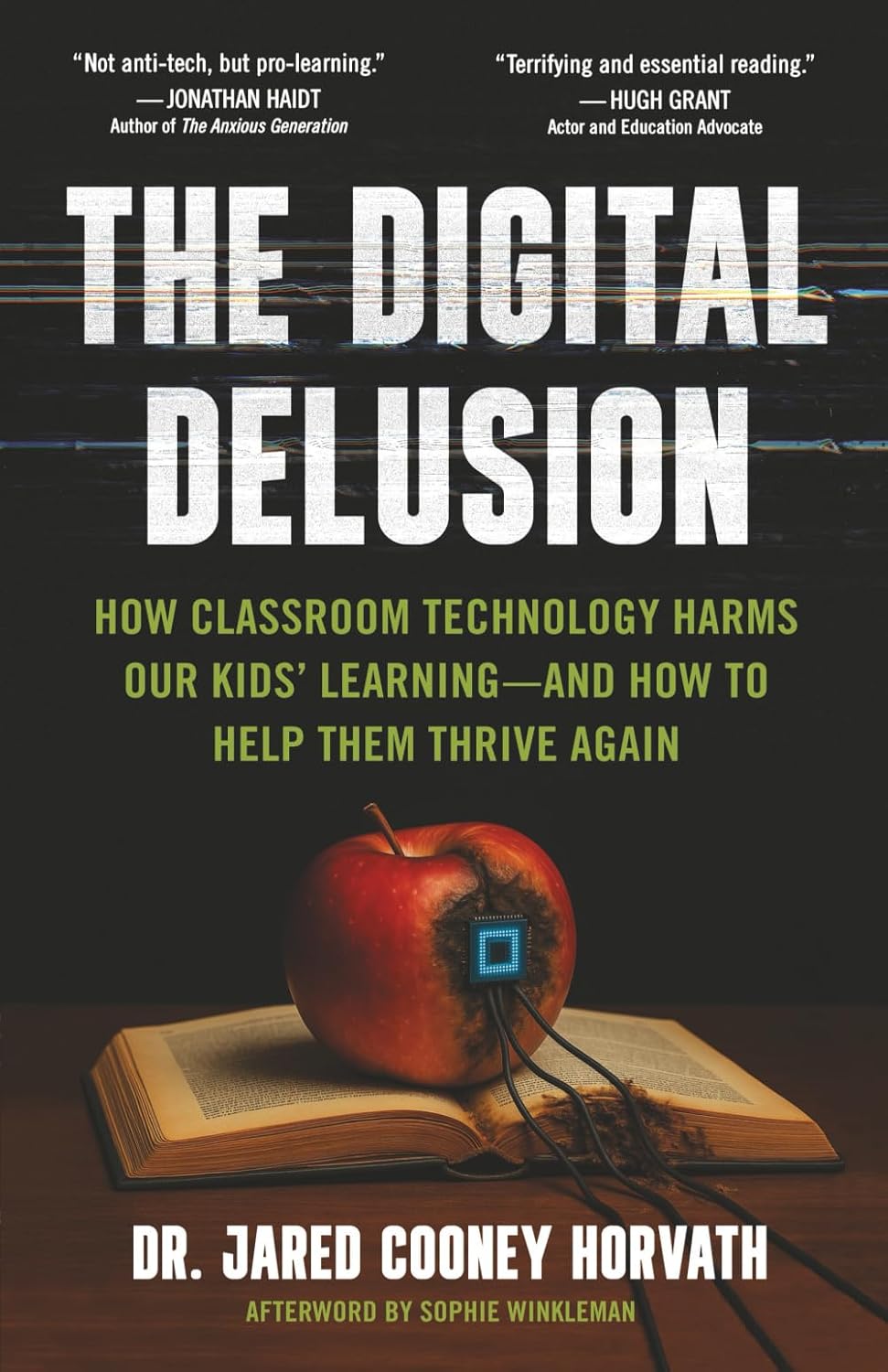
‘The Digital Delusion: How Classroom Technology Harms Our Kids’ Learning—And How to Help Them Thrive Again’
By Jared Cooney Horvath
This trumpet blast from a neurologist and teacher urges a return to real learning in American schools by reducing or discarding the use of screens in classrooms and bringing back books and pencil-and-paper learning. Horvath, who is not anti-tech but pro-learning, examines the damage done by deploying computers as teaching tools, rendering students weaker in their academics and ability to focus. Given the current debate over our failing schools, this book is a must-read for parents and educators.
LME Global, 2025, 360 pages
Space
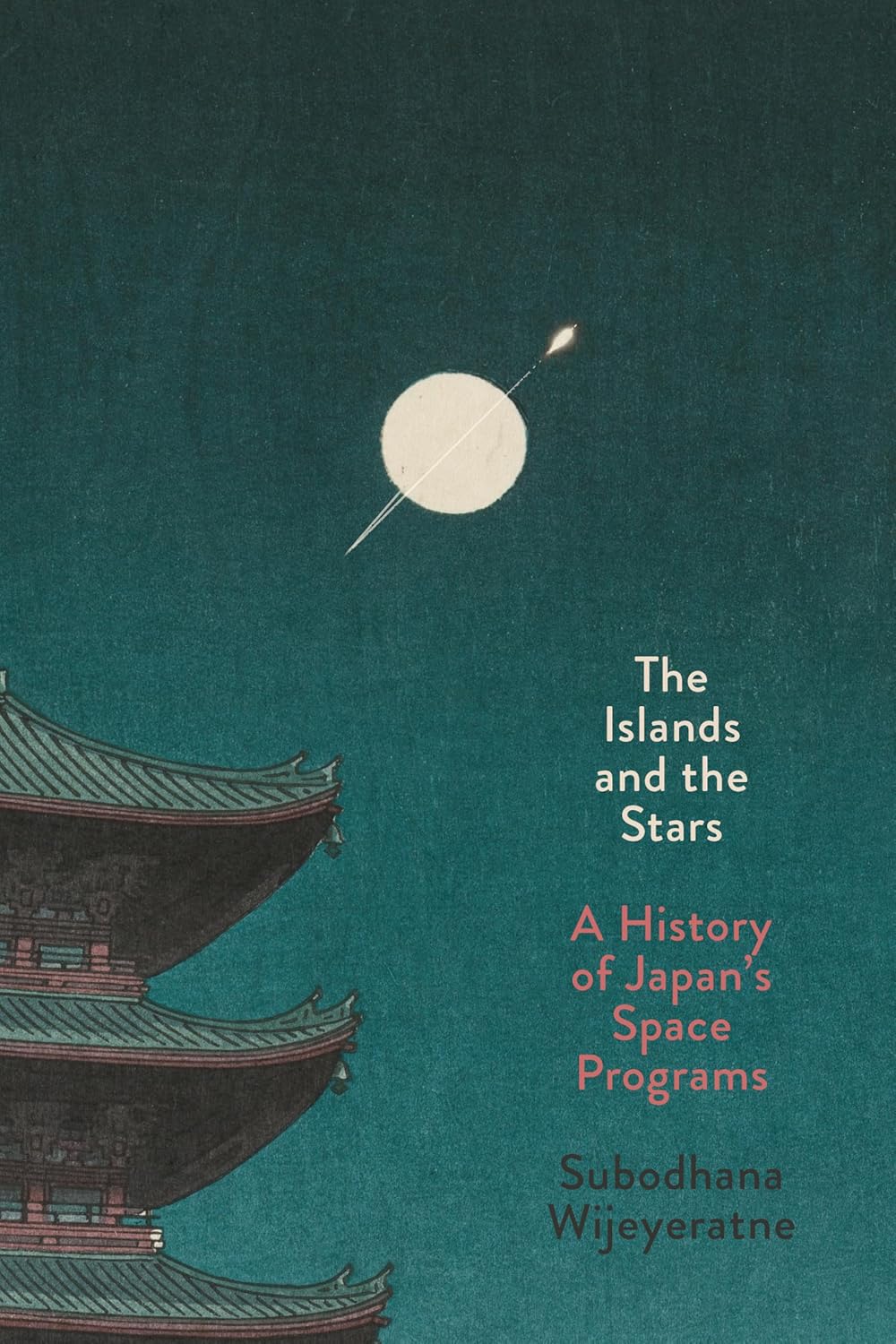
‘The Islands and the Stars: A History of Japan’s Space Programs’
By Subodhana Wijeyeratne
Japan, with its space organization JAXA, has one of the world’s largest national space organizations. In the 1970s and 1980s, it was the third largest, behind only the United States and the Soviet Union. Yet it faltered in the 1990s, causing a reorganization of its multiple space agencies into JAXA in 2003. This book, a history of Japan’s rocketry from the 1920s through 2003, is the most comprehensive English-language account of Japan’s space industry available. It traces its successes and failures.
Stanford University Press, 2026, 352 pages
Government
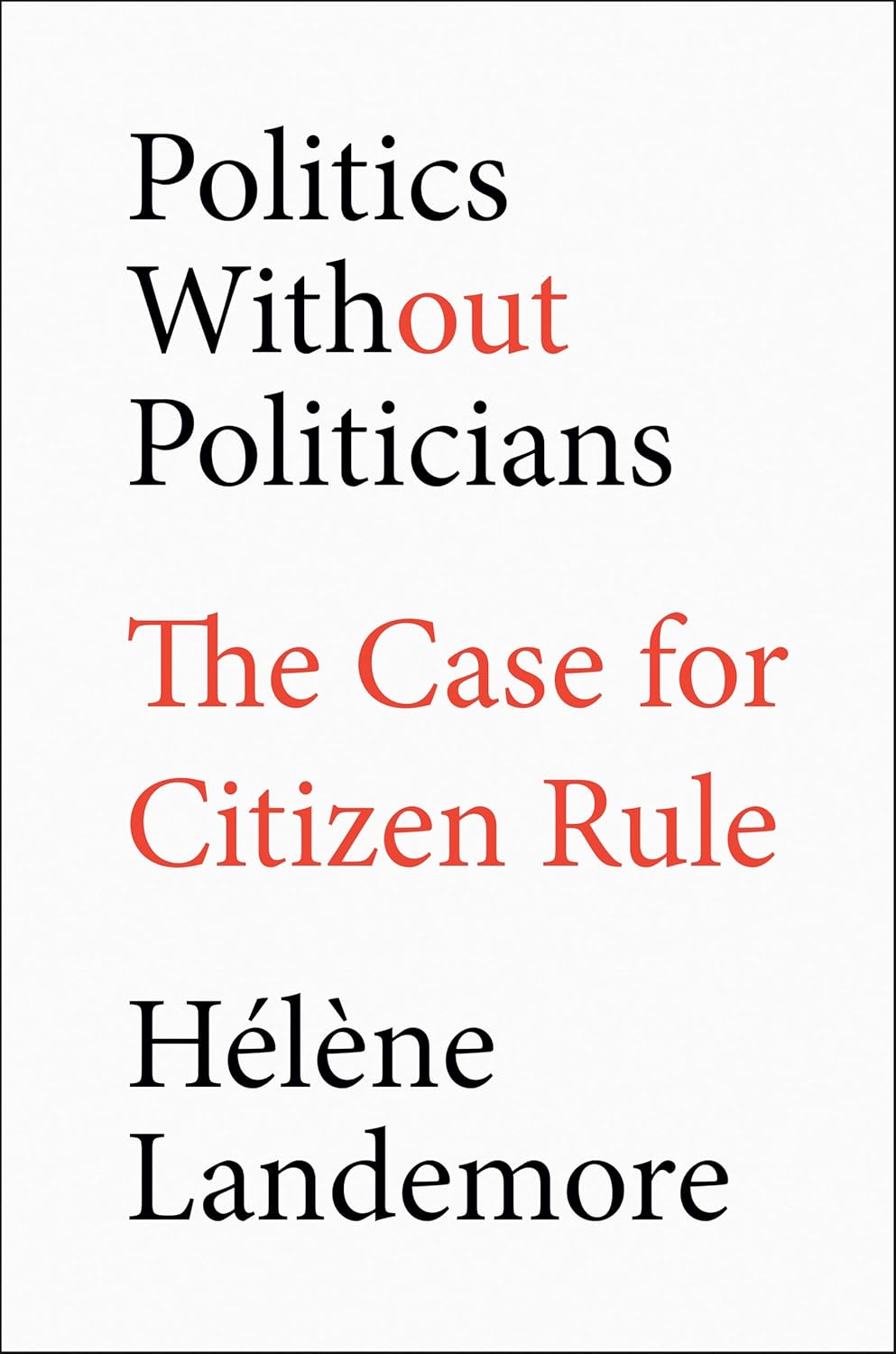
‘Politics Without Politicians: The Case for Citizen Rule’
By Hélène Landemore
Americans consistently complain about politicians and their many shortcomings. Indeed, such complaints are hardly an American phenomenon. Hélène Landemore, a Yale political science professor, makes a very interesting case that perhaps the future is politics without politicians. As her subtitle suggests, hers is a “case for citizen rule.” A thought-provoking idea, the author makes a convincing case. Admittedly theoretical, she does provide recent and successful examples of citizen rule.
Thesis, 2026, 320 pages
Science Fiction
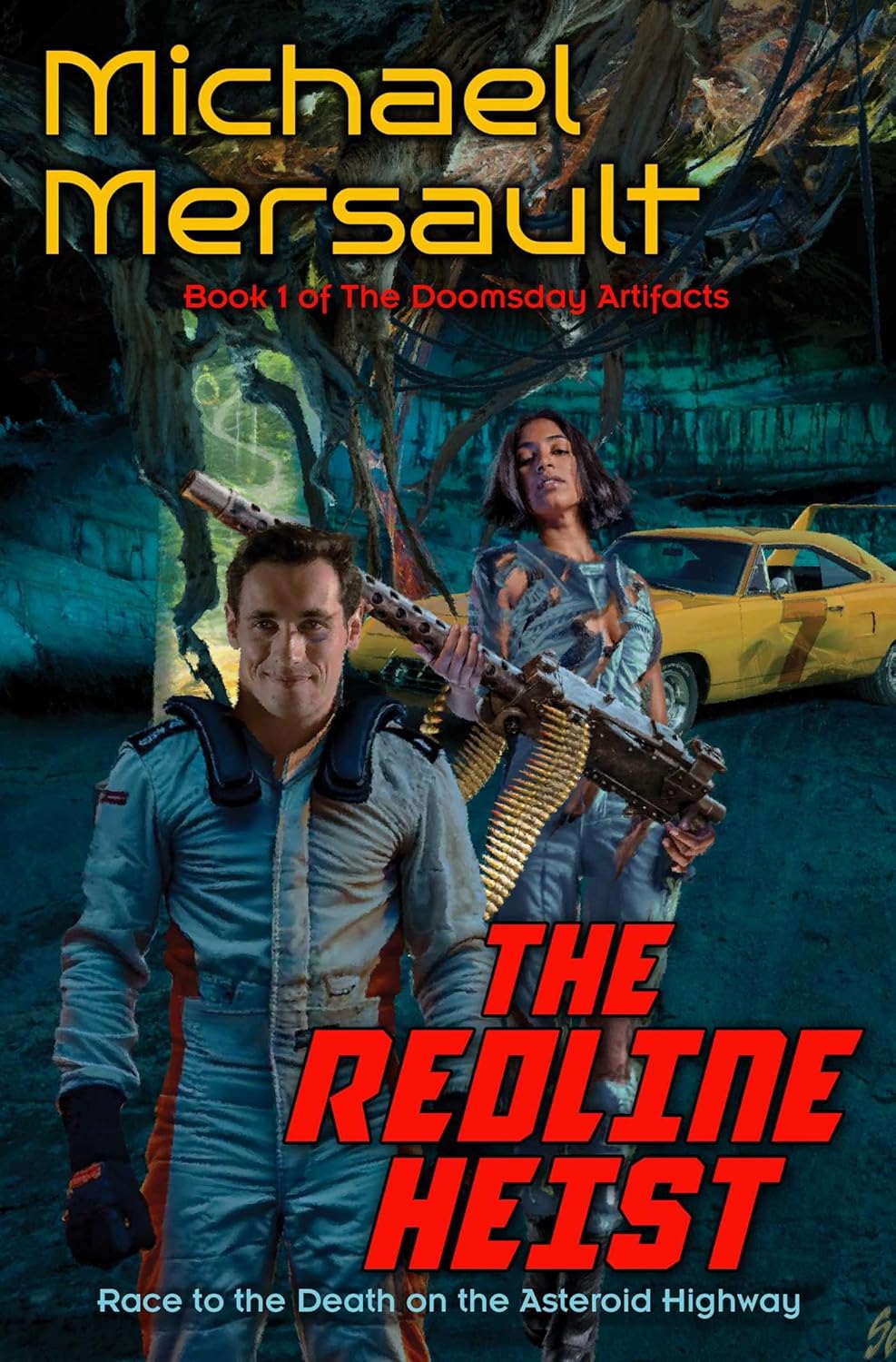
‘The Redline Heist’
By Michael Mersault
When gentleman thief Warren Springer Stowe and partner Cherry Aisha get caught trying to “obtain” an authentic, 20th-century automobile from an antiquities museum, they cut a deal with Sami Maktoum, a junior partner in the family-owned, multi-stellar Maktoum Corporation. They turn an ancient alien base in the asteroid belt into a demolition-derby racing arena for very rich tourists. Then, Sami’s older brother, Maktoum’s managing director, shows up and takes things in a new and deadly direction. Heist meets space travel!
Baen, 2026, 336 pages
Classics
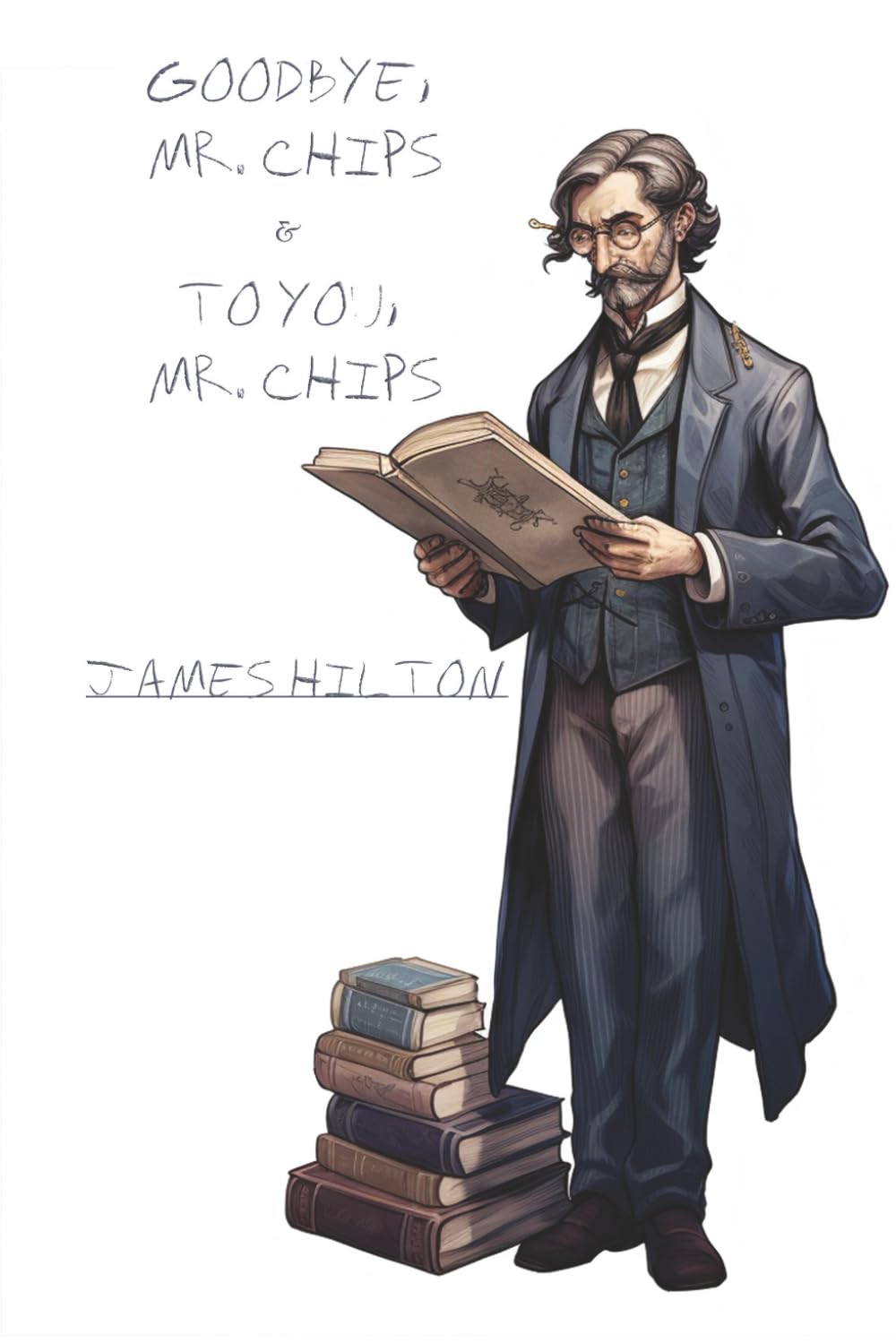
‘Goodbye, Mr. Chips & To You, Mr. Chips’
By James Hilton
This 1934 novella is one of the most tender of tales. Arthur Chipping, or Mr. Chips as the boys dub him, spends most of his adult life teaching at the fictional Brookfield School in England, where, over the years, he becomes a legend among the students. He progresses from stern instructor to a wiser, kinder man, gentled by experience and by his wife, who dies in childbirth. It’s an idealized portrait but also inspiring. Readers may remember a Mr. Chips in their own lives, or wish they had one.
Independently Published, 2025, 108 pages
For Kids
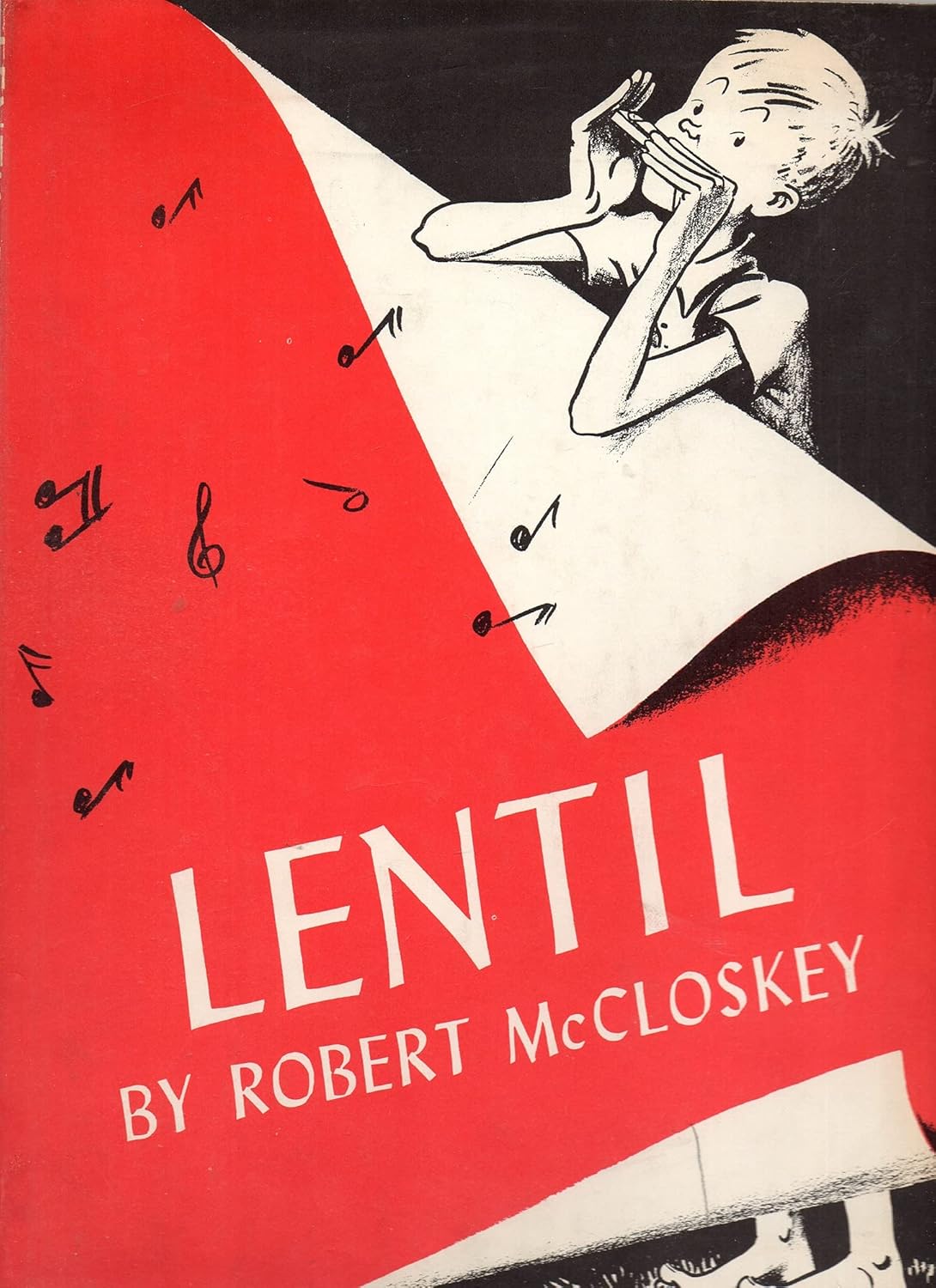
‘Lentil’
By Robert McCloskey
Lentil can’t sing, can’t whistle, and can’t afford lessons, but he can play the harmonica. When the town’s welcome for its returning hero is nearly ruined by a grumpy old man, Lentil saves the day with his music. McCloskey’s traditional illustrations bring to life this warm, funny, all-American story about finding and using your own gifts.
Viking Press, 1968, 72 pages
What arts and culture topics would you like us to cover? Please email ideas or feedback to features@epochtimes.nyc